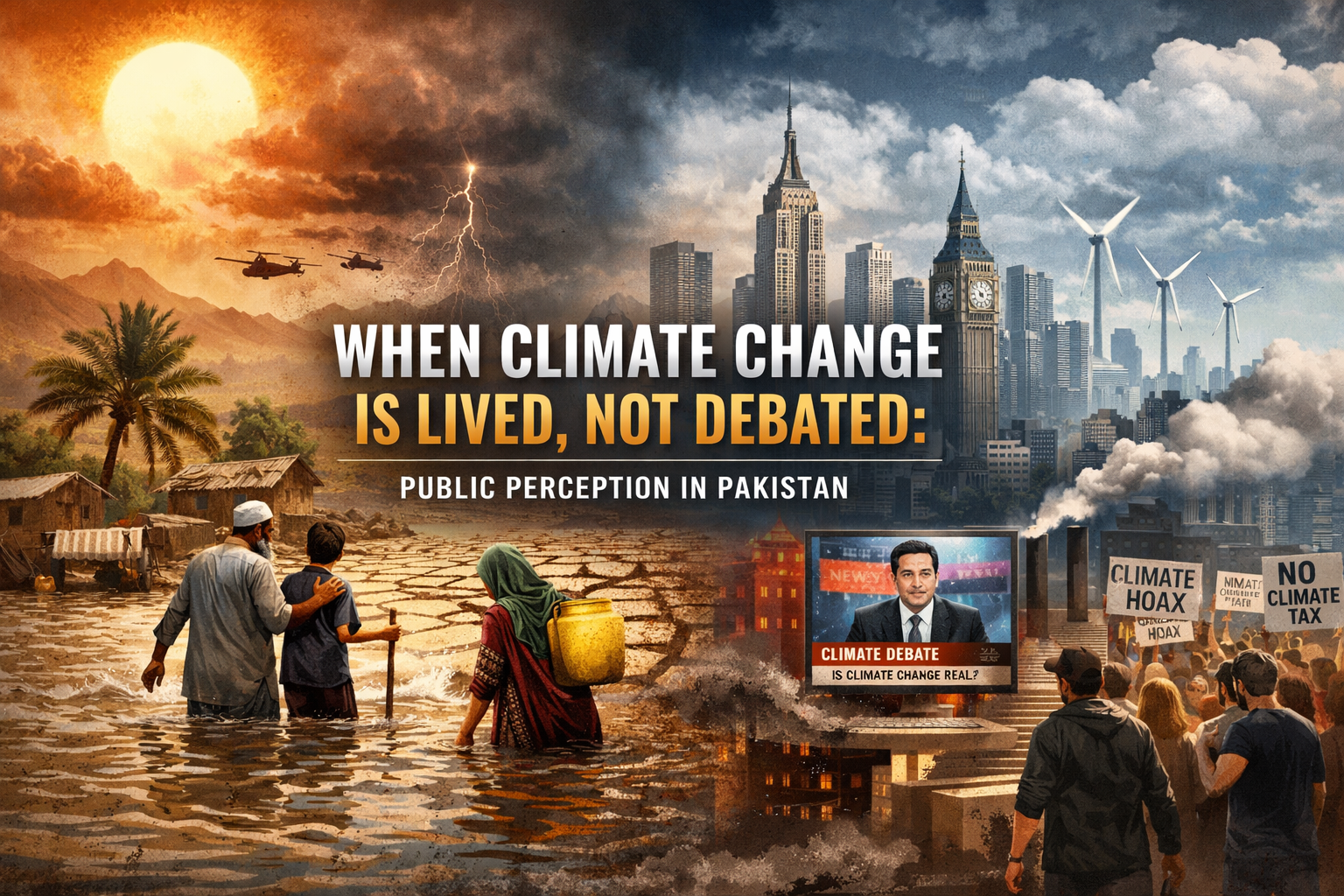

In Pakistan, climate change is not headlined or a culture war talking point. It is the feel of dust in the throat on a May heat waves, the scent of stagnant floodwater in the village school transformed into a refuge and the silence of panic when the tap finally runs dry in the third week straight. Climate change is experienced by millions of Pakistanis before it is branded and described.
When the sky becomes the proof
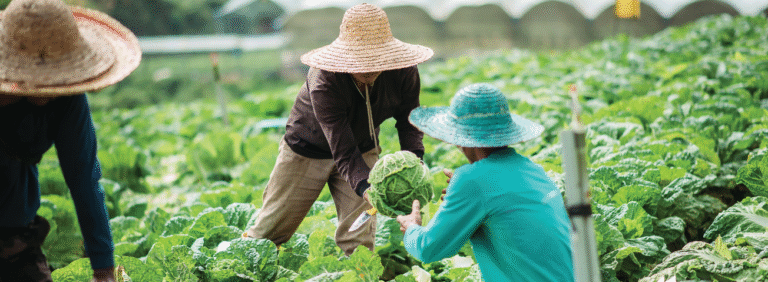
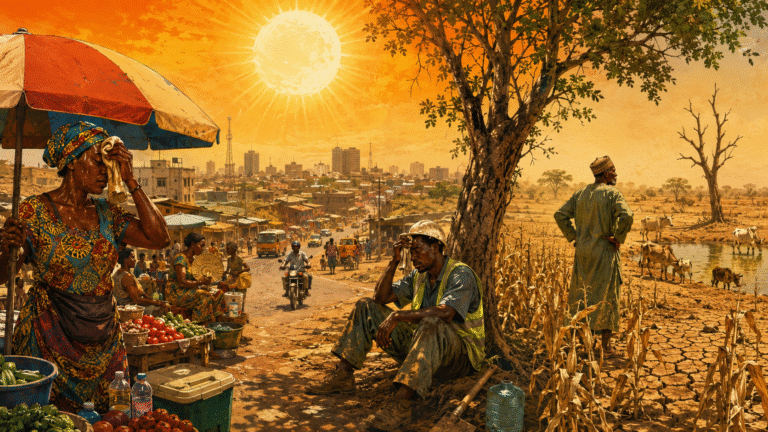
A farmer in Sindh might not pick up IPCC reports or carbon graphs around the world to answer the question why he believes that the climate is changing. He will probably discuss the rains as being too heavy or not at all, the cotton of last year that did not grow, the wheat of this year that withered in a winter that never dropped too cold. The people of southern Punjab or interior Sindh recall when monsoon had a pattern; this season is now a lottery in which every season might either yield cracked fields or a lot of waist deep water. The Urhobos of Pakistanis who live in the cities experience it in the same way, yet equally strongly. In Karachi, Hyderabad, Lahore, Multan Peshawar and most other cities, summers are more repressive. Heatwaves ensure that temperatures become so high that individuals find themselves in hospitals because of elevated temperatures, no one can work outdoors, and even small rooms in areas inhabited by low income earners are converted into ovens. Load-shedding and untrustworthy cooling implies that being at home is not necessarily safe. To a large number of people, there is no necessity to make people believe that something has changed, their bodies know it.
The climate change is a story of survival and not a scientific theory.
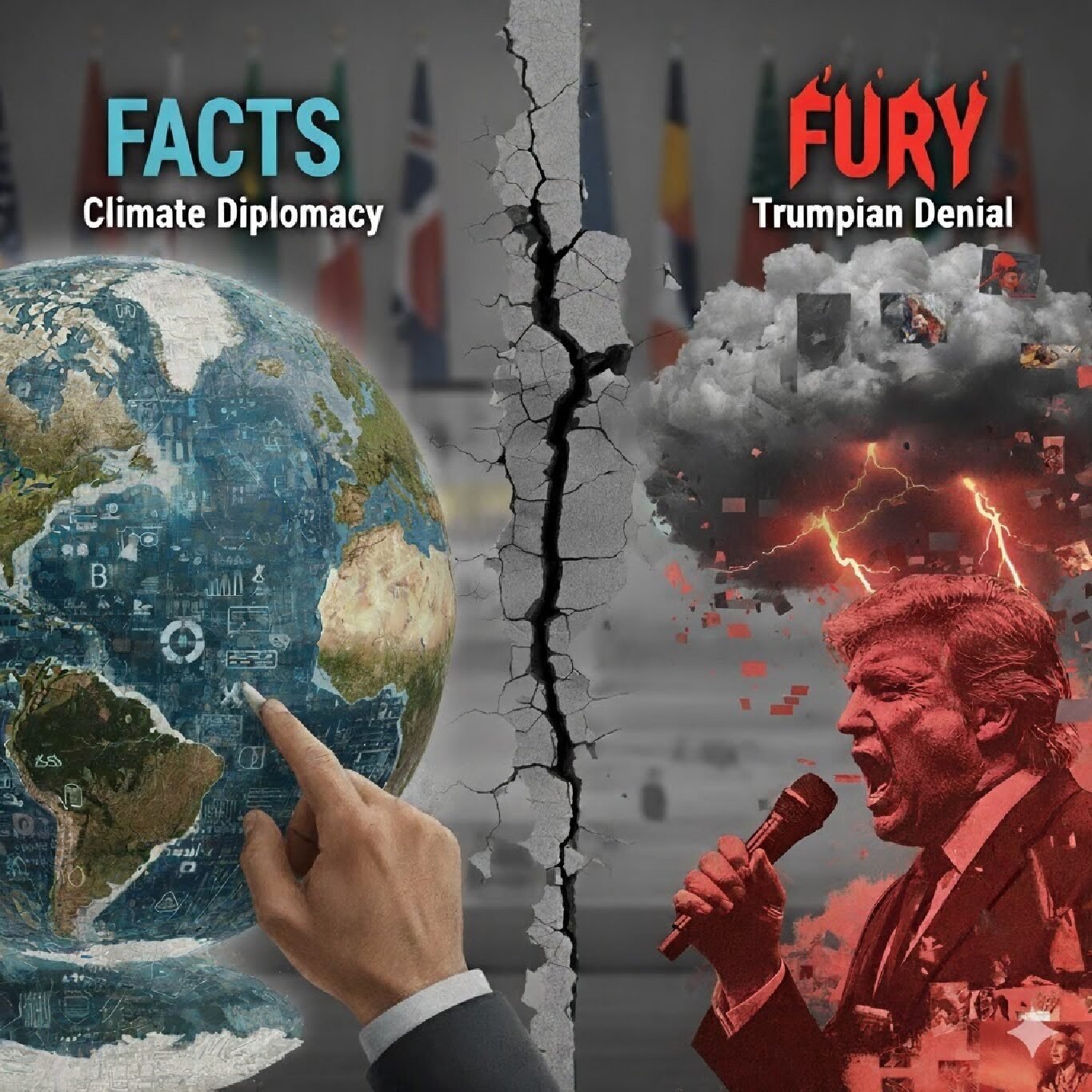
The latter is a fundamental distinction between Pakistan and most of the Global North. In most developed nations, the climate change is usually mediated by the media, social networks, and politics. Graphs, models, and policies are discussed by people on television shows or even on social media threads. Political identity can be in line with belief or denial: who you vote for, what news you watch, which party you trust. In Pakistan, the question of climate change is not an issue of an identity, but a question of survival, especially to the people who are not in the powerful elite. A family that has flooded twice in 3 years, or a family who has seen their water tap go dry will hardly argue whether the climate is changing or not. It is possible that they do not even say climate change, but they will talk at length about changing seasons, nights that are warmer or colder, or rivers that are acting like strangers. The irony is in the fact that this face to face experience gives some kind of more grounded belief than most opinion polls- but does not necessarily translate into organized climate action.
Awareness in living with no adaptation power.
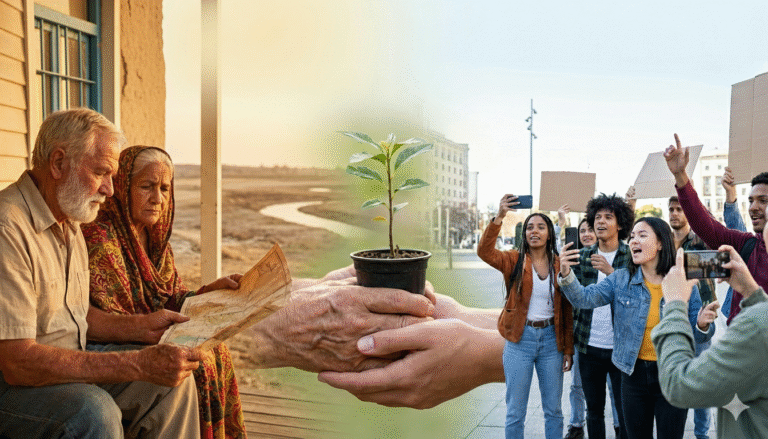
It is here that the paradox is to be found. In Pakistan capacity can be said to be anticipated. It is in their bones that people know that the weather is turning against them. However, they do not have resources, political stability or institutional support to adapt. A farmer can be aware of the fact that his crop is sensitive to heat and unpredictable rain, but there are no credit, extension services, and drought-resistant seeds. One of the coastal communities can learn that the sea is taking away their soil, but they cannot afford the cost to move and the government does not back the idea. Floodwaters may be rising more rapidly each monsoon in a family in an informal settlement but there is no tenure, no insurance, and no realistic hope that the family will be able to relocate to safer land. In this regard, the awareness of climate in Pakistan can be said to be a consciousness of constraint: individuals are aware of the danger, but also of the restriction in their choices. That consciousness can be changed into resigned silence (Allah ki marzi), pragmatic accommodation (migrating temporarily, changing the planting season, informally borrowing), or even local formation. But it hardly develops into organised adaptation without institutions to support it.
The Global North: belief distanced.
Weather and belief are inverted in the Global North in most parts. Climate effects continue to impact daily life, including wildfires, heat waves, floods, storms but too many individuals are insured, covered by infrastructure, and social safety nets. The blow is cushioned by air conditioning, flood defenses, strong health systems and operating local governments. To others, climate change remains something they primarily watch on television: in a different state, a different country, graphs in a newspaper. This distance leaves room in which climate change can be ideological. Party, media ecosystem, or cultural value can influence the belief more, rather than direct experience of a disaster. Climate science remains an opinion that some individuals in the Global North can afford; it is an issue that a large number of people in Pakistan simply cannot afford. However, there is a twist: the nations of the Global North tend to possess more resources and have more stable organizations to take action. States can invest in adaptation, control emissions, and invest in innovation even in areas where there is disagreement in the consensus of the people. In Pakistan, social opinion is high where the effects of climatic conditions are severe, yet the financial space of the state and the institutional means is small.
Belief is not enough
The main point is unpleasant: the subjective experience of climatic extremes can be an effective teacher, but not power, money, and governance. People who practice the most extreme form of belief in climate change in Pakistan are the ones who are being affected by it the most since they are the ones with the least power to mitigate the situation. This puts an unequal moral ground. Villagers who have never travelled by plane are losing their homes to floods which have been increased by emissions in other places. Children who did not do anything to define the energy systems of the world are inhaling unclean air and consuming unclean water. Their faith in climate change is in most aspects, a by-product of the choices made miles away of their communities. Meanwhile, the mere increase in one’s belief in the Global North is not necessarily followed by justice either. Climate action may have high popularity with the population, yet may still be defective, or externalised to other economies such as Pakistan by policies that are both debt-intensive and demand supply-chain choices that leave climate-exposed countries mired in low-value and high-risk positions.
Between the lived reality and common responsibility.
And what would honour entail in relation to the difference between lived climate change in Pakistan and debated climate change in the Global North in parts of the world?
It involves appreciating the fact that first-person accounts of flood victims, overheated employees and displaced families are just as valuable as satellite images and models.
It consists of moving climate communication beyond asking Pakistanis whether they believe in climate change to inquiring what they require to cope and recuperate.
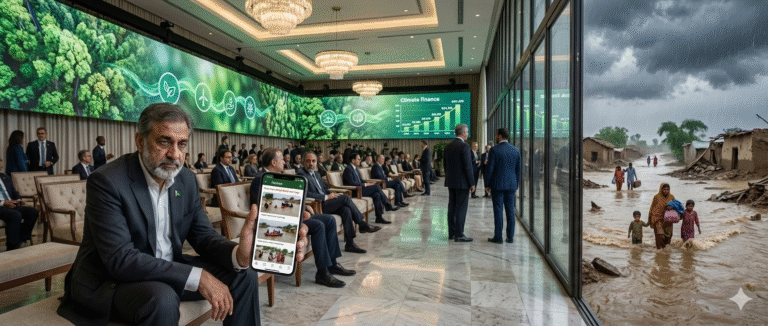
And it is globally an invitation to Pakistan to take the climate reality it experiences as a charge of responsibility: less but equitable climate finance, and relations that enable it to build local capacity rather than dependency.
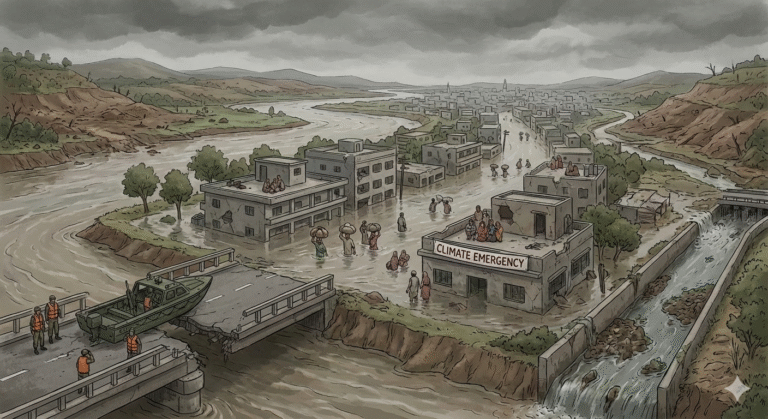
Once the climate change ceases to be an argument and becomes an every-day occurrence, the question alters. It is no longer “Is this real?” but “What shall we together then do with the fact that to some of us it has long been a very real thing?”.



 Reston Dennis Juah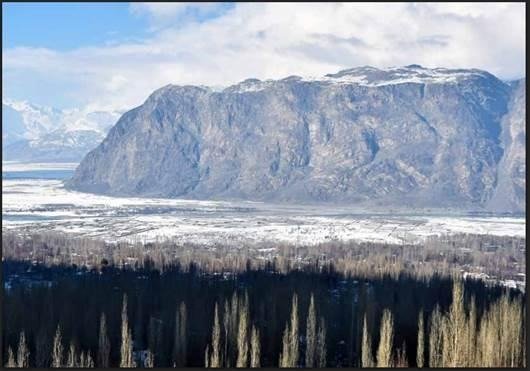
 Noor Ul Ain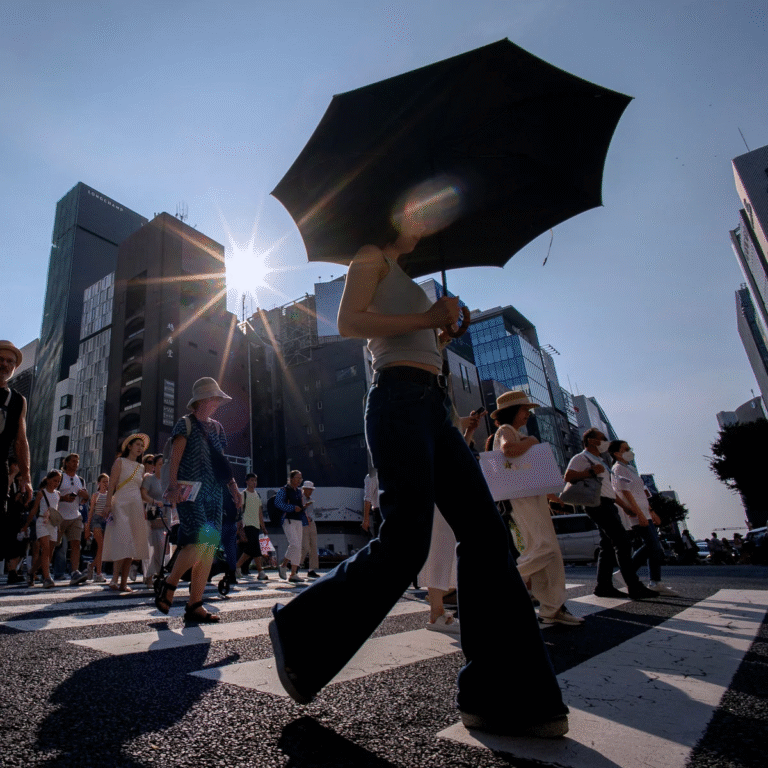
 Hassan Barrie
 Hoby Nasandratra Andriamiandrisoa
Thanks for the sensible critique. Me & my neighbor were just preparing to do some research about this. We got a grab a book from our local library but I think I learned more clear from this post. I am very glad to see such fantastic info being shared freely out there.
Hey, for real, 89fgamelogin seems kind of no bullshit. Jumped on the other night, signed up easy. Was playing in minutes! Might be my new hangout. Find out more: 89fgamelogin
Listen up, he777game isn’t bad at all! Jumped on this because a friend recommended it, and now i love it. See for yourself what the hype is all about: he777game
Been playing around on pbv88vip for a hot minute. Gotta say that it’s a decent place to spin and get those wins. Definitely worth checking out if you’re looking to take risks. Check them out here: pbv88vip
66b app có blog chia sẻ mẹo chơi slot, phân tích RTP, review game mới – kho kiến thức miễn phí cho cược thủ. TONY05-09
I am not sure where you’re getting your information, but good topic. I needs to spend some time learning much more or understanding more. Thanks for fantastic info I was looking for this information for my mission.
Very interesting details you have noted, appreciate it for putting up.