
What Do Current Deforestation Trends Tell Us?
The answer to this question lies in global monitoring reports, national assessments, and the lifestyles or living experiences of communities. After looking into those sources, it becomes clear that the loss of forest in Liberia is still significant and, in several areas, increases. Nestled in West Africa, Liberia is home to the region’s last remaining tropical rainforest. The Liberian forests are not only a beautiful ecosystem, they are a help to rural livelihoods, and also serve as reservoirs of biodiversity buffering against climate change. However, over the last ten years, the major question that has frequently troubled researchers, journalists, policymakers, and conservationists has been; Is deforestation in Liberia actually increasing, or are conservation efforts finally showing effect?
This blog examines Liberia’s forest importance, what the data shows as it relates to deforestation, what’s driving forest loss in Liberia, and the way forward.
Why does Liberia’s forest matter?
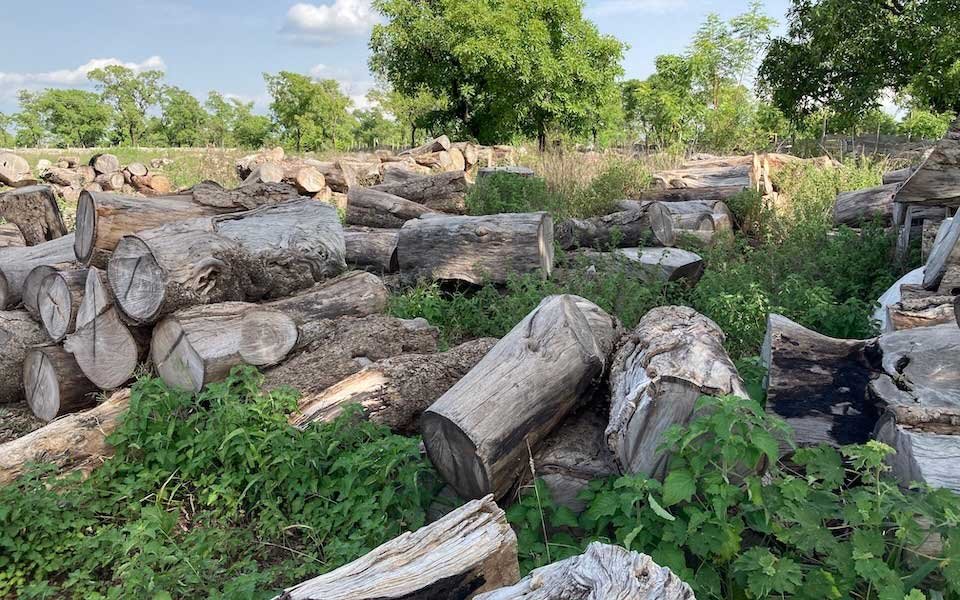
Liberia has West Africa’s largest remaining area of tropical rainforest. The category of Upper Guinean rainforest occupies 42-44% of Liberia’s land. These forests are not merely a collection of trees; they are also water regulators, carbon sinks, wildlife habitats, and rural livelihoods. They affect the climate and generate a source of revenue and are home to some of the most diverse biodiversity found anywhere in the Upper Guinean Forest region. The country is a target for global forest financing schemes on account of global climate implications of their conservation. If this development continues then it can terribly impact the worst forms of biodiversity loss followed by more hardships for forest-dependent communities. In addition to this, Liberia will lose carbon sinks preventing climate stability. Moreover, ecotourism and carbon finance will also be missed economic opportunities. Lastly, Liberia risks undoing decades of progress in conservation. Protecting the forests of Liberia has more significance than environmental issues alone (UN). It is a development, climate, and public-health issue.
A decade of change: what the numbers reveal
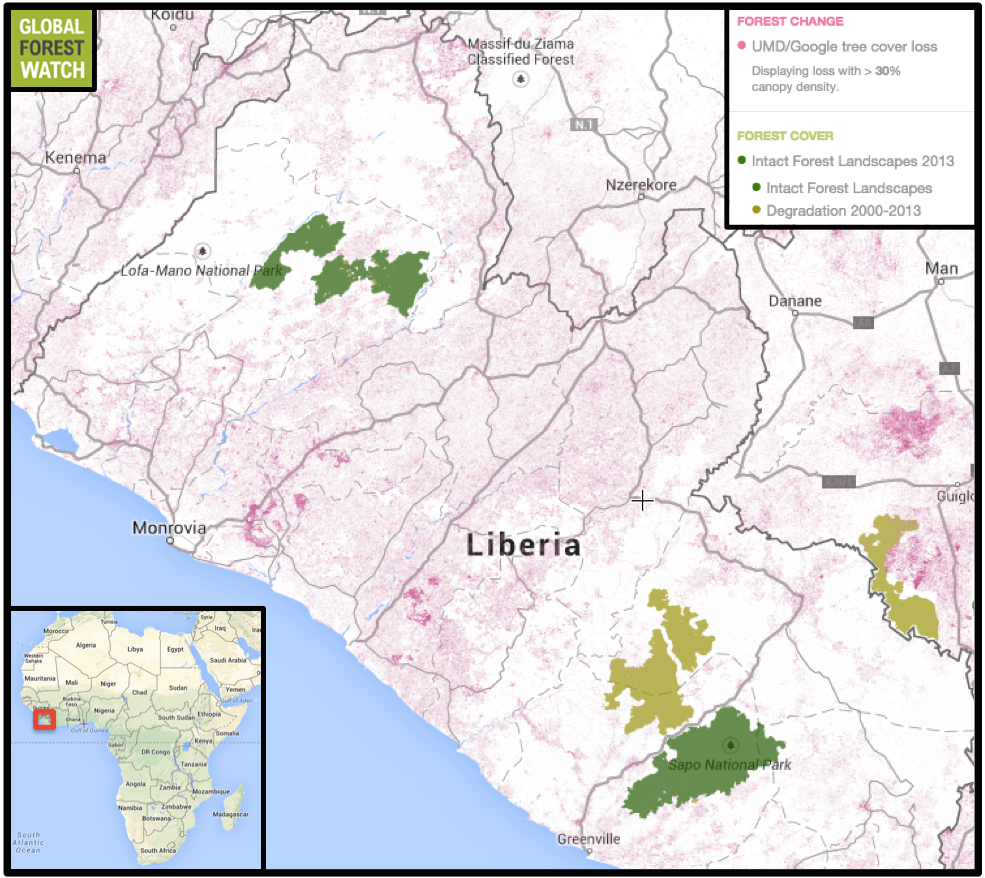
Forest loss in Liberia occurs in a haphazard way; to include the building of roads, loggers’ activities, mines building, expanded agriculture frontiers, charcoal making, and large-scale concession. The pace in some years of governance improvement might have slowed affairs but recent data reveals that Liberia is losing substantial forest cover, particularly primary forest. In Africa, closure of forest cover occurred in the Sudano-Sahelian and Western Indomalaya countries, that is the Central African Republic and Liberia, respectively. According to a report from Global Forest Watch using updated satellite imagery, Liberia lost 38,000 hectares of humid primary forest in 2024. In that same report also, the loss of 160 kha of natural forest generates 100 Mt of CO2 emissions. According to Goldman, primary forest is the richest in carbon and most ancient forest type. Once the forests are cut, they cannot be repaired easily. From 2010 to 2020, an annual average of 30,000 hectares of primary forests were lost in Liberia, according to the Independent Market Monitor (FLEGT IMM) for the Forest Law Enforcement, Governance and Trade. Over the course of a year, the global forest area may go up and down a little. But over the decade, there is a picture of Liberia not reversing deforestation. According to newly released UN development planning documents, nearly the entire loss related to tree-cover actually pertains to the clearing of natural forests. Consequently, it is not only the logs that will go missing in Liberia but also the actual forests and all their biodiversity. They are losing forests home to endemic species, rainfall-regulators and large carbon-storing forests. According to these statistics, loss in forest cover is regular. Liberia is one of the fastest deforesting countries in the world.
What’s driving deforestation today?
In Liberia, deforestation is driven by economic, social, and political pressures, rather than one problem alone as seen in other countries. We look at the main drivers.
Agriculture
Smallholders take cocoa farming, as the global demand is high, making it attractive, and experts see it as a reliable source of income. When forests are clear for huge cocoa planting or cocoa planting that’s unregulated; biodiversity, carbon storage and soil health-wham! These farms are often established gradually unlike large industrial plantations, making them more difficult to regulate.

Logging
Logging drives the biggest deforestation in Liberia. Forest protection issues stem from lack of enforcement, under-resourced forestry department, and corruption. Due to its lucrative nature, illegal logging is taking place. Even though the government has made efforts, illegal logging continues.

Mining and land degradation
Forest areas are increasingly being exploited for mining of gold, diamonds, and iron ore without land-use planning. The act of mining causes forests to be cut down directly. Further, it leads to more deforestation by causing road building and settlement establishment. Moreover, it causes fuelwood collection. These actions often happen in remote areas, where forests that have not been disturbed become settlements, poaching and agricultural expansion. Advisory services like GLAD alerts on forest disturbances in satellite images around excavations points.
Charcoal and fuelwood demand
Charcoal is produced in very huge quantities for commercial sale because many Liberians heavily rely on charcoal or firewood for cooking and heating. Charcoal production can lead to: continuous small-scale forest cutting, degradation of community forests, and the loss of secondary forests. Although the effect is spread out and not focused, it still accumulates over time causing the forest to decline in general. Even though many people think of logging, charcoal production is one of the main sources of forest damage (Clement).

Are policies or regulations making a difference?
Communities have more control over forest management, logging, and conservation. In some places, community forest management has improved oversight, which is not a bad thing, but funding and technical capacity are still limited. In early 2025, a number of pilot projects in Liberia see communities paid up to US$1.50/ha per year to conserve forests. The design of these programs references REDD+ and carbon credit models. Communities can be paid as an alternative to logging, charcoal making and farming. However, these amounts are often too small to compete with those gotten from cocoa farming. Despite the improvements in institutional reforms, there is still more to be done.
So, is deforestation increasing or decreasing?
Although there are several declarations and other policy measures, deforestation in Liberia is still growing overall, especially in terms of primary forest loss. Forests are losing their existence due to the growing demand for agricultural land, illegal logging, mining and energy.
The way forward
While it’s clear that Liberian forests are getting destroyed faster than ever; it’s not very late for interventions. With the use of sound governance, proper land-use planning, community and international support or partnerships like the Norway-Liberia Carbon credit deal, Liberia can conserve its forest while developing a strong inclusive economy. To enhance deforestation mitigation, the country will need to strengthen forest laws, support community-managed woodlands, control the spread of cocoa, increase payments to communities for conserving forest, draw climate finance through transparent schemes for carbon credits and enhance transparency in logging and mining concessions. The right policies, partnerships and community participation can reduce and eventually reverse deforestation in Liberia.

 Reston Dennis Juah
 Noor Ul Ain
 Hassan Barrie
 Hoby Nasandratra Andriamiandrisoa
Looking for the right link? Linkbong8899 seems legit. Needed a quick and easy way to get where I needed to be to bet on my favourite matches this weekend! And this was it! linkbong8899
I have spent a few weeks playing Xo3game and I can confirm many games are engaging. Jump in and start playing: xo3game
Looking for some real gà chọi c1 action? Look no further! This site is dedicated to the toughest birds out there. Get your bets in and enjoy the show! gà chọi c1 is where it’s at.
Friday Night Slashing Jeff The Killer FNF is a nice pick if you enjoy Friday Night Funkin mods. The theme works well and the rhythm sections feel satisfying.
This is a useful page for FNF Funkin Drones X Murder Drones. I found it easier than searching through scattered mod links.
Funkin Drones X Murder Drones FNF works well as a quick play option. The beat is strong and the mod feels easy to get into.