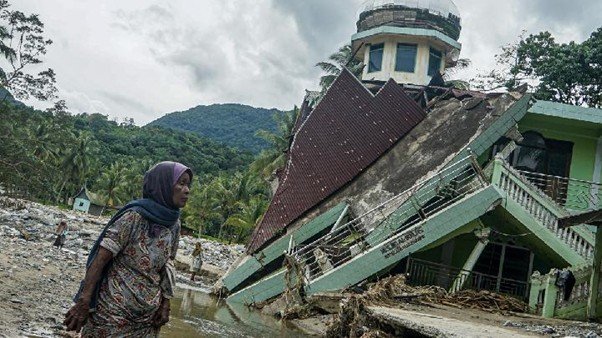

The floods that hit the Indonesian provinces of Aceh, West Sumatra, and North Sumatra were not only environmental disasters; they were also a humanitarian and political shock. According to The National Disaster Management Authority, as of December 15, 2020, there were 1,068 reported deaths, the majority of whom were found in Agam Regency, Aceh Utara, and Tapanuli Tengah. In this area, around 252 people were missing and almost 158,000 houses were destroyed. It has been estimated that approximately 1,000,000 individuals have been displaced, most of whom are located in Aceh Tamiang, Aceh Timur and Aceh Utara.
The floods in Sumatra are not an isolated event but part of a broader regional crisis that has changed the outlook on climate change and diplomacy in Southeast Asia. Climate diplomacy is also taking on a new form outside the global summits and it is becoming a reality in the wake of disasters. The current floods in Southeast Asia are not only humanitarian disasters but also diplomatic problems. Governments have to cooperate, mediate aid, mobilize climate finance, and make sense of the political consequences of climate vulnerability.
From flooded floodplain to diplomatic battlefield.
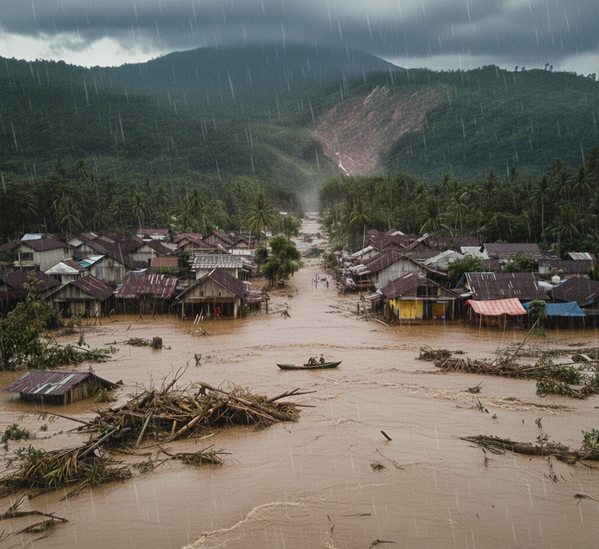
Climate diplomacy has traditionally been understood as a process that takes place in conference rooms and international summits. Nevertheless, the 2025 floods in Sumatra show that it is becoming more and more decided on the spot, in times of crisis. Later in 2025, very strong and long-lasting rains caused massive flooding and landslides across Aceh, North Sumatra, and West Sumatra, overwhelming local authorities and displacing hundreds of thousands of people. What began as a natural disaster quickly overwhelmed provincial response capacities and required coordination that extended far beyond normal administrative processes.
With the emergency services struggling to handle the magnitude and speed of the inundation, the Indonesian Government had to deploy resources promptly at various levels of governance. Early warning systems proved uneven, evacuation logistics were overstretched, and damaged infrastructure hampered relief efforts. In this case, the sphere of disaster response could no longer be limited to a domestic one. The need to have technical support, humanitarian aid, and financial resources thus shifted the crisis to the diplomatic sphere.
In this case, climate diplomacy takes a practical and urgent nature. Governments must organize information, administer external aid, and broker cooperation when under significant social pressure. Decisions that would otherwise take months to make are condensed into days. National government mobilized emergency resources with local partners on a regional level, as well as international organizations, to help coordinate relief efforts. Thus, diplomacy in this context is not about long-term climate commitments, but about immediate efforts aimed at saving lives and restoring order
ASEAN and the Pressure on Regional Cooperation.
The geography of Southeast Asia has rendered regional cooperation unavoidable. Rivers, monsoons and storm tracks cross national borders. ASEAN has for some time advocated models for disaster response and humanitarian aid, understanding that climate risks are universal across the region. But the recent floods have exposed persistent deficiencies in regional climate diplomacy. There was information sharing and coordination in the Sumatra floods, but this was more of a national activity with no centralized and ASEAN-led response. The differences in early warning mechanisms, infrastructure capacity and disaster preparedness created bottlenecks in coordination at the regional level.
The long-standing principle of non-intervention within ASEAN also limits deeper cooperation in the field of emergency response. Humanitarian coordination in disasters is politically feasible, but long-term adaptation planning, which includes joint river management, land-use control and development of infrastructure standards, involves participation in domestic governance processes. As a result, the climate diplomacy of ASEAN is more prone to activation during the crisis and cannot maintain proactive and preventive cooperation. This is a consistent disjuncture between will and institutional ability that is regularly revealed whenever floods hit the area.
International aid and the Politics of aid.
The higher the intensity of floods, the higher the need to seek international help. After the disaster in Sumatra, regional neighbours, development partners, and multilateral organisations provided aid. Other countries like Japan and Australia provided technical and financial assistance, and United Nations agencies provided humanitarian assistance. Disaster aid is never purely technical; the timing, magnitude, and visibility of assistance carry diplomatic consequences. The disaster response gives a channel to the donor countries to demonstrate leadership and to strengthen regional relationships. To recipient countries, aid comes with political undertones and long term obligations.
Here, climate diplomacy operates at the intersection of strategy and solidarity. This is not a phenomenon unique to Indonesia. In Southeast Asia, climate disasters have become moments of geopolitical relations being tested and reshuffled – especially because climate impacts are moving far faster than they are being handled through institutional reform. In this way, international aid during climate disasters becomes both a humanitarian necessity and a diplomatic currency, shaping regional relationships long after the floodwaters recede
Climate Finance Under Pressure.
Floods in Southeast Asia also demonstrate the most contentious area of climate diplomacy: climate finance. For years, national governments in the region have long argued that costs of adaptation will exceed what any country can afford on its own. Rebuilding, reconstruction and future preparedness are expensive and require large public resources to invest. This year, heavy flooding in Jakarta resulted in economic losses estimated at more than USD 258 million and displaced tens of thousands of residents. These urban floods also showed that climate vulnerability is not confined to remote areas. In Sumatra, the damage was far more widespread, with destroyed infrastructure and extensive livelihood losses. While the world pledges to be climate change-resilient, climate finance is slow and bureaucratic.
Climate finance mechanisms are slow and very procedural. Receiving international adaptation funds often involves lengthy application processes, technical requirements, and delayed disbursement, conditions ill-suited to responding to urgent post-disaster realities. This creates a chasm between the urgency of climate impacts and the speed at which aid is applied to it. That tension has emerged as a central frustration in climate diplomacy, especially for climate-vulnerable nations, which are repeatedly experiencing disasters while trying to wait for long-promised funds to materialize.
Domestic Politics and Diplomatic Pressure.
Floods recast domestic patterns in politics, which, in turn, frame international diplomacy. During the Sumatra floods, people clamored for leadership, coordination and clear communication from the government, placing a heavy emphasis on the effectiveness of the authorities. A response to disasters became a measure of political credibility. Facing mounting domestic pressure, governments are more likely to raise climate justice arguments in international forums. Today, the impacts of climate change are no longer abstract possibilities, but real-life problems demanding global accountability. The dynamic between domestic accountability and global advocacy is a vivid example of the grassroots forces behind bottom-up drivers of climate diplomacy, not solely in the elite negotiating processes.
Why Southeast Asia Matters for Global Climate Diplomacy
The recent floods indicate the central role of Southeast Asia in the global climate governance. The area is extremely susceptible to climate hazards, has a substantial economic worth, and functions as a strategically important geopolitical region, making the experiences of the area particularly impactful in global climate management. The events in Southeast Asia give crucial information on how climate diplomacy works in the circumstances of vulnerability and urgency.
These floods show that adaptation is not a secondary process to mitigation. Although the decrease of emissions is inevitable, the communities that face the problem of rising waters need to invest in resilience, infrastructure, and preparedness urgently. Climate diplomacy that concentrates on the long-term objectives without considering the present risks poses a threat to vulnerable groups.
Disasters also show that diplomacy is judged not by the treaties signed during international conferences but by the activities taken during disasters. International credibility is more and more dependent upon the speed, the magnitude, and equity of assistance. At the same time, the same floods reveal a necessity of having the climate-vulnerable countries play a more significant role in global climate governance. The experiences of Southeast Asia undermine the frameworks of diplomacy that place future obligations on the present protection and propose a more balanced and people-centred approach to climate diplomacy.
From Reaction to Prevention.
One of the clearest lessons in the Sumatra floods is that climate diplomacy is mostly reactive. Cooperation builds after disasters occur and then wanes once recovery starts. This is a costly and untenable process. A more effective approach would be preventive climate diplomacy, long-term cooperation in the effort to minimize future risks. Shared river management, regional early warning systems, integrated urban planning and quicker adaptation financing would dramatically alleviate the damage from floods. Such measures rely on trust, political will, and diplomatic action that goes far beyond an emergency response.
Diplomacy When the Water Rises.
The floods that have ravaged Sumatra and other regions of Southeast Asia provide a clear indication that climate diplomacy is no longer a far-fetched activity that is only done during global summits and policy declarations. Instead, it is currently being crafted during crisis time, when governments must collaborate, bargain aid, assemble climate funds, and act both in response to domestic and international pressure. These catastrophes reveal the constraints of the current diplomatic systems that focus on long-term goals and leave vulnerable populations exposed in the short term. Meanwhile, they also demonstrate the increased role of adaptation, regional collaboration, and financial assistance in time as the main pillars of climate diplomacy.
However, the experience of Southeast Asia shows that the credibility of climate diplomacy will increasingly be measured not by the pledges made in the international forums, but by the speed, fairness, and effectiveness of the responses in the event of floods. Diplomacy in the age of increasing climate disasters should be transformed not only as a response to a crisis but as proactive, people-centered collaboration that would save lives prior to the waters receding once more.




 Reston Dennis Juah
 Noor Ul Ain
 Hassan Barrie
 Hoby Nasandratra Andriamiandrisoa
jjwinwin.com is pretty slick. Anyone had issues withdrawing? That is I always worry about haha. The games are nice when they pay off. jjwinwin
Hey mate, looking for 7m.cn ma cao odds? This is the place. Been using it for years and never had an issue. Good luck with your bets! Get started at 7m.cn ma cao.