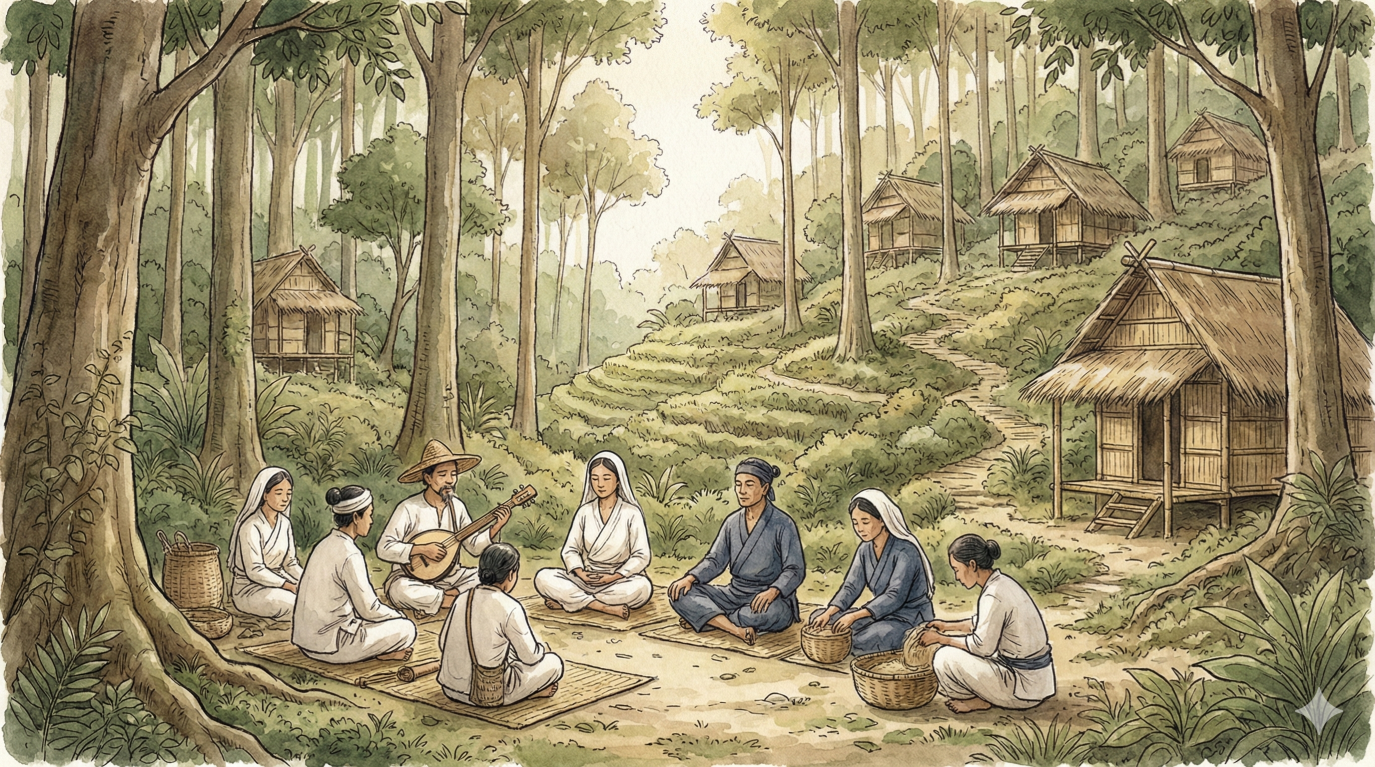

The Baduy tribe in Banten, Indonesia is one of the communities that has lived hundreds of years without electricity, and modern technologies, yet they are happier, healthier, and safer from landslides and floods than people in big cities. It seems like a movie but that is their reality. We often talk about new technology like electric cars, solar panels, and smart grids to “fight” climate change. New technologies are important, but we need more effective solutions by changing the way we think about nature. The Baduy people are the perfect example for us to learn by living side-by-side with mother nature. By understanding their belief system called Sunda Wiwitan, we can learn powerful lessons to help save our planet.
Sunda Wiwitan
The core belief to understand the Baduy lifestyle is Sunda Wiwitan. It is the main religion of the Baduy people. For them it is just more than just a religion, it is a way of life that sees humans and nature as one big family. For generations, in modern society we often view nature as a “resource” to be used and sometimes it gets exploited. If we see a forest we think about timber and if we see a river and think about hydroelectric power. We always think about how we can “use” our natural resources for our own benefit. On the other hand, Sunda Wiwitan is a belief that teaches their believer to do the opposite. It teaches that we should see nature as a “subject” rather than an “object”. The belief considers nature has spirit and rights, just like humans do.
The strict set ancestral rules called Pikukuh is what the Baduy people followed with their most philosophy is:
“Gunung teu meunang dilebur, lebak teu meunang dirusak.”(Mountains must not be destroyed, valleys must not be damaged.)
A powerful climate strategy can be created from this simple rule by understanding that we cannot change the shape of the land to fit our ego, but we should fit our lives around the land. In other words, for example if a hill is steep, they do not dig it out to make it flat for a house, instead they build the house with legs of different lengths to fit the hill. This way we respect the land, prevent landslides and keep the soil healthy, which is crucial for absorbing carbon dioxide. There are few lessons we can take from Sunda Wiwitan for “fighting” climate change:
The Lessons
Deforestation is the biggest cause of climate change. We release tons of carbon dioxide into the atmosphere by cutting down trees to fulfill our “needs” such as expanding plantations or building infrastructure. The Baduy people have their way of life that can be our solution to this problem with strict zoning. According to a research there are three distinct zones that the Baduy do to divide their land and this could be a lesson for modern city planners:
- Leuweung Kolot (Old Forest / Forbidden Forest)
A sacred area where no one is allowed to cut a single tree, farm, or even enter without special permission. It acts as the”lungs”of the area, storing carbon and protecting water sources.
- Leuweung Titipan (Entrusted Forest)
The Baduy people can use it carefully but it is mostly kept as a reserve for the future.
- Huma (Farming Land)
This area is where the Baduy people use farming for their daily lives.
The Baduy ensure that the ecosystem remains balanced by strictly protecting the Leuweung Kolot. Adopting this “sacred zoning” concept is crucial for climate resilience in modern society. By designating inviolable green belts within cities areas where no development is permitted regardless of economic pressure, the urban planners can emulate the Baduy system. As modern society we must protect wetlands and urban forests to mitigate heat islands and manage floodwaters, just like the Baduy protect the Leuweung Kolot to ensure water for downstream communities.
Furthermore, the Baduy people lifestyle is the opposite of the modern culture of hyper-consumption. The practice of minimalism of the Baduy people, by believing that its simplicity preserves harmony and it also aligns perfectly with the United Nations’ Sustainable Development Goal 12 (Responsible Consumption and Production). The Baduy people avoid the “throwaway culture” that drives industrial emissions and fills landfills. Instead they use biodegradable tools that are crafted from bamboo, wood, and stone.
The Baduy philosophy of Lojor teu meunang dipotong, pondok teu meunang disambung (what is long should not be cut, what is short should not be lengthened) is an antidote in modern excess. This proverb teaches a radical acceptance of nature’s limits. By applying this wisdom means shifting from a linear economy to a circular one in modern society. It requires a behavioral shift from choosing durability over trendiness, repairing broken items rather than replacing them, and prioritizing biodegradable materials. We can align our modern lives with the planet’s ecological boundaries by curbing our desire to manipulate and consume the environment.
Why Indigenous Wisdom Matters for National Policy?
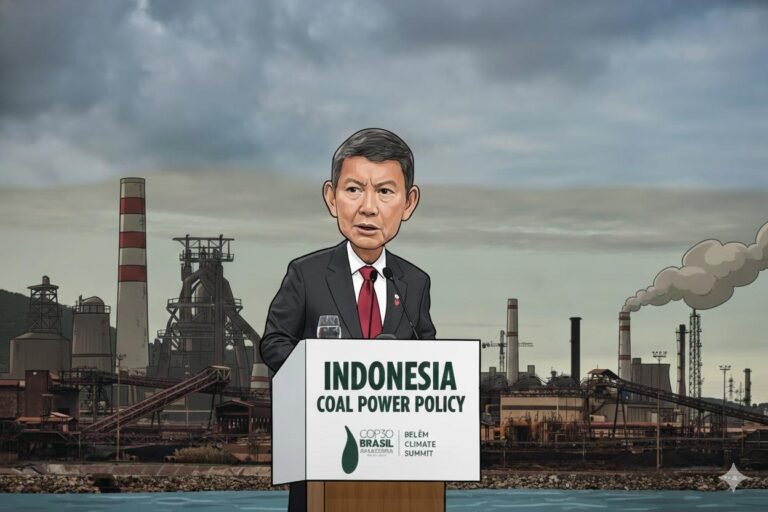
The perspective of “That works for a tribe, but not for a country” overlooks the fact that indigenous wisdom often predates and out performs modern sustainability frameworks. Some research found the core tenets of the Baduy’s Sunda Wiwitan align seamlessly with the United Nations’ Sustainable Development Goals (SDGs). This is the proof of a blueprint for national policy rather than just a cultural curiosity. The SDGs goal Goal 13 (Climate Action) and Goal 15 (Life on Land) is being modeled by the Baduy’s strict protection of the Leuweung Kolot (Forbidden Forest). The Baduy have maintained natural carbon sinks for centuries through strict customary laws (adat) that forbid forest conversion, while modern governments spend billions on carbon capture technology. The Baduy naturally preserve biodiversity in ways that modern conservation laws often fail to achieve by viewing nature as a “subject” with rights rather than an object for extraction. Additionally, the rejection of synthetic materials by the Baduy people represent the Goal 12 (Responsible Consumption) of SGDs.
We could mitigate the disastrous effects of urbanization if policy makers adopted even a fraction of Baduy’s philosophy, such as implementing”ecological zoning”based on the Baduy’s refusal to alter land contours. We can embed the principle of limitation into law without abandoning technology by integrating these values. If the policymakers could legally recognize”sacred natural sites”in every province where development is strictly prohibited could act as a national shield against climate disasters. This proves that the ancient laws of Sunda Wiwitan are essential for our future survival.
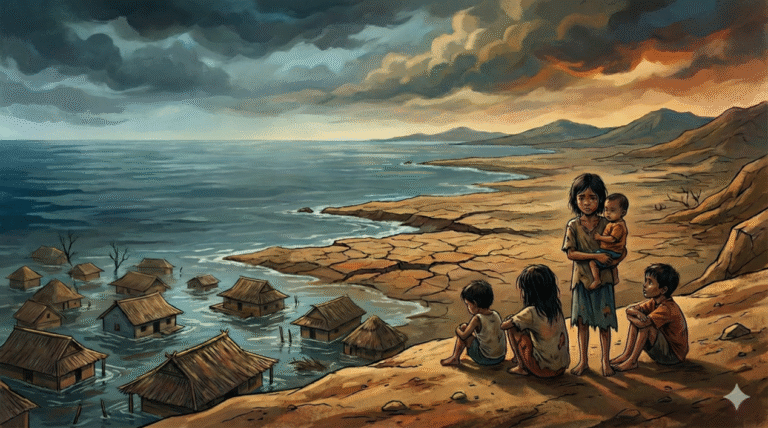
In the end, we do need to adopt the mindset of the Baduy because climate change is not just a problem of carbon dioxide, it is a problem of disconnection. The Baduy tribe reminds us that we have forgotten that we are part of nature. We should not use earth as a machine for us to operate, rather it is a parent that feeds us. It is our turn now to guard our own neighborhoods with the same love and respect as the Baduy guarded the forests of Banten for centuries. As the Pikukuh says “the mountains must not be destroyed. If we destroy the mountains, we eventually destroy ourselves.”





 Jonathan Tarnue Payne
 Precious Douglas Maulana
 Eslam Mohamed Elsheikh
 Lutfi Nurachma
 David R.K Brown
 Asef Jafari
I like this post, enjoyed this one thankyou for posting.
I’ve spent some time on ggbbplataforma. They have a good variety and I haven’t had any major issues with withdrawals, which is always a plus. Might be worth a shot. Find it at: ggbbplataforma.
Had a bit of trouble finding the 222betlogin at first, but once I did, it was smooth sailing. Saved my info so logging in is fast. Site’s decent. Check out 222betlogin.
I’ve been using ivibbet for a few weeks now. Good bonuses and the customer service is responsive. I can’t complain. Give them a try ivibbet.