
How Media Shadows Nuclear Energy’s Climate Promise
In the world we live in, there are ghosts that we see and the ghosts we breathe, and not knowing much about.
Imagine rusted steel and crumbling concrete, and the silence around abandoned nuclear power plants giving you fear of losing your life. It’s a ghost we can see, a monument to potential disaster burned into our collective memory by images we got from the media.
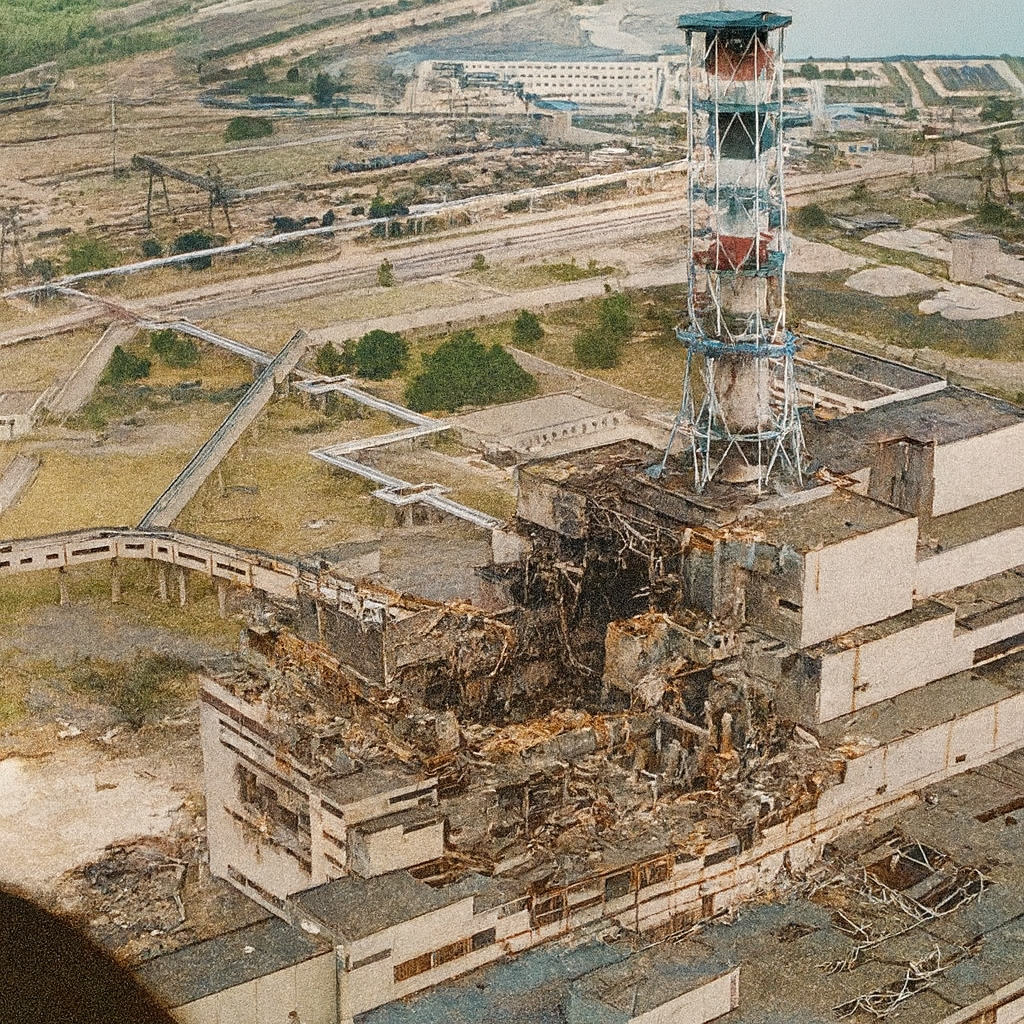
However, every day we live, we breathe a different and more dangerous ghost. The invisible pollution from fossil fuels. This adversary doesn’t appear on a skyline, but it goes straight to our lungs, fills our atmosphere, and quietly contributes to millions of early deaths annually. We have been taught to fear the dramatic, singular disaster. But in focusing on the specter of nuclear accident, How many stories of silent suffering from coal and oil are we missing
The True Cost of Energy
To face our fears, we must first lay down the fact and numbers we have, and analyze them. What happened at Chernobyl in was an extreme human and environmental tragedy. Direct deaths from the incident are acknowledged at around 30, with around 6,000 thyroid cancer cases linked directly to radiation exposure in the years after the accident. Also the death toll from Fukushima were over 2,300 lives were lost. We have to know that these are not just statistics, they are lives having family and people that they care about, and since then we started to demand more careful safety standards to prevent this from happening in the future.
However, when we count the death rates per unit of energy produced, a different picture emerges. Fossil fuels are consistently the most dangerous energy sources on earth. We can see clearly based on our world in data, comparing the estimated death rates from accidents and air pollution per terawatt per hour (TWh) of electricity generated. Also, it is worth mentioning that the annual consumption of about 150,000 people just in the EU.
| Energy Source | Estimated Deaths per TWh (from air pollution & accidents) |
| Coal | 24.6 |
| Oil | 18.4 |
| Gas | 2.8 |
| Hydropower | 1.3 |
| Wind | 0.04 |
| Nuclear | 0.03 |
| Solar | 0.02 |
Data synthesis from UNSCEAR and scientific publications, as presented by Our World in Data (Markandya & Wilkinson, 2007; UNSCEAR, 2008).
The math might be shocking as most people perceive nuclear power as fetal, but in reality nuclear energy causes 99.8% fewer deaths per TWh compared to coal(IPCC AR6, 2022). This isn’t to minimize the dark past of nuclear accidents, but to see them in the right order. One key element people tend to forget is that the technology has not stopped still decades ago. Modern reactor as Gen III+ reactors are engineered with passive safety systems that rely on natural forces like gravity and heat convection to cool the reactor in an emergency, and making an accident such as Chernobyl nowadays is physically impossible (IAEA, 2022).
Perception vs Reality
Sometimes we see how a single story shapes our world, but why does the perception of nuclear risk remain so high compared to how it should be? The answer lies in the psychology of risk and the power of media and how it communicate it with people. Using drama with singular events like nuclear accidents such as (Chernobyl series 2019) are easily visualized and remembered. When you shift to the deaths from fossil fuel pollution can be in different shapes and forms, slow moving, and statistically abstract, making them far less apealing to appear with media.
The media plays a big role in this shaping not just what we think about, but how we think about it. Islam at 2024 gets in his research on climate diplomacy, “Media plays a crucial role in climate diplomacy and public understanding” that media has too many complex issues when it comes to covering climate. When coverage of energy is dominated by disaster imagery, it fuels public fear and can end up the debate needed for effective climate policy change. The invisible ghost shows daily toll of burning fossil fuels rarely gets the same prime time coverage as a nuclear incident, creating a dangerous perception gap with the public.
We can visualize this inequality in public attention with the following conceptual graph based on analysis of media studies:
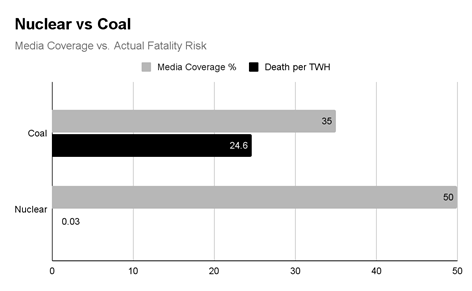
Media framing studies (e.g., Stephens et al., 2009).
This graph shows the reversed relationship between media coverage and actual health impact by the death toll. Nuclear energy often receives intense media focus despite its low fatality rate, while coal’s high fatality rate receives relatively less sustained attention.
Nuclear still to this day leaves us with a waste issue, but it is a manageable problem, not an unsolvable one.
The image of glowing green barrels often dominates the discussions about nuclear waste. The reality is less dramatic but more manageable. All of the high level nuclear waste produced by the U.S.A nuclear industry over decades could fit on a single football field stacked less than 10 yards high. When compared to the vast quantities of coal ash and other toxic waste released directly into the air, rain, and land by fossil fuels, the nuclear controlled waste issue versus uncontrolled waste.
We are living in 2025, so new innovation and new ideas continues in this area. Small modular reactors (SMRs) are being designed to produce less waste, and some actually of next generation designs can even use existing nuclear waste as fuel. For the long term we can use disposal, deep geological storages that must be stable, multi barrier level systems carved deep into ancient rock formations. We have represented a scientific solution being implemented in countries like Finland and Sweden. The challenge is less technical and more one of public trust and political will.
The solution
Trust can be the key solution to collaboration. The public trust is less that what we need to make the change, because of historical cover ups and complex technology, are the nuclear energy biggest obstacle. Overcoming it requires a new model focus on transparency and community. Environmental security is linked to public trust and fair policies.
We can build this trust through three steps:
- First, Transparency: for example we could have real time public dashboards displaying radiation levels around nuclear facilities, making safety data accessible to all.
- Second, Community collaboration: as working with local communities from the very beginning in the planning and benefits sharing of energy projects, ensuring they are partners, not hostages, to development.
- Third, know and honor the past: by honoring the victims of Chernobyl and Fukushima and all victims from nuclear accidents not by rejecting the technology, but by learning from these tragedies to not have more victims in the future, and it should be while addressing the present danger of climate change.
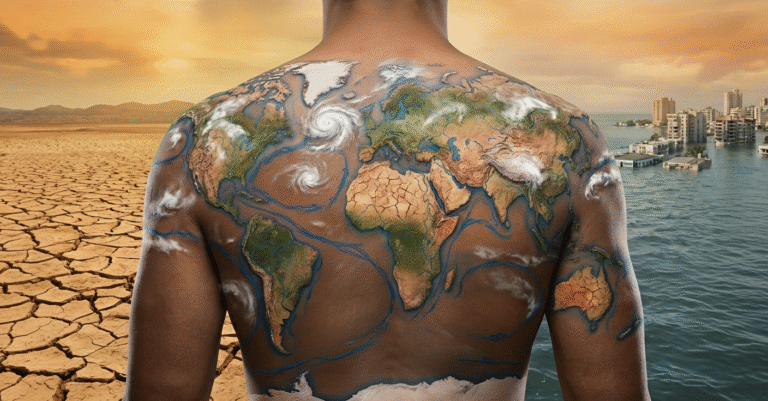
Chernobyl, Fukushima, and other accidents ghosts deserve our remembrance and respect, But the big ghost of 3 degree warming caused by fossil fuel is melting the ice, raising oceans, and escalate climate disasters is already. Do not get it wrong, Nuclear isn’t perfect, No energy source is. But rejecting it outright, based on a fear and making worst by wrong understanding, will keep the reliance on fossil fuels. The path forward isn’t about choosing between perfect and imperfect solutions, but about choosing the future with the most hope and the least harm.



 Jonathan Tarnue Payne
 Precious Douglas Maulana
  Eslam Mohamed Elsheikh
 Lutfi Nurachma
 David R.K Brown
 Asef Jafari
Been using Zalopay to top up my Fun88 account thanks to the advice from fun88forum.com. Super convenient! Try it yourself at: nạp tiền fun88 zalopay
Mxwin27 is worth a look. There’s plenty to do to keep me busy! I like that the site is well set up. I’m hoping to have a nice win soon. mxwin27
Seriously enjoying pokerkingvn8! The tables are always active and I’ve already seen some serious action. Def worth a look if you are looking for poker! Check out pokerkingvn8!