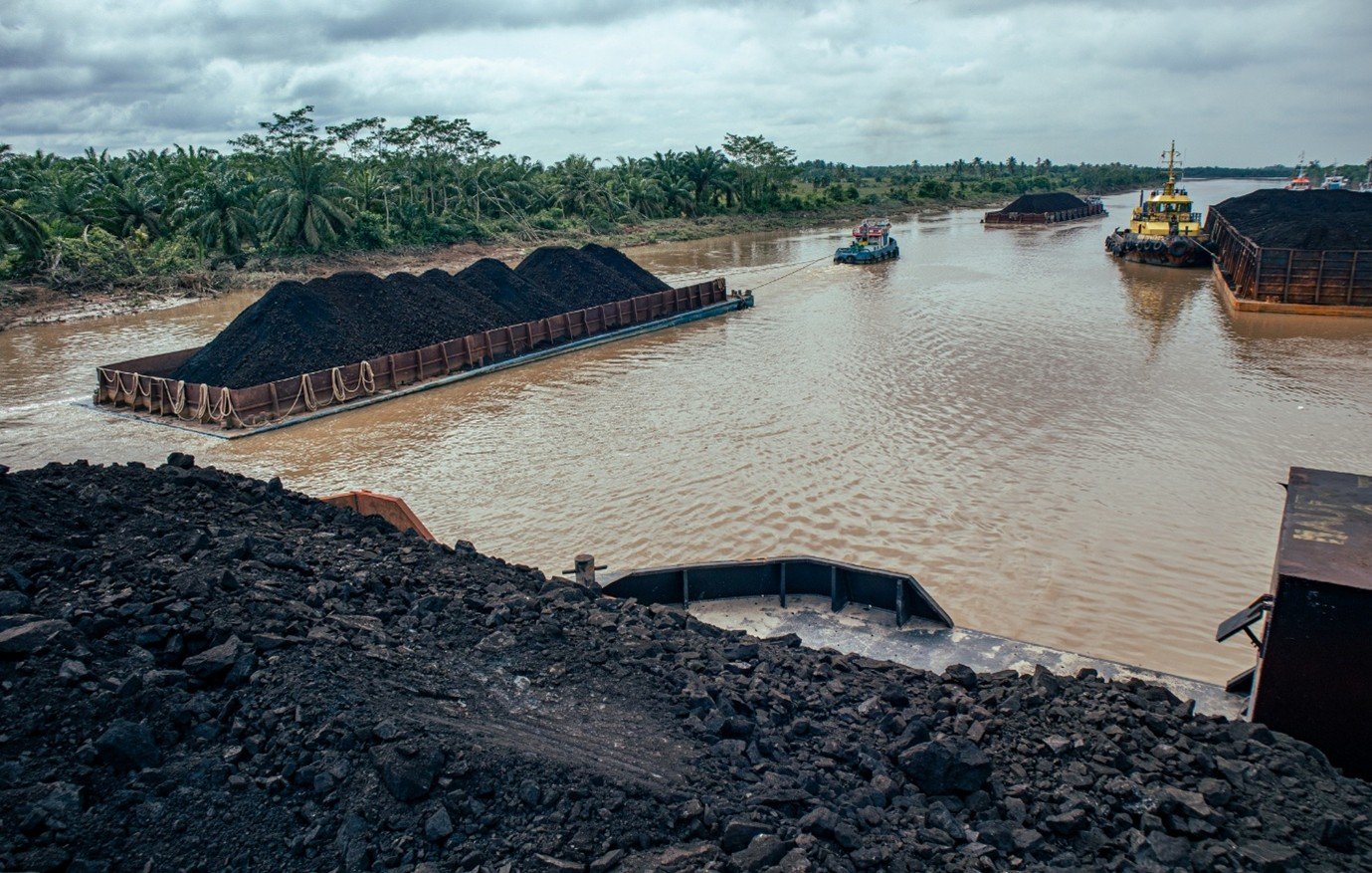

Imagine the thoughts and lives of people working daily in the dust filled workshops of East Kalimantan, where coal mines not only dominate the landscape but also fuel 80 percent of the local economy. Coal has become a part of their lives for decades; elders recount histories in the pits while for the youths it’s their daily hustle. What happens to them when the coal suddenly runs out? What happens to their livelihoods when it no longer sustains them? These are cries echoing from Sumatra’s pits to Jakarta’s corridors of power. Indonesia’s Just Energy Transition Partnership (JETP), with its flashy $20 billion pledge, promised to answer that by swapping coal for renewables while shielding workers and communities. But there is a stark reality: This transition won’t deliver on its promise of true justice. It’s more than likely to become a technocratic swap that involves cleaner megawatts for dirtier lives because politics, economics, and policy gaps are stacked against the people it claims to protect.
The plot must not be twisted; the core of Indonesia’s transition to renewable energy is noble. Launched at a time when the world needs bold actions in its fight against humanity’s primary enemy (climate change), JETP aims to step up to the task of phasing out coal, boosting renewables, and sparking green jobs in the biggest economy of Southeast Asia. Yet, as unpacked in detailed analyses like the Indonesia at Melbourne piece on the country’s Just Energy Transition Roadmap, the plan’s fine print reveals a roadmap riddled with potholes. It’s not just about installing solar panels; it’s a battle against “carbon lock-in“ which is a self-perpetuating fossil fuel fortress built by elites, debt, and indifference. In the following post, I will break down the reasons this justice dream will fizzle.
The Market Reform Trap: A Blueprint That Misreads the Room
At the heart of the JETP’s strategy lies a Comprehensive Investment and Policy Plan (CIPP) that is, in theory, logical. It correctly identifies that to meet its staggering goal of increasing renewable energy from 13% to 44% of the grid by 2030, massive private investment is non-negotiable. To attract this capital, the plan prescribes a heavy dose of market-oriented medicine. The CIPP pushes for three painful, interconnected reforms:
Scrapping the domestic coal price cap, which artificially keeps power generation cheap.
Overhauling the state utility PLN’s model,forcing it to run like a commercial business and stop absorbing losses to keep consumer tariffs low.
Making PLN shoulder more riskto make renewable projects “bankable” for private developers, even handling complex steps like land acquisition upfront.
This makes a lot of sense in black and white (on paper). Delete the government’s subsidy on coal, let fossil fuels get expensive naturally, and then households and industries will be pushed toward solar and wind because these renewable energies would be cheaper and a smarter investment choice. The market will sort it out. But this blueprint is a classic case of prescribing an economic solution to a deeply political problem. It fundamentally misreads the Indonesian reality. The entire structure of Indonesia’s energy sector, which includes the coal price cap, the fixed tariffs, and PLN’s role as a loss-absorbing public service, isn’t an accident. It’s a deliberate political choice to deliver affordable, stable electricity and shield the public from volatile global commodity markets. After the 2022 protests against cutting fuel subsidies, the government knows all too well the political firestorm that awaits if electricity prices surge. Asking the Indonesian state therefore to dismantle this system in just seven years, forcing consumers bear the upfront cost of a transition while it absorbs private developers’ risks, is not just ambitious. It’s a recipe for political suicide that the government is extremely unlikely to follow. The plan was written to attract Wall Street and Tokyo, but it fails to win over the voters and powerbrokers of Jakarta.
Social Safety Nets: An Afterthought in a Technocratic Plan

While the CIPP obsesses over megawatts and bankability, the “just” half of the Just Energy Transition gets lost in the spreadsheets. The analysis of the roadmap confirms a glaring omission: the plan prioritizes economic and engineering targets over concrete social ones.
The human cost is treated as a secondary concern. For the nearly half of power plant workers in informal or precarious jobs, what safety net exists? The plan’s market-driven approach could clearly wipe out their means of survival, yet there are no specific programs for retraining them in relation to the renewable energy sector, income support, or local economic diversification in places like East Kalimantan. Indonesia’s Ministry of Manpower is notably excluded from the core planning tables, giving the impression that labour is a box to be ticked and not a foundation to be built upon or at least considered.
Furthermore, the push for rapid renewable deployment, with PLN urged to secure land for big projects, opens a new front of injustice. Indigenous and local communities, often without formal land titles, risk being labelled “illegal occupants” in the path of a new solar farm. The very communities that have borne the brunt of extractive coal mining could see history repeat itself with “green” extraction, displaced without consent or fair compensation. A transition that simply swaps one form of large-scale energy extraction for another, without centring the rights and futures of the people on the ground, is not just; rather, it’s a perpetuation of an old, unequal model in a new colour.
Financing Fiasco: The $96 Billion Mirage
While there is no denying that Indonesia JETP’s $20 billion figure is dazzling headline, it obscures a completely terrifying math problem. In itself, the CIPP roadmap estimates that Indonesia will needs $96 billion for renewables and grid upgrades by 2030. The fund coming from the JETP are a catalyst, but the overwhelming majority of the funds must come from the private sector (private investors).
This is where the plan’s political fragility creates a financial deadlock. Private investors are being asked to pour billions into a market that is, by design, uncompetitive and politically managed. They are being told to trust that a government, which has for decades prioritized price stability over market signals, will now decisively implement reforms that will hurt its own citizens’ pocketbooks. They are being asked to believe that PLN, a monolithic state entity, can suddenly transform into a nimble, risk-taking partner.
Investors see the math, and they see the politics, and the two don’t add up. As the analysis notes, unless PLN and the government make these politically unpalatable reforms, projects will remain effectively “unbankable.” The capital will not flow. The result? A small number of pilot projects might surely get built, but the transformation that’s supposed to be fully systematic will definitely stall. The $20 billion (which would in fact be given at fraction) will be a drop in a $96 billion ocean. Consequently, the transition will fail to reach the speed and scale that are required of it, leaving the coal-dependent economy and its workers in a prolonged and painful limbo.
A Crossroads of Credibility
To conclude, Indonesia’s JETP stands at a crossroads, offering a cautionary tale for the entire Global South. It demonstrates with stark clarity that you cannot finance your way out of a political problem. The roadmap to Indonesia’s JETP advances an approach that is technically coherent as a market transition; politically, however, it is tone-deaf and socially hollow.
Without the courageous political will to consider entrenched interests and communicate the very hard truths about the costs of this transition to the public, both market reforms and a genuine transition will remain confined to paper. Without embedding considering justice in the form of a robust, funded, and legally binding social protections into the very core of the plan, the transition will definitely breed inequality and resistance. Finally, without a finance model that acknowledges the political realities of a developing economy, the money will not materialize.
The workers in East Kalimantan are right to be fearful. The current plan is not built for them. It is built for grids and investors. Until the architects of this transition which includes both in Indonesia and in the partner nations of the Global North face this truth and redesign a plan that places justice and political reality at its core, Indonesia’s just energy transition will remain merely an energy transition and the people it was meant to lift up will be left in the dust.


 Jonathan Tarnue Payne
 Precious Douglas Maulana
 Eslam Mohamed Elsheikh
 Lutfi Nurachma
  David R.K Brown
 Asef Jafari
Alright alright, vn88.com dj is a little different, right? More than just games, they have some cool live stuff too. If you’re into that, give it a try. Solid enough. vn88.com dj
Pinas777slotloginregister, my go-to! Login and register is super easy, plus the slots are fire! Get in on it! pinas777slotloginregister.
Heard some buzz about shbet.80. Guess it’s worth checking out. Someone told me they had a decent win there last week so who knows maybe I will too. shbet.80
18winapp is the real deal; I play on the app and its awesome. Easy to use app, plenty of games and it is safe. You can always get customer service when needed. 18winapp
99bon is a top resource, they have all the best and newest games. Very easy to navigate the site. I highly recommend them. 99bon
Been playing on cpc6 for a good bit now. Good selection of games, fast withdrawals and overall good experience. cpc6
Alright, jaya777vip, let’s see what you’ve got! Hoping for some big wins and a hassle-free experience. Show me the VIP treatment, baby! jaya777vip
Okay, abcrummy, intrigued by the name… Let’s see if the games are just as interesting! Hoping for some unique options and good odds. Worth a shot! abcrummy
Alright bajivip999, gotta check out if that VIP life is real!. A fast interface and good games that could mean big money. Let’s go and win some. bajivip999