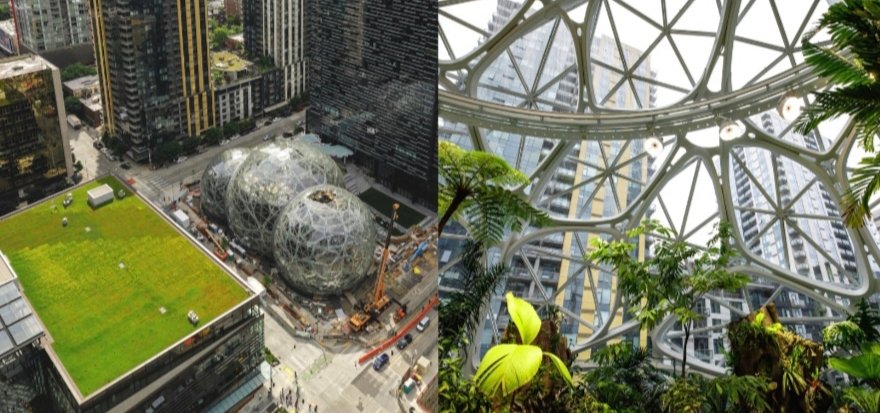

Across the Global South, rapid development brings economic benefits and continues to drive forest depletion. The Amazon, the Congo Basin, and Southeast Asia’s primary tropical forests are still under pressure from agricultural, infrastructure, and urban development. Global Forest Watch lists recent data indicating a continued pattern of forest loss across the tropical zones, with Southeast Asia showing recent trends of further increases in the loss of tree cover over the past few years. (https://www.globalforestwatch.org/dashboards/global). As shown in Fig. 1, these patterns are spatially concentrated in key tropical regions.
In Brazil, official monitoring by the national space agency (INPE), as reported by Mongabay, indicates that Amazon deforestation declined by 11% in 2025 to its lowest level in over a decade. (https://news.mongabay.com/2025/12/the-year-in-rainforests-2025-deforestation-fell-the-risks-did-not/). In contrast, Indonesia experienced a drastic increase in forest loss of 66% in a year, the highest in eight years. These hybrid signals are still a threat to climate and biodiversity.
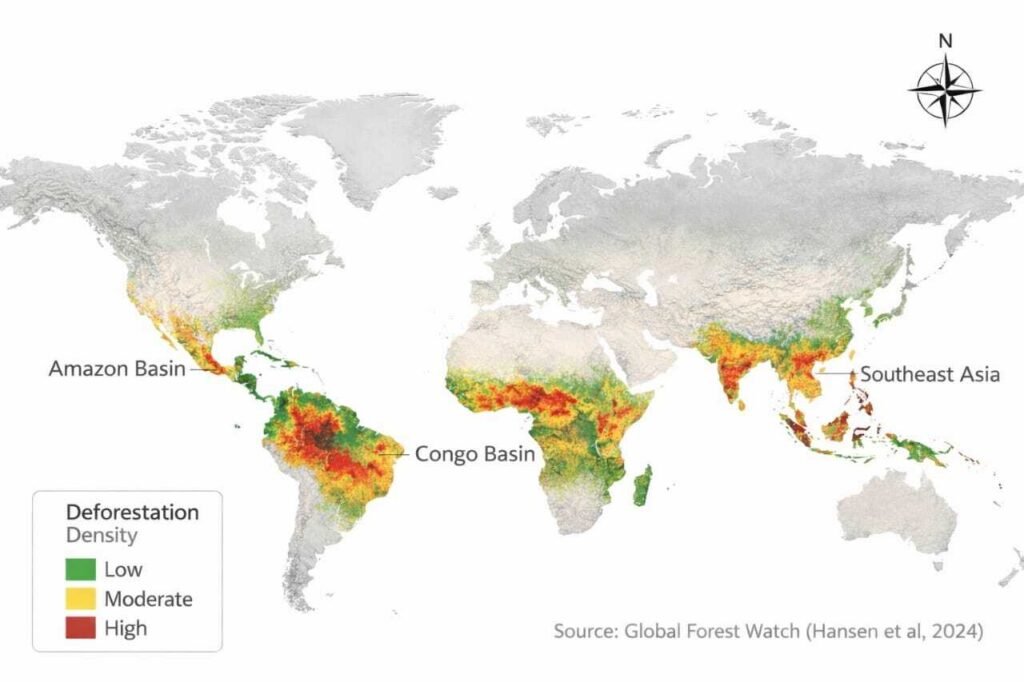
Fig. 1: Global deforestation hotspots map; showing concentration in the Amazon, Congo Basin, and Southeast Asia
Is there a way in which developing countries can attain sustainable growth without compromising the ecosystems that would sustain them in the long run? The answer increasingly lies in moving from replacing nature to building with nature.
False Trade-off: Forests vs. Development
Over the decades, numerous models of development transformed forests into agricultural land or urban communities in search of easy profits. However, this method always underestimates long-term cost consequences of this decision. Forests play a vital role in climate regulation: by storing carbon, stabilizing rainfall distribution, and preserving biodiversity, which is explained in the IPCC 2022: Impacts, Adaptation and Vulnerability. (https:/www.ipcc.ch/report/ar6/wg2)
When the forests are removed, the carbon stored in them is release into the atmosphere, which contribute about 10-12% of the global anthropogenic greenhouse gases (IPCC, 2022). This increases susceptibility to floods, droughts, and food insecurity as well.
In the case of climate vulnerable across countries in the Global South, the short-term economic benefits are capable of resulting to greater socioeconomic and environmental losses in the long run. Developing countries are under the pressure to save forests in international negotiations, but they often lack the financial strength and technology backings to find the balance between conservation and development, and this has been a subject of deliberation.
Building with Nature: From Concept to Practice
The Building with Nature approach integrates ecosystems in development as opposed to considering them as barriers which often lead to their removal. It is similar to Nature-based Solutions (NbS) which is defined by the International Union on conservation of nature as an action to protect, sustain and restore ecosystems to counter societal issues. (https://www.iucn.org/theme/nature-based-solutions)
Indonesia is a good example. In Central Java, on the part of Demak, hybrid engineering and mangrove restoration were used to address the problems of coastal erosion (Fig.2). EcoShape Building with Nature Indonesia project has effectively mitigated the flood risk, enhanced the sediment capture and the local livelihoods. (https://www.ecoshape.org/en/pilots/building-with-nature-indonesia/).
Numerous sustainable approaches are being adopted globally. Urban green infrastructure reduces heat stress and enhances air quality, whereas agroforestry enhances food security without destroying trees. The mangrove restoration helps in safeguarding coastlines and sequestration of Carbon. It has been proven that these methods can provide good economic paybacks, with benefit-cost ratios often varying between 2:1 to 10:1 depending on the context and implementation, as reported by the Global Commission on Adaptation. (https://gca.org/reports/adapt-now-a-global-call-for-leadership-on-climate-resilience/)
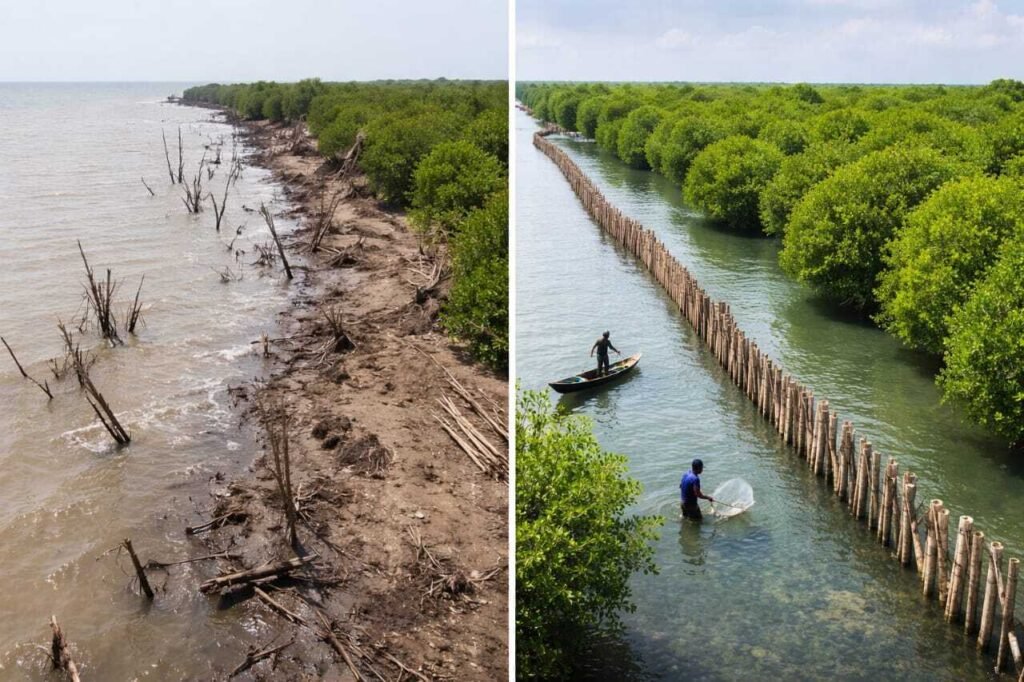
Fig.2: Before-and-after photos of mangrove restoration in Demak, Indonesia; illustrating reduced erosion and community benefits
Closing the Diplomacy Gap: Finance for Nature-Positive Growth
The NbS are underfunded despite the proven benefits. Developed countries met the $100 billion annual climate finance goal in 2022, according to the OECD. (https://www.oecd.org/climate-change/finance-usd-100-billion-goal/). Nonetheless, a limited proportion of global climate finance is allocated to nature-based solutions, a disparity highlighted by the Climate Policy Initiative (https://www.climatepolicyinitiative.org/).
This is indicative of more equity problems. Most developed countries have industrialized in a manner that relied on environmentally intensive pathway but are currently supporting conservation without offering significant support to the developing countries, this call for more effort at international climate negations just as fig. 3 illustrates a COP session highlighting finance discussions. The IPBES Global Assessment highlights the need to incorporate the Indigenous and local knowledge systems in the strategies of sustainability. (https://ipbes.net/global-assessment)
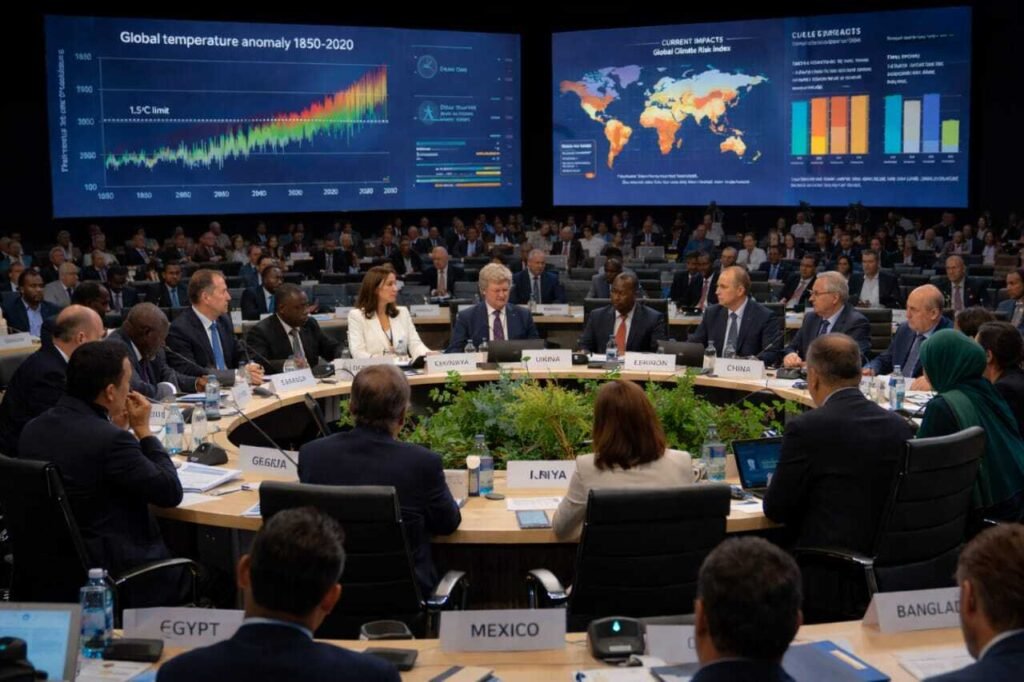
3: COP session highlighting finance discussions
Policy Priorities: Turning Ideas into Action
Governments across the Global South should:
- Integrate NbS into national development plans
- Invest in hybrid infrastructure combining nature and engineering
- Strengthen community land rights for sustainable forest management
These solutions must address governance challenges and counteract land-use pressures to scale effectively. In Southeast Asia, particularly in Indonesia, promoting mangrove and peatland restoration as well as green urban development offers a viable pathway to resilient and inclusive development.
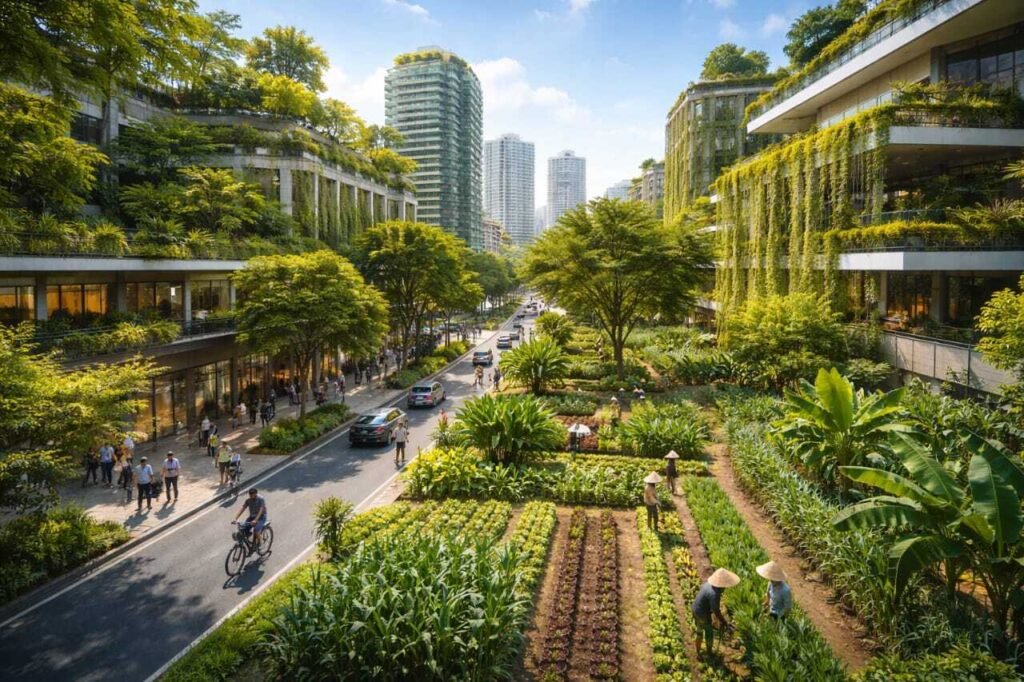
Fig. 4: Examples of urban green infrastructure
Rather than clearing forests to enable construction, agriculture, and economic activity, development can be pursued in ways that work in harmony with forest ecosystems, as illustrated in Figure 4. Such an approach enables the simultaneous achievement of forest conservation and socioeconomic development goals while maintaining a healthy environment and achieving SDGs goals.
Conclusion: Call to Action.
The old myth that development has to replace forests is not only dangerous, but more unsustainable. Tracing this line will put countries in high-emission, climate-vulnerable futures. Building with Nature offers a better idea: to regard forests as key resources to resilience and inclusive development.
Policy makers should incorporate Nature-based Solutions in national policies. Climate diplomats should demand fair funding and increased international collaboration. The Global South (including Indonesia) has a historic chance to be at the forefront of this transition – demonstrating that forests can be integrated to redefine sustainable development in the 21st century.
Key words: Deforestation, Climate diplomacy, Nature-based Solutions, Climate finance, Sustainable development



 Reston Dennis Juah
 Noor Ul Ain
 Hassan Barrie
 Hoby Nasandratra Andriamiandrisoa
Sảnh chơi bắn cá tại slot365 vip tuy ra mắt đã lâu nhưng sức hút mang lại trong cộng đồng cược thủ chưa từng hạ nhiệt. Thành viên tham gia được hóa thân thành những ngư thủ thực thụ, chinh phục đa dạng loài sinh vật biển với nhiều mức độ khác nhau. Anh em cần chuẩn bị các dụng cụ hỗ trợ tương ứng, vũ khí hiện đại để có thể săn về cho mình những boss khủng, cơ hội kiếm số tiền lớn nhé. TONY05-01