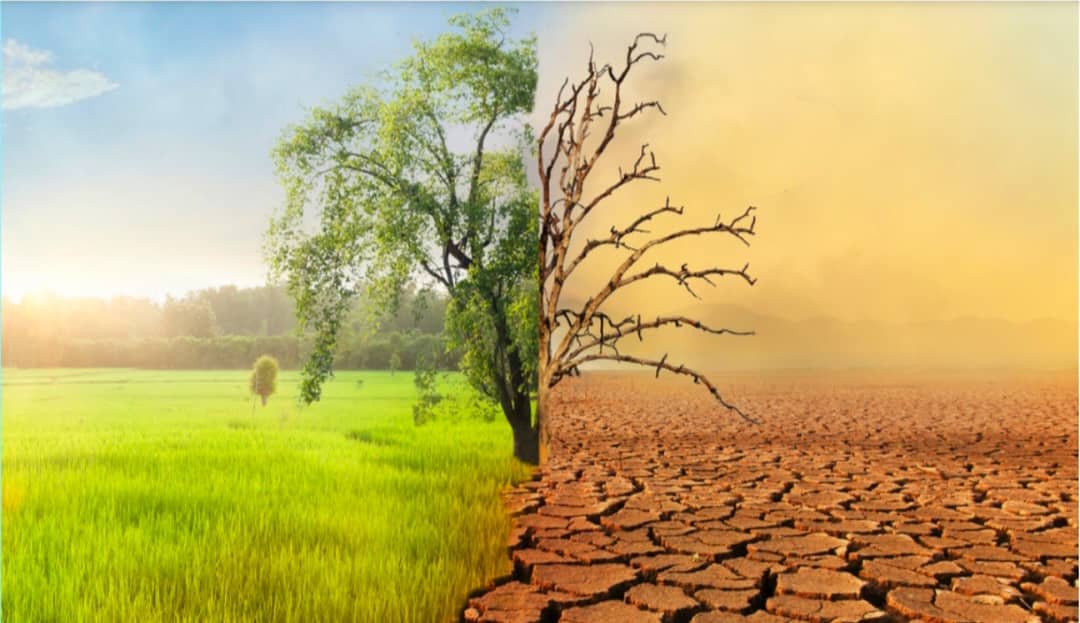

If climate finance is intended to protect vulnerable populations through adaptation, why does it continue to prioritize mitigation projects that largely benefit investors?
Amidst growing global climate impacts, climate finance remains disproportionately focused on mitigation rather than adaptation. The majority of funding flows towards investments in renewable energy, low-carbon technologies, and energy efficiency due to their scalability, quantifiable results, and potential of attracting extensive interest on the part of the private capital. Adaptation, which is key to defending the vulnerable population, livelihood security and long-term resilience, is systematically underfunded. This disproportion creates further suspicion of climate negotiations especially between the Global North and Global South. The gap is vividly depicted in recent data. In 2023, the international public adaptation finance to developing countries amounted to only to US$26 billion, despite the fact that annual adaptation needs in developing countries are expected to reach US$310–365 billion by 2035, 12-14 times the current flows, respectively. (https://www.unep.org/resources/adaptation-gap-report-2025)
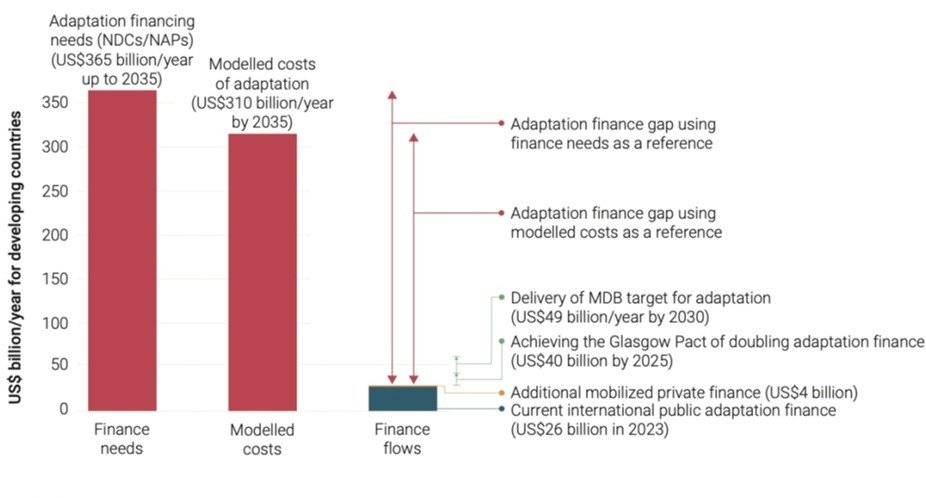
Fig. 1: International public adaptation finance flows, modelled costs, and adaptation financing needs in the developing countries (US$ billion/year in constant 2023 prices).
Source: UNEP Adaptation Gap Report 2025
In 2023, total climate finance in the world reached an all-time high of US 1.9 trillion but mitigation US 1,780 billion (a significant portion of the total) and adaptation US 65 billion (which is probably an underestimate due to continuing tracking challenges). (https://www.climatepolicyinitiative.org/publication/global-landscape-of-climate-finance-2025/)
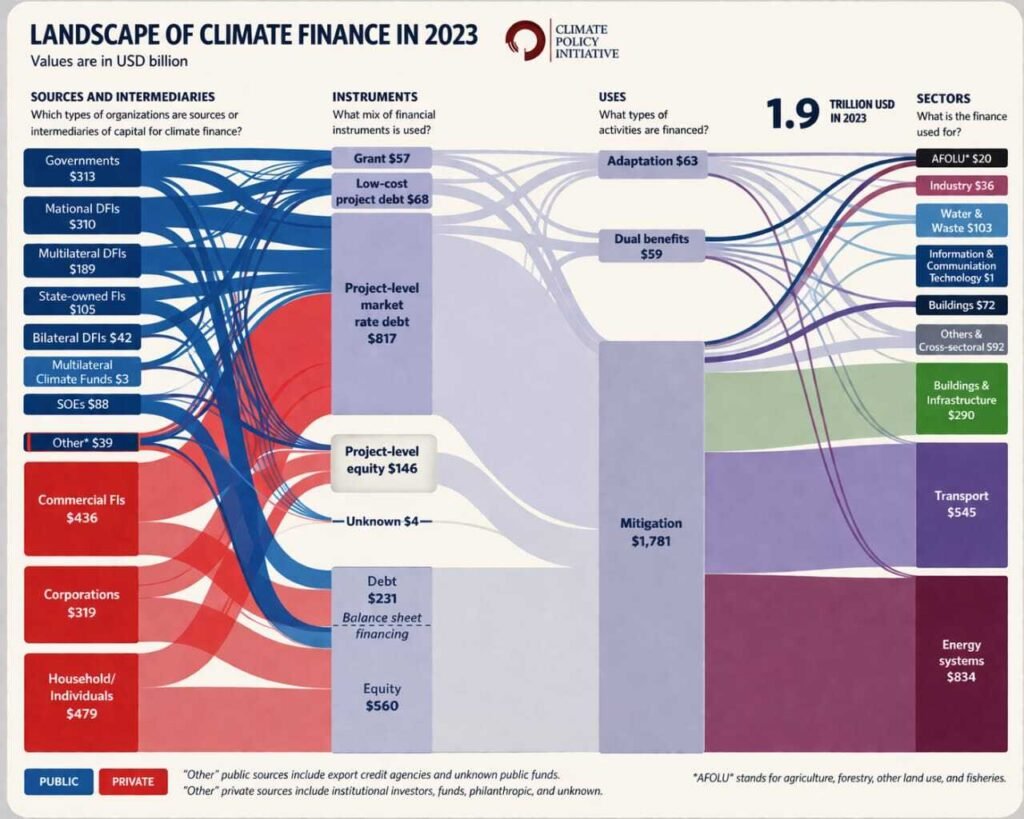
Fig. 2: 2023 landscape of global climate finance, where the majority of the money is spent on mitigation (US$1,780 billion) than on adaptation (US$65 billion).
Source: Climate Policy Initiative
Why Mitigation Still makes the Splash
There are clear economic incentives and developed investment models in mitigation projects. The low-carbon infrastructure provides predictable returns based on the sale of electricity, the carbon credit and integration with the established markets. These features reduce perceived risk and allow mobilizing private capital at scale quickly. The adaptation options-flood mitigation, early warning, climate-resistant agriculture, and coastal defences commonly produce public goods with diffuse, long-term payoffs that are much more difficult to monetise or directly attribute to investors.
Despite the strong evidence that each dollar spent on adaptation could bring US 2-10 in economic, social and environmental returns, these returns may be realized over decades and are not easily recaptured by individual actors. This makes adaptation reliant on the constrained public and concessional finance, forming a vicious circle of underinvestment.
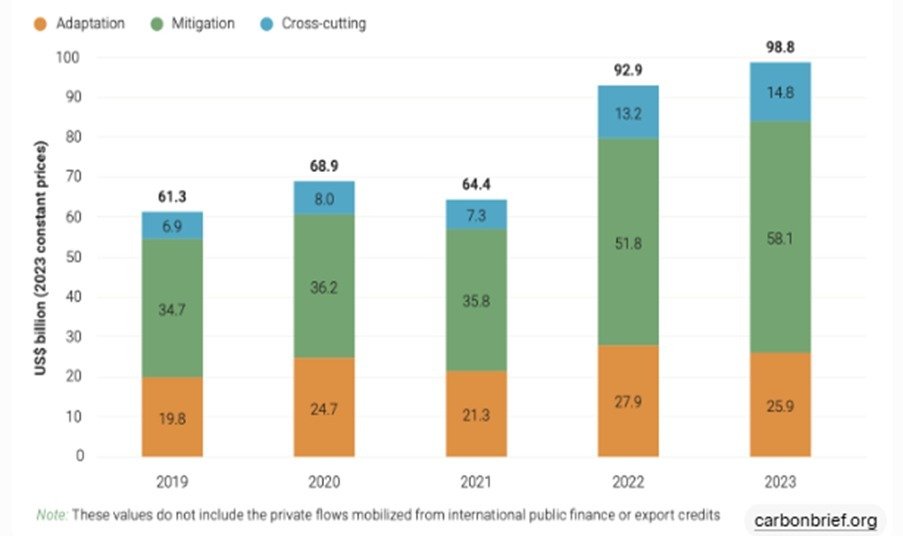
Fig. 3: International public climate finance commitments (2019-2023): adaptation continues to have a lower proportion across flows to developing countries.
Source: Climate Policy Initiative
Justice Dimension in Climate Diplomacy
This is not just a technical imbalance, but it is a great injustice. Climate impacts are felt by the developing countries that have contributed the least in the historical emission of greenhouse gases. Africa, especially, is one of the most vulnerable areas. (https://www.ipcc.ch/report/ar6/wg2/).
The Paris Agreement (https://unfccc.int/process-and-meetings/the-paris-agreement) and the Glasgow Climate Pact (https://unfccc.int/process-and-meetings/the-paris-agreement/the-glasgow-climate-pact) specifically request an equal distribution of finance between mitigation and adaptation, preferably at a 50:50 point. As a matter of fact, adaptation is given much less, which undermines the trust in multilateral processes and weakens the principle of common but differentiated responsibilities. Sealing this divide is not only crucial to its effectiveness but also to rebuilding credibility and fairness in global climate governance.
The Nigerian Case: Acute vulnerability is facing a lack of support
Nigeria is an example of human and developmental costs of this imbalance. The nation is experiencing compounding risks: destructive floods in the south, desertification and drought in the north, and a growing erosion and rise in sea level threatening mega cities such as Lagos. The 2022 floods by themselves displaced millions, devastated agricultural land, and caused colossal economic damages.
Irrespective of these facts, adaptation efforts are finding it difficult to get funding as compared to mitigation efforts. In Nigeria, the National Adaptation Plan and new Nationally Determined Contributions present resilience-enhancing measures that are ambitious but limited by the lack of funds (https://www.worldbank.org/en/topic/energy).
The Nigeria Erosion and Watershed Management Project (NEWMAP) has proven to be successful, with its ability to restore sites of gullies, building erosion-control structures, and the direct impact on more than 12 million individuals, but this is under constant funding shortages.
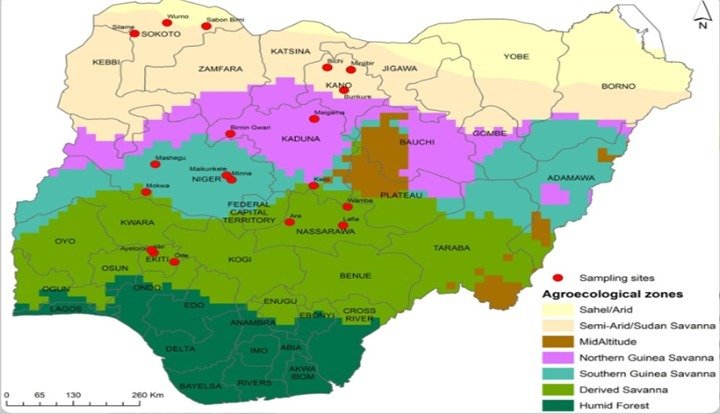
Fig. 4: Nigeria map with the main climate risks (flooding, desertification, coastal erosion) pointed out.
Source: World Bank Climate Risk Profile
Pathway to balancing Adaptation Finance:
Rebalancing must be an intentional, concerted effort on many fronts:
- Increase grant-based and highly concessional finance especially allocated to adaptation particularly in least-developed and highly vulnerable countries.
- Create bankable adaptation pipeline using blended finance mechanisms that de-risk projects and draw in private capital without reducing equity.
- Empower evidence and epistemic communities through investing in strong, context-specific data on the cost of adaptation, benefits and effectiveness to develop investor trust.
- Increase direct access to climate funds by national and sub-national actors, eliminating the use of middlemen and enhancing responsiveness and timeliness of assistance.
- Integrate high goals of adaptation, measured and specific in the New Collective Quantified Goal (NCQG) on climate finance, with well-defined accountability mechanisms and regular reviews.
These steps are not a choice; they are preconditions to a plausible, fair climate action that is responsive to the factors, as well as the effects, of the crisis.
Conclusion
The persistent bias toward mitigation continues to leave adaptation in the shadows. For countries like Nigeria, this imbalance threatens livelihoods, food security, and long-term development.
Call to Action
Rebalancing climate finance is both a policy necessity and a moral imperative. Governments, multilateral institutions, and investors must elevate adaptation as a central pillar of climate diplomacy.
Policymakers must commit to measurable adaptation targets, researchers must generate actionable evidence, and civil society must hold actors accountable. Without urgent action, the adaptation gap will continue to widen; undermining both global resilience and climate justice.
Key words: Climate finance, Mitigation, Adaptation, Climate diplomacy, Climate justice



 Reston Dennis Juah
 Noor Ul Ain
 Hassan Barrie
 Hoby Nasandratra Andriamiandrisoa
+ There are no comments
Add yours