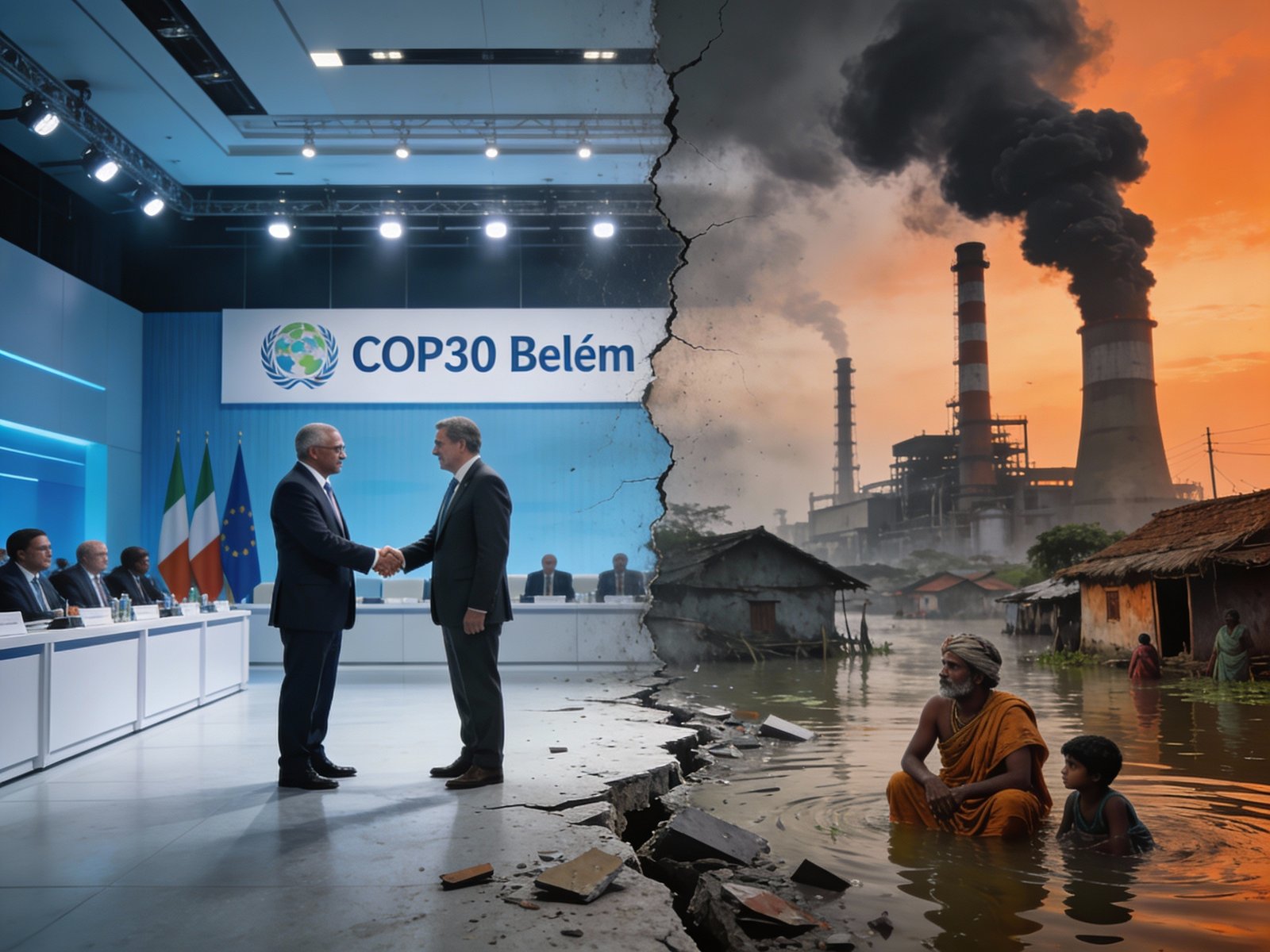

A Critical Anatomy of COP30 and India’s Climate Paradox: From the Amazon to the Industrial Heartland, Why the “Global Mutirão” Failed to Bridge the Gap Between Diplomacy and Reality.
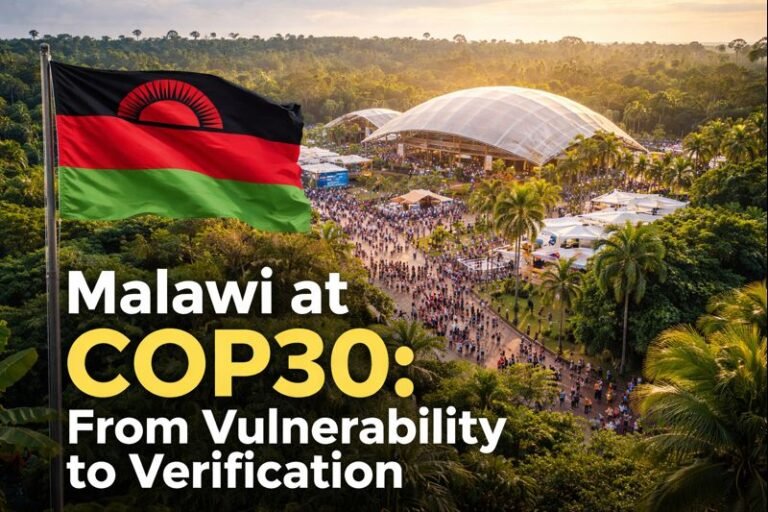
The 30th United Nations Climate Change Conference (COP30), which held in the lush gateway of the Amazon Belém, Brazil from 10-22 November 2025, was actually the “Forest COP”. It concluded with the adoption of the “Belém Package”, a set of 29 decisions framed around the Brazilian concept of “Global Mutirão”, a term invoking collective, communal mobilization against a shared threat. The aim was to shift the climate governance agenda from the desk to the ground and impact pattern in society.
Yet, once the delegates left, it was notably silent. There is a great disparity between the discourse and promise of political commitments, especially for vulnerable countries and communities who cannot afford to wait for “2035 roadmaps”. Belém has delivered diplomatic incrementalism when the world demands radical change. Such discordance is not new.
The 30th United Nations Climate Change Conference (COP30) scheduled to take place from 10 to 22 November 2025 in the lush gateway of the Amazon Belém, Brazil is being touted as the “Forest COP”. It was concluded by the adoption of the so-called Belem Package that was composed of 29 decisions arranged on the basis of Brazilian notion of Global Mutirao a term that means collective, communal mobilization against a common threat. The agenda was straightforward to shift climate governance beyond the policy-making sphere into the sphere of implementation.
There was silence as the delegates went. A severe disconnect exists between what is said by the political world and what is actually pledged, especially in the third world and those communities that are vulnerable and cannot afford to wait to see the roadmaps of 2035. A mix of diplomatic incrementalism in a world that is insisting on radical change is what Belem delivered.
Achievements: Incremental Progress in Contested Territories
It would be cynical to completely rule out COP30; the conference did produce three major breakthroughs worth being taken seriously, and the first and most important one is that it marks a change in the person who is driving the discourse.
1. The Adaptation Finance Breakthrough
To begin with, the conference reached the consensus to triple the amount of adaptation financing to 120 billion per year by 2035. This is a solution to the much needed financing gap that has been screaming decades by developing countries. It is a significant recognition that mitigation (having stopped the emissions) is not sufficient anymore, we have to compensate to endure the damage that is already fixed.
2. Flipping the Economics of Forests (TFFF)
Moreover, The Tropical Forests Forever Facility (TFFF) with its $5.5 billion pledges came into the picture and transformed the economics of forest conservation. The protection of tropical forests is now designed to be economically viable and attractive than the destruction of the forests, the first time ever. In effect, 20% of these funding will be provided to the Indigenous Peoples and local communities. This is a historic movement: The Global South is no longer a recipient of aid, but it is building the financial architecture of its possessions.
3. Rights-Based Just Transition
Third, The Just Transition Mechanism includes the language of rights which has never been employed in COP. It strategically aims to protect workers and Indigenous Peoples and women and the youngsters in the course of energy shifts of energy systems. This is to prevent the occurrence of a scenario where the transition to green energy reproduces the colonial modes of exploiting fossil fuels.
In addition to the formal accords, the momentum of implementation could also be traced: the investments in clean energy grids were at least 1 trillion, the population was at least 400 million targeted to improve climate resilience, and 210 million hectares of land were dedicated to regenerative agriculture. The advocacy of the Joint Crediting Mechanism (JCM) expansion with Japan was particularly characteristic of India and was indicative of how the Global South was increasingly becoming more of an agency in the context of developing carbon governance mechanisms that would be inclusive of both climate action and development interests.
Critical Failures: Where Ambition Meets Political Reality
But on peeling the skin of the Belem Package, we discern the rot.
The Fossil Fuel Silence
The most blatant failure of COP30 diminishes all other successes: The conference failed to develop a binding international roadmap to the phasing-out of fossil fuels the key requirement to ensure warming is limited to 1.5degC. Despite President Lula’s personal advocacy and the formal demands of over 80 countries, a coalition of petro-states (including Saudi Arabia, Russia, and notably, India on this specific issue) successfully blocked fossil fuel language from the final binding text.
The post-hoc announcements of “non-binding roadmaps” by the COP President are merely symbolic gestures. They lack legal standing. Not only does this reflect a procedural failure, it constitutes a denial of the root cause of the crisis. We are trying to correct the damage without stopping the cause of it.
The Adaptation Gap: Too Little and indeed Too Late
The commitment to adaptation finance is historic but a systemic injustice. The deadline has been postponed by five years to the year 2035. This new timeline lets vulnerable nations down as they need will need support now as the impacts of climate are worsening rapidly and are worse than IPCC projections.
The Adaptation Finance Gap: Pledged vs. Required (Annual by 2035)
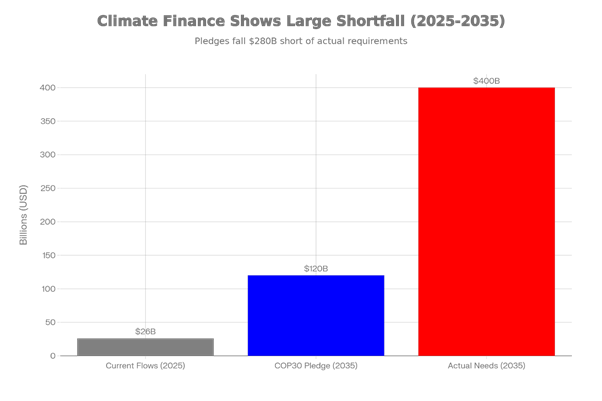
The figure above shows that the target of 120 billion dollars is a small percentage of what is really required. Furthermore, it is only developed nations that would stick to a track record that they have never had. The most vulnerable countries that do not emit more than 5% of the global emissions are dedicating the largest percentage of the national budget to climate catastrophes. This depicts structural inequity encoding to global climate governance.
Structural Issues: The Carbon Market Trap
The Article 6 rulings of COP30 about carbon markets tell of even greater ills. These mechanisms are officially not ready, but the urge to engage in the carbon credits as alternative to reduction of the emission still remains.
This forms sick incentives: rich countries will be able to buy cheap credits in developing countries instead of investing in their energy systems. This amounts to outsourcing the responsibility of climate to the Global South. This danger of over-committing to carbon sequestration projects by countries and not necessarily diminishing the actual reliance on fossil fuels in the country is evident in Indonesia aggressive marketing of carbon credits at COP30. The inadequate protection against land grabbing and violation of the rights of the Indigenous people in these markets is a time bomb. On the same note, technology transfer mechanisms were ineffective. As the Technology Implementation Programme progressed, the intellectual property hurdle remains in the way of developing countries to have access to low-cost renewable energy technologies. The Global North has technological monopolies and wants the South to decarbonize as quickly as possible with imported and costly solutions.
The Climate Paradox of India: NDCs vs. Industrial Reality
As we criticize the international scene, we should also look inwards to India. The international achievements mask major issues with the home implementation. Net Zero by 2070, 500 GW renewable by 2030, a 45 per cent cut in the carbon intensity of the economy are all part of the Panchamrit plan. The development is factual the National Solar Mission has transformed the energy industry and transport electrification is evident in the streets. However, there is one loophole that is essential: The Industrial Sector. The existing policies fail to commit the concept of net neutrality of heavy manufacturing greenhouse gas emissions. It is not a question of emissions, it is a question of holistic pollution. Industries are becoming unregulated and their waste are being improperly handled and contaminating the water and causing acid rain in the most least prepared areas to handle the pollution. It raises the awkward eco social problem- how can India accelerate renewable energy on the one hand, and permit industrial emissions to increase unregulated on the other hand? The answer reveals the rot in the organization: the industrial policies are usually grounded in the business promotion and not environmental responsibility. The greenwashing covers the actual spikes of emissions in reality and the interests of the corporations usually come between the protection of the environment and the interests. We are making our grid clean, but our air dirty.
The Source-Point Solution: An Eco-Social Innovation
As the climate innovation space in India is something I have been interested in analyzing over the years, I believe that we should shift away from costly, futuristic, and Direct Air Capture, to an immediate, realistic, Source-Point Carbon Capture.
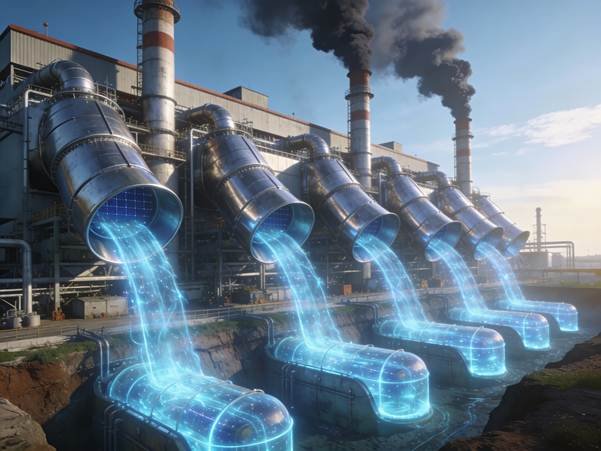
Significant advantages are linked to the direct capture of CO2 at the source of emission (factory smokestacks). Industries are able to alter the existing processes in such a way as to capture, transport and store the CO2 rather than adding the high cost of eliminating it at a later stage in the ambient air. This plan makes net-zero shifts cost-efficient when it comes to the manufacturing process and introduces direct responsibility.
Implementation Blueprint:
- Regulatory Mandate Systems: High-emitting industries must capture emissions at point of origin instead of just offsetting them.
- Infrastructure Funding: Involvement of the Government in CO2 transportation and storage systems.
- Domestic Tech Transfer: Ensuring Indian companies build these technologies indigenously rather than importing them.
- Anti-Greenwashing Monitoring Systems: A rigorous verification system to ensure captured carbon stays captured.
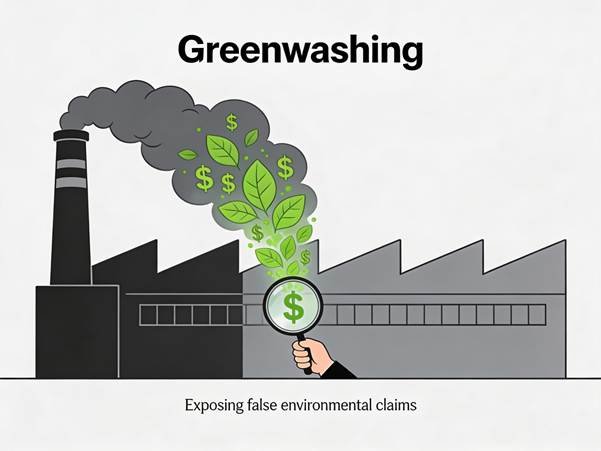
This is in line with the principles of eco-social innovation: it is economically viable (enabling the participation of businesses) and environmentally strict (preventing emissions on the level of their sources).
COP30 in Eco-Social Frameworks: Promising but Limiting
The COP30 represents the actual progress and frustrating limitations in the perspective of eco-social innovation. TFFF and Just Transition Mechanism are consistent with community-based solutions and the ecological integrity. Nonetheless, such innovations are inadequate without the agreements of the phase-out of fossil fuels and climate finance in the form of grants.
To combat global south and India, the way ahead needs five immediate steps:
- Insist on upgrading adaptation financing timelines closer than 2035.
- Enhance South-South cooperation (like the India-Japan JCM) to curb financial dependency on the North.
- Ensure Just Transition processes incorporate real worker and community leadership, not just on paper.
- Refuse carbon market systems that allow wealthy countries to offload their guilt.
- Apply binding environmental accountability to our own domestic industries through source-point capture.
Beyond the Conference Hall
COP30 was more of a reflection of our gains and our inability to do anything about it ecologically and socially. Tropical Forests Forever Facility and the Just Transition Mechanism are evidence of the fact that community-based, right-based solutions are finally gaining traction. However, these are only half-measures without an obligatory move away of fossil fuels and grant-based finance.
In the case of India and the Global South, this way forward is a two-pronged strategy:
- Global Advocacy: Pay Climate Not in 2035 but Now, and Abolish Carbon Markets as Loopholes of the Rich.
- Domestic Integrity: Do not allow the so-called development to be the excuse of industrial pollution. We have to adopt the Source-Point Carbon Capture and also make sure that our shift to renewables is met with strict environmental responsibility.
The COP30 event demonstrated to us the existence of climate justice beyond superior treaties, it is a re-writing of the economic logic of the world. COP30 had a change of climate governance: balancing on the border of formless commitments and hard frontiers of geopolitical interests. It took small steps in protecting the forests and rights but it could not survive the final test of 0iling out fossil fuels. The path of negotiation is becoming smaller as the effects of climate are exceeding the 1.5degC thresholds. In the case of India, this would represent the rejection of the hypocrisy of renewable development and no industrial accountability. It entails creating solutions that enhance our Eco-Social Values and not our GDP. Whether we have a secure and a catastrophic future will not be determined in a conference hall at Belem but in our own choices of our own industries, policies and communities today.ce hall in Belém but in our own industries, policy, and communities today.



 Jonathan Tarnue Payne
 Precious Douglas Maulana
 Eslam Mohamed Elsheikh
 Lutfi Nurachma
 David R.K Brown
 Asef Jafari
Alright gk88slot, it’s all about the slots, then? Gotta have some killer jackpots and a good variety. Don’t disappoint! Spin to win here: gk88slot
The phclublogin process is super simple, which is a huge plus for me. No messing around, just straight to the games! Login and play at phclublogin!
55winvip, that’s where the real money is at! It’s the VIP experience, try it. It’s the only place where it is! See you at 55winvip.
Its fantastic as your other content : D, regards for posting.
AsiaBet88 Slot Game… slots are my weakness! Hope they have some good ones with awesome bonuses! asiabet88slotgame
W88is… W88 is always reliable, right? Just double-checking before I jump in! w88is
Alright alright alright, sv388app is where it’s at for some serious action. Smooth gameplay and decent odds, what more can you ask for? Hit it up here: sv388app
Downloaded the 777bdapk. Easy to install. Games seem alright so far. Nothing too special but good for some quick game when you’re bored. 777bdapk is worth a try.
Nice page for Sprunki Phase 12. It gets to the point fast, the link works properly, and the overall presentation feels polished enough to revisit later.
This Sprunki Phase 100000 page is genuinely useful. It loads smoothly, the content matches the title, and the whole experience feels much better than most random mod pages.