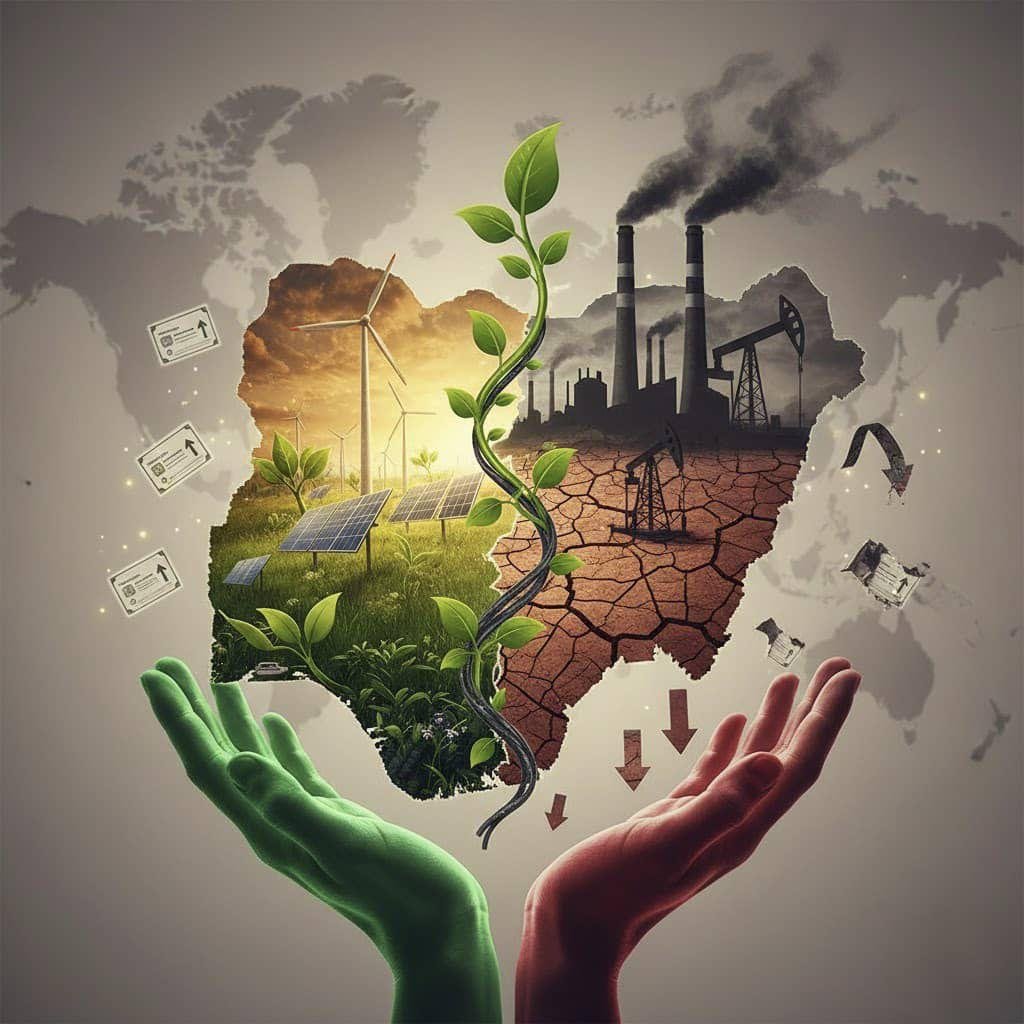

Can Nigeria’s Carbon-Credit Gamble Deliver Wins at Home and Abroad?
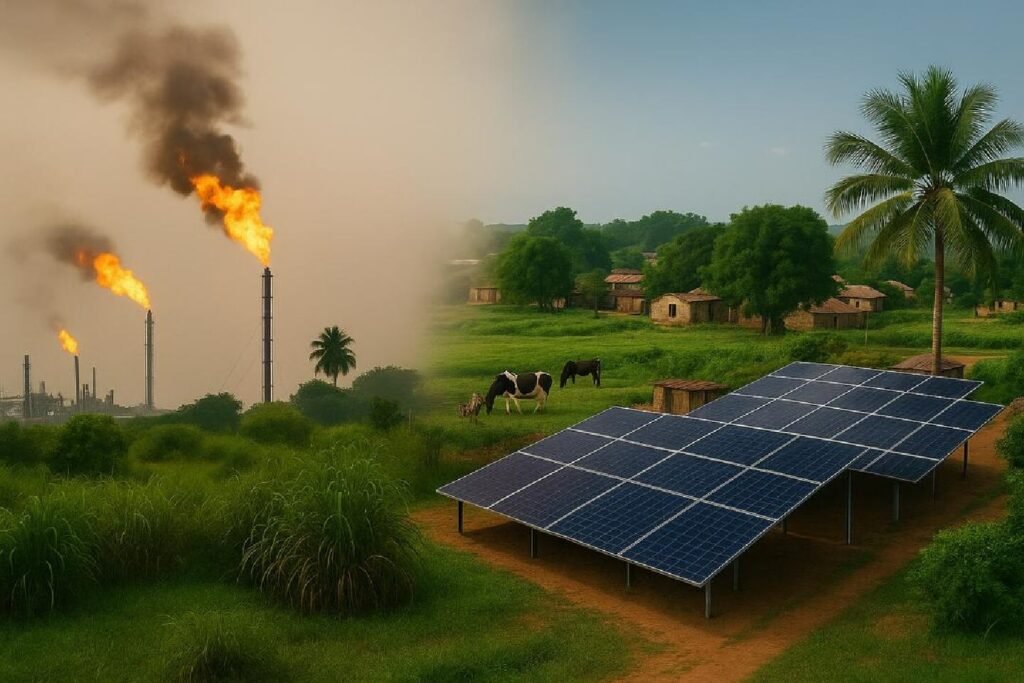
When a fisherman in Nigeria is questioned about climate change, he will say that climate diplomacy is a far-off thing until the tide in his compound rises higher with each passing year. Markets, mitigation are not what he talks of; it is roofs, nets and school fees, things that make a visible difference. But now his destiny is bound to a global experiment: Nigeria is trying to turn the avoided emissions into cash flows, sell verified climate benefits to the foreign markets and enhance clean cooking, forest protection, and domestic jobs.
These are carbon credits, certificates that show that a ton of C02 was prevented from entering the atmosphere and are supposed to make pollution pay its fare and is rapidly becoming a new currency of climate diplomacy. That is the hope and the risk that Nigeria is hoping to take.
The ambition is sweeping. Abuja is no longer on rhetoric but on building rules and institutions to be able to ride the climate finance wave. Under the Climate Change Act (2021), the National Council on Climate Change (NCCC) and the five-year carbon-budget system were established, becoming part of the federal decision-making process. By 2024–2025, the government advanced a Carbon Market Activation Plan, signaling intent to set up a national registry aligned with the integrity, using Carbon Market’s Core Carbon Principles (CCPs) to certify high-quality credits. The officials put the opportunity at a projected $2.5 billion by 2030.
The initiative is state policy, with the presidency recently approving a framework of a national carbon-market, operationalizing a climate fund, and returning the NCCC to the annual budget. There are also international commitments: 20 per cent below business-as-usual reduction by 2030 (45 per cent, with assistance)
The Integrity Challenge
Carbon markets rely on trust. Nigeria is taking a bet in a world that is debating on quality and integrity. Clean-cooking initiatives, which are the core of African credit provision, have provided health and time savings but have been questioned. A 2024 Nature Sustainability study reported that some cookstove credits were over-credited on average by roughly 9 times, prompting reforms by both Verra and Gold Standard.
Nigeria is attempting to interpret this mood. The Carbon Market Activation Policy has a transition to CCP-compatible standards and a national roadmap to 2030. The authorities are also increasing the restrictions on the fossil sector: from January 2025, the upstream oil and gas applicants will have to demonstrate low-carbon operations, methane management, and renewable integration to receive a license, connecting legacy energy to a net-zero pathway. By reinforcing the foundation with such domestic filters, cookstove, forest, or methane-abatement projects can be placed on a firmer credibility.
The Two-Level Game: Global Promise, Local Delivery
The two-level game of Robert Putnam can be applied directly to this case: international climate deals are made (Level I) but have to pass domestic politics (Level II). Nigerian diplomats might offer high-integrity credits, but governors, regulators, chiefs, women groups and developers have to discover value or the deal will fail. Oil-producing states require more returns. Forest communities require a say in REDD+ as well as in the sharing of revenues. Federal agencies have to synchronize registries and avoid duplication. The developers require consistent rules. The buyers around the world desire CCP labels, powerful community protections and transparency. The intersection of the two levels is the potential carbon-market frontier of Nigeria.
To see the opportunity, we can separate this into three live strands:
1. Clean Cooking: In 2025, New Nigerian cookstove initiatives have been announced to bring together hundreds of thousands of stoves to rural families in states like Niger and Nasarawa, in addition to a potential 500,000 credits per year. These projects are beneficial to health, they ease the pressure of deforestation, and are able to generate verifiable credits through conservative baselines and digital surveillance, e.g the African clean-cooking carbon revenues increased four times during the 2020-24 to $107 million, indicating a real credit demand.
2. Forests: The Cross River State, which also harbors half of the remaining forests in Nigeria, has taken more than a decade to develop a REDD+ model including reference levels, safeguards and nested accounting of result-based payments. Studies have always cautioned that legitimacy is based on the genuine involvement of the community and equitable sharing of benefits.
3. Methane and Industry: New decarbonization regulations upstream have set Nigeria on the path of cutting methane leakages and flaring, which is one of the most inexpensive and quickest climate instruments. By connecting licensing reforms and pilot trades or high-quality voluntary credits, the emissions reductions would become a revenue stream as long as MRV is potent and adjustments eliminate the possibility of double claiming.
The Art of the Credible
Still, a gamble is a gamble. The upside looks very real and promising for a country that is trying to manage inflation, infrastructure gaps, energy poverty, all into one, a credible credit could channel concessional-like flows into clean cooking, rural energy, forest protection, coupled with methane cuts, and co-benefits add-ons in health and security as well.
However, the negative side is also quite obvious: poor quality credits would harm the image of Nigeria, stop projects, and create a backlash in case the communities believe they have been betrayed. The recent scandals in the global market are warnings, not dismissal. They underline what is important, measure with honesty, verify and share the benefits fairly.
What then would it take for Nigeria’s bet to pay off:
A Four-Point Strategy
1. Consider integrity as an export standard: Enhance conservative Baselines and CCP ideas in the Nigerian regulations and enforcement. Demand that cookstoves be digitally monitored. Integrate REDD+ with nest accounting and grievance systems that can be very highly trusted. In order to prevent duplication, publish all project data on one interoperable registry.
2. Bring the Level II coalition to life. Ensure the governors, traditional authorities, women groups and civil-society monitors buy-in by signaling the benefits sharing and bind the communities in mutual agreements. When the revenue comes, it must bring about clinics, boreholes and livelihoods, not only the dashboards and billboards.
3. Associate carbon with development priorities: through the use of climate-fund windows and MDB guarantees to de-risk early projects, and directing some of the proceeds into clean cooking as well as higher salaries for forest rangers.
4. Pursue strategic climate diplomacy: In forums of UNFCCC and Article 6, advocate high-quality credits that will not hamper development, but enhance world development. The selling of absolution is not the intention, but to sell demonstrated mitigation and divert use proceeds to strengthen domestic changes.
So, diplomacy may be the art of the possible, the carbon credit push in Nigeria is the art of the credible. The fisherman on the Cross River may not understand Core Carbon Principles, but he will know whether the new cookstove is saving fuel, forest patrols are preventing illegal logging, and whether the floods will spare the clinic due to the rebuilding of a culvert, etc. That is Level I promises meeting Level II delivery and what makes a gamble a strategy. The challenge facing Nigeria is to align the size of international trust demands with national integrity. Should it be able to translate credibility overseas into concrete results back at home, then the market will not be a bet at all, but rather the joint-cooperation that yields results both locally and internationally.



 Jonathan Tarnue Payne
 Precious Douglas Maulana
 Eslam Mohamed Elsheikh
 Lutfi Nurachma
 David R.K Brown
 Asef Jafari
This is a very good analysis. Nigeria moving ahead with carbon credit is a good initiative. Would love to see how it all turns up. 👍🏽
This is an excellent article, Muhammad. I would love to meet you whenever you are in Nigeria, because as a PhD candidate in Physical Chemistry, I believe we could collaborate on many ideas, especially when connecting it to the broad field of Environmental Chemistry. My research on biodiesel is closely related to the issues you discussed regarding cooking. Honestly, this is one of the best articles I have read in my academic career.
From a chemistry standpoint, the article raises valid concerns about how human activities introduce new substances into the environment. Understanding the reactions, degradation pathways, and toxicity of these compounds is crucial. Sustainable chemistry and safer alternatives should be prioritized to reduce unintended harm.
Wonderful
Masha Allah, what a wonderful article
Regarding this as a chemistry student, I find this analysis very important. The link between carbon markets, emission reduction mechanisms, and community-level impacts is often overlooked. Nigeria’s success will depend on strong monitoring systems and scientifically credible baselines that ensure real carbon savings, not just paper credits.
G’day, guys! Been having a bit of a go on goldenhoyeah1. Not bad, I must say. Graphics are alright and the gameplay’s smooth enough. Worth a look-in: goldenhoyeah1
Just spotted 6745bet1. Looks pretty new. Anyone given them a try? Could be worth a look for some new offers. Here’s the link: 6745bet1
What’s up! Just wanted to say hi888win is actually pretty good. I was looking for a reliable site and found it. Fast payouts too. Get your game on at hi888win.