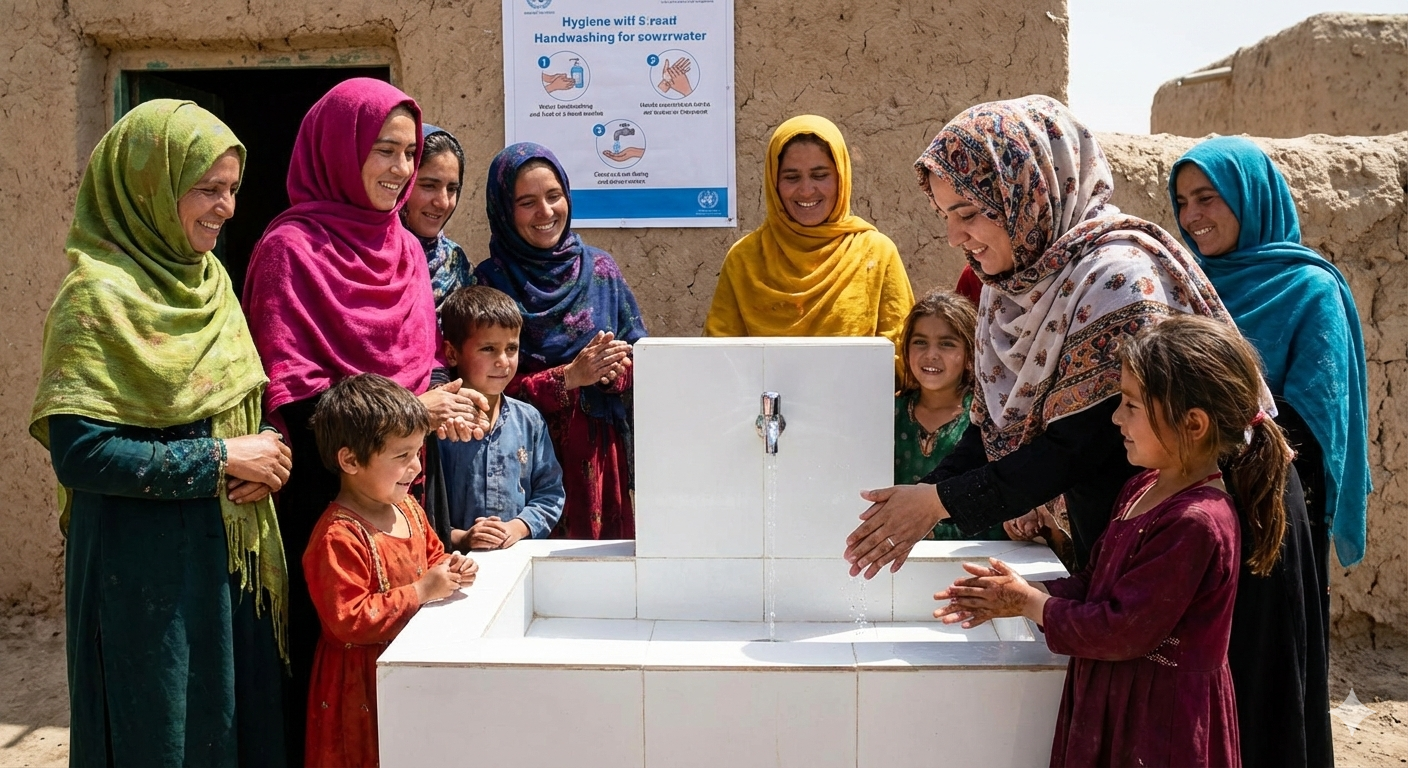

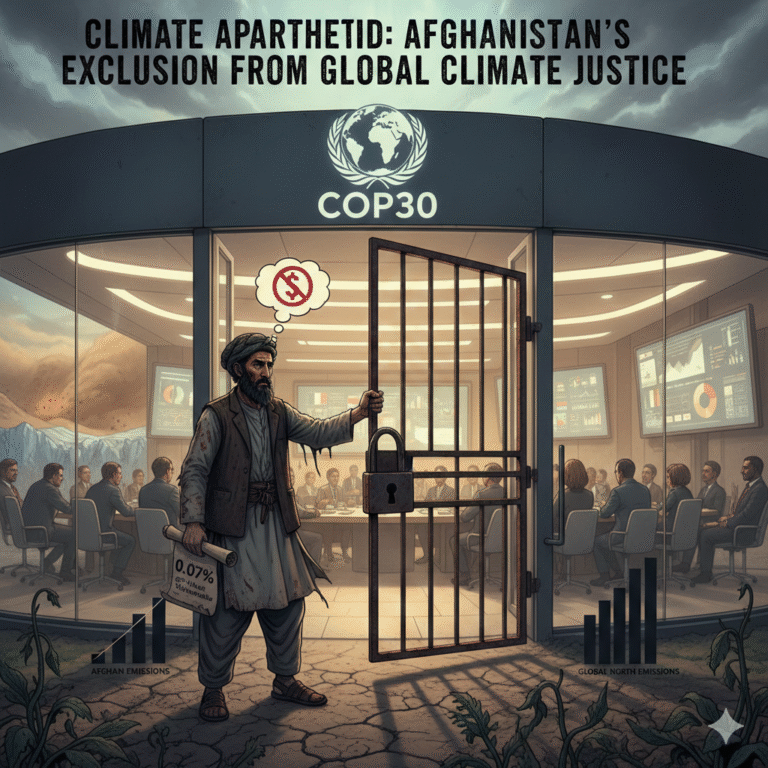
Afghanistan, one of the most vulnerable countries to climate change but still has the least capacity to respond. In Afghanistan, the average temperatures have risen almost twice the rate of the global average in the last two decade, with precipitation patterns becoming more unpredictable. These climate changes are occurring in a country that is already ravaged by over four decades of civil war, political instability, and economic stagnation. The combination of climate stress, institutional failure, and prolonged conflict has resulted in a systemic crisis, which is visible in the sector of Water, Sanitation and Hygiene (WASH).
Before climate change became a major development concern, the economy and governance systems of Afghanistan were severely weakened long before. Decades of conflict devastated physical infrastructure, eroded technical capacity, and dismantled water governance mechanisms. With the change of political regime in 2021, the abrupt suspension of foreign aid made the delivery of public services, such as water, sanitation, and health services, further weakened. Nowadays, over two-thirds of the population is reliant on the humanitarian aid, and the institutions of the country do not have funds and operational capacity to handle climate risks.
Afghanistan vulnerability is not theoretic, the country has been hit by successive droughts since the early 2000s. Historically the snowmelt in the Hindu Kush mountains supported rivers and groundwater recharge, however, with the rise in temperature, there is less accumulation of snow and glacier retreat, which limits the supply of water during the dry season. Such trends have a direct effect on livelihoods, food security and accessibility of basic services. The rural population that relies on agriculture suffers crop failures, and the urban areas like Kabul and other big cities are dealing with fast depletion of groundwater as a result of overextraction and uncontrolled drilling of wells.
Afghanistan has always been one of the most climate vulnerable countries in the world, not because of being the source of greenhouse gas emissions, but due to climate disasters compounded by poverty, displacement and weak institutions. Such structural conditions cause the WASH crisis. Under the climate extremes, there is less redundancy in the infrastructure, little emergency response and poor regulation to safeguard the water resources. Consequently, climate change does not only exert pressure on the WASH sector, it threatens its viability.
Climate Change and the Breakdown of WASH Systems
There are three main pathways through which climate change affects the WASH sector in Afghanistan; water scarcity, deterioration in water quality, and destruction of sanitation and hygiene infrastructure. These pathways are intertwined and impacts one another. The most common one is water scarcity. The springs, shallow wells and traditional Kareez systems have been dried up due to prolonged droughts throughout the country. As a result of the recent assessment in the country it is reported that 60-80 percent of the households experienced water shortages in the past few years with rural and peri-urban communities being the worst hit. The groundwater levels in most provinces have fallen a few meters down leading to abandonment of the wells by the households or use of the expensive water tankers. The amount of groundwater being extracted in Kabul is greater than the natural recharge and thus water in the city is hydrologically unsustainable.
Climate variability has undermined the water quality as well. Frequent floods are progressively polluting surface water, which carries fecal and agricultural run-offs and solid wastes into rivers and canals used by local people in their daily activities. Due to the high temperatures, the pathogens will live longer and proliferate more quickly in these sources of water, which will lead to an increased risk of being infected with water-borne disease including cholera and acute diarrhea. Treatment of water is not an option with many households. Few manage to get filters or chemicals and boiling water is usually unavailable as there are long-term fuel shortages and the family has nothing to do but to drink unsafe water.
Sanitation systems are also under strain. There is also a low rate of sanitation coverage in Afghanistan as almost a half of the population does not have access to an improved sanitation system. Most of the latrines that are in use are shallow, unlined, or improperly built and have a significant risk of collapsing or overflowing during floods. In the event of a failure in the sanitation systems, there is a rapid spread of fecal contamination, especially in dense settlements and displacement camps. Climate-related displacement increases this issue further by putting further strain on already poor WASH infrastructure.
Climatic stress leads to poor hygiene practices. Water shortage decreases handwashing and laundry as well as restricts access to soap and menstrual hygiene items because of economic hardship. Women and girls are the most vulnerable groups since they are the ones responsible for collecting water and household sanitation. Increased distance to water sources leads to physical stress, loss of school time and women being vulnerable to risks of protection.
All these issues are enhanced by the vulnerability of infrastructure. The WASH infrastructure across the country has been built under short development cycle and has been poorly maintained because of conflict and lack of fundings. Pipelines and pumps are destroyed by floods, and boreholes cannot function properly because of the drought. Energy crises also destabilize water systems that are powered by electricity. Each extreme event drives systems closer to collapse unless the systems are designed for climate resilience, or have institutional maintenance capacity.
Public Health Consequences of Climate-Stressed WASH Systems
WASH system failure has dire health consequences in Afghanistan and can be quantified through health indicators. Contaminated water and poor sanitation are the main drivers of preventable diseases. Unsafe water and poor hygiene are closely linked factors that contribute to the high child mortality rates caused by diarrheal diseases that are the leading causes of death in Afghanistan.
Climate conditions have a direct impact on the patterns of diseases. Research in Afghanistan and other arid environments indicates that there are strong correlations between hot weather, floods, and acute watery diarrhea outbreaks. In Afghanistan, health surveillance records show seasonal rises of diarrhea after floods and heatwaves during summer, when there is poor quality of water and deterioration in hygiene conditions. Between 2022 and 2024, there were large outbreaks that affected millions of people and overwhelmed under-resourced health facilities.
These risks are complicated by malnutrition. Repeated infections hamper the uptake of nutrients, which also lead to high stunting and wasting rates in Afghanistan among children. When there are poor WASH conditions, food assistance and nutrition programs become ineffective leading to a vicious cycle of diseases and undernourishment. As it has always been the case, children in households lacking improved water and sanitation are at a much greater risk of mortality and long-term developmental disorder.
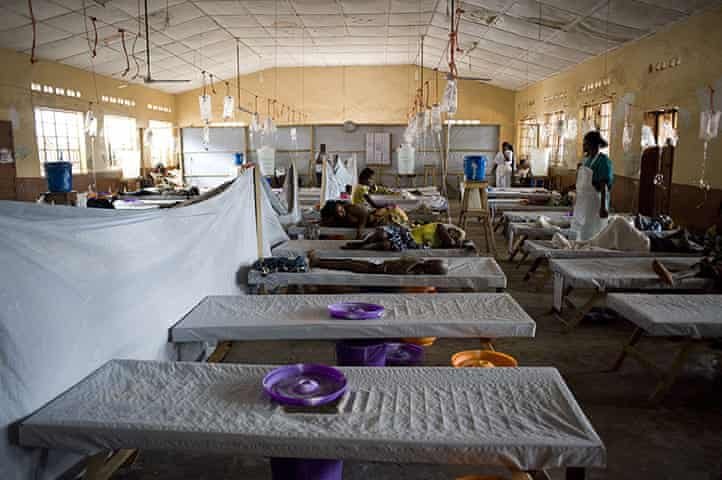
Displacement increases the vulnerability to health. Droughts and floods caused by climate have caused the displacement of hundreds of thousands of Afghans, many of whom reside in informal camps with very minimal WASH facilities. Crowding, open urination and sharing water points provide the best environment to spread diseases. Enhanced exposure is particularly enjoyed by women, children, and people with disabilities.
The WASH-health nexus possesses even more extended social implications than immediate sickness. The time on water collection decreases income opportunities and school attendance, whereas healthcare expenses drive households further into poverty. Poor health performance destroys faith in an institution and creates cycles of susceptibility in an already reputable country with regard to legitimacy and governance.
Conclusion
The evidence is clear. In Afghanistan, climate change is not a problem that will threaten the WASH sector in the future, it is an issue that is already contributing to system failure and avoidable disease outcomes. Water shortages, failure of sanitation infrastructure, and poor hygienic practices are directly being converted to disease, malnutrition, and human potential loss. These consequences are unavoidable; it is an outcome of insufficient investment, poor governance, and failure to integrate climate risks in the WASH planning framework. WASH interventions based on climate adaptation are not only possible but also cost-effective. Water systems run by solar energy, latrines that resist flooding, and community-based water management have been noted to bring positive health effects even in vulnerable environments. The main issue is lack of long-term funding and political commitment. It is not neutrality; it is neglecting climate-adapted WASH in Afghanistan. The disease outbreaks, child deaths, as well as the worsening of the instability will be paid as the price of inaction. In addition to being a humanitarian imperative, it is a strategic investment in resilience, health, and stability.



 Jonathan Tarnue Payne
 Precious Douglas Maulana
 Eslam Mohamed Elsheikh
 Lutfi Nurachma
 David R.K Brown
 Asef Jafari
Alright, just checked out 7ggg and it’s… well, it is what it is. Not my usual go-to, but hey, different strokes for different folks! Check it out if you’re curious: 7ggg
Welcome to S666.com! It is time to have some fun. I hope I get lucky today. Wanna join me? welcome to s666.com
Chương trình giới thiệu bạn bè tại app 888slot cực kỳ hấp dẫn: mỗi người bạn mời thành công, bạn nhận ngay 100.000 VNĐ + 1% hoa hồng trọn đời trên mọi giao dịch của họ. TONY01-12
Just checked out 223bet19! Seems like a decent place to have some fun. The layout is pretty user-friendly, and I’m liking what I see so far. Definitely gonna give it a shot! Check it out yourself at 223bet19
Been playing QK777game for ages! Love the updates and the community is super helpful. I highly recommend it! Checkout: qk777game
Looking for a new game? Just found PAK804gamedownload. Downloading now, fingers crossed it’s a good one! Gonna share it, you can find it here: pak804gamedownload