
Climate Diplomacy Through Islamic Stewardship
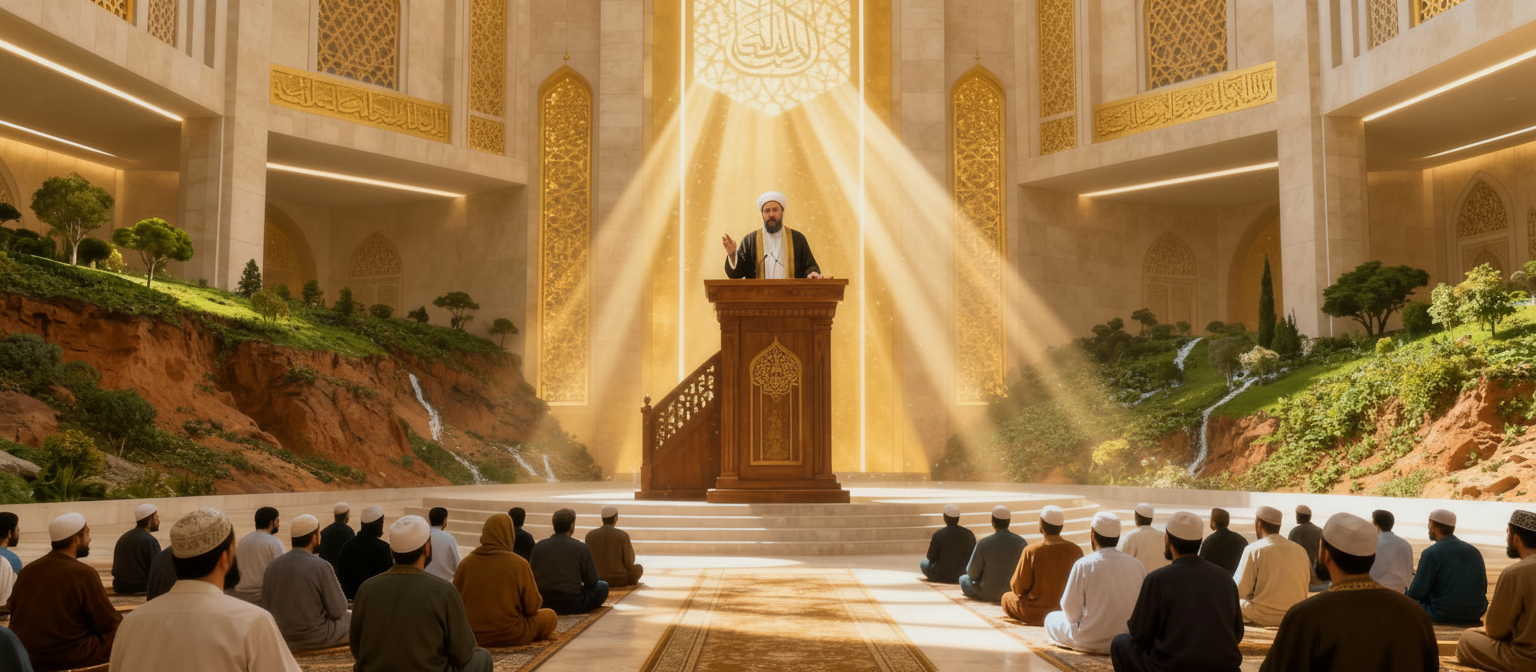
Muslims everywhere head to the mosque for Friday Prayers, or Jumu’ah prayers, in their hundreds of millions every Friday. More than just prayer, the khutbah is listened to and is designed to guide Muslims in their spiritual and moral life. But how many of them relate the big Islamic teachings about being guardians of the Earth to the climate change crisis? We have a great opportunity to build climate literacy into the fabric of Islam. Through the Friday sermon, we can ground environmental action in centuries- old Islam.
The Faith-Action Gap
For many Muslim communities, climate change remains distant from religious discourse. The science feels abstract, policy solutions feel political, and personal responsibility feels overwhelming. But Islam never distinguished the spiritual and material, prayer and action. The Quran has about 200 verses on environmental stewardship whilst there are more verses on prayer than the stewardship verses but they are usually not translated to congregational awareness.
In most Muslim communities, religious leaders, particularly Imams delivering Friday sermons, are the most trusted voices. Voices linking care of the earth with Islamic identity and spiritual obligation not only raise public consciousness but also awaken a long-dormant spiritual obligation in Islam, 1400 years old. Across all religions, the history of environmentalism is long. What makes this moment unique is not discovering these principles, but the urgency of remembering them in the face of climate crisis.
Five Pillars of Islamic Environmental Ethics: Islam has a complete environmental ethic which derives from specific concepts. These concepts can be activated by any sermon delivered today:
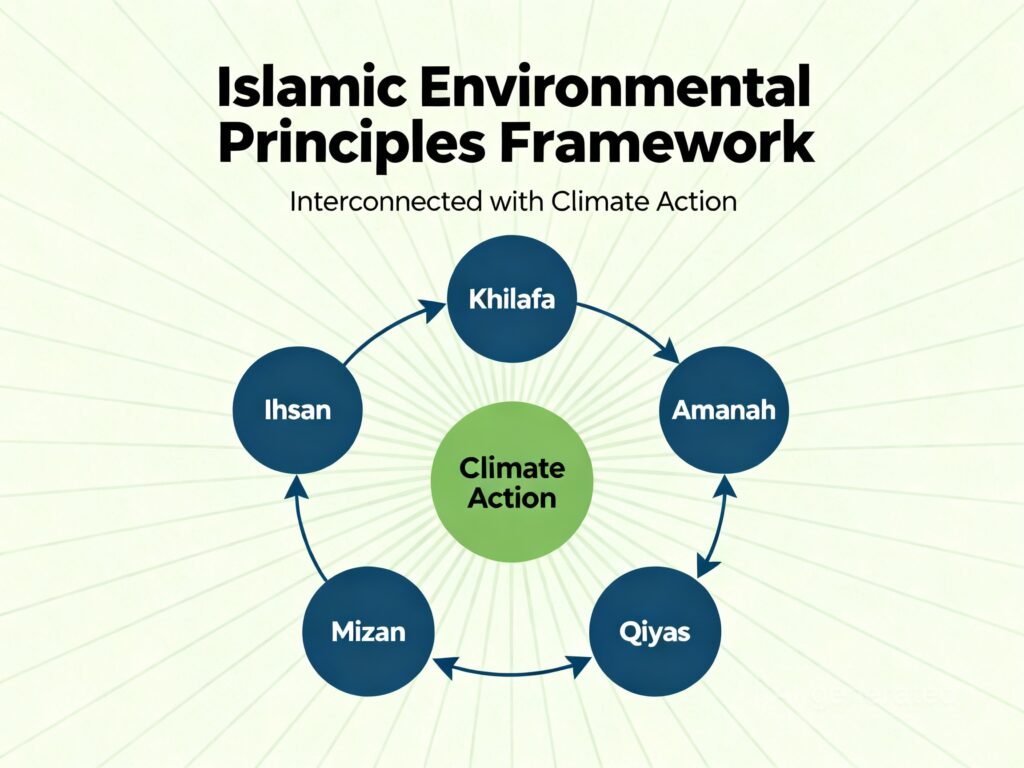
Khilafa (Stewardship): The Quran states that human beings are assigned as khalifah stewards, on planet earth. This is a position of sacred accountability. There is purpose and plan in which God created the universe. There is no part of God’s creation which is now entirely useless. Everything which exists is created out of love and with the knowledge that it will serve a function.
Amanah (Trust): Earth and its resources are an Amanah, a divine trust from Allah to humanity. This changes the way we associate with nature. We are not proprietors but keepers, and we are responsible to make sure that what we have received as an inheritance from our predecessors will be passed on to the coming generations in the same condition or better.
Qiyas (Analogy): offers a very useful tool to confront modern environmental challenges. Islamic scholars extend classical prohibitions against contamination to contemporary issues. If Islam forbids bad odours in cities or unsanitary home conditions, how much more serious are air pollution, toxic waste, and climate disruption?
Mizan (Balance): Allah created the universe in perfect equilibrium. Maintaining this ecological balance is a spiritual duty. The Qur’an warns against Fasad, corruption and destruction of Earth. Climate disruption commits spiritual transgression.
Ihsan (Excellence and Kindness): Environmental care is not merely obligatory – it is worship, an expression of Ihsan toward all creation. This elevates environmental action from compliance to devotion.
Prophet’s Environmental Vision
In the early Islamic state, environmental protection was a top priority. Prophet Muhammad introduced hima around Medina was established to protect an area with forests, water, and wildlife. The management of the land was thoughtful, based on high motives. Islam tells us not to waste or have extravagance like tossing around food. The Prophet prohibited excessive water use during ablution, spiritual disciplines that trained the Muslim conscience toward restraint and respect for creation.
The Friday Sermon as Climate Messenger
The Friday khutbah reaches virtually all Muslim congregations weekly, making it the most strategic platform for environmental communication through Islamic authenticity, not external pressure. Imagine sermon series woven throughout the Islamic calendar connecting environmental stewardship to heightened spiritual consciousness. During Ramadan’s practice of restraint, imams discuss mindful consumption. Before Eid al-Adha, when Muslims reflect on sacrifice, sermons emphasize responsible animal husbandry and ecological compassion.
The research related to mosque communities in Indonesia indicated that activities related to “Green Khutbah” can boost environmental awareness if it references the Qur’an and hadith. The best way to do it is by using a “khutbah kit” thematic guides, with Qur’anic arguments, references to hadiths and practical action points. It allows imams to deliver consistent messages.
From Awareness to Action
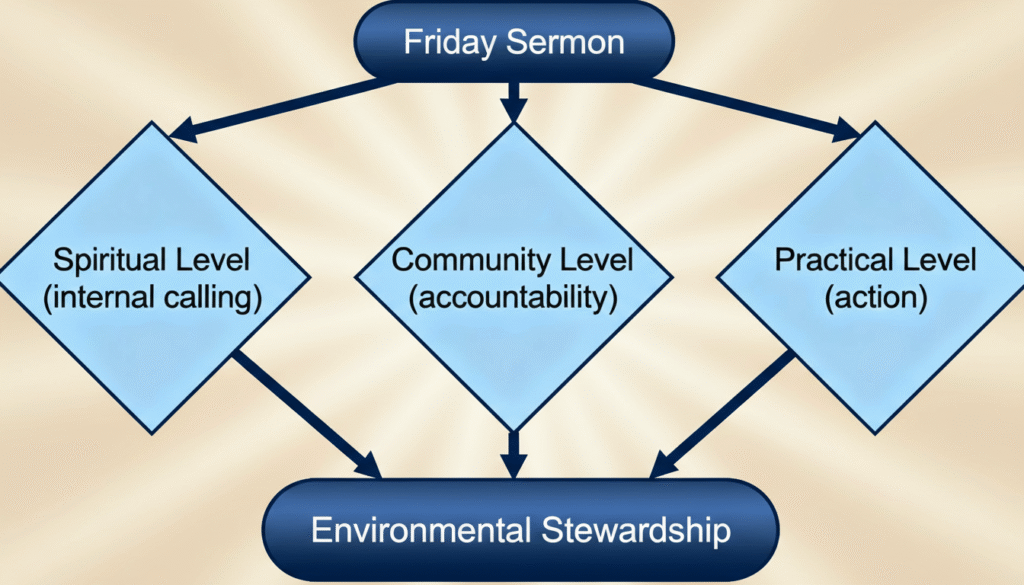
Climate literacy through Friday sermons operates at multiple simultaneous levels. On a spiritual front, it shifts a person’s reasons for wanting to protect the environment from an external obligation to an internal one, from “I should protect the environment” to “Protecting the environment is my worship, my way of honouring Allah’s trust.”
Communally, it creates accountability. When congregants hear weekly that environmental stewardship is Islamic obligation, shame and pride become powerful motivators. Failing to conserve water becomes not merely wasteful but un-Islamic.
Practically, sermons translate principle into concrete action: “Observe how much water flows unused from our wudu taps. This week, fix one water leak in your home.” Or The Prophet used to plant trees throughout his life, let’s pledge to plant 100 trees in our neighbourhood this month.
Indonesia’s Green Islam Model
This isn’t theoretical. Big Islamic mass organizations in Indonesia, Muhammadiyah and Nahdlatul Ulama, have launched a green islam movement. One such movement is the Muhammadiyah Green Cadres (KHM). Research suggests that community initiatives and involvement of citizen, religious leaders and local environmental initiators contribute towards embedding sustainable practices in everyday life.
Mosques are becoming centers for environmental da’wah (outreach), hosting educational gardens, waste management programs, and water conservation initiatives alongside spiritual functions. Sermons create theological foundations; community programs provide practical pathways.
Tawhid and Universal Duty
The doctrine of the unity and oneness of God in Islamic terms, which is at the heart of any environmental action. Tawhid marks oneness. Muslims believe one God, and all creation emerges from the One God. Harming the environment becomes not an abstract issue but a violation of cosmic harmony, a discord in the divine order.
As Imam Dr. Rashied Omar articulates, we need an “Islamic Jurisprudence of the Environment” (Fiqh Al-Bī’ah fī al-Islām) that recognizes environmental care as one of the highest objectives of Islamic law, not a secondary concern.
The Path Forward
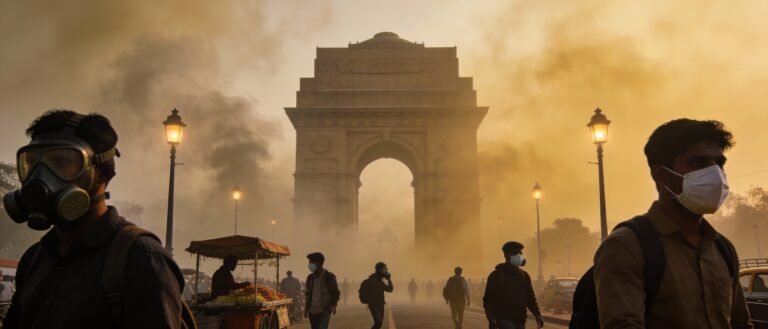
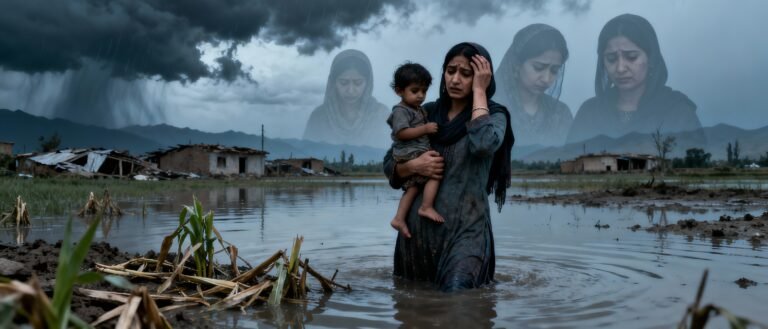
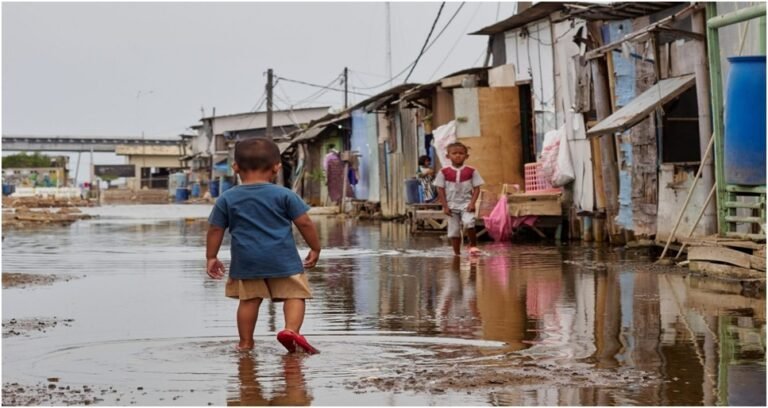
The most affected climate change regions are the Muslim nations. The mosques should listen to the farmers affected by drought, the families that have lost their homes due to floods, and the countries that are going under because of the oceans’ rising.
But they will only be truly heard when environmental care is woven into Islamic spirituality itself. When Friday sermons consistently connect divine trust to ecological responsibility. When Muslims understand viscerally that caring for Earth isn’t modern political stance, it’s timeless spiritual value, encoded in revelation, exemplified by the Prophet, urgently needed today.
The integration of environmental literacy into Friday sermons represents recovery of Islamic tradition that never disappeared, merely dormant in collective memory. It’s recognition that climate action isn’t Western import to be resisted, but Islamic obligation to embrace. The mosque has always been where heaven and Earth meet. Let it become where Islamic theology and ecological action become one.




 Abdul-Razak Issifu Yidana
 Amadu Barrie
 Primrose Mutema

A brilliant call to action that correctly frames environmental stewardship as an ancient, essential Islamic obligation rather than a foreign concept to be debated. Moving forward, I suggest compiling a training manual for imams that provides scriptural evidence and practical advice for weaving ecological responsibility into weekly Friday sermons, and additionally, launching local, mosque-led green initiatives to translate this theological mandate into tangible community-level action.
It was insightful.
The Qur’an calls humanity to be khalifah, stewards of the Earth, a title that is more than honor—it is an unending responsibility. Environmental care is not an innovation, but an ancient trust intrinsic to our faith’s foundation, now loud with modern urgency.
Every droplet saved in wudu, every tree planted, every act of conservation becomes an act of worship, an expression of ihsan—not only kindness to creation, but excellence in devotion to the Creator.
• The mosque, a sanctuary for the soul, can become a sanctuary for the planet; khutbahs that link environmental justice to Islamic law revive a dormant Qur’anic ethic and awaken faith-powered responsibility in millions.
The climate crisis is not just ecological but moral; neglect is not merely imprudent, but a form of fasad—corruption and disorder—condemned as a spiritual failing in the Qur’an.When Muslims recognize Earth as amanah, a trust from Allah, environmental harm becomes not only a failure of citizenship but a breach of sacred contract.
Prophet Muhammad’s (peace be upon him) Medina was encircled by hima—zones of protection for forests and water—a city design that placed ecological balance at the center of urban spiritual life.
The legacy of Islamic jurisprudence (Fiqh Al-Bī’ah) reminds us: the unity of God (Tawhid) is reflected in the unity of creation. Breaking the balance of nature disrupts cosmic harmony and distances humanity from its divine purpose.
A sermon that transforms “Save the Earth” from a slogan into a Qur’anic imperative can turn climate literacy into communal action—every khutbah a seed of consciousness, every mosque, a wellspring of hope.
Shame and pride, often regarded as social emotions, become spiritual motivators when stewardship is linked directly to faith; what would the ummah look like if wastefulness was seen as un-Islamic as missing a prayer?
The world needs not only policy change but a renewal of inner intention (niyyah)—a conviction that caring for creation is part of every believer’s way to honor God, and every environmental act a rung on the ladder toward closeness to Him.
This post really touched me and opened my eyes to a perspective I hadn’t fully appreciated before. I love how it connects faith and environmental responsibility so naturally — that taking care of the Earth isn’t just a duty to society, but a spiritual obligation deeply rooted in Islamic teachings. The principles of Khilafa, Amanah, Mizan, Qiyas, and Ihsan give such clear guidance for daily life, showing that small actions — like saving water, planting trees, or avoiding waste — are not just practical, but acts of worship.
As the Qur’an reminds us, “And He it is Who has made you successors (Khalifah) upon the earth” (Al-An’am: 165 – وَهُوَ الَّذِي جَعَلَكُمْ خَلَفَاءَ فِي الْأَرْضِ) highlighting our sacred duty as stewards of this planet.
Maintaining balance is essential too: “And the heaven He raised and imposed the balance, that you not transgress within the balance” (Ar-Rahman: 7-8 – وَالسَّمَاءَ رَفَعَهَا وَوَضَعَ الْمِيزَانَ أَلَّا تَطْغَوْا فِي الْمِيزَانِ) reminding us to preserve the harmony of nature.
I think using Friday sermons as a tool to spread this awareness is brilliant, because it can reach millions of people consistently and inspire them to act. Reading this makes me feel hopeful that more communities will embrace this approach, and that caring for our planet will become a natural part of faith and life.
Truly, this is a beautiful reminder that environmental stewardship is timeless and essential for our future, as the Qur’an says, “And to everything We have appointed a due measure” (Al-Qasas: 68 – وَكُلَّ شَيْءٍ فَعَلْنَاهُ بِقَدَرٍ), reminding us to respect the limits of all things and use Earth’s resources wisely.
A powerful reminder that caring for the Earth is not modern activism—it’s a core Islamic duty. Reviving this message in our Friday sermons could transform climate awareness across the Muslim world. Beautifully put.
A powerful reminder that caring for the Earth is not modern activism.it’s a core Islamic duty. Reviving this message in our Friday sermons could transform climate awareness across the Muslim world. Beautifully put.
A thoughtful piece that beautifully reconnects Islamic teachings with climate responsibility. If our khutbahs echoed this message, our communities would awaken to their true role as guardians of the Earth.
This piece was truly inspiring. I really appreciate how you link caring for the environment with moral and spiritual duty—it gives the discussion such profound meaning. The connection you make between faith and climate action brings a genuine and heartfelt touch. A beautifully thoughtful and motivating reflection.
This was such a meaningful read. I love how you connect environmental care with moral and spiritual responsibility it really adds depth to the conversation. The way you tied faith and climate action together makes the message feel powerful and real. Truly a thoughtful and uplifting piece.
Thank u
Profound and necessary. This piece beautifully articulates what so many faith communities need to hear, that environmental stewardship is not separate from our spiritual calling but central to it. Your voice matters.
This is the intersection we’ve been waiting for. The pulpit has such untapped potential to mobilize climate action through moral authority. Thank you for illuminating this path.
Your reflection on connecting faith values to environmental action is timely. When religious leaders champion sustainability as a spiritual practice, entire communities shift their behavior.
As someone working in climate communication, I deeply appreciate how you’ve framed this. The moral dimension often gets lost in technical discussions, but faith perspectives bring it back home.
Beautifully written. The way you’ve connected creation care with spiritual responsibility opens new conversations in congregations everywhere. This is the kind of leadership we desperately need.
This piece captures what I’ve been trying to articulate for years that faith communities are not obstacles to climate action but potential catalysts. Your reflection gives language to this hope.
The wisdom here extends beyond faith communities. Every sector needs to ask: how do we connect our deepest values to planetary health? You’ve modeled this brilliantly.
Your perspective from the pulpit is invaluable. Faith leaders often feel excluded from climate conversations, but this piece reclaims their essential role. Powerful advocacy.
I shared this with my entire congregation. The moral clarity you bring without being preachy resonates deeply. This is exactly the kind of bridge-building we need.
A powerful and timely reminder that caring for the Earth is not separate from Islam but woven into the core of our faith. You beautifully show how balance, trust, and ihsan transform environmental responsibility into an act of worship rather than a political issue. The idea of using Friday sermons to awaken this spiritual duty is both inspiring and practical. May this message motivate more imams and communities to make environmental protection a natural part of daily Islamic life. JazakAllah khayr for reconnecting faith with ecological responsibility so meaningfully.
The integration of spirituality and environmental action you describe feels both radical and obvious. Why haven’t more of us made these connections explicit? Thank you for the wak ite-up call.
As an educator, I’m inspired by your approach. You don’t lecture; you illuminate connections that people already sense. That’s real leadership.
This reflects something I’ve observed in my work with faith-based organizations: when spirituality drives environmental commitment, it becomes sustainable (pun intended). Your writting captures this energy.
Brilliant framing. You’ve shown that the pulpit and the planet aren’t in tension they’re in conversation. This opens doors for interfaith environmental collaboration on a new scale.
The nuance here is refreshing. You acknowledge both the power and the complexity of faith-based environmental leadership. It’s honest and hopeful simultaneously.
Your piece validates what frontline communities have known all along that spirituality and environmental justice are inseparable. Thank you for bringing this to broader audiences.
I keep coming back to your point about trust. In polarized times, faith leaders occupy unique positions of trust. Using that to advance climate action is not overreach; it’s responsibility.
This essay does something rare: it makes climate action feel like a spiritual practice rather than an obligation. That shift in perspective could change everything.
The way you’ve connected stewardship language to concrete climate action is exactly what grassroots organizers need. Theology and practice working together that’s transformative.
As someone skeptical of mixing religion and environmentalism, I found myself convinced by your careful articulation. You’ve shifted my thinking. That’s the mark of genuine insight.
Your reflection captures something essential: that the richest moral traditions on Earth can be mobilized for planetary healing. We’ve been underutilizing this resource for far too long.
I appreciate how you’ve avoided both extremes neither dismissing faith nor overstating its role. This measured wisdom is exactly what we need in climate conversations.
This piece should be required reading for climate communicators. You’ve demonstrated that effectiveness doesn’t require excluding moral and spiritual dimensions; it requires embracing them.
The hope in your writing is contagious. You’re not offering false certainty but genuine possibility that faith communities can be part of the solution narrative.
Your personal voice shines through while addressing universal themes. That combination of intimacy and scope makes this piece both reflective and actionable.
I work at the intersection of faith and environmental justice, and your framing is exactly what community leaders need to hear. This validates the work we’re doing.
The connections you draw between religious texts, environmental ethics, and planetary urgency feel inevitable once you’ve read them, which means you’ve done the work of making them clear. Keep it Up.
This reflection asks faith communities to be their best selves. Not to abandon tradition but to remember what their traditions have always taught about creation and care.
Your piece is a call and an invitation simultaneously. For those already working on this, it’s validation. For those wondering how to begin, it’s a roadmap.
The accessibility of your language is striking. You’ve made a sophisticated argument about spirituality, climate, and social change in prose that welcomes rather than excludes readers.
Finally, someone articulating what so many of us sense: that the spiritual and environmental crises are one crisis, and that faith communities have a central role to play in healing. Thank you for this essential reflection.
Love how this piece refuses to separate faith from real‑world responsibility. If the ‘pulpit’ doesn’t speak to rising temperatures and shrinking futures, what exactly are we preaching for?
The shift “from the pulpit to the planet” is a brilliant narrative move: it reframes sermons as invitations to real-world stewardship, not just private belief. In contexts where religious trust is higher than trust in politicians, this can be a catalytic, game‑changing strategy for climate action.
The post implicitly challenges a passive, other‑worldly spirituality by insisting that love of God and neighbour must now include emissions, ecosystems, and intergenerational justice. That makes the author’s journey feel less like a career shift and more like a theological deepening.
The article offers a timely and compelling argument, especially in the context of Indonesia’s ongoing environmental crisis, where increasing floods, landslides, and ecological degradation, particularly in regions like Sumatra, reflect exactly what the Qur’an warns in Surah Ar-Rum:41: that corruption on land and sea emerges from human actions. Its call to embed climate literacy within Islamic teachings is not only spiritually grounded but urgently relevant; Islam’s principles of khilafah, amanah, mizan, and ihsan provide a powerful moral framework for confronting today’s climate challenges. By activating the Friday sermon as a medium for ecological awareness, the article highlights a practical and culturally resonant pathway to reconnect Muslim communities with their environmental responsibilities.
Fortunerabbit4 sounds cute and lucky. Let’s see if the games match the name! Anyone had a good run on fortunerabbit4?
Just spent a bit on h786game.info. Its nothing bad. Try h786game.
Yo, I’ve been surfing gachoic1 myself. It’s decent, you can find what you need, if you know what I mean.
Đội ngũ hỗ trợ khách hàng tại 888slot. được đào tạo chuyên sâu, sẵn sàng lắng nghe và giải đáp mọi thắc mắc của quý khách với thái độ lịch sự và chuyên nghiệp nhất. TONY05-01
Theo iGaming Asia (2024), mã nhận thưởng 888slot thuộc Top 5 nhà cái phát triển nhanh nhất khu vực, với mức tăng trưởng người dùng lên tới 62%/năm. TONY05-09