
Climate Policy, State Power, and Industrial Transformation
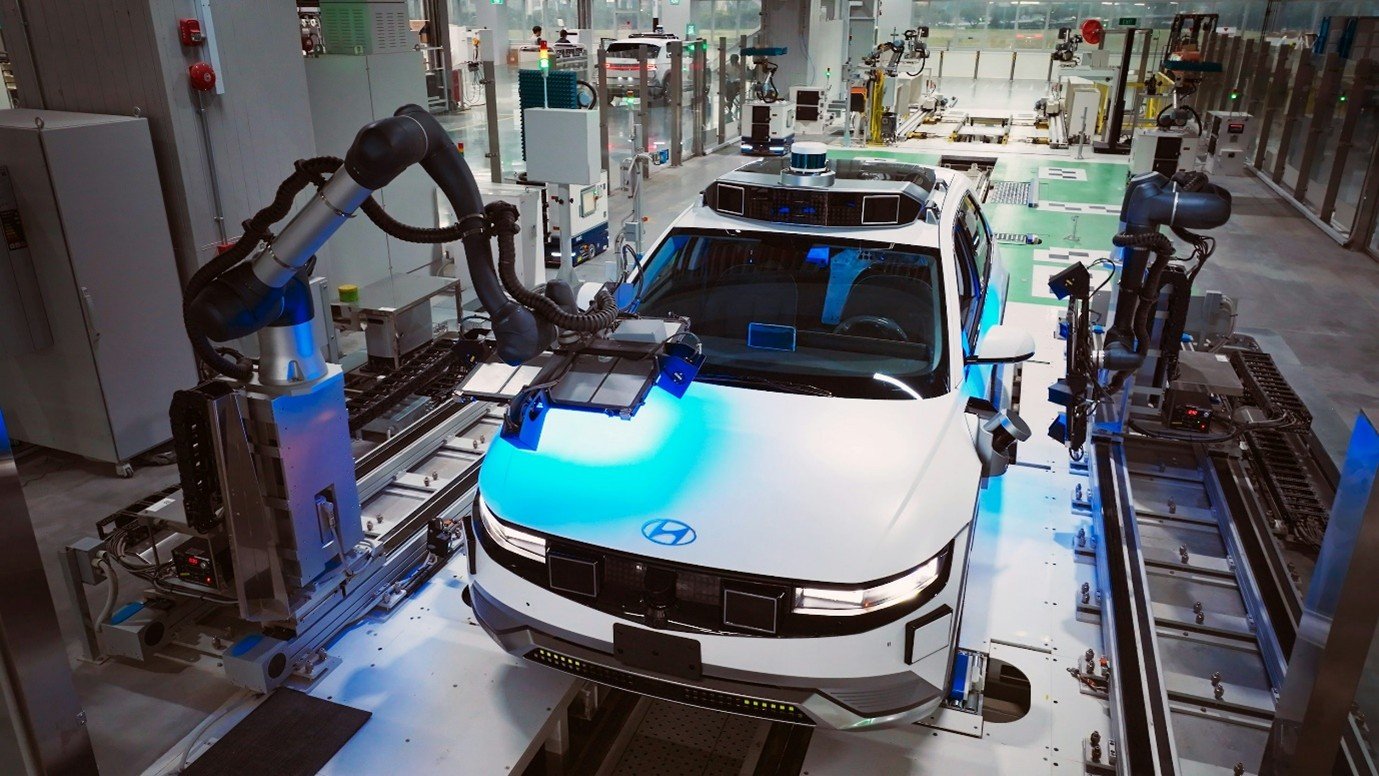
The Chinese government implemented a systematic approach to industrial policy, between 2009 and 2024, which completely transformed the world automotive industry and at the same time supported the agenda of curbing climate change. China has turned into the global manufacturing power in less than 20 years through long-term strategic planning, heavy investment, policy tools and extraordinary state capacity to become an electric vehicle (EV) market leader.
The state-led policy of EV in China has been very successful since it adopted a proactive role of the state that even market forces would not have accomplished in such a brief period. Despite its imperfections, the Chinese EV policy is one of the most radical instances of industrial transformation in the modern age, where the climate policy formed the foundation.
Reasons why China opted to use Electric Vehicles
Since 2009, the Chinese state recognized electric vehicles as a strategic solution to three interrelated problems, namely, decreasing reliance on imported oil, mitigating air pollution in major cities, and fulfilling long-term commitments on climate. In comparison to the countries that used almost exclusively a carbon pricing method, or a consumer led shift to a market driven economy, China did not follow any policy.
In the 2009-2023 period, the Chinese government has given the EV industry a sizeable US $231 billion in subsidies. These were direct purchase subsidies, sales tax exemptions, massive investment into charging infrastructure, and massive research and development efforts. Such a sustained commitment is an ideal example of the industrial policy at its best: the state did not just regulate or correct the market; it was a key participant in designing technological change.
Revamping the Global EV Market
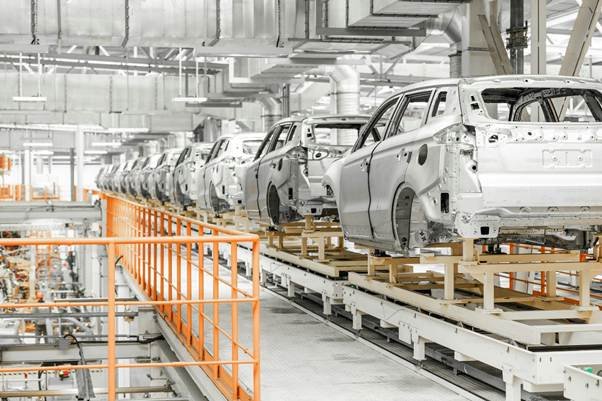
The outcomes of such strategy are impressive. In 2009 only, China sold 5,209 electric vehicles. In 2024, the annual sales of EV reached more than 11 million vehicles, which was almost half of the amount of EV sold worldwide. In China, the proportion of EVs sold in the year amounted to nearly 50 percent of total new car sales, which was a significant way beyond the rate of adoption in most developed economies.
China currently manufactures more than 70 percent of the global electric vehicle production and exports about 1.28 million EVs every year. Chinese manufacturers, on the other hand, have dominated the growth in the sale of electric cars in the emerging markets in Asia and Latin America. This export success shows that the Chinese EVs are now almost as competitive as others in the world, a fact which is directly related to the scale of the impact, as well as the learning effects, created by the state support.
Policy Coordination and State Capacity
The success of China in driving the electric vehicle (EV) transition can be explained by considering the concept of state capacity as the administrative, regulatory, and financial capacity to design and enforce complex policies in the long-term perspective. According to studies on industrial policy and transitions, most countries do not have the ability to implement policies because of institutional inability and not because they have poorly formulated policies.
The strategy of EV in China also displays a flexible and changing policy framework. The government was first making the way with generous purchase subsidies to get over the high initial costs and to get the first demand moving. Within the period after 2016, these subsidies had been phased out and eliminated altogether by 2022. Instead, China has implemented an EV credit system which needed manufacturers to manufacture a certain proportion of battery-powered vehicles, redistributing the burden of the consumers to the manufacturers.
The 2023/2024 government came up with USD72.3 billion in tax exemptions in four years to stabilize the growth as market maturity was realized. This sequencing is an indication of a high level of understanding of socio-technical transitions in which policy instruments must be redesigned to accommodate the increase of technologies as they shift out of niche applications and into mass markets.
The Beyond subsidies: Multi-instrument approach
Financial motivations cannot talk about the success of EVs in China. Several policy instruments were coordinated at the same time by the state to deal with the non-linear and complex character of technological changes.
Large cities in China established vehicle licensing rules that favoured the purchase of EVs, but internal combustion engine vehicles were limited to quotas and lotteries. EVs were promptly placed in government fleets and in transportation systems creating assured demand. Consumer adoption was also encouraged through favouritism on the access to roadways, parking and charging infrastructure.
The Role of State-Owned Ventures
The state-owned enterprise (SOE) system of China also became very critical. State-owned utilities and car companies could absorb initial financial risks that would not have been taken by the private companies thereby scaling quickly before commercial viability was realized. The model represents an extreme opposite of the so-called Wall Street Consensus which has its significant elements in de-risking initiatives to stimulate influx of private funds into the state.
Rather, China still had much state ownership and control, which provided policy makers with powerful instruments to steer industrial development based on strategic priorities as opposed to the short-term profitability. Although the approach is inefficient, it allowed a rate of change that market-driven systems have not been able to match.
Climate and Health Public Benefits
The climate mitigation potential of the EV policy in China is significant. Transportation contributes to about 10 percent of the total carbon emission in China and currently this percentage begin to decline with the growing use of EVs. The battery electric cars, despite their reliance on coal-intensive electricity grid in China, have been studied to lower the lifecycle CO₂ emission of battery electric vehicles by 29%, compared to vehicles powered by internal combustion engines.
The International Energy Agency reports that EV must be installed all over the world to substitute over 5 million barrels of oil each day by 2030, and all of it is estimated that about half of this decrease will take place in China. In addition to the emission cut, EV adoption has created measurable health gains in the society. Cases of fine particulate matter (PM2.5) have been reduced by 3.1 percent in pilot city programs and this has led to reduced risks of mortality and better urban air quality.
Trade-Offs of Policy and New Challenges
Despite being a successful policy, the EV strategy in China also brings out the threats of the state-led industrial policy. The massive state investments have also resulted in big overcapacity that currently has nearly 200 EV manufacturers on the road- far more than the market would carry. China utilizes less than forty percent of its battery cell production capacity which brings forth a difficult price competition and a budget burden on firms.
The other problem is tension in international trade. In 2024, the European Union imposed tariffs of 17.4-38.1 on Chinese EVs and the United States imposed 100 percent tariffs as it claimed the excessive government subsidies. These challenges are threatening to restrain the spread of cheaper EVs in the world, particularly to the developing world and may bring down the world climate change reduction efforts.
Lessons to Climate Policy
The Chinese electric vehicle policy demonstrates that climate policy can be radical when the capabilities of the state, a long-term perspective, and consistent policy instruments are available. China overcame barriers that usually hinder low-carbon transitions, such as high costs initially, coordination issues in infrastructure development, and durability of development phase, which took more than fifteen years.
In the meantime, the Chinese example aids in stressing that this success is specific to the situation and cannot be easily replicated in other economies because it presupposes the willingness of the state to incur losses, to work with inefficiency, and to be strategically capable in controlling strategic industries.
With governments across the world aiming to hasten climate changes, the experience of EV in China is an impressive, giving a lesson that it is challenging to transition quickly via markets. The state is often called upon to shape markets and in effect to create them as well to have an effective climate policy.







 Abdul-Razak Issifu Yidana
 Amadu Barrie
 Primrose Mutema
trang chủ 66b cam kết đồng hành cùng quý khách trên hành trình tìm kiếm những giá trị giải trí đích thực và những cơ hội gia tăng lợi nhuận bền vững. TONY02-02O
Sảnh game bắn cá tại đây bùng nổ với rất nhiều chủ đề săn thưởng siêu hot. 188V Hơn nữa, tỷ lệ trả thưởng mà nhà cái cung cấp cũng được đánh giá là cao gấp 3, thậm chí gấp 4 lần so với mặt bằng chung trên thị trường. TONY03-02
live slot365 là một trong những trang web đánh bạc trực tuyến hàng đầu tại châu Á, nổi bật với cam kết bảo vệ dữ liệu người dùng. Chúng tôi liên tục cải thiện và nâng cao trải nghiệm của người chơi bằng cách thường xuyên thêm các tính năng mới và các chương trình khuyến mãi thú vị. Với những yếu tố này, live slot365 xứng đáng là lựa chọn hàng đầu cho những game thủ yêu thích đặt cược và đánh bạc trực tuyến. TONY03-11O
HDsQhsjCTYhdXqlREyWD
Slot tại xn88 có tính năng “xem trước vòng bonus” – bạn có thể xem demo cách hoạt động của free spin trước khi kích hoạt thật. TONY03-20
nhà cái xn88 luôn quan tâm và tri ân những người lâu năm bằng những chương trình khuyến mãi độc quyền. Nhà cái có hệ thống xếp hạng thành viên dựa trên số lần chơi nạp tiền. TONY03-23O
Slot tại 888slot có cơ chế “hot/cold indicator” – cho biết game đang trong chu kỳ trả thưởng cao hay thấp, giúp bạn đưa ra quyết định chơi hợp lý hơn. TONY03-25
Chỉ trong 5 năm ngắn ngủi, 888SLOT đã ghi nhận hơn 5,2 triệu người dùng đăng ký trên toàn hệ thống, với mức tăng trưởng trung bình 48% mỗi quý – một con số ấn tượng mà không phải tân binh nào cũng làm được. TONY04-04H
66b đăng nhập khẳng định vị thế dẫn đầu thị trường nhờ hệ thống bảo mật SSL 128 bit. Đăng ký ngay để trải nghiệm không gian giải trí đẳng cấp quốc tế. TONY04-25
888slot liên tục đạt giải thưởng nhà cái uy tín của năm nhờ vào sự đổi mới không ngừng trong danh mục sản phẩm giải trí. Từ các game bài đối kháng đến những giải đấu thể thao ảo, tất cả đều được tối ưu hóa để mang lại trải nghiệm mượt mà nhất. TONY05-09