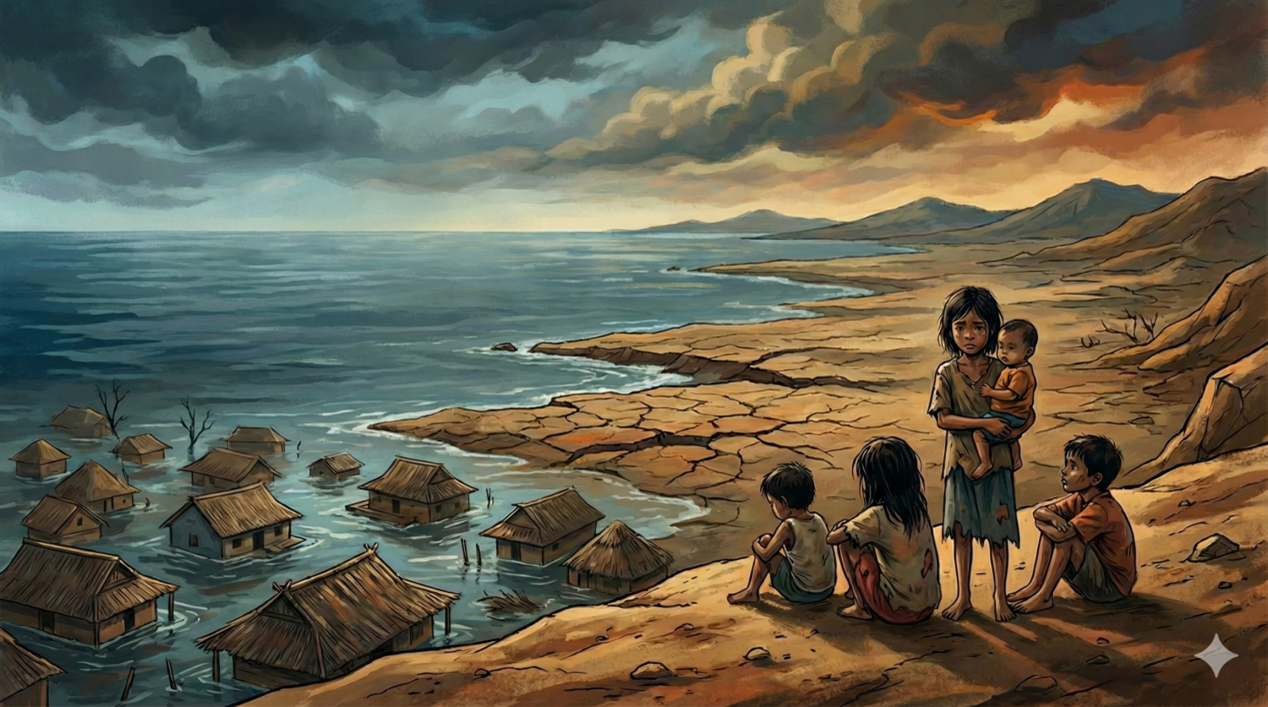

When we want to talk about Indonesia’s future, it is not far from Indonesia’s “Generasi Emas 2045” with its vision to transform the nation into a top global economic powerhouse by its centennial through the strategic utilization of its massive demographic bonus. It started from Indonesia’s young generation to make it possible. However, there is one specific enemy of Indonesia’s government to fight, which is Stunting. We all know what is stunting. It is when a child did not grow and became shorter for their age and the cause is malnutrition. Stunting is beyond just about height, it is also about brain development. A stunted child often has lower IQ and a weaker immune system then eventually it will affect their education and it will be harder for them to earn money as an adult. It will become a problem for their lives and a disaster for Indonesia’s future economy.
In the past, we knew the solution to this was simple by giving families more food and educating mothers. However, in today’s crisis we need more than just that solution. In recent years, scholars and experts have discovered a “silent saboteur” which is Climate Change. Climate change now is more than environmental issues like melting ice caps or dying polar bears. It is becoming a public health crisis and directly attacking the “First 1,000 Days” of a child’s life especially in Indonesia.
The Current Situation
Indonesia has made good progress in stunting for the past decade. According to the Indonesian Nutritional Status Survey (SSGI) in 2023, it started from over 30% on stunting rates and it has dropped to around 21.5%. However, it is still far above the World Health Organization (WHO) standard of 20%. The Indonesian government is trying to lower it down more to 4% by 2024, a goal that has proven incredibly difficult to reach. Poverty and lack of knowledge mostly caused stunting in the past but now it is beyond that. Climate change with its issues such as drought, floods and other disaster shocks hit the poorest families the hardest, creating a trap that keeps children malnourished. Climate change affects Indonesia’s food security, worsening and even creating new disease and it lowered the nutrient quality of crops.
Food security has become the number one source of the cause of stunting in Indonesia. Indonesia’s food system is deeply reliant on regular rainfall. Because of climate change, the rain conditions are unpredictable and it affects Indonesia’s commodities such as rice, corn and vegetables. Because of climate change, we are currently seeing more frequent and intense El Niño events. It caused prolonged drought which will affect the harvest. If harvests fail, farmers will lose their income and the food prices will go up because there are less commodities available in the market (inflation). Higher prices on food such as rice or eggs are just “irritating” for Jakarta’s middle class. However it will be castratopic for a poor family in a rural village. They will only buy their source of energy (carbohydrate) and skip on buying pricey food like meat, eggs, fish, and milk products. However, animal produce is key to preventing children from stunting. If families struggle to buy animal produce, they will switch to buying just plain rice and instant noodles to survive to fulfill their chilldren’s’ hunger, but their body is starving of nutrients needed to grow.
Another thing, nutrition is not just something that inside of food you consume, it is also about what your body actually absorbs. Even though all families can provide the best produce for their children to eat, if their child is constantly sick, they will still become stunted. The second effect of climate change is La Niña that makes rainstorms more intense and how it increases flooding. The infrastructure for sanitation is still being developed in many parts of Indonesia. Septic tanks are frequently improperly sealed, and many communities get their water from shallow wells or rivers. It functions as a huge mixer when a huge flood occurs. It combines human waste (feces) from open sewers and overflowing drains with sources of clean water. In the home, this tainted water finds its way onto dishes, drinking glasses, and kids’ hands.
It results in diarrhea outbreaks and it is one of the leading causes of stunting. Diarrhea can harm children by flushing out all the nutrients on their body, including all things that they just ate. The data is evident in areas such as the riverbank slums of Jakarta and Bantul. According to a 2021 study, children who experience frequent diarrhea have a 3.3 times increased risk of stunting. Repeated diarrhea infections on a child can cause a condition called Environmental Enteropathy. This condition is permanent to the lining of the stomach of children where the intestines become inflamed and lose their ability to absorb nutrients.
Not only diarrhea, climate change increases another enemy in Indonesia which is Vector-Borne Diseases. As the world gets hotter, the habitat for mosquitoes that cause Dengue fever (Aedes aegypti) and Malaria (Anopheles) are expanding. Their species can go rapidly in warmer air and bite more often, while erratic rainfall creates stagnant pools of water where they lay their eggs. Food serves as a child’s body’s budget for energy. The majority of this energy aids in the growth of a healthy child’s height and brain growth. However, the body enters emergency mode when they contract dengue or malaria. It directs all of its energy toward combating the fever rather than using it for growth. The body burns calories quickly when it has a fever, even when it is at rest. A child who frequently contracts these illnesses in a hot, changing climate will eventually run out of energy. As a result, they will always be weak and short.
It also affects expecting mothers. If pregnant women have contacts with Malaria, the virus will infect the placenta. A startling connection between stunted growth and malaria caused by climate change has been revealed by recent data from Indonesia’s eastern regions. A 2023 study discovered that pregnant women with malaria were up to 49 times more likely to give birth to babies with low birth weight (LBW) in Papua, where rising temperatures aid mosquito reproduction. Low birth weight babies have a statistically significant increased risk of lifelong stunting. This is how climate change could create a “Tropical Trap”, meaning it could create a sicker environment that drains the energy children need to reach their full potential.
The Future
We keep assuming that climate change is just a “weather problem” that only affects hotter days or heavier raincoats. We keep always treating Climate Change and Public Health as totally different problems that are separate from each other. But today, we face the fact that it is the other way around where climate change acts as a “threat multiplier” that affects every aspect of public health, transforming routines into emergencies. This breakdown affects young generations the most. It prevents their bodies from growing properly through a condition called stunting. This is not a temporary issue; it permanently limits their opportunities. A stunted child could experience slower brain development, weaker immunity to diseases, and eventually will affect their future. Simply, it is impossible to raise healthy, strong children on a “sick planet.”
If we allow climate change to continue, we risk harming Indonesia’s “Generasi Emas” before they even reach adulthood, transforming an environmental crisis into a major loss for our country for many years. The only way to solve this is we need to understand that stunting is worsened by a lack of resilience in our communities. With the right policies from the government and right action to fix the environment are actually acts of love for our next generation. Climate change is not just about saving trees or polar bears, it is also a fight to save the future of our next generation to come.




 Jonathan Tarnue Payne
 Precious Douglas Maulana
 Eslam Mohamed Elsheikh
 Lutfi Nurachma
 David R.K Brown
 Asef Jafari
Alright listen up, mmabetr is the real deal. Found some sweet odds there and had a decent run. Give mmabetr a look, you might just find your new favorite thing. Check out mmabetr.
Heard 95VNslot’s got some pretty decent slots. Might give them a whirl later. See if it’s worth the hype. Find the latest games at: 95vnslot
Bạn có thể đặt lịch nhắc nhở khuyến mãi tại link 66b – hệ thống sẽ gửi thông báo trước 1 giờ khi có chương trình mới bắt đầu, đảm bảo bạn không bỏ lỡ bất kỳ deal hot nào. TONY02-21