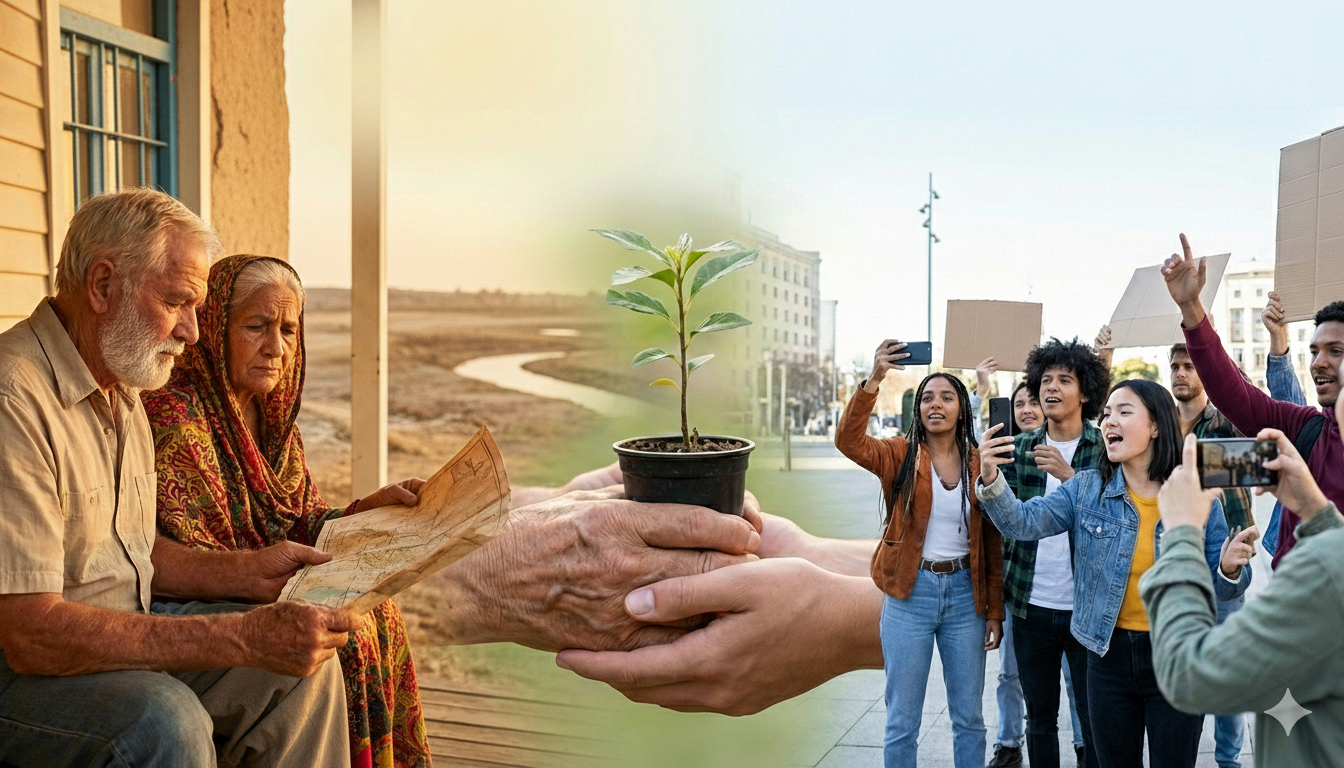

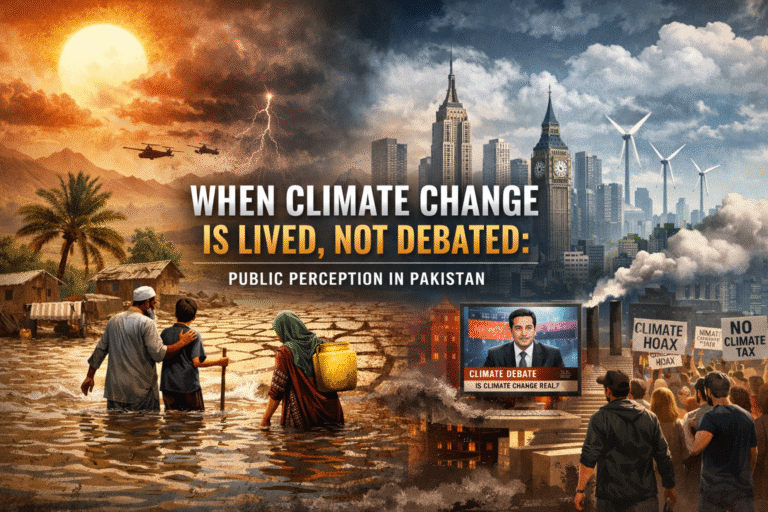
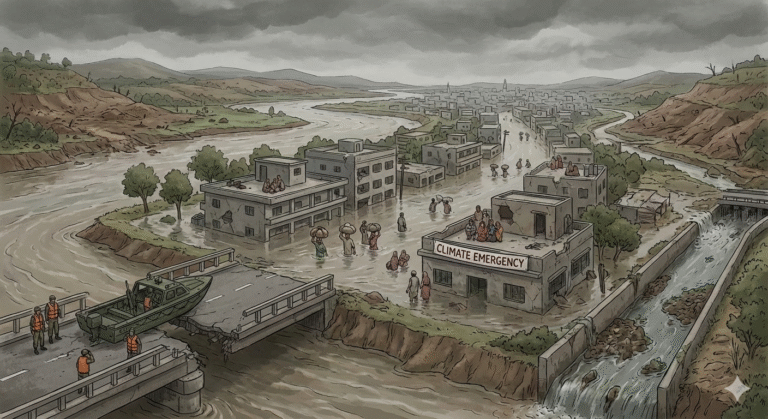
In many regions of the Global South, climate change has no book to be put in as an episode. It’s the dry ground right outside your door, the monsoon that is off schedule and never comes fully, the heated room that feels like an oven because there’s no fan or air conditioning, the flood that sweeps away someone’s small business in a matter of hours. Gen Z is actively and noisily talking about it, making videos, protesting, and creating campaigns, and pointing out the double standards. Their cries for attention are strong and deserved.
But in the background, someone else is watching. An older woman who remembers when the river first changed its course. A retired engineer who saw a “solution” dam slowly fail. A grandfather who has lived through three droughts and knows exactly which crop survives when everything else dies. Their voices are quiet, but full of receipts, just not the digital kind.
This is a story about why those loud voices and quiet voices actually belong on the same team.
When climate is lived, not argued
Picture two versions of the same question: “Is the climate changing?”
In parts of the Global North, a teenager might meet that question in a documentary or a class debate. They see graphs, hear experts, watch politicians argue. Climate change first appears as content,something you agree or disagree with.
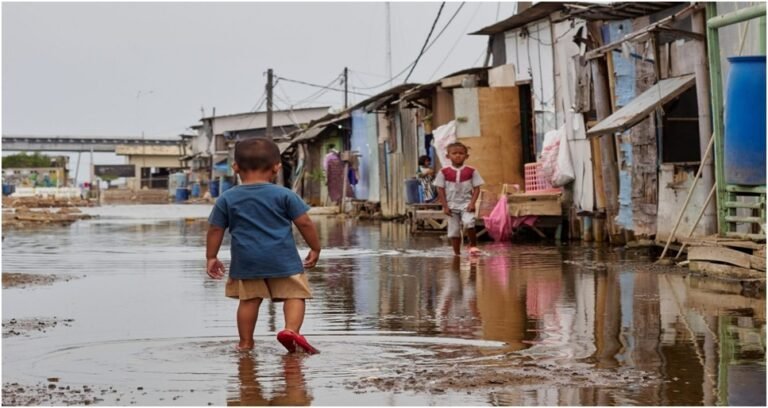
In much of the Global South, it lands differently. A girl in a small town doesn’t wait for a report. She feels it when her younger brother faints in a heatwave that lasts longer every year. She sees it when her school shuts because rains have turned streets into rivers…..again. She lives it when food prices jump after crops fail So for her Climate Change is not just some “Topic” for her it’s just….life.
Her Grandmother Nods sitting beside her. She doesn’t say “climate crisis”. She just says, “The rains don’t listen anymore,” or “This river isn’t the river I knew.” She remembers decades when the monsoon arrived on time, when the well stayed full all season. Now the timing slips, and the well runs dry early.
Here’s the twist: the places where climate is most real are often the places with the least power to change it. The girl wants to yell. The grandmother knows yelling alone doesn’t move systems. That gap, between raw urgency and hard limits, is exactly where they need each other.
The Gen Z energy: full send on climate
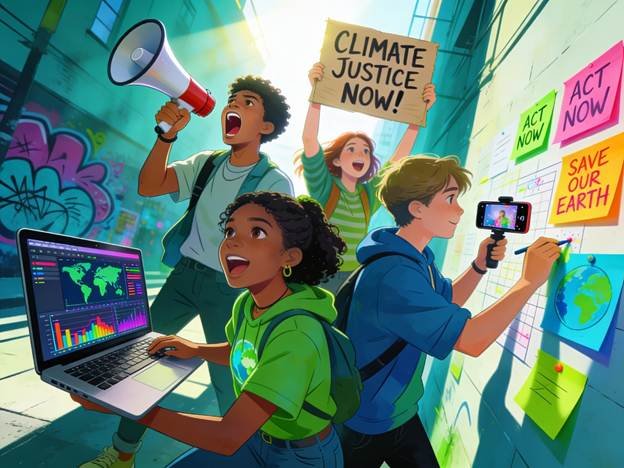
Gen Z are turning climate anxiety into action. They’re outside ministries with “No Climate, No Future” signs. They’re cutting explainers that turn dense science into 30‑second videos. They’re calling out brands for greenwashing and leaders for empty statements. “Thoughts and prayers” doesn’t cut it with them.
There’s something powerful here. Gen Z will live longest with the fallout of today’s decisions. Of course they’re impatient. Of course they don’t want to “wait their turn.” Their anger is rational. Their zero‑chill about the future makes sense.
They also move fast. One post, one thread, one reel…and suddenly thousands know about a local flood, a bad law, a broken promise. They don’t scare easily. Big demands? Cool. Awkward questions? Even better. “The climate isn’t being realistic, so why should we be?” could honestly be a Gen Z tagline.
But fire has a cost. Constant doom‑scrolling and “crisis mode” can burn people out. It is uncommon for news to slow down, and the solutions to be as fast as the news. It is not uncommon to think after a viral event, “But did anything really change?” Not every viral Thread knows the ins and outs of budgets, movements of laws, or the kinds of people who quietly holds the real power in system. Gen Z brings the heat. But heat needs direction if it’s going to build something that lasts.
Older wisdom: long memory, quiet skills
If you picture yourself sitting with someone much older, maybe in their 60s, 70s, or 80s…They have seen the climate change slowly and all at once. A farmer can tell you exactly when the seasons started “acting weird.” He remembers the monsoon rhythm from his childhood, a certain month, a certain pattern. He’s watched it drift year after year. He can list which crops “died” in the new heat and which ones stubbornly survived. He knows which well never really refills like it used to, and how families coped through previous droughts.
A retired engineer might talk about a dam everyone once celebrated as the answer. She watched as silt built up faster than predicted, as ecosystems shifted, as water somehow never reached the poorest neighbourhoods it was meant to serve. She learned the hard way that a “technical fix” can fail if power and justice aren’t part of the design.
A former teacher can tell you about movements he joined when he was the one full of fire. Some won. Many fizzled. Over time, he learned which promises mean something and which are just for the microphones. Which meetings matter, which are theatre. How to read power without letting it break you.
This is the stuff you can’t binge‑watch your way into. It’s only earned by staying, watching, failing, and trying again. Older generations carry patterns: what tends to work, what usually collapses, where institutions bend and where they dig in their heels. They’ve built trust in their communities over decades. You can’t buy that, brand that, or speed‑run it.
And yet, they’re often background characters. Young people may assume, “They don’t get climate science” or “They don’t understand our world.” Older people sometimes think, “These kids are loud but naive.” So everyone goes a little bit deaf and shared knowledge stays locked in separate rooms.
Why one generation alone will fumble the bag
The climate crisis is not a test where one person gets the right answer. It’s more like a house slowly catching fire while everyone lives inside.
If Gen Z tries to handle it solo, here’s what happens: they sprint. They carry buckets, move fast, shout directions, get a lot of things going at once. But some water lands in the wrong places. Some energy goes into fights that don’t move the needle. They may repeat strategies that already failed decades ago, simply because no one told them. Eventually, people get exhausted. The fire’s still burning; the crew is wiped.
If only older generations respond, another pattern shows up. They know, almost instinctively, where the fire will spread and how it might behave. They understand the wiring of the house. But they move cautiously. They’ve seen efforts crash before, so small fires start to feel “normal.” They might tell the young, “You can’t win against this,” when actually, with new tools and speed, you might. The fire grows while they perfect the plan.
If both show up together, the story shifts. Young people bring urgency and reach: “We need to move now.” Older people bring direction and endurance: “Yes, and aim here, not there. We’ve tested those other routes.” One side is the spark; the other is the pilot light that doesn’t go out.
That’s the alliance we actually need.
What intergenerational teamwork could look like
Think of a young activist who maps recent floods in her town. She collects videos, builds a clean visual, posts a thread that blows up. For two weeks, everyone is talking. Then the algorithm moves on. Out of the digital world, still nothing changes.
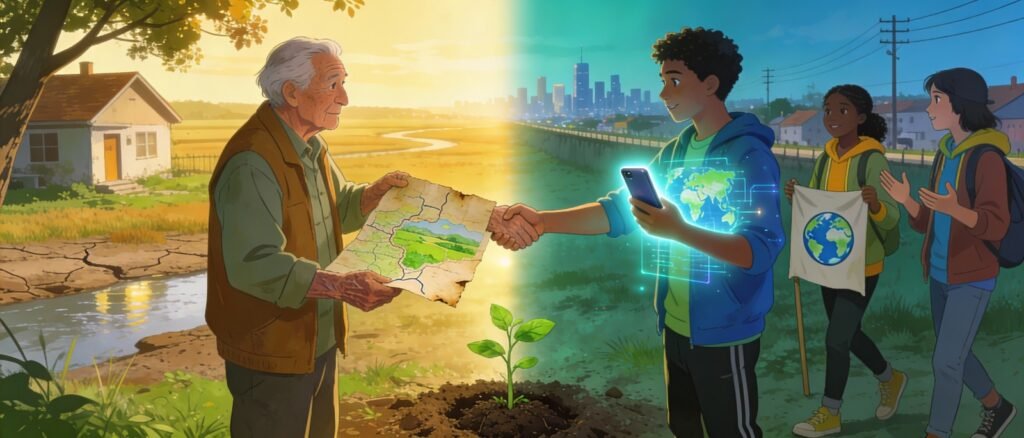
Now, picture her sharing a seat with her grandfather who’s been living in that place for 60 years. He takes a glance at her map and exclaims, “You are absolutely correct, it is worse now.”But see this corner? It has always gone under first. Ever since they laid that drain wrong in the late ’80s. It’s not bad luck. It’s bad design.”
She adds his memory to her data. Together, they go to the local engineer and say, “Look, the flood line repeats. Same spot, same mistake, every time.” It’s no longer just a sad story; it’s evidence. And that’s when change starts to get real.
Or picture a youth group that launches a petition for a climate law. They get tens of thousands of signatures fast. It’s impressive’ and fragile. A retired civil servant joins them and quietly explains how laws actually move: which committee will see the bill, who chairs it, what other interests might block it, how long it takes, how to keep pressure on for months, not weeks.
Suddenly, the campaign isn’t just a spike of outrage. It grows legs. Youth handle visibility and momentum; the elder helps them build a path into the system.
This isn’t theory; it’s a blueprint. Data + memory. Speed + stamina. Story + structure.
A word to Gen Z: keep the fire, build the bridge
If you’re Gen Z or close, here’s the gentle nudge: don’t just “ok boomer” and move on. Instead:
Sit with an elder’ family member, neighbor, someone from your mosque, church or community center’ and ask the question, “What is the change in weather, water and seasons in your lifetime?”
Then just… listen. No fact‑checking, no “Actually…” Just let them download the long version.
When you’re planning a campaign, ask an older person, “What’s the boring detail I’m probably missing?” You’ll be surprised how often that one boring detail is the real barrier.
Bring older voices into your spaces’ events, podcasts, Insta Lives. Let people see climate wisdom as both young and old, loud and calm. It doesn’t make you less radical; it makes your work harder to ignore.
And please, pace yourself. Talk to someone who have been in long fights and ask how they maintain both Rage and patience at the same time. & You may rest now. A burnt‑out activist doesn’t help the planet.
A word to elders: don’t ghost the fight
If you’re older, your role is not “sit quietly and feel guilty.” You are still much needed.
Before giving any advice, ask these young people what they are doing and why it is so important to them. Provide contacts, shares, and the traps you’ve experienced’ but let them be the one to speak. You are a mentor, not a ruler.
If their methods seem weird, all the online stuff like hashtags and TikToks, ask what they mean by it instead of tuning it out. You don’t have to like it. What matters is staying open to it.. Your experience plus their tools is a powerful combo.
Most of all, tell the truth about your generation’s story: what you tried to change, where you pushed, where you stayed quiet. That honesty is a gift. It can help them skip mistakes that cost your peers years.
You don’t need to act young or live online. You just need to show up and say, “I’ve been here a while. “Here is what I have learned over the years & i want you to Teach me what you know, so we can help eachother”
The house we’re all in
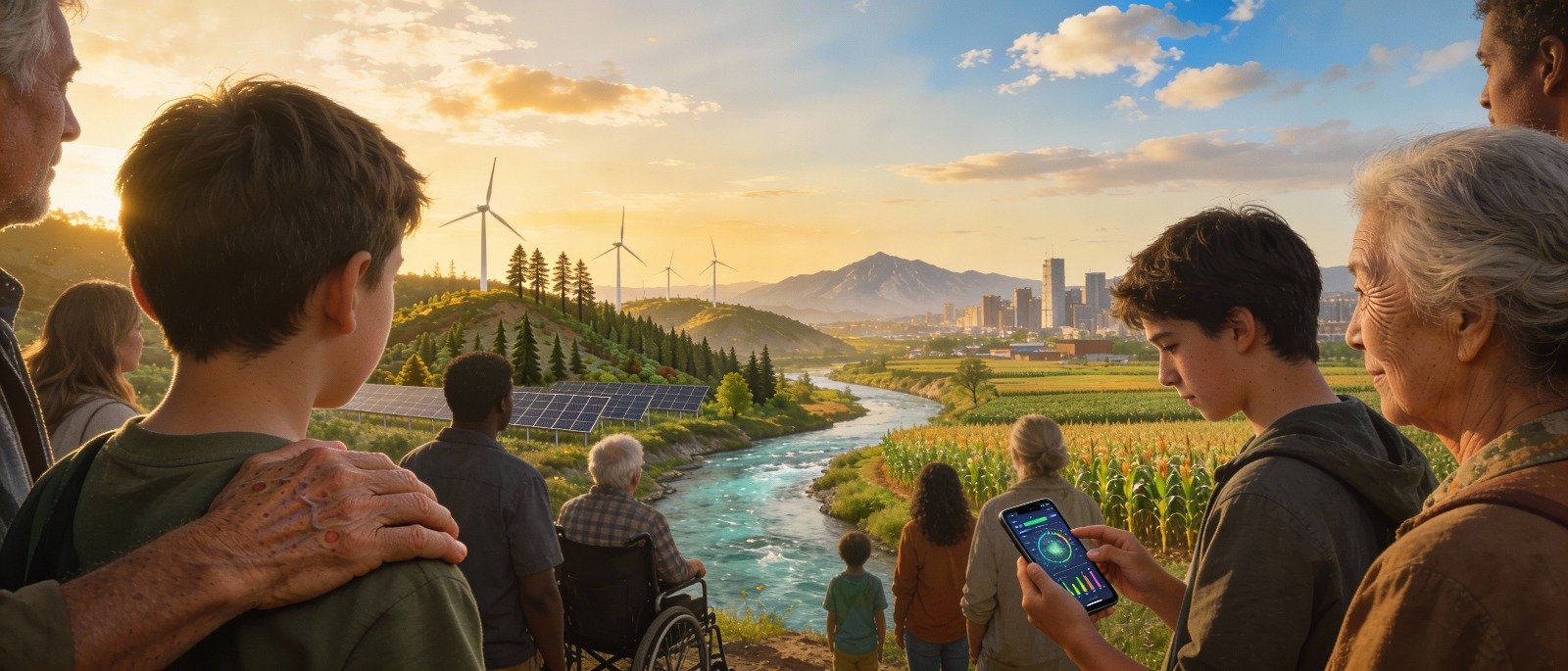
Climate change is a house on fire that nobody can move out of. The youngest will live longest with the damage. The oldest remember how the house was built, when cracks first appeared, and which repairs held. Both views are real. Both are needed.
If generations spend their time arguing about who “gets it,” the fire wins. “Everything changes when a younger person and an older one sit together, drop their guard, and say, ‘I’m scared. I need your help.’ Let’s figure this out.”. Fear becomes shared. Power becomes shared. Solutions stop being a solo performance and become a collaboration.
Maybe the most powerful climate sentence right now is also the simplest:
“Pass the knowledge & I’ll make it happen.”




 Abdul-Razak Issifu Yidana
 Amadu Barrie
 Primrose Mutema

What i do not understood is in truth how you are no longer really a lot more well-liked than you might be now. You are so intelligent. You already know thus significantly in terms of this matter, made me in my view imagine it from so many various angles. Its like men and women don’t seem to be interested until it is one thing to accomplish with Woman gaga! Your personal stuffs outstanding. At all times handle it up!
Youre so cool! I dont suppose Ive learn something like this before. So nice to search out somebody with some unique thoughts on this subject. realy thank you for starting this up. this website is one thing that is wanted on the net, somebody with a little bit originality. useful job for bringing one thing new to the web!
PHmapaladlogin gets you straight to the games, no fuss. Easy interface and a decent selection of games make it a solid choice. Give it a try and see for yourself! Get playing at phmapaladlogin.
Jollibee777ph? Haha, that’s a funny name. I’m curious, though. Gotta check it out because of Jollibee. Take a look at Jollibee777ph: jollibee777ph
Need the ph646 app? ph646download seems like the place to grab it. Simple and fast to get your game on. Get after it at ph646download.
There is perceptibly a bundle to realize about this. I consider you made various nice points in features also.
Thank you, I’ve just been looking for information about this subject for a while and yours is the best I have found out so far. But, what concerning the conclusion? Are you positive concerning the source?
Definitely imagine that that you said. Your favorite justification appeared to be on the internet the simplest thing to consider of. I say to you, I certainly get annoyed whilst other folks think about worries that they just don’t recognise about. You managed to hit the nail upon the highest and defined out the whole thing without having side-effects , people could take a signal. Will probably be again to get more. Thank you
Good write-up, I’m regular visitor of one’s web site, maintain up the nice operate, and It is going to be a regular visitor for a lengthy time.
Hello my family member! I wish to say that this post is awesome, great written and come with almost all significant infos. I’d like to look more posts like this.