

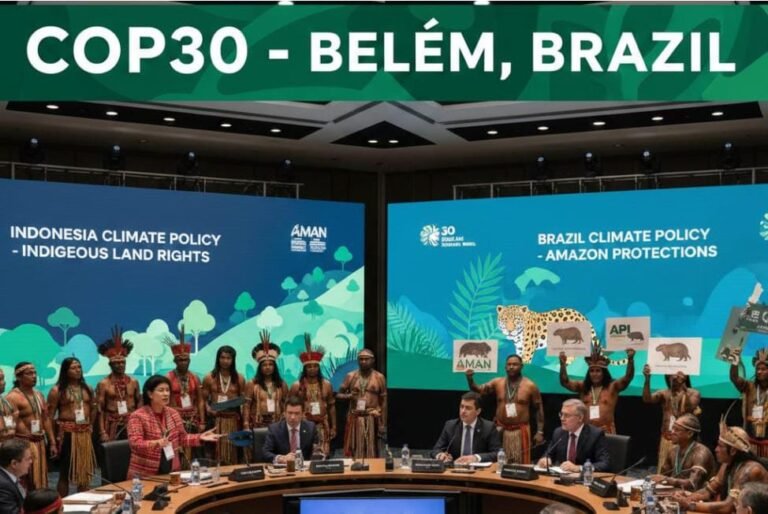
The COP30 Malawi delegation in Belém, Brazil, was reflective of the increased vulnerability of the country to the effects of climate change. At the same time, it was also an indicator of an increasing determination of the country to play an active role in the global climate governance. As a least-developed country with a dire situation due to floods, arid climate and tropical cyclones, Malawi framed its COP30 agenda around three main goals. Firstly, finding a way to provide a stable financing to adaptation efforts. Secondly, enhancing loss and damage mechanisms. Finally, increasing the transparency of climate action policymaking. The anthropogenic greenhouse gas emissions in the country are still insignificant, but its involvement at COP30 pre-empted the ideals of climate justice, and the overall goal of the country to become a leading participant in the global climate negotiations.
From Vulnerability to Verification: The PAIP Initiative
Malawi introduced the Paris Agreement Implementation Platform (PAIP), which is an AI-verified national climate-tracking system. This platform was notable not only for its technical sophistication, it also holds political significance within the framework of global climate governance. Transparency, measurement and, verification is some of the areas where Least Developed Countries have been depicted as incapable, which tends to strengthen the mistrust and conditionality of donors in the provision of climate finance. Malawi came out directly to challenge this story by introducing PAIP.
This system will help enhance the national measurement, reporting and verification (MRV) systems. This is done through AI to monitor the climate commitments, implementation and financial flows under the Paris Agreement. PAIP will solve fundamental flaws that many developing countries have including generating timely, credible, and standardized climate information that is up to the international reporting standards. This move by the Malawi government to foreground verification and accountability was an indication of readiness to harmonize domestic climate governance with the new standards of transparency.
On the political front, the introduction of PAIP was a diplomatic tactic. The Malawi’s presentation of this system, transparency mechanism at a UN climate conference re-framed the country as an active participant in climate aid and not just as a recipient. This intervention enabled Malawi to have credibility in discussions on adaptation finance and loss and damage. This gives more weight to the argument that more financial assistance would be coupled with more robust accountability systems.
PAIP also represented a change in the Malawi climate diplomacy, which was based on vulnerability appeals to one that is verification based with trust-building, and institutional reform. Malawi also added a tangible governance tool that showed willingness to handle the climate finance and implementation effectively. This intervention marked a clear shift in Malawi’s diplomatic positioning. Rather than relying solely on vulnerability-based claims, the country presented itself as capable of contributing governance innovation to the global climate architecture.
Adaptation Finance as a Diplomatic Priority
Malawi also emphasised adaptation finance during the negotiations. The representatives claimed that the issue of adaptation should be considered as an urgent since the economy and food security of the country rely on climate-sensitive agriculture. In Malawi, the recurring climate shocks have inflicted severe losses on livelihoods and infrastructure. Over time, these impacts have placed increasing strain on social welfare systems and state capacity
The country also called for climate finance that is predictable, sufficient, and primarily grant-based. The Malawi delegation highlighted the challenges faced by least developed countries (LDCs) in accessing complex financing mechanisms. They highlighted that there is a need to streamline these systems in order to enable the vulnerable countries to access funds efficiently. This stance is consistent with the larger LDC and African Group advocacy that indicates the lack of balance in the support of mitigation and adaptation in global finance flows.
Demonstrating Credibility Through Local Adaptation
Beyond the formal negotiation rooms, Malawi also presented the practical outcomes of community-based adaptation efforts. These have been carried out in different districts of the country. The examples include afforestation and reforestation campaigns in Mangochi, watershed rehabilitation, adoption of climate-smart agricultural practices, and better early-warning mechanisms that would safeguard the vulnerable rural populations. These demonstrations enhanced Malawi’s credibility. Even with restricted national resources, there are some meaningful resilience-building activities in place. These tangible examples further showed that more climate finance would be translated into real on-the-ground outcomes.
Coalition Diplomacy and Small-State Influence
The other major contribution from Malawi was that it actively took part in collective negotiation forums. These include the African Group of Negotiators, the Least Developed Countries Group, and Southern African Development Community delegations. Through position coordination, Malawi advocated a more ambitious New Collective Quantified Goal (NCQG) on climate finance, enhanced technology transfer, and enhanced support for the countries that are most vulnerable to climate shocks. These coalitions made Malawi’s stance stronger, and its priorities were mirrored in more comments from other African and LDC countries.
Coalition politics continue to play a vital role in the small states in international climate negotiations where power asymmetry usually restricts their direct impact.
At COP30, Malawi intentionally employed the climate justice discourse to develop its proposals. The delegation emphasized that Malawi and other countries like it have contributed practically nothing to the global historical emissions, but its citizens are affected by the climate the most. This argument was based on the principles of distributive justice and historical responsibility which is becoming more apparent in the global climate discourse. Malawi cited the imbalance of the consequences of events like Cyclone Freddy, which resulted in massive displacement, destruction of infrastructure, and economic imbalance in the long term. Malawi gave the negotiations an interesting moral aspect by basing its diplomatic message on lived experience.
Malawi’s performance can be termed as strategic and future-oriented. The nation juggled three functions. Fist, a very vulnerable state that argued justice, second one, a negotiator that joined larger coalitions to gain leverage and the last one, a policy innovator who provided new instruments of transparency and accountability. This association increased the visibility and credibility of Malawi. The introduction of the PAIP platform, specifically, made Malawi stand out among most other LDCs, indicating that it was ready to improve the governance systems in terms of climate reporting and monitoring finance.
From Diplomatic Visibility to Domestic Implementation
Although these achievements are commendable, the real evaluation of Malawi’s engagement at COP30 will ultimately take place on the ground. To have a meaningful diplomatic progress, it should be translated into tangible benefits, which may include increased funding of adaptation, enhanced institutional capacities, and effective national implementation systems. The internal climate governance mechanism of the country still faces challenges of regulatory harmonisation, lack of resources in both national and sub-national levels. The shift of the promises and partnerships established at COP30 into measurable outcomes will depend on the long-term political commitment, continuous monitoring, and reasonable use of the PAIP platform.
The active presence of Malawi at COP30 was a major step in the history of Malawi in climate diplomacy. The country clearly explained its weaknesses and at the same time showed willingness to provide innovative solutions to global climate governance challenges. Malawi enhanced its visibility in global climate talks through a synthesis of empirically based advocacy, models of grassroots implementation, and tactical coalition affiliations. The next step is transforming the diplomatic eminence into practical adaptation outcomes that enhance the strength and well-being of Malawian communities.




 Jonathan Tarnue Payne
 Precious Douglas Maulana
 Eslam Mohamed Elsheikh
 Lutfi Nurachma
 David R.K Brown
 Asef Jafari
Giao diện website của nhà cái chính là điểm cộng lớn đối với các bet thủ lần đầu truy cập. chơi bài 66b Trang chủ có sự kết hợp hài hoà giữa 2 tone màu đỏ – đen vô cùng bắt mắt tạo nên vẻ đẹp sang trọng, đẳng cấp. Ngoài ra, các bố cục website cũng được sắp xếp rất logic để người mới dễ dàng thao tác. TONY12-26
Used bong88org for a bit. It’s not bad, easy enough to use. Check it here and have fun: bong88org
Okay, so I tried the phl63app, and ang ganda! The games are smooth, and I like how easy it is to navigate. Sana all ganito ka-ayos! Definitely giving it a thumbs up.
Downloaded taitranggasv388 app. So much easier than using the browser. Definitely recommend! Check it out: taitranggasv388
168fbet is top tier. If you guys want the best experience, look no further. I have been around the block and by far, 168fbet ranks the absolute top! 168fbet
Seriously, that 1win aviator download. This should be everyone’s favorite. The graphics are incredible, very engaging. It’s my daily dose of fun and potential winnings. 1win aviator download
Yo! 368betlive, huh? Seen it around. Anyone hitting it big on there? Thinking about giving it a shot. What’s the lowdown? More info here: 368betlive