

Leading the Charge for Climate Justice
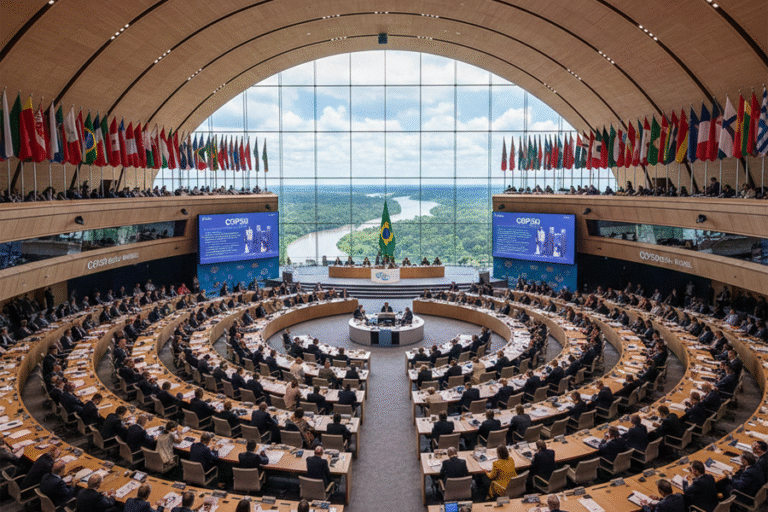
Malawi, one of the least developed countries (LDCs) on the planet, was among the vocal and strategic countries at COP 30 in Belém, Brazil. The Malawian delegation made the Malawi climate diplomacy based on the urgency, justice, and tangible assistance, under the leadership of the Minister of Natural Resources, Energy, and Mining, Dr. Jean Mathanga.
The Voice Malawi needed at COP30.
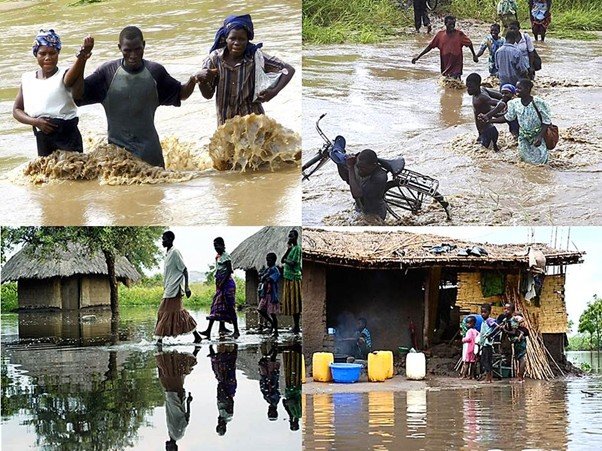
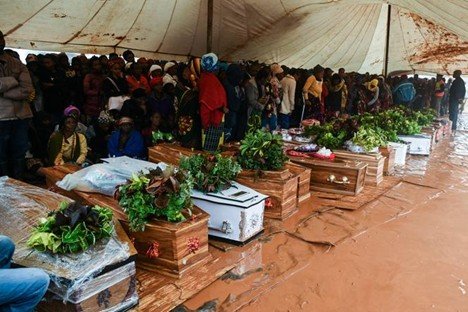
Malawi was of significance especially with respect to the timing of COP30. The nation had come to the Brazil summit with the country still in the aftermath of numerous climate disasters which had hit within a short period of time in the preceding years. Freddy in 2023 had killed 679 and displaced more than 600,000 people and 2024 El Niino-induced drought left 4.2 million Malawians with acute food insecurity.
This scenario accorded the Malawi diplomatic activities moral authority that reverberated inside the conference halls. When Minister Mathanga was quoted saying that climate-driven disasters were undermining livelihoods and blocking food security, she was not quoting reports, she was talking about what communities such as that in the Machinga district had gone through that year where families had lost their crops to floods as well as their loved ones to mudslides.
The Strong Statement of Power in Malawi.
LDC Group made the best statement in the opening plenary which was given by Dr Jean Mathanga. She emphasized that Malawi is bearing the cost of a crisis it did not instigate that implies that climate induced catastrophes are undermining livelihoods, annihilating food security and diminishing economic benefits. By turning hunger and vulnerability as the consequences of global inequalities rather than the inner failure, Malawi transformed the discussion on the topic into the responsibility, equity and the need of the urgent actions taken by the developed world.
Togetherness and Planning: The Keystone to Success.
Before COP 30, the Principal Secretary of Malawi Yusuf Mkungula urged all the delegates to speak with a single voice when he said that the country needed to have coherence in how it handles its climate priorities. He added that the unsurpassed and efficient delegation would be required to help Malawi in tabling crucial issues like climate finance, adaptation, and loss and damage.
This unity focus and preparation were what made the approach of Malawi different with numerous other delegations. Through keeping the whole team informed about the overall priorities in the country and delivering the same message, Malawi maximised its scarce resources and diplomacy. The unity of the delegation enabled the negotiating partners to be more involved and difficult to the opposition to capitalize on the differences within the group.
Fundamental Demands: Adaptation, Loss and Damage.
Dr. Jean Mathanga seized the moment to make more global adaptation demands, indicators and larger funding to LDCs. She asked adaptation finance to be tripled so that the vulnerable countries can acquire resilience. She also paid attention to operationalization of the Loss and Damages Fund, and she insisted that the Fund should be adequately financed and availed through simplified procedures to ensure that the most vulnerable populations are not brought down by the delays in the bureaucratic procedures.

The demand to triple adaptation finance represented the calculations of what Malawi and other countries of the sort require to establish meaningful climate resiliency. Already existing amounts of funds leave giant disparities between requirements and assets, compelling nations to make unfeasible decisions on which communities to safeguard and which threats to tolerate. The focus of Mathanga on simplified operations of the Loss and Damage Fund responded to a long-standing frustration that most vulnerable people are unable to access available funds when disasters happen due to the complexity of the bureaucracy.
Action Innovation: the Paris Agreement Implementation Platform.
At COP 30, Malawi launched the world’s first AI-enabled Paris Agreement Implementation Platform (PAIP), (the first digital environmental treasury in the globe), integrating artificial intelligence, satellite images, and blockchain to quantify, validate, and report emissions reductions, paying in. Such innovation will offer the possibility of tracking carbon credits, recovering results, and financing flows in a transparent way that will build confidence in the investors and make Malawi a potential model to other Global South countries.
It was a masterstroke when the PAIP was launched. It proved that Malawi does not only demand the assistance but also becomes innovative and a leader in climate governance. By using modern technology to facilitate transparency and accountability Malawi was able to resolve one of the most important issues that at times creates a barrier in climate finance flows as to whether funds will be spent wisely and impacts can be realized. This makes Malawi a companion of climate action, rather than an aid recipient.
Establishing Relationships: The Singapore Carbon Credit Agreement.
On November 20, 2025, Malawi and Singapore signed a Memorandum of Understanding to collaborate on carbon credits under Article 6 of the Paris Agreement. The transaction aims at identifying mitigation projects in Malawi that can generate high quality carbon credits which can be bought by the carbon tax paying firms in Singapore to offset a portion of their emissions. With regards to Malawi, the alliance is the opportunity to make an investment in such spheres as the sustainable forestry, energy, and agriculture.
This collaboration is a bright example of the type of South-South and cross-regional collaboration that could speed up climate action and bring economical gains to affected nations. In the case of Malawi, the revenue of carbon credit can finance the adaptation investments and sustainable development initiatives. In the case of Singapore, cooperation with a nation that shows accountability of carbon in the form of PAIP is credible and assuring in quality. The transaction demonstrates that innovation (PAIP) and partnership might collaborate to achieve win-win results.
Critical Evaluation: COP30 Failure.
The Global Goal on Adaptation (GGA) was adopted at COP 30, and major compromises were appreciated by Malawi delegation. In the Malawi reporting, some of the indicators and the ways of implementation of adaptation were not as the LDC expected. This is a pointer of the acute vulnerability that Malawi is experiencing as indicated by Minister Mathanga Malawi is experiencing climate shocks that include floods, droughts, extreme heat, that is compromising food security, livelihoods, water supply, and economic growth.
This is a blunt evaluation of how far one has fallen behind the expectations of COP30 and what Malawi and other LDCs require. Although the Global Goal on Adaptation constitutes a step forward, its indicators and mechanisms of implementation are too few regarding the intensity and urgency of the climate crisis of vulnerable countries. The fact that Mathanga admitted these deficiencies even when celebrating the gains is a sign of diplomatic expertise of being constructively engaged and yet telling the truth about the consequences.
Making Smallholder Farmers the Center: AGRA Alliance.
Malawi, in its COP 30 engagement was oriented towards the needs of its stakeholders which were farming oriented. The Alliance for a Green Revolution in Africa (AGRA) needed a farmer first climate breakthrough, which puts greater emphasis on soil, social protection and resilience investments in smallholder agriculture. This could be reiterated to the factual reality of Malawi, which is dependent on the rainfed agriculture, and the unreliability of the rain, soil erosion and constant shocks endanger the output and sustenance. AGRA is of the opinion that the adaptation finances need to be channeled on the smallholder farmers who feed the weak populations.
This congruency with the interests of AGRA is indicative of Malawi realizing that climate policy should be based in affected communities’ realities. In the case of a nation where most of its populace, nearly 80 percent, relies on farming, climate change adjustments that do not consider farmers are fundamentally worthless. In requesting farmers in COP30, Malawi has made sure that the global climate agenda is not lost in the technical platforms but is linked to ground level demands.
Top-tier Interaction: An encounter with the UN Secretary-General.
Mathanga met the UN Secretary-General António Guterres bilaterally to request him to transform climate finance immediately. Malawi under this leadership has boosted the bargaining power of the weak nations whereby unity of force will be more crucial than disjointed demands. The Malawi COP 30 plan had a justice story in the sense that it stated severally that it is not its previous emissions that make it susceptible to climate but rather inequalities in the world. Such framing serves several diplomatic as well as communication purposes.
The Strength of the Weakness-Based Diplomacy.
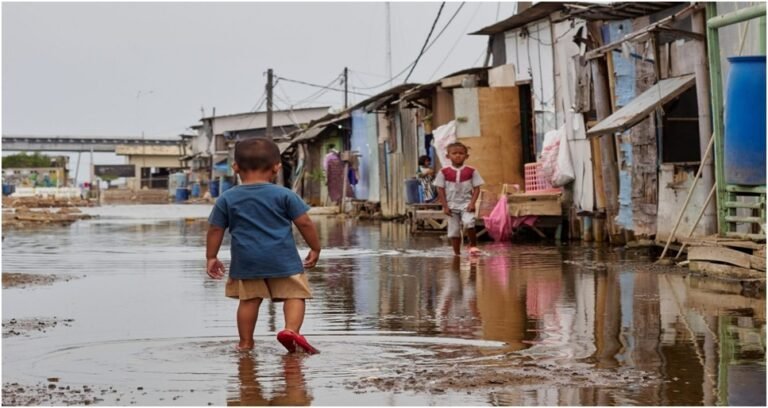
The COP 30 in Belem, Brazil, provided the vivid and useful example of how even the global negotiations can be utilized by the countries which are particularly susceptible to the climate changes to make their priorities articulate and claim the justice of climate. As a nation that has suffered multiple times due to floods, drought, cyclones and rise in temperature, Malawi arrived at the conference with a worsening hunger crisis which is directly connected to climate change. These issues preconditioned the accent and the urgency of the Malawi diplomatic, which became especially noticeable in the circle of the Least Developed Countries (LDCs) and the rest of the frontline nations.
A Small Country, Big Impact.
The COP 30 witnessed Malawi to demonstrate that even the least powerful countries in terms of climate can make diplomatic leap beyond their symbolic value. As it introduced justice, hunger, and adaptation in the middle of its story, Malawi was able to articulate its existential climate predicament and propose policy viable solutions. However, additional promotion of COP gains in real resilience will need more advocacy, smart partnerships, and sustainable access to funding.




 Abdul-Razak Issifu Yidana
 Amadu Barrie
 Primrose Mutema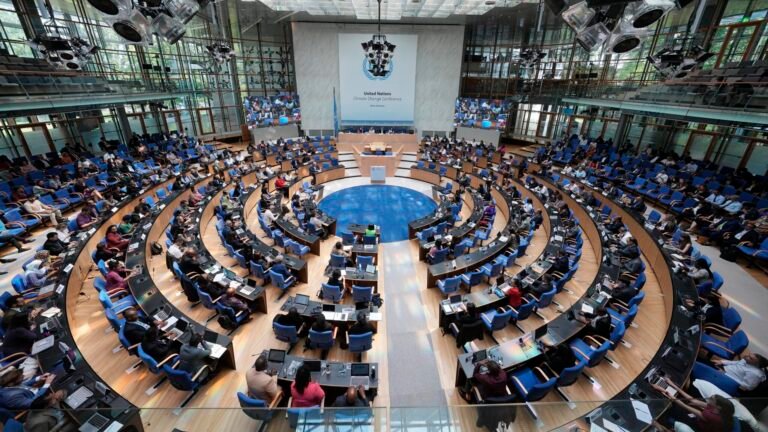

88vi treating me right! Great streaming options, especially for live sports. Definitely worth a look 88vi.
Nohu28, haven’t heard much about this one, but decided to take a gamble. Found some unique games I haven’t seen elsewhere. Worth a peek if you’re lookin’ for something different. nohu28
11betcon – not a bad option to see some promotions and events. Check them here:11betcon!