
A Disaster and the Road to Resilience
The Storm Arrives
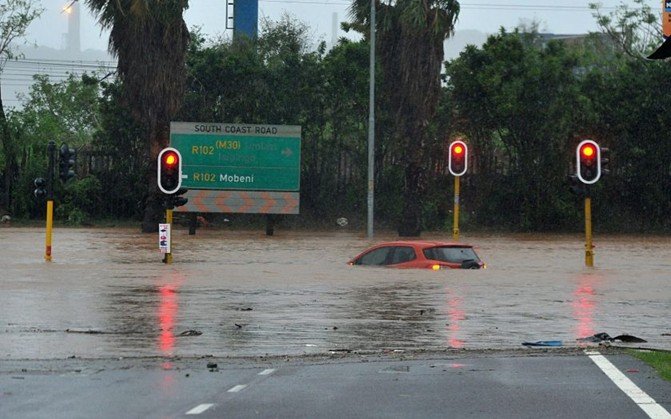
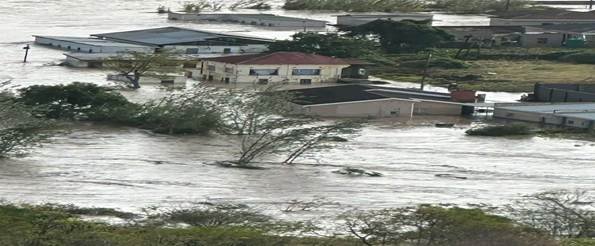
At the beginning of June 2025, South Africa was hit by one of the most devastating climate related disaster in recent history. An intense cold front caused by torrential rains caused disastrous flooding in the Eastern Cape Province. What started as a serious weather condition, soon expanded into a humanitarian disaster involving loss of lives, displacement of thousands of people and exposing the internal weakness in infrastructure and disaster readiness, especially in Butterworth and Mthatha, a major urban center near the rural heartland, became synonymous with the magnitude of the disaster. Streets turn into rivers, houses were submerged up to their roofs, and people had to find refuge on rooftops and in trees as floodwaters increased at a high rate. This disaster did not only enlightened the rawness of nature but also a system weaknesses in climate preparedness and disaster management.
(Government of South Africa, 2025)
Human Cost: Lives Lost and Families Broken.
During emergency efforts, the human cost was confirmed to be alarming as authorities started providing immediate reaction to the incident. The early reports given by the government stated that at least 49 individuals were confirmed dead within the initial days of the disaster. Among these, six high school students and two adults died when a school bus was swept away by floodwaters near a river crossing in the Mthatha area. Several students were rescued after clinging to trees, while others remained missing. (Business Day, 2025)
According to the Government of South Africa, with search and recovery efforts continued throughout June, the official number of deaths increased drastically. By mid-June, authorities had confirmed 90 people death and this number would later exceed 100 in the following weeks as bodies were discovered in isolated places and identification procedures were made. (Government of South Africa, 2025)
The victims included, adults, children, and elderly residents of the area each of the fatalities spreading throughout families and communities. Entire families became homeless, and graven with no knowledge of what lies ahead.
Massive Displacement and Infrastructure Collapsed.
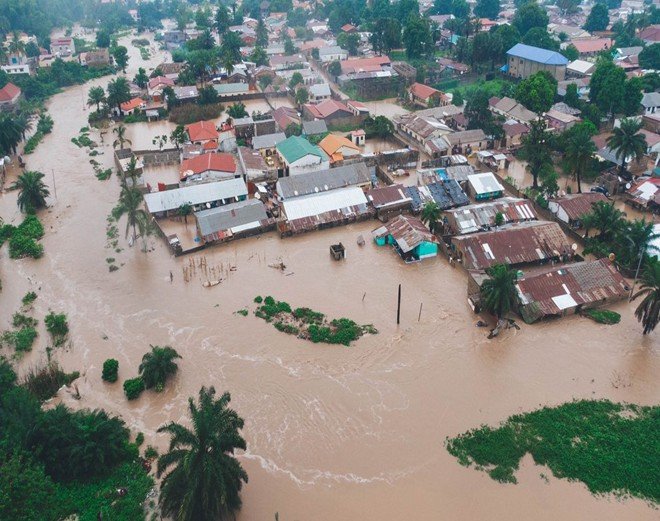
The floods did not only claim lives; it also ruined the structure of life in most of the communities. There were hundreds of families who were displaced and made to stay in temporary shelters, community halls and emergency care facilities as waters swept away their homes and others levelled them to the ground.
Critical infrastructure was severely damaged. Bridges and roads were swept away making it hard to deliver relief items. The breakdown of communication systems occurred because of electricity outages in most parts of the area thus isolating people at the time when they needed the most attention. At least 58 schools and 20 hospitals had been damaged or destroyed.
In addition to the short-term impacts, the flooding interfered with local economies. There was massive loss of small businesses, farms and informal sector activities that support the rural way of life. This meant many residents had their livelihoods lost overnight as crops were destroyed, livestock drowned and ferrying systems to the market were cut off. (News24, 2025)
Government Response and National Disaster Declaration.
The government of South Africa realized how dire the situation was and hence, it declared a national disaster soon after the floods started. This was a declaration that opened emergency funding’s, authorized more measures of disaster response, and organized national and provincial agencies to facilitate relief and recovery. (Government of South Africa, 2025)
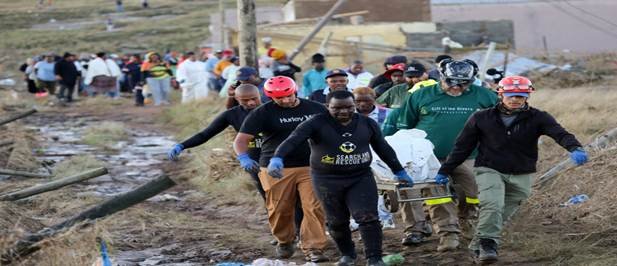
Massive search and rescues were conducted by provincial governments, as well as National Disaster Management teams. Emergency personnel’s were on duty 24 hours to identify survivors, pick up the dead’s, and offer immediate assistance to homeless families. Burial support programs were arranged making sure that families could bury their loved ones in a dignified way.
Nevertheless, the flood demonstrated the vulnerability of the local infrastructural set-up and preparedness to disaster. These were made worse by informal settlements in river floodplains, old drainage systems and absence of early warning. Respondents claimed that more investment in resilient infrastructure and climate adaptation would have help in reducing damage to lives and property.
Climate Change and Disaster Risk.
The severity of the floods of June 2025 is a reflection of bigger patterns of the world as a whole in terms of extreme weather. According to climatologists, the rising global temperatures raise the number of moisture-carrying units of the atmosphere, which leads to more serious rainfall events when precipitation conditions are met. Although individual weather events cannot be directly linked to climatic change, trends show that extreme rain and flooding is increasingly being common and intense across most parts of the globe, including the southern part of Africa.
Eastern Cape being one of the poorest provinces of the country, was exposed to the impact of this vulnerability. Its population is situated close to rivers or in floodplains where environmental dangers have not been taken into consideration. Having limited drainage systems and infrastructure that could not handle the heavy downpours, floods such as the one experienced in June 2025 show clear shortcomings in disaster risk management and climate adaptation measures.
Researchers and advocacy groups have focused on the fact that unless major investments are made in resilient infrastructure, early-warning systems and community preparedness, South Africa will keep bearing disproportionate losses of similar occurrence. The fortification of the local governance, the improvement of public awareness, and the incorporation of climate risk into development planning are pivotal undertakings that face the future. (Center for Disaster Philanthropy, 2025)
Community Support, International Aid and Resilience.
Despite the tragedy, there were some positives of community and international support. The Local NGO’s and international partners mobilized funds for food, water, medical care, and temporal shelter. Grassroots campaigns enlisted volunteers that facilitated distribution of supplies and assisted affected families.
International humanitarian agencies provided emergency funds and technical support to help South African relief agencies increase their operations. Philanthropic networks and the Diaspora communities contributed towards continued efforts to recover.
Such acts of kindness played a critical role in the intervention of urgent demands as well as emphasizing the strength of unity during crisis.
Reconstruction and Building Back Better.
During a period when the waters had subsided and emergency response agencies were redirected to recovery efforts, the post-disaster efforts to restore the Eastern Cape of South Africa in a meaningful manner started in earnest. The rebuilding of infrastructure, rehabilitating homes, and revitalizing local economies are all performing titanic tasks that will take long-term dedication to both government, business, and civil society.
The rebuilding process should not focus on physical recovery only but also resilience against disasters in the future. They include improvement of drainage systems, creating of strong early-warning systems and make sure that development policies must take into consideration environmental risks. It also implies giving community’s knowledge and resources that would help them to respond effectively when disaster occurs in the future.
Conclusion: A Wake up Call to South Africa and the Rest of the World.
The floods in South Africa in June 2025 serve as a sobering instance that climate change is no longer a far-off phenomenon it is right here, showing in first-hand and devastating consequences. The magnitude of human suffering, loss of economy and damage of infrastructures highlights the importance of strategies on climate adaptation and disaster risk reduction on everyone at all levels of society.
Although there is no community that can be totally immune to forces of nature, careful planning, strong infrastructure and well integrated public policy can considerably reduce the damages. As South Africa mourns its losses and begin the path towards recovery, the lessons of June 2025 should be used to determine the future actions not only at the national level, but also globally.
The flooding is a confirmation of the strength of nature and an appeal to action: to understand that the life of a person is fragile, to defend vulnerable populations, and to create the world in which disasters will no longer be met by just desolation, but by readiness, unity, and ability to withstand it.



 Abdul-Razak Issifu Yidana
 Amadu Barrie
 Primrose Mutema

Alright, Wild Bandito demo, let’s see what you got! Heard some buzz about this one. Gonna give it a spin and see if it’s worth my time. Hoping for some sweet wins! Check it out for yourself here: wild bandito demo
Heard mixed things about m36588vin. Some people really like it, others not so much. Guess you gotta see for yourself, right? Check them out here: m36588vin
8kBetApp is the next thing on my list! Seems easy to use which is exactly what I’m looking for. Download it here: 8kbetapp
So convenient having 74betapp on my phone. Makes placing bets on the go a breeze. Get the app here 74betapp.
Hey, checked out naya24. Looks pretty promising. Gonna bookmark it and see what’s new. Definitely worth a look! Check it out naya24
Gonna spend tonight lost in the q555game universe. Hope it’s as good as everyone says. Gaming time! Immerse yourself in q555game q555game
slot365 đăng nhập tự tin mang đến những chương trình khuyến mãi độc quyền, có giá trị thực tế cao nhất thị trường hiện nay. Đăng ký ngay hôm nay để nhận gói chào mừng lên đến 150.000 VNĐ tiền cược trải nghiệm và cơ hội nhân đôi số vốn trong lần nạp đầu tiên. TONY05-01