

What is COP?
First of all, it is necessary to comprehend the meaning of COP. Conference of the Parties to the Convention is the abbreviation of COP or the UN Framework Convention on Climate Change (UNFCCC), a treaty that was adopted in 1992 and officially recognized climate change as a threat to the world. The zeal of the principle of common but differentiated responsibility was also embedded in the treaty, that is, the greatest emitters ought to pay the claim because of the damage that its Green House Gas emission is causing.
The UNFCCC became legal in 1994 and has since been the backbone of the international agreements, the most recent being the 2015 Paris Climate Agreement, a collection of intentions designed to limit global temperatures to around 1.5 degrees Celsius (2.7 degrees Fahrenheit) above the temperatures before the industrial revolution to prevent the worst impacts of global warming.
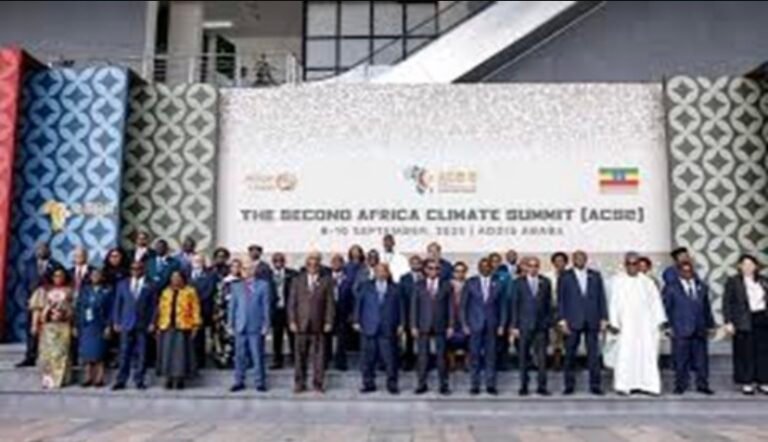
The first COP summit was hosted in Berlin, Germany, in 1995. An agenda-setting rotating presidency, currently occupied by Brazil, also pre-empts by hosting the two-week summit that makes the world aware of climate change in a bid to corral the member states to consent to new climate measures.
This has seen Gambia being a member of the United Nations, also with good representation in the present COP, and playing its part to ensure the attainment of the objective of the conference. (United Nations)
Performance of the Gambian Delegation.
The Gambia is a very important and quite noticeable participant of the 30th United Nations Climate Change Conference (COP30) that just concluded in Belem, Brazil. The Gambia, being a small country in West Africa, showed how small countries can have a great deal of influence on the global climate policy despite its small size and limited resources. They have been felt in several critical sectors in the course of the negotiations because of the good leadership of the government officials and a robust drive by the youth themselves.
One of the greatest achievements was the designation of Co-Facilitator of the adaptation discussions to Rohey John Manjang, the Minister of Environment, Climate Change and Natural Resources (MECCNAR) of The Gambia, by the President of the COP 30. The response that is required of countries when it comes to coping with the impacts of climate change, such as the rise in sea level, droughts, and bad weather, is called adaptation. (UNFCCC).
Adaptation means everything to the weaker states, as is the case with emission reduction. The Gambia at the Centre has led such a position in the negotiations that directly affects the survival of the small developing states and the African nations. The COP30 President himself had observed that the secret of a harmonious outcome was adaptation, and this indicated the trust in the Gambian leadership. It is under this facilitation that The Gambia was capable of spearheading the discussions towards working structures that would be in a position to help the countries at the highest risk (thepoint.gm).
Least Developed Countries Group
As the head of the Gambian delegation, Minister Manjang insisted on more funding access at the conference. She said The Gambia has developed good policies on climate change, but cannot pursue its goals unless it has the anticipated and adequate financial resources. Her words resonated with most of the other developing nations, who are in the same fight. Having combined forces, they became more powerful in their message, which demanded financial systems that are just, open, and responsive to the needs of the vulnerable populations. This advocacy made the Gambia a powerful voice on equity when it comes to climate action, in connection with financial assistance, resilience and adaptation.
The Environment Minister who spoke on behalf of the Least Developed Countries (LDC) group dialogue on adaptation, made a powerful appeal to act and urged the world to take action on global climate adaptation.
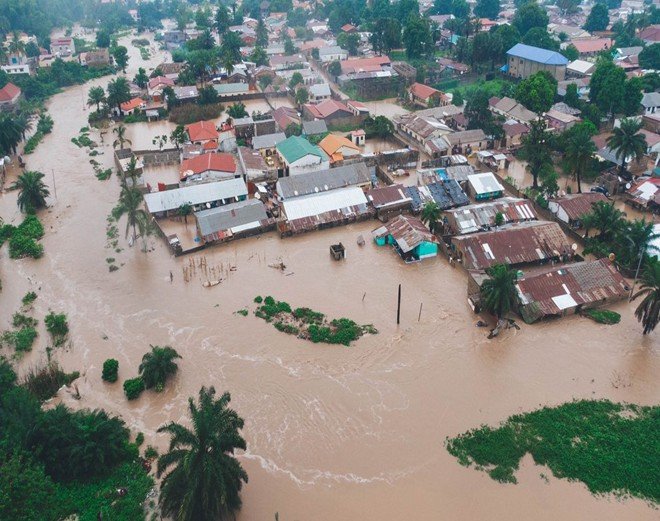
She stressed that the issue of adaptation is a national survival for the Gambia as the rising sea levels threaten to submerge Banjul that accommodates 80 percent of government institutions in the country. She also included that drought and unpredictable rainfall are becoming a problem in food insecurity and undoing development gains.
Minister Manjang emphasized that LDC gets only USD 9 per person in adaptation finance, with Gambia getting only USD 3, nearly half of which is in the form of loans. She stressed that adaptation finance is not an act of charity but a duty under the Paris agreement and urged developed nations to increase the amount of money they give out in the form of grants and meet the goal of doubling adaptation finance by 2025 and tripling the sum by the year 2030.
The Gambia’s commitment to contribute at least USD 1 billion to the Adaptation Fund and the LDC Fund before the end of the year 2025 in order to enhance the speed of implementation of the National Adaptation Plan was reiterated.
The Gambia’s’ Youth Delegation
The other bright spot among the Gambian delegates at COP30 was the youth delegates. The young representatives, in their turn, have made a powerful speech, where Kaddijatou Ceesay, the Coordinator of L COY Gambia, was the leader of the group representing the Children and Youth Constituency. They claimed to be the voice of the children and youth of the world, representing billions of children whose future was being decided in the negotiation rooms. They did not restrict their intervention purely to climate matters. They insisted on a world armistice against armed warfare and on climate justice and environmental sustainability, and associated peace and environmental sustainability with human rights. This extreme stand propelled The Gambia to the Centre of intergenerational justice; thus, in this aspect, the voice of the young generation could not be ignored.
The strategic influence of the Gambian delegation was well-known. It was noted that the team had the potential to bring together technical talks with moralization and advocating the urgency of climate justice. They did this in accordance with the longer African and Global South agendas, which strengthened weaker countries. The Gambia has demonstrated that they can be leaders in the delivery of climate diplomacy on various levels through the inculcation of ministerial leadership and youth activism at the grassroots. Such an authoritative figure combined with youth, made their input believable and poignant.
The results of the Gambia being in COP 30 was obvious. Their leadership on adaptation discussion based on models that concern resilience in vulnerable countries. Their financial activism brought into the focus structural obstacles and demanded that the policies regarding climate funding needed reform. Their actions with the youngsters also made ethical duty to preserve the coming generations prominent so that it was not disregarded at all during the discussions. In combination, these activities had more vivid image of the Gambia as a small but powerful nation in the international climate negotiations.
Conclusion
In conclusion, the Gambian delegation did extremely well at COP30 and in a multidimensional manner. Co-facilitating the negotiations on adaptation to climate, insisting on equal financing of climate, and giving more voice to the young generation made the Gambia one of the leaders among vulnerable nations. They did not only promote national interest but also enhancing international calls for justice, fairness and sustainability. To sum up, the performance of the Gambian delegation in COP 30 was a bright example of how even the small countries could contribute to international climate policy-making disproportionately.



 Jonathan Tarnue Payne
 Precious Douglas Maulana
 Eslam Mohamed Elsheikh
 Lutfi Nurachma
 David R.K Brown
 Asef Jafari
If you’re a fan of gà đòn c1, this site is for you. The best place on the internet for this kind of content. Check it out now at gà đòn c1.
Been playing on km88ph for a while now. Pretty decent. Solid selection of games. Give it a try. km88ph
Yo, been playing on fun605 a while now, solid platform, no complaints! Check it out fun605.
Was looking for Sprunki Phase 100000 and this page actually helped. The game is easy to open, the page structure makes sense, and it does not feel cluttered.
Nice page for Sprunki Phase 100000. It gets to the point fast, the link works properly, and the overall presentation feels polished enough to revisit later.
This Sprunki Phase 94 page is genuinely useful. It loads smoothly, the content matches the title, and the whole experience feels much better than most random mod pages.