
Why Malawi’s Climate Policies Keep Failing Its People
Eliza Edward was under seconds to decide on an impossible decision. When the floodwaters of Cyclone Freddy rushed down Soche Hill in March 2023 she held the hands of her children and fled, abandoning it all behind. Her husband vanished down the muddy torrent and was never found. The next year, Ellen Sinoya went back and discovered her one-hectare farm patched and the soil filled with sand and thus could not cultivate the maize and rice that sustained her family.
These are not single tragedies. They are the side effects of a catastrophic trend, which has put Malawi in a loop of climatic catastrophes that no emergency aid can release it out of. The 2015 floods have claimed at least 106 people and the 2019 Cyclone Idai (60 deaths) and back-to-back Tropical Storm Ana and Cyclone Gombe in 2022 (53 deaths combined) and the disaster Cyclone Freddy in 2023 (679 deaths) have led to many more deaths in the 5 years since 2015, with 4.2 million people facing starvation due to El Niño in 2024. All this resulted in direct losses in Malawi amounting to about $1.19 billion and the cost of recovery being even more than 1.7 billion which this small country simply lacks.
It is not whether Malawi is experiencing climate disasters. The question is why, catastrophe after catastrophe, the same people are affected by the same losses, why climate policies that are on paper turn out so disastrously ineffective to save people as storms and droughts inevitably come.
A Decade of Devastation
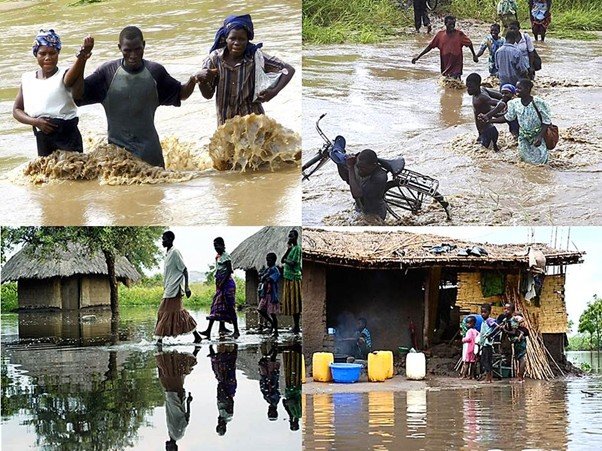
To appreciate the failure in Malawi policy on climate, we must first appreciate the incessant occurrence of calamities torching this small southeastern African country. In January 2015, there were 106 people and more than 200,000 displaced by floods worth up to $335 million in damages. Societies started restructuring thinking that they would get time to recuperate. They didn’t. Cyclone Idai hit four years later devastating the south of Malawi with 60 deaths and 975,000 people affected.
And then there was the nightmare of 2022 with Tropical Storm Ana striking January 24 and claiming 46 lives and displacing 190,000 people. Cyclone Gombe hit most of these same areas six weeks later when the communities had not yet recovered. A 78-year man was killed by the falling of a wall. The woman who is 49, her daughter of 32 years and her two-year-old grandson drowned as they attempted to cross a flooded river.
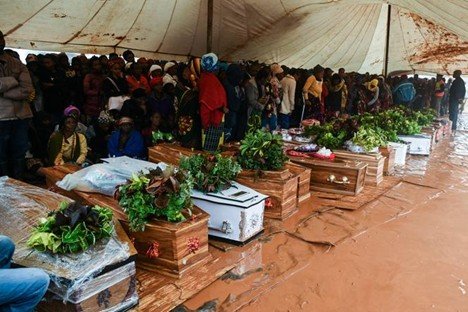
Then came Freddy. The longest-duration tropical cyclone on record (36 days) was the tropical cyclone Freddy that hit the coast in March 2023 and left six months of rainfall in six days. The statistics are astounding: 679 dead, 537 gone never to be seen, 2.3 million sickened, more than 600,000 displaced. The Machinga Rosebay Suman is talking in bits: “Not too much to tell you about Cyclone Freddy. I lost my son and husband which cannot be traced up to this point. Personally, I cannot feed these children here”. The disaster wiped out 440,000 acres of agricultural acreage and 1.4 million head of livestock. Maize price increased four times during twelve months.
As Malawians started recovering, there was another extreme of climate in 2024 severe drought. Late rainfalls and extended dry seasons were the results of El Niño conditions. Maize production reduced by 45 percent and President Lazarus Chakwera declared a state of disaster in 23 out of 28 districts.
In the case of Policy Presence and Protection Lacking.
Malawi does not lack policies on climate. The country has excellent structures on paper: the National Disaster Risk Management Policy, the National Resilience Strategy and the Paris Accord and Sendai Framework vows. However, catastrophe after catastrophe, these policies have never resulted in the safety of the individuals who require it most.
Such discrepancy between policy and protection demonstrates the inherent issues regarding the functioning of climate policy in the developing countries that are vulnerable. It is not a matter of coming up with good ideas or writing detailed documents, it is about putting them into practice. When there are limited resources, corruption is a problem, political will is variable and competing demands puts the government capacity to the limit.
The Science Nobody Acted On
The weaknesses of Malawi have been made known through climate science well ahead of time. The nation is in a hot climate zone and gets heavy rainfall, as well as endures extreme droughts in a short period of time. Tropical cyclones are common in Malawi. It has a topography with low lying Shire Valley which forms natural flood zones. In as much as scholars observe concerning the translation of science to policy, what is desired is a level playing field, or the aspiration of science as a common ground, where the knowledge can be used to make decisions.
When Communities Continue to Know But can do Nothing.
The disaster-prone areas had been raised by the communities severally during Cyclone Freddy due to deforestation, poor drainage systems, and hazardous settlement designs. However, such warnings did not become policy changes ahead of the calamity. It is not the absence of community knowledge. Local individuals know their weaknesses well. The issue is the absence of power relations to allow the community knowledge to influence the policy. The decision-making is controlled by the rich landowners, commercial interest and politically affiliated elites whose poor rural population has no political anchor to bargain through protectionist policies.
The Paradox of Agricultural policy.
Malawi is a country whose people are primarily subsistence farmers whose numbers constitute above 80 percent of the population, and the food that they grow accounts to 80 percent of what is consumed in the country. However, the agricultural policies have not managed to invest climate resilience in this important sector. Majority of farmers engage in subsistence farming which is rain-fed, and they are therefore at the mercy of the variability of rainfall. In the event of floods, crops are washed away. Fields turn withered when droughts come.
The Climate Justice Dimension.
The disasters experienced in Malawi due to climate shed light on the injustices in the world. The country plays an insignificant role in the emissions of greenhouse gases in the world. It has one of the lowest per capita emissions in the world. However, Malawians experience disastrous climatic effects with very little to cope with.
Following Cyclone Freddy that led to more than 1.1 billion damages in Malawi, Mozambique and Madagascar, international aid was resourceful but insufficient. The World Food Programme needed 26.7 million to reach 541,000 people, which is a small amount of the real requirements. The Central Emergency Response Fund has only been able to allot under 2 million dollars to the response to Malawi on the 2024 drought and 4.2 million people in the country were in acute food insecurity.
The COP27 Loss and Damage Fund is an initiative to reimburse vulnerable countries in terms of climate-related disasters that they are unable to avoid. However, funding is deplorable. Malawi has already lost over 1.19 billion between 2015 and 2023, about 10 per cent of the GDP wiped out by calamities in less than 10 years. No country can become resilient when it loses so much on a regular basis.
What a Good Policy would really entail.
The transition between disaster to resilience needs to be a shift between climate policy manifestations as aspirational plans to protection in practice.
Integrated Land-Use Planning: Proper policy should be able to curtail the development in risky locations and offer safe alternatives. This involves extensive hazard mapping to determine flood prone areas, landslide prone areas and drought prone areas; compulsory prohibition of permanent settlement in high-risk areas, which is done by manner of a statutory land system and customary land system; social provision of alternative land and resettlement aid to families that currently occupy high-risk areas; planting of dense forests on steep hillsides and river banks, which serves as natural barriers to floods and landslides; and strict enforcement of environmental regulation on commercial activities that enhance disaster risk.
Climate-Resilient Agriculture: To transform agriculture, large-scale awareness of drought-resistant crops varieties, investment into small-scale irrigation technologies, livelihoods other than rain-fed agriculture, low-cost crop insurance, agricultural extension services to all smallholder farmers, and a focus on soil conservation and water management are all required.
Effective Community Involvement: An effective policy must be participatory budgeting that provides communities with direct control over risk reduction funds, community based early warning systems, disaster committees in the village with real power and resources and involve the youth through training students such as Monica as change agents.
What Malawi Really Needs in the Form of International Support.
Climate resilience cannot be established by Malawi alone, despite its perfect domestic policies. The country requires grant-based adaptation funding (not loans), commitments on a multi-year basis, which will enable the country to make long-term investments, direct access to climate funds, which reduces bureaucratic processes, and covering the full cost of adaptation. Malawi also requires availability of drought resistant varieties of crops, renewable energy sources used to irrigate water, climate modelling equipment, water management equipment, and technological know-how through global collaboration.
Breaking the Cycle
Eliza Edward, Ellen Sinoya, Rosebay Suman, Pilirani Mtupa, these women and millions like them have gone through disaster after disaster as policies set to safeguard them fail each time. Their misery is not unavoidable. It is caused by policy failures that can be corrected through a strong political will and international assistance.
Malawi does not require additional aspirational policy paperwork. It needs implementation. It needs resources. It must have foreign allies who offer proper assistance rather than insufficient charity. Disaster cycle can be stopped. However, it needs to be changed, not on paper, but in practice, not in aspiration but implementation, not in responding to the emergency but in resilience, not in insufficient support, but in climate justice. The question we must pose is; when are we going to have enough disasters to make the policy that offers protection to the people who most require it?
The people of Malawi deserve nothing less than full protection and meaningful action.





 Jonathan Tarnue Payne
  Precious Douglas Maulana
 Eslam Mohamed Elsheikh
 Lutfi Nurachma
 David R.K Brown
 Asef Jafari
Been playing on ta28bet for a while now and honestly, it’s pretty solid. The games are legit, and I’ve had some decent luck. Definitely worth checking out if you’re looking for a new place to gamble online. Click here: ta28bet
3fcassino seems like a new player on the scene. Decent selection of games, I gotta say. I played a few hands of blackjack, and it felt smooth. You guys should check it out! Check this link out: 3fcassino
Found everything I needed about Bong88 at bong88bio.net. Good platform for info and links. See for yourself: bong88bio
Yo, 51gameapp is legit! I had some decent luck there last week. Worth checking out if you’re looking for a new spot to play. Get your game on at 51gameapp!
Hey, been checking out vpbetapp lately and gotta say, it’s pretty solid! Easy to navigate and they have a decent selection. Worth a look if you’re after some fun. Check it out here: vpbetapp
Alright folks, I’ve been playing at okgranmxcasino and I’m liking what I see. Good variety of games and seems legit. Could be your next go-to! Give it a try: okgranmxcasino