

Climate-induced floods and the Quiet Unravelling of Citizenship
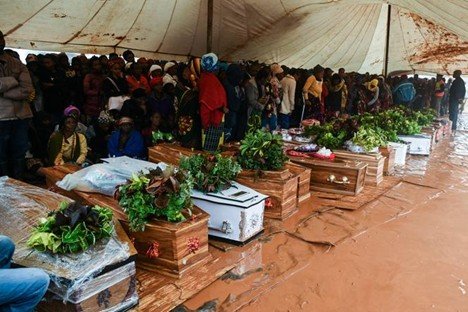
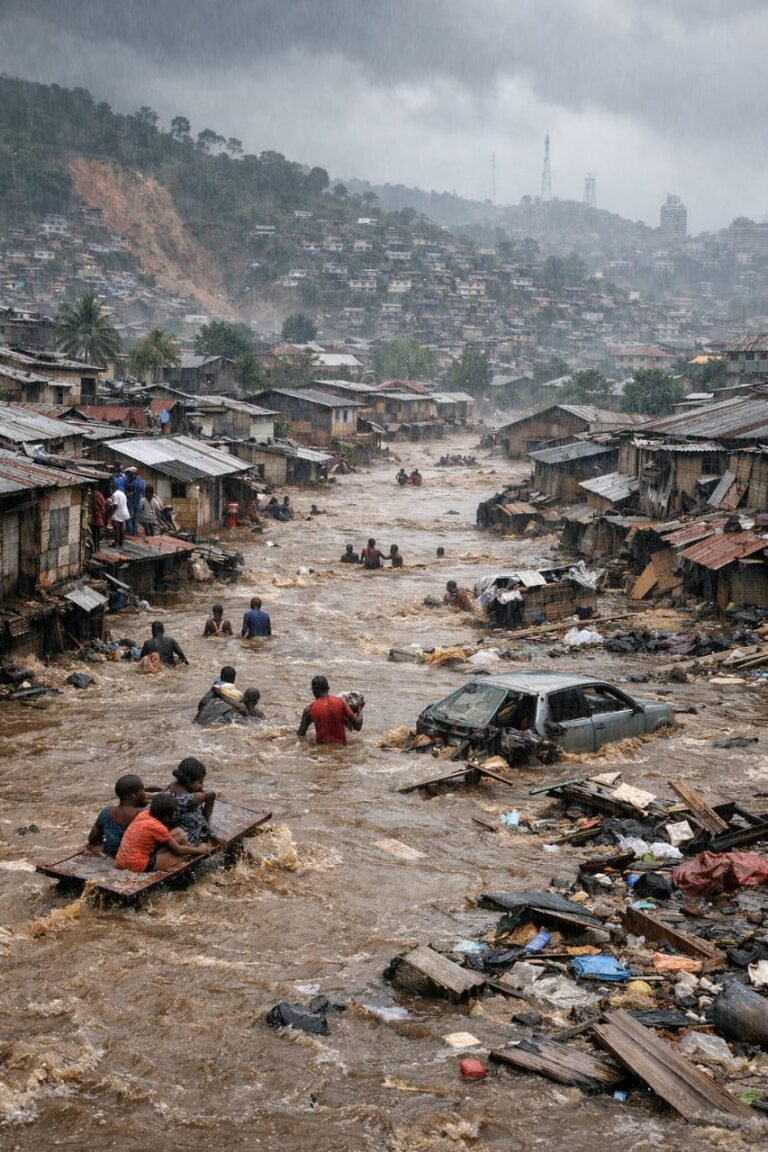
When the monsoon rains started falling at the end of 2025, they did not knock outside the doors in a polite way, they wiped whole neighbourhoods off the face of the earth. In central Viet Nam, a single meteorological station had over 1,700 mm of precipitation on a single day, which was among the highest 24-hour rainfall totals ever recorded globally. Whole villages were swept away, infrastructure swept away and some families with a history dating back to generations found themselves with the realization that the very land that defined them was underwater. In the meantime, a series of back to back hurricanes such as the Cyclone Senyar and Cyclone Ditwah ripped through Indonesia, Sri Lanka, Malaysia and Thailand, super-charging the monsoon rainfall and drowned rice fields and submerged cities, making rivers look like walls of water whilst simultaneously claiming more than 1700 lives. Scientists were categorical: this was not normal and climate change exacerbated it – increasing rainfall intensity, in certain areas, by up to 160%.
In terms of scale and sorrow, the story was much the same in South Asia. During the 2025 floods in Pakistan that was caused by the heavy pre-monsoon rains, melting glaciers and haphazard monsoon that hit Khyber Pakhtunkhwa, Punjab, Sindh and Balochistan, millions of people were displaced, houses destroyed, fields flooded and whole livelihoods swept away. It was estimated that over 2.5 million people became homeless, and some towns were turned into tented towns.
These are not stand-alone tragedies. Floods have become one of the most influential yet neglected factors of human mobility and state relations around the world due to climate intensification. But there is a more subtle damage behind the headlines of flooded rice fields and submerged cities: Climate-induced floods may undermine the very concept of political identity, the recognition of a person as citizen, or right-bearing member of a polity, and diplomacy is seriously ill prepared to deal with it.
This is because, Floods to most diplomats are humanitarian disasters: disasters to be solved with relief funds, engineering, risk maps and early-warning systems. What most treaties and negotiations fail to acknowledge is that floods destroy not only crops and homes, but also documents, land titles, registries, and place-based social memory; erasing the markers through which individuals are recognized by the state. When identities are rendered unmoored, people lose not only their homes, but their representation, enumeration, security and bargaining in diplomatic arenas.
Think about our implicit assumptions of citizenship. Citizenship is pegged on a fixed territorial domination, in civil registries which connect a name to a birth, to a village, to a street; in land title offices where they say this is theirs, and this is their country. Such fixity is presumed in diplomacy when it discusses the need to protect its citizens in foreign nations, guarantee electoral turnout, or bargain the category of migration. However, in flood areas where records are lost, or where people are constantly displaced to the margins of government, the basis of political identification is undermined. When the homes are swept away in floods in many areas of Southeast Asia, where informal settlements along waterways are the rule and where cadastral systems are spotty, the legal and administrative evidence of political belonging is swept away as well.
Thus, this is not a hypothetical future; it is a reality and it is growing. In the monsoon region of South Asia, floods caused by climate have caused tens of millions of people to be displaced in the last decades, leading to internal flows that existing governing systems can hardly keep up with. By 2050, Bangladesh alone might experience more than 13 million climate migrants, many of whom will cross internal borders in search of work and shelter and in many cases without clear documentation that links them to any specific place of origin.
Nigeria presents a recurring lens, which is a combination of Global South precariousness and diplomatic interests. Floods in 2022 and 2024 displaced 1.4 million in 31 states, according to NEMA, destroying registries in Kano and Benue. Land rights, which had already been the bone of contention between pastoralists and farmers, disappeared, and both were left without a political home. For those that do not have titles, they cannot get access to the climate adaptation funds of Abuja or cast their votes in any meaningful manner during elections that are biased in favor of urban survivors.
The floods in 2025 in Pakistan added to an established trend of climate vulnerability and infrastructural vulnerability. Millions were displaced, again and again, into camps where their legal identity, certificates, land deeds, voter registration were not applicable or not available. Within these spaces, individuals are not part of the usual processes by which states identify and defend their own citizens. The people in the relief camps are often unable to vote, are unable to obtain formal credit, and are often denied their property claims since the land is no longer there, or the records are destroyed. This amounts to political erasure through the compromise of the very administrative structures that serve as the pillars of citizenship and representation.
Closer to home, the recent floods in Southeast Asia in Sumatra forced over 3 million people with over 1 million displaced in Indonesia alone. Whole communities were swept away in floods of water and mud, children were deprived of their schools, families of their clinics and communities of the legal documents of residence that bind them to services and rights.
These are not exclusive, nor are they strictly humanitarian. They are political. Flood does not only drown and submerge buildings; it may cut the administrative straws which enable one to be recognized by a government, as a voter, a tax-payer, or a rights-owner. People who have been forced to relocate by climate disasters find themselves in legal limbo with no identity and their claims to land and services fragile. When records are swept away, census lists cannot be updated, and displacement forces families off electoral registers, the foundations on which states and diplomats secure protection are undermined.
But climate negotiation, whether at COP conferences or bilateral talks, have been mostly ignorant of this aspect. Climate migration discussions tend to center on movement rather than political invisibility, the quietly expanding group of human experience whereby individuals slip beyond the administrative jurisdiction of states long before they actually move across international borders. Modern theories consider climate displacement as a humanitarian issue, rather than a constitutional and a diplomatic problem of identity, rights, and government.
Think about legal protections (or absence thereof) of people who are forced out by climate disasters. Human rights organisations maintain that it is the duty of states to safeguard the rights to life, dignity, food, water, shelter, and non-discrimination against displaced people, which however depends on established identity and territoriality. In the absence of legal status, displaced individuals frequently cannot access education, healthcare, formal jobs and even humanitarian assistance conditional on demonstration of identity.
The absence of the normative structure reflects a diplomatic blindspot. As national representatives negotiate on the level of emissions and climate funding, they, similarly, tend to overlook the consequences of climate effects on sovereignty, civic action, borders, and bureaucratic inclusion. A diplomat acts on behalf of citizens; yet who represents the millions who, following a climate flood, will no longer be able to readily demonstrate that they are citizens, or to what state of the world their rights belong?
To cover this gap, climate diplomacy must be reconsidered, placing a more visible role on politics as a central issue alongside mitigation, adaptation and finance. Already, some realistic changes are beginning to surface, albeit slowly. In South Asia, the CGIAR system has been carrying out research that can be used to inform policy discourses in Pakistan to address climate displacement into disaster planning and legal frameworks. That involves changing emergency response training to take into account long-term movement and displacement.
However, these attempts are still rather sporadic.
At the international level, the push to broaden legal categories so as to safeguard climate-affected peoples, such as temporary or humanitarian statuses frameworks that appreciate transnational mobility is in the air such as the ASEAN Migration Outlook which calls for a comprehensive and integrated approach to addressing the climate change-human mobility nexus in the region. Human rights organisations are focusing on the fact that climate protection is part of the right to a healthy environment and states should work together to curb displacement and safeguard climate-induced migrants.
Much of this however is aspirational, rather than operational.
To achieve real progress, three interconnected priorities need to be taken seriously by diplomats:
One, governments should invest in their capacity to maintain civic infrastructure that are more climate resilient, such as: digital registries, decentralized identity systems, and legal safeguards against erasing citizenship because of natural disasters.
Two, climate diplomacy needs to extend the list of vocabulary and frameworks by incorporating political visibility and state legitimacy as its goals alongside emissions pathways and adaptation funds. This implies not necessarily thinking about climate finance only, but also about governance support in order to ensure that institutions can continue to live despite climate shocks.
Three, the legal systems of nations and international organizations have to adjust to accept climate-induced displacement not as a humanitarian incident, but as a great challenge to civil identity and diplomatic representation as well. This requires mechanisms that ensure displaced people retain their rights regardless of where they are relocated.
Climate-induced floods do not only blow away the soil and stone, but also the administrative as well as the juridical scaffolding that tends to hold democratic life together in the 21st century, when floods have become a regular feature that marks every monsoon season and every storm surge, they not only require us to construct taller embankments, but also to rethink the nature of our citizenship, our sense of belonging and the political life that must outlive the waters.
To remain relevant in a warming world, climate diplomacy must address not only emissions reduction, but also the protection of political identity. Without visibility there can be no voice; without voice, no representation; and without representation, diplomacy itself loses its meaning.


 Jonathan Tarnue Payne
 Precious Douglas Maulana
 Eslam Mohamed Elsheikh
 Lutfi Nurachma
 David R.K Brown
 Asef Jafari
Just signed up at keobovn.online. The odds seem alright and the layout is pretty easy to navigate. Hoping to win big! You can find it here keobovn.
Yo, jljl11ph! Heard some whispers ’bout you. Is it really worth the hype? I’m lookin’ for some new entertainment, ya know? Hit me up with the goods! jljl11ph
Looking for a new lottery site and 92 lottery.net popped up. Decent platform? Tell me your experiences after visiting 92 lottery.net.
Alright, Jun888, three eights? Gotta live up to that lucky reputation! Bring on the jackpots, the bonuses, and the non-stop action. Let’s roll those dice! Explore now jun888
N88vn – Let’s see what this platform has to offer. Fast transactions and great game options will be excellent thing. Time to explore! Get started here: n88vn
Yo, 123betapp, you guys are alright! The app’s pretty slick, and I haven’t had any issues with withdrawals so far. Keeping my fingers crossed! Check ’em out: 123betapp