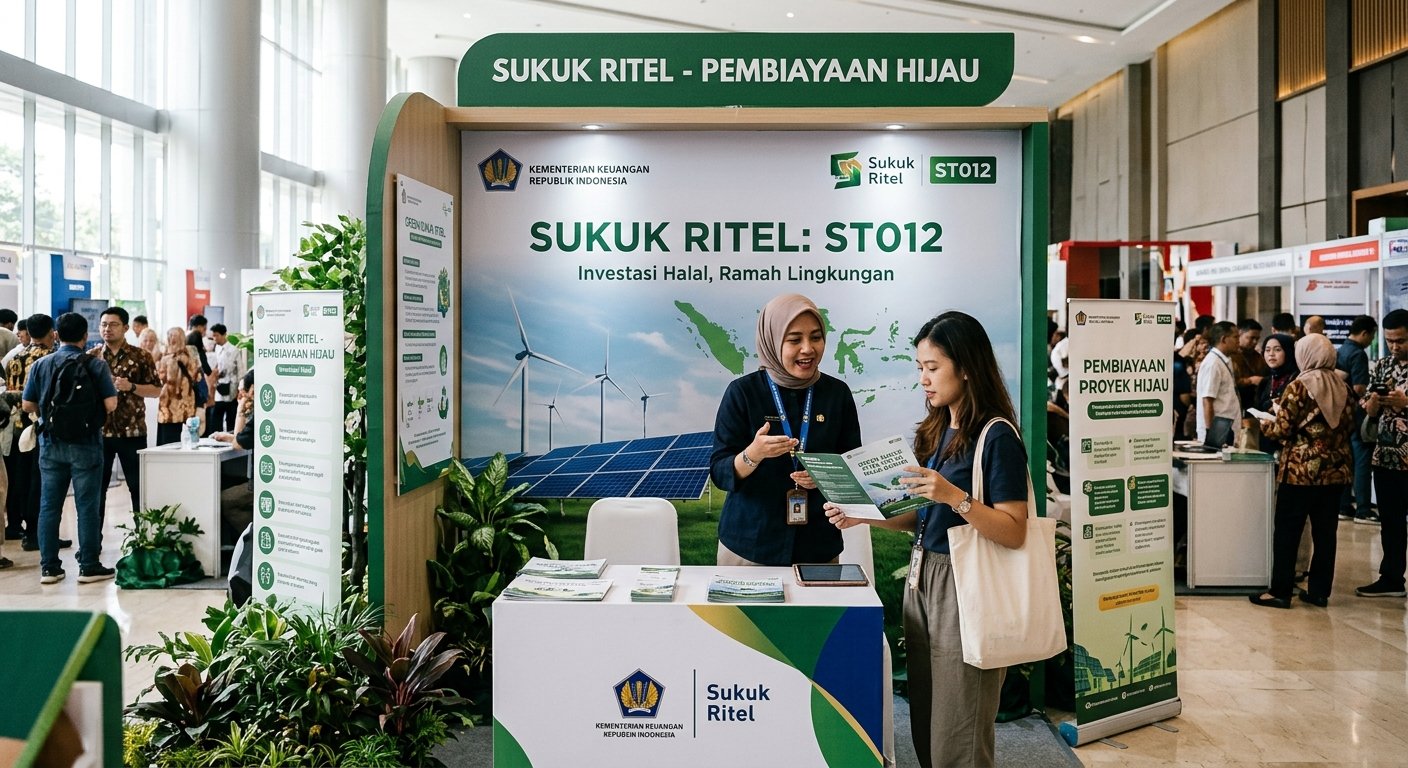

Climate change has transcended its status as a mere environmental concern to become a primary catalyst for systemic global economic reconfiguration. Rather than serving purely as a disruptive constraint, the climate crisis opens substantial avenues for green capital reallocation, low-carbon innovation, and sustainable market creation. Global institutional frameworks most notably the Paris Agreement have codified this shift, exerting regulatory and financial pressure on both sovereign governments and market actors to align capital flows with net-zero transition targets. Within this evolving financing architecture, while public and private commitments are both essential, the private sector has emerged as the principal engine of climate finance. Recent data from the Climate Policy Initiative (CPI, 2026) reveals that private entities contribute approximately 62 percent of global climate finance. This empirical dynamic underscores the indispensable role of private capital in bridging structural fiscal deficits left by public budgets and operationalizing long-term ecological sustainability
Recognizing the structural limitations of public expenditure, the state functions primarily as a market-enabling regulator designed to lower investment barriers, mitigate risk exposure, and systematically mobilize both national and international capital (Kemenkeu.go.id, 2024). To operationalize this regulatory mandate, Indonesia pioneered the issuance of Sovereign Green Sukuk—an innovative, asset-backed Islamic financial instrument dedicated to funding low-carbon transition projects and climate-resilient infrastructure. Frameworked under “Peraturan Otoritas Jasa Keuangan Nomor 18 Tahun 2023, Indonesia has established itself as the world’s pioneer and largest sovereign issuer of Green Sukuk, setting a global benchmark for Islamic sustainable finance and demonstrating how Sharia-compliant structures can serve as robust vehicles for ESG-aligned capital allocation (BankIndonesia, 2024).
Green Sukuk serves as an effective policy vehicle designed to mobilize institutional, corporate, and retail liquidity directly into environmentally beneficial infrastructure (Arifudin et all, 2024). By structuring investments through Sovereign Sharia Securities (Surat Berharga Syariah Negara/ SBSN), the Indonesian government bridges capital market depth with socio-environmental priorities, ensuring that debt issuance corresponds directly to tangible green assets (Arifudin et all, 2024). Demonstrating strong leadership in sovereign climate finance, Indonesia has issued approximately Rp185.6 trillion in Green Sukuk, strategically bifurcated into international sovereign issuances totaling Rp106.92 trillion and domestic retail offerings reaching Rp78.8 trillion. According to the Indonesian Association of Islamic Economists (IAEI, 2023), these proceeds are strictly earmarked across five priority mitigation and adaptation sectors under rigorous green eligibility frameworks renewable energy, energy efficiency, sustainable transportation, waste management, and climate resilience (Team Redaksi IAEI, 2023).
While modest relative to the overall state budget, Green Sukuk acts as a vital fiscal cushion within Indonesia’s broader macroeconomic framework (Hag, 2026). By absorbing heavy capital expenditure demands for national strategic initiatives, it mitigates budgetary crowd-out effects in the state budget (APBN), freeing up traditional fiscal revenues for urgent public priorities while preserving overall financial stability. Furthermore, by funding transformative capital investments, it indirectly supports domestic purchasing power, enhances interregional connectivity, and fosters sustainable productivity, thereby helping to maintain stable macroeconomic growth around the 5 percent baseline.
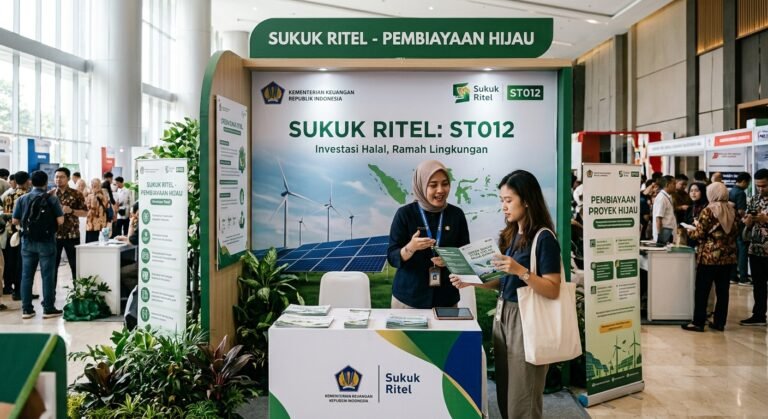
The expansion of Indonesia’s Sovereign Green Sukuk market between 2018 and 2026 demonstrates remarkable structural momentum and deep market adoption. Through successive retail offerings specifically series ST006, ST007, ST008, ST009, ST010T4, ST011T4, and ST012T4 cumulative issuance volume expanded nearly ten-fold, recording a roughly 991 percent increase from an initial USD 1.25 billion (Rp17 trillion) to Rp185.6 trillion across both international and domestic tranches (Antaracom, 2025). This trajectory illustrates an institutionalized national commitment to expanding non-repository, market-based climate finance mechanisms while systematically democratizing green investment access for retail investors to drive Indonesia’s energy transition.
On the ground, these capital allocations are strategically directed across five priority energy transition and climate adaptation sectors: renewable energy, energy efficiency, sustainable transportation, waste management, and climate resilience. The proceeds have financed concrete infrastructure assets across the archipelago (Masitoh, 2023). Key physical deployments include the Piyungan waste-to-energy facility in Yogyakarta, off-grid solar energy installations on Selayar Island in South Sulawesi, and coastal protection structures in Taludaa (Bone Bolango, Gorontalo). For sustainable transit and flood mitigation, allocations funded Phase 1 of the Trans-Sulawesi Railway, the 727-kilometer North Java double-track railway corridor, the Palembang Light Rail Transit (LRT) in South Sumatra, as well as the Ciawi and Sukamahi dry dams in West Java designed specifically for Jakarta flood risk reduction.
Evaluating the ecological returns of these sovereign investments indicates measurable progress toward Indonesia’s Nationally Determined Contributions (NDC) target of reducing 358 million tons of CO2 by 2030. For instance, the ST007 retail series alone generated an estimated carbon abatement of 1.12 million tons of CO2 equivalent CO2e. When aggregated across sovereign Global Green Sukuk issuances between 2018 and 2021, cumulative emissions reduction reached 10.3 million tons of CO2e comprising 5.7 million tons in 2018, 3.2 million tons in 2019, and 1.4 million tons in 2020. This collective achievement represents approximately 2.7 percent of the national 2030 carbon mitigation goal, proving that Sharia-compliant climate financing yields verifiable environmental dividends alongside direct economic co-benefits.
The empirical evidence underscores the tangible contribution of Green Sukuk to Indonesia’s energy transition and climate mitigation efforts. Portfolio allocations under this sovereign climate financing framework have demonstrated substantial carbon abatement, achieving an estimated cumulative emission reduction of 10.3 million tons of CO₂ equivalent. Beyond primary clean energy targets, Green Sukuk funding has produced positive socio-economic co-benefits through strategic infrastructure projects such as double-track railway networks to expand low-emission interprovincial transit, and coastal defense structures designed to bolster community resilience against sea-level rise and coastal erosion. Notwithstanding these positive outcomes, the efficacy of Green Sukuk remains contingent on rigorous project selection and robust demand forecasting. Highly publicised spatial planning misalignments, such as the underutilized Palembang Light Rail Transit (LRT) project, highlight the risks of supply-demand imbalances in state-led infrastructure investments. Overall, while operational inefficiencies persist, Green Sukuk stands out as a highly effective state-led public-private financing vehicle for accelerating low-carbon infrastructure and advancing national climate policy objectives.
References
- Antara. (2025). RI telah terbitkan sukuk hijau hingga Rp185,6 triliun. Antara. https://www.antaranews.com/berita/4895069/ri-telah-terbitkan-sukuk-hijau-hingga-rp1856-triliun
- Bank Indonesia. (2024). Kontribusi Green Sukuk Indonesia Torehkan Capaian Positive. -. https://www.bi.go.id/id/publikasi/ruang-media/news-release/Pages/sp_268724.aspx
- Hag, F. (2026). The Development and Contribution of Sovereign Green Sukuk Issuance to Sustainable Economic Resilience and Carbon Emission Reduction in Indonesia (2018 – 2025). JOURNAL OF ISLAMIC BANKING AND SHARIAH ECONOMY, –(-), 1-12.
- Ikatan Ahli Ekonomi Islam Indonesia. (2023). Perpetual Green CWLS. -. https://iaei.or.id/id/berita-dan-artikel/artikel/perpetual-green-cwls
- Kementerian Keuangan. (n.d.). Peningkatan Kapasitas dalam Mengakses Pembiayaan Berkelanjutan dan Penerapan Konsep ESG untuk Mengatasi Tantangan Iklim. Kementerian Keuangan. https://fiskal.kemenkeu.go.id/nda_gcf/peningkatan-kapasitas-dalam-mengakses-pembiayaan-berkelanjutan-dan-penerapan-konsep-esg-untuk-mengatasi-tantangan-iklim/
- Masitoh, S. (2023). Intip Proyek-Proyek Hijau yang Didanai Green Sukuk Artikel ini telah tayang di Kontan.co.id dengan judul “Intip Proyek-Proyek Hijau yang Didanai Green Sukuk”, Klik untuk baca: https://nasional.kontan.co.id/news/intip-proyek-proyek-hijau-yang-didanai-green-. Nasional konten. https://nasional.kontan.co.id/news/intip-proyek-proyek-hijau-yang-didanai-green-sukuk#goog_rewarded
- OCDC. (n.d.). Private Finance Mobilization Report 2026. 2026. https://www.oecd.org/en/publications/private-finance-mobilisation-report-2026_a871a032-en/full-report/trends-in-private-finance-mobilisation_b2e9782d.html


 Mwaiwawo Banda
 Mujibullahi Shahud
 Seftario Virgo
 Jawal Sualisu
 Hanifah Setyaningrum
 Fadhli Ilahi
Today, I went to the beach front with my children. I found a sea shell and gave it to my 4 year old daughter and said “You can hear the ocean if you put this to your ear.” She placed the shell to her ear and screamed. There was a hermit crab inside and it pinched her ear. She never wants to go back! LoL I know this is entirely off topic but I had to tell someone!