
- | Introduction
The term ‘climate diplomacy’ is often used at the treaty, summit, and international institution level. Much of its real effects are felt on the local level: between neighbouring countries sharing a river, a lake, or a basin. This mini-review examines one such example: the yearly spillage of the Bagre Dam in Burkina Faso that has led to recurrent flooding in northern Ghana for nearly 30 years. The case is analyzed in relation to two studies examined in week three: Babar et al. (2024) and Tänzler and Carius (2013), both of which see climate change as a source of tension between states sharing natural resources.
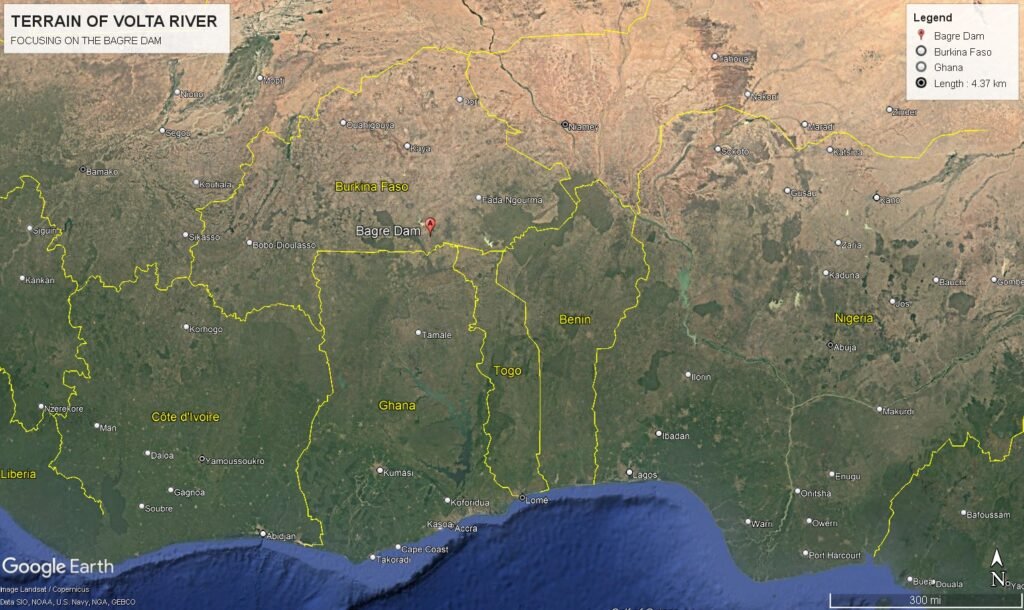
The Bagre Dam case was chosen as it is ongoing, well reported in the Ghanaian news media, and presents both sides of the story in the literature. Ghana and Burkina Faso are cooperating on the one hand via the Volta Basin Authority and a Water Charter. Communities in northern Ghana are still suffering damages from flooding each year, however; in 2026, an environmental scientist even called for compensation for Ghana. This is the battle between cooperation and ongoing injury that is encapsulated by the title of this review.
This review is limited to secondary information from the news, institutional documents, and previous research carried out on the Volta Basin. It does not attempt new fieldwork or primary data collection. It aims to show how the concepts developed on the international agenda of climate diplomacy can be translated to the context of West Africa, and, to some extent, test them.
- | Background and Context
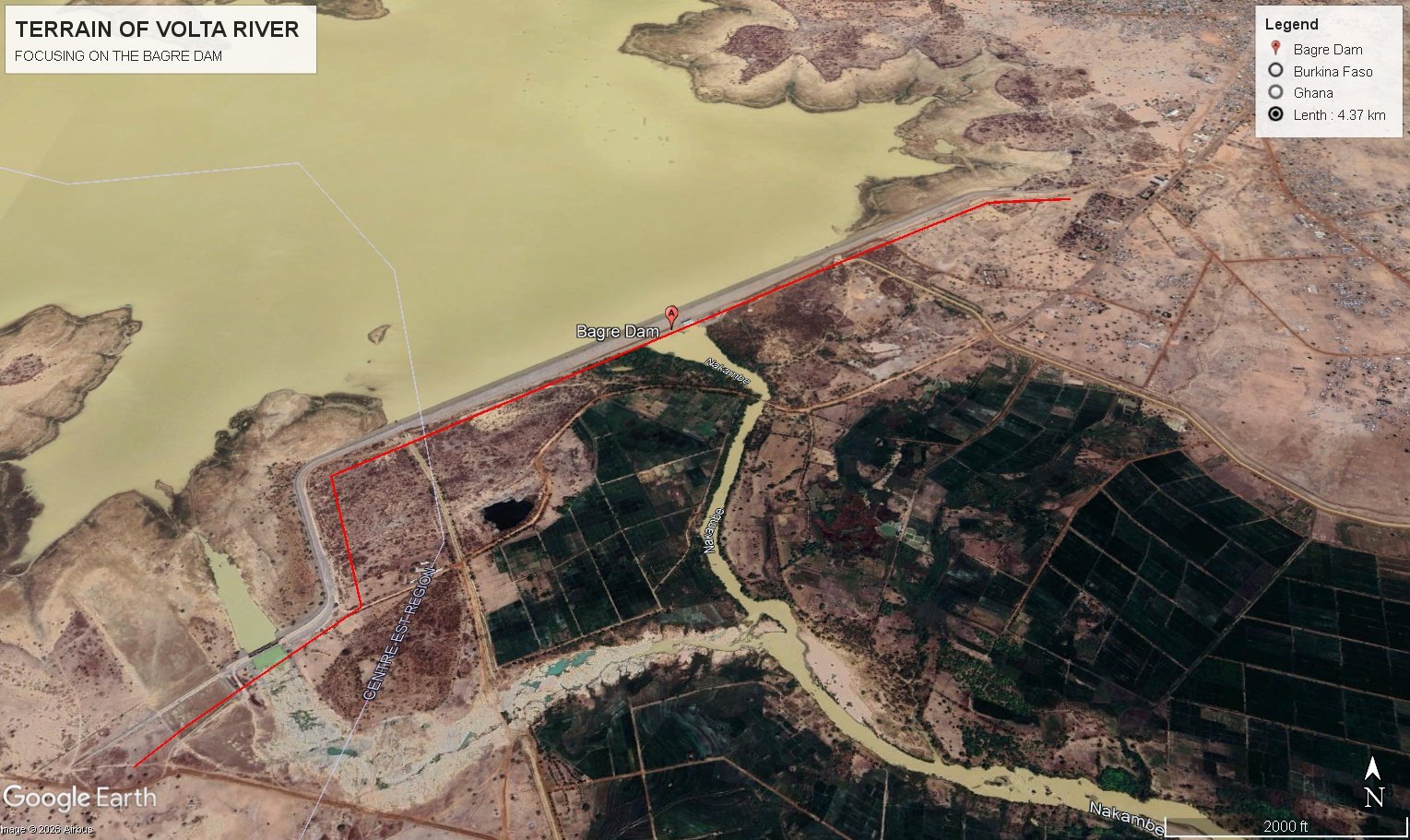
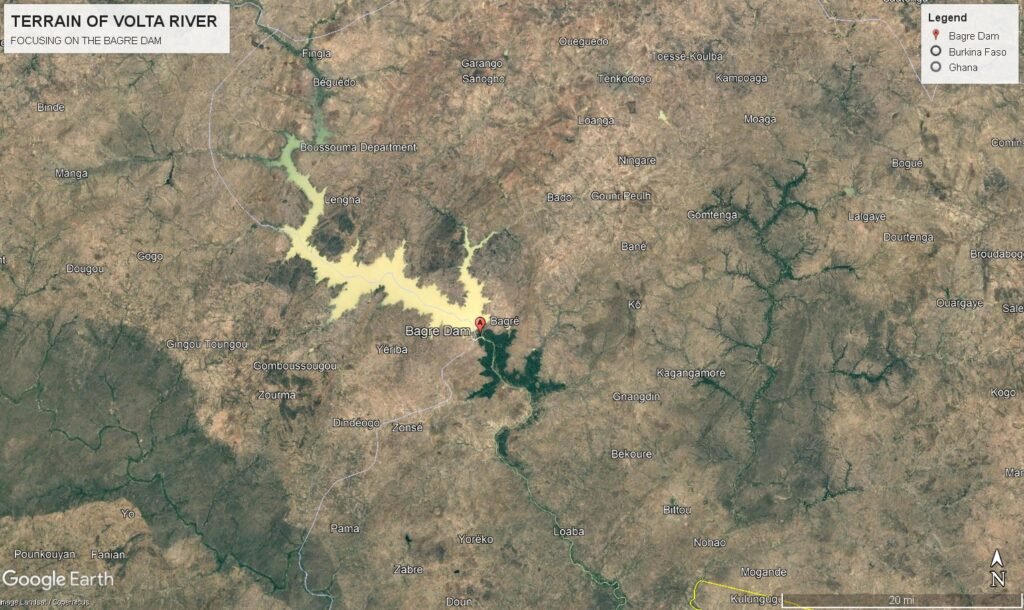
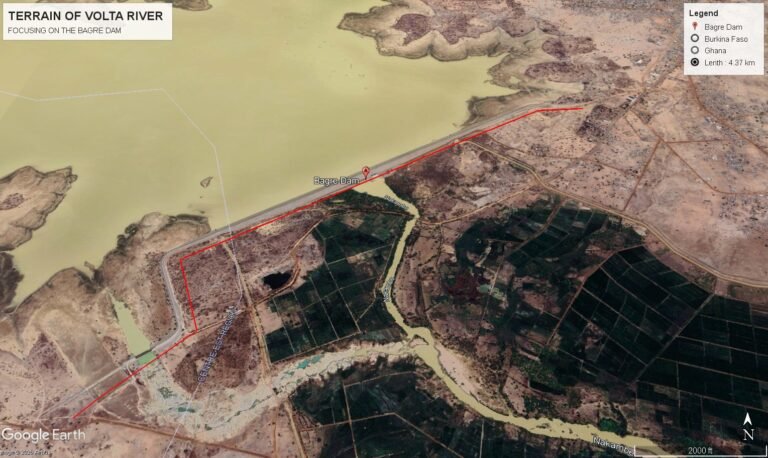
The Bagre Dam is a multipurpose dam built in 1992 on the White Volta River, near Bagré village in Burkina Faso (Wikipedia, n.d.). It was constructed with the assistance of the World Bank and is managed by the national electricity company of Burkina Faso, the Société Nationale Burkinabè d’Électricité (SONABEL; Wikipedia, n.d.). The reservoir contains about 7 billion cubic metres of water and the dam is used for irrigation and hydropower (Wikipedia, n.d.).
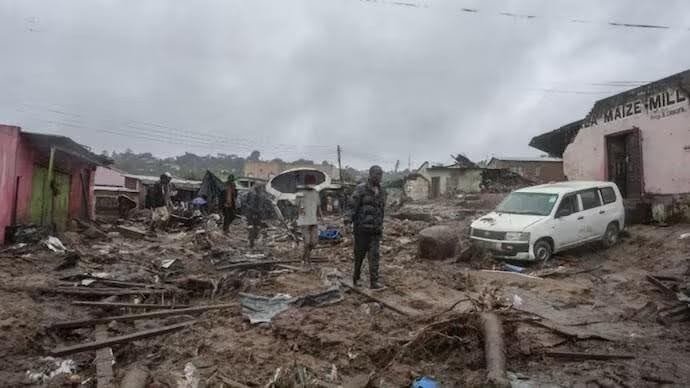
The reservoir is filled every year, and SONABEL releases excess water from the reservoir in a controlled spillage (Brown University Center for Human Rights and Humanitarian Studies [CHRHS], n.d.). Because the White Volta River flows southwards into Ghana, this spillage periodically floods communities in the Upper East, Upper West, North East, Northern, and Savannah regions of Ghana (CHRHS, n.d.). This has been the case since at least 1997, when 20 people died as a result of unexpected spillage (MyJoyOnline, 2026). The situation has not improved in more recent years; in 2019 alone, 686 communities and 81,532 people were impacted by the spillage (CHRHS, n.d.). In August 2026, authorities in the Northern Region of Ghana once again warned 68 communities to be on the lookout as the water level in the Bagre Dam was on the verge of spilling (MyJoyOnline, 2026).
The loss affects not only homes and infrastructure, but community livelihoods as well (CHRHS, n.d.). Typically, the farmers in the White Volta region who grow rice, maize, millet, and vegetables are the worst affected (Apubeo, 2025). In 2025, farmers in Binduri District reported that they were receiving spillage notices with inadequate time to harvest their crops or evacuate them to safer locations because the spillage was announced just a few days prior to its occurrence (Apubeo, 2025). The National Disaster Management Organisation (NADMO) in Ghana has responded by putting relief materials in place and advising farmers and herders to move to safer ground, which remains a reactive rather than proactive measure (MyJoyOnline, 2026).
None of these patterns reflects an isolated event; rather, they represent a structural feature of the river’s present mode of operation (CHRHS, n.d.).
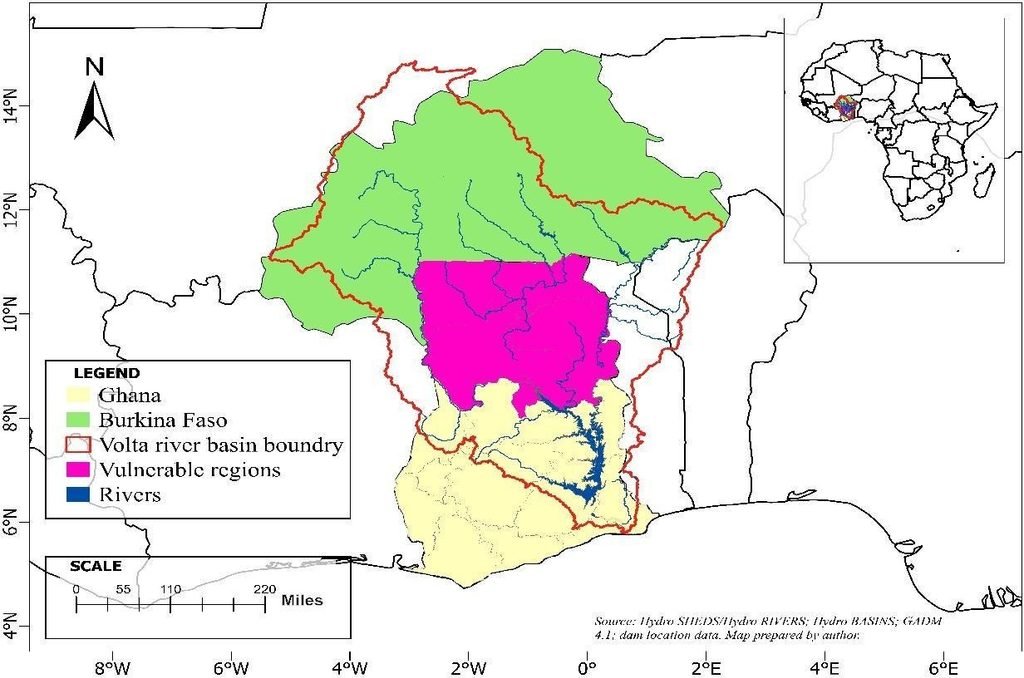
The Bagre Dam is a multipurpose dam built in 1992 on the White Volta River, near Bagré village in Burkina Faso (Wikipedia, n.d.). It was constructed with the assistance of the World Bank and is managed by the national electricity company of Burkina Faso, the Société Nationale Burkinabè d’Électricité (SONABEL; Wikipedia, n.d.). The reservoir contains about 7 billion cubic metres of water and the dam is used for irrigation and hydropower (Wikipedia, n.d.).
The reservoir is filled every year, and SONABEL releases excess water from the reservoir in a controlled spillage (Brown University Center for Human Rights and Humanitarian Studies [CHRHS], n.d.). Because the White Volta River flows southwards into Ghana, this spillage periodically floods communities in the Upper East, Upper West, North East, Northern, and Savannah regions of Ghana (CHRHS, n.d.). This has been the case since at least 1997, when 20 people died as a result of unexpected spillage (MyJoyOnline, 2026). The situation has not improved in more recent years; in 2019 alone, 686 communities and 81,532 people were impacted by the spillage (CHRHS, n.d.). In August 2026, authorities in the Northern Region of Ghana once again warned 68 communities to be on the lookout as the water level in the Bagre Dam was on the verge of spilling (MyJoyOnline, 2026).
The loss affects not only homes and infrastructure, but community livelihoods as well (CHRHS, n.d.). Typically, the farmers in the White Volta region who grow rice, maize, millet, and vegetables are the worst affected (Apubeo, 2025). In 2025, farmers in Binduri District reported that they were receiving spillage notices with inadequate time to harvest their crops or evacuate them to safer locations because the spillage was announced just a few days prior to its occurrence (Apubeo, 2025). The National Disaster Management Organisation (NADMO) in Ghana has responded by putting relief materials in place and advising farmers and herders to move to safer ground, which remains a reactive rather than proactive measure (MyJoyOnline, 2026).None of these patterns reflects an isolated event; rather, they represent a structural feature of the river’s present mode of operation (CHRHS, n.d.).
- | The Climate Change Link
The Bagre Dam spillage is more than a technical issue. It is very closely associated with rainfall in the Volta Basin, and rainfall is becoming less predictable as a result of climate change (Brown University Center for Human Rights and Humanitarian Studies [CHRHS], n.d.). The spatial variation of rainfall is already quite large over the basin. Annually, rainfall is about 500 mm in the upper parts of Mali and northern Burkina Faso, whereas it can reach over 1,100 mm in the lower parts in Ghana (Volta Basin Authority [VBA], n.d.). As more rain falls or when it rains at an inopportune time, dam operators have a more difficult time forecasting the volume of water that will flow into the reservoir (CHRHS, n.d.). This, in turn, directly impacts the lead time and accuracy of the warnings that downstream communities receive prior to the spillage (Apubeo, 2025; CHRHS, n.d.).
This climate connection is rather clear in the broader literature of the region. Writing in The Water Diplomat, Sangbana (2022) notes that the future of the basin is uncertain, citing the global climate crisis alongside a rapidly increasing population on both sides of the border. That is, pressure is exerted from two sides of the basin. In some years, an excessive amount of water arrives, resulting in the recurrent floods mentioned above (Sangbana, 2022). Other years might produce insufficient output, leading to a scarcity of supply and heightened competition over water resources (Sangbana, 2022).
This is where the literature reviewed in this study becomes most directly relevant to the case. In the context of climate change, scholars and practitioners in the sector refer to it as a “threat multiplier,” as Tänzler and Carius (2013) do. The issue is that climate change is not necessarily a direct catalyst for conflict, but it can exacerbate underlying issues, such as weak governance or resource competition (Tänzler & Carius, 2013). The case of the Bagre Dam is a clear example. It is not the first time that the dam has flooded downstream communities; this has been occurring since the 1990s (MyJoyOnline, 2026). However, the unpredictable nature of rainfall associated with climate change appears to be exacerbating an already uneasy relationship between downstream Ghanaian communities and upstream dam operations, making it increasingly difficult to predict when and how severe the next flood will be (CHRHS, n.d.; Sangbana, 2022).
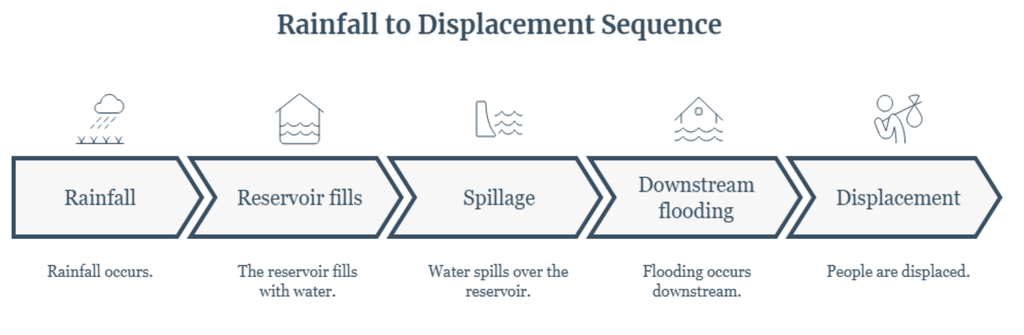
The Bagre Dam spillage is more than a technical issue. It is very closely associated with rainfall in the Volta Basin, and rainfall is becoming less predictable as a result of climate change (Brown University Center for Human Rights and Humanitarian Studies [CHRHS], n.d.). The spatial variation of rainfall is already quite large over the basin. Annually, rainfall is about 500 mm in the upper parts of Mali and northern Burkina Faso, whereas it can reach over 1,100 mm in the lower parts in Ghana (Volta Basin Authority [VBA], n.d.). As more rain falls or when it rains at an inopportune time, dam operators have a more difficult time forecasting the volume of water that will flow into the reservoir (CHRHS, n.d.). This, in turn, directly impacts the lead time and accuracy of the warnings that downstream communities receive prior to the spillage (Apubeo, 2025; CHRHS, n.d.).
This climate connection is rather clear in the broader literature of the region. Writing in The Water Diplomat, Sangbana (2022) notes that the future of the basin is uncertain, citing the global climate crisis alongside a rapidly increasing population on both sides of the border. That is, pressure is exerted from two sides of the basin. In some years, an excessive amount of water arrives, resulting in the recurrent floods mentioned above (Sangbana, 2022). Other years might produce insufficient output, leading to a scarcity of supply and heightened competition over water resources (Sangbana, 2022).
This is where the literature reviewed in this study becomes most directly relevant to the case. In the context of climate change, scholars and practitioners in the sector refer to it as a “threat multiplier,” as Tänzler and Carius (2013) do. The issue is that climate change is not necessarily a direct catalyst for conflict, but it can exacerbate underlying issues, such as weak governance or resource competition (Tänzler & Carius, 2013). The case of the Bagre Dam is a clear example. It is not the first time that the dam has flooded downstream communities; this has been occurring since the 1990s (MyJoyOnline, 2026). However, the unpredictable nature of rainfall associated with climate change appears to be exacerbating an already uneasy relationship between downstream Ghanaian communities and upstream dam operations, making it increasingly difficult to predict when and how severe the next flood will be (CHRHS, n.d.; Sangbana, 2022).
- | Cooperation and Governance Mechanisms
To foster cooperation and governance mechanisms, Ghana and Burkina Faso are not alone in having to deal with this problem. Both countries are members of the Volta Basin Authority (VBA), which also includes Mali, Côte d’Ivoire, Togo, and Benin (Food and Agriculture Organization of the United Nations [FAO], 2007). The purpose of the VBA is to establish a mechanism for managing the Volta Basin as a common resource, rather than as a series of independent resources managed separately by each country (Graphic Online, 2017).Its major milestone has been the Volta Basin Water Charter (Volta Basin Authority [VBA], n.d.). In December 2018, member states affirmed the charter in Lomé, and in 2019, the charter was formally approved during a meeting in Accra (FAO, n.d.). Its goal is for the basin to be “shared by willing and cooperating partners who manage the water sustainably for the benefit of all” (Graphic Online, 2017). This represents an important step: prior to the charter, there was no single system of laws governing how the six countries coordinated their use of the river (Graphic Online, 2017).
Ghana and Burkina Faso have also established cooperation beyond the six-country framework. They maintain a bilateral framework tailored to addressing their differences over the basin (Sangbana, 2022). This is significant, given that disputes over the Volta threatened to erupt into open conflict as recently as the 1990s (Sangbana, 2022). Since then, the nature of the relationship has clearly shifted, at least at the institutional level (Sangbana, 2022).Early-warning systems have also improved. The VBA has worked to harmonise data collection across all six member states and to build a more comprehensive alert chain, extending from river-level monitoring stations to communities living along the river (Graphic Online, 2025). While this preparation does not prevent floods, it ensures that, in theory, warnings are issued to affected communities more quickly than before (Graphic Online, 2025).
Taken together, these mechanisms indicate genuine rather than merely symbolic cooperation between Ghana and Burkina Faso: a legally established charter, a joint institution, and technical systems to facilitate coordination. However, whether these mechanisms are being implemented satisfactorily in practice is another matter, and one that will be examined in the next section.
- | Persisting gaps and tensions
The institutions mentioned in the previous section are actual, but they have not prevented the annual flooding nor prevented the damage it brings. The conflict at Bagre Dam is the conflict of cooperation on paper and at the institutional level versus the communities who are bearing the costs almost invariably year after year.
The best indicator of this difference is the ongoing demand for compensation. In July 2026, a Ghanaian environmental scientist at the C. K. Tedam University of Technology and Applied Sciences (Dr. Raymond Aitibasa Atanga) stated that the country has a strong legal basis to seek compensation from Burkina Faso, and that it should do so through the mechanisms provided by the Volta Basin Authority (Asima, 2026). The important thing here is not only the call itself, but the need to make the call. A compensation mechanism, if effective, should be in active use—not something recommended by an outside expert and publicized decades after the problem was first identified (Asima, 2026).
Another case in point is the short notice provided to farmers. In Binduri District, farmers complained in 2025 to the Ghana News Agency that they were only warned of the release of water a few days before it arrived, a lead time insufficient to enable them to harvest their crops or protect their property (Apubeo, 2025). This occurred despite the fact that the early-warning system was supposed to be one of the VBA’s principal successes (Graphic Online, 2025). It indicates that technical systems developed at the basin-wide level do not necessarily translate into timely, practical warning systems for the people who need them most (Brown University Center for Human Rights and Humanitarian Studies [CHRHS], n.d.).
This reflects an enduring trend across the decades. Recurrent flood impacts have occurred repeatedly since at least 1997, including major episodes in 2019, 2025, and 2026 (CHRHS, n.d.; MyJoyOnline, 2026). A period of almost 30 years is a long time for a problem to remain largely unchanged, particularly when formal cooperation structures have been in place for a considerable portion of this time (CHRHS, n.d.).
This does not mean that the partnership between Ghana and Burkina Faso is inconsequential. It does, however, demonstrate that the mere presence of institutions does not ensure full protection for the people involved. The gap between formal cooperation on paper and the realities experienced on the ground is precisely what makes this case useful for testing the claims made in the broader climate diplomacy literature (Babar et al., 2024; Tänzler & Carius, 2013).
- | Conclusion
This review aimed to explore the case study in comparison with two other climate diplomacy texts, by Tänzler and Carius (2013) and by Babar et al. (2024). The spillage of the Bagre Dam was chosen as it is a well-documented case of an ongoing shared water resource causing a recurring problem between two neighbouring states, Ghana and Burkina Faso (Brown University Center for Human Rights and Humanitarian Studies [CHRHS], n.d.).Generally, the case confirms the arguments in both articles (Babar et al., 2024; Tänzler & Carius, 2013). Climate change seems to exacerbate a pre-existing dam management issue through more erratic rainfall, fitting in with Tänzler and Carius’s (2013) notion that climate change acts as a threat multiplier rather than a direct root cause. At the same time, Ghana, as the downstream partner in the hydro-political relationship, reflects the asymmetric vulnerability of Pakistan in comparison to India as detailed by Babar et al. (2024), where one partner absorbs the downstream consequences of the upstream state’s actions.
The case contributes to the literature by providing a more complex view of cooperation. Shared environmental problems can foster mutual trust between states, as the Volta Basin demonstrates in action through the Volta Basin Authority, the Volta Basin Water Charter, and joint technical cooperation between Ghana and Burkina Faso, aligning with Tänzler and Carius (2013). Yet the same case also indicates that formal cooperation and ongoing harm do not necessarily occur inopposition to each other. Decades after the establishment of the first cooperative structures, communities in northern Ghana continued to experience flooding with little prior warning in 2025 and 2026 (Apubeo, 2025; MyJoyOnline, 2026). This demonstrates that the mere existence of cooperative institutions should not be interpreted as a resolution of a shared-resource problem (CHRHS, n.d.).

 Mwaiwawo Banda

 Mujibullahi Shahud
 Seftario Virgo
 Jawal Sualisu
 Hanifah Setyaningrum
 Fadhli Ilahi
We’re a group of volunteers and starting a new scheme in our community. Your web site offered us with useful info to work on. You’ve done a formidable activity and our whole group can be thankful to you.