
Climate change adaptation and mitigation require significant costs, especially for developing countries. The United Nations Environment Programme (UNEP, 2025) estimated that developing countries’ adaptation financing needs will reach approximately US$310–365 billion per year by the year 2035. The 29th Conference of the Parties (COP) also resulted in an agreement on the New Collective Quantified Goal on Climate Finance, which targets at least US$300 billion per year by 2035 for developing countries, with developed countries leading the mobilization of this financing (United Nations Framework Convention on Climate Change, 2024). From the large amount of funding, an important question arises: who should finance climate action?
This question is very relevant for developing countries because they face two critical needs simultaneously. On the one hand, governments must still finance basic needs such as education, health care, infrastructure, clean water, poverty alleviation, and increased economic growth. On the other hand, climate change has become an urgent issue, and governments must provide additional funding for mitigation and adaptation. Fiscal space in developing countries tends to be limited compared to developed countries, while capital costs and investment risks are also relatively higher in developing countries. These conditions are key drivers of climate finance’s inability to rely solely on a single funding source.
There are several options for climate financing, the first is grants and loans financing from developed countries and international organizations. Grants and loans financing are typically used to finance adaptation projects that provide significant social benefits, such as coastal protection, early warning systems, protection of vulnerable groups, and ecosystem rehabilitation. However, the amount of these funding remains limited. The Organisation for Economic Co-operation and Development (OECD, 2026) stated that public climate financing provided by developed countries through bilateral and multilateral organizations in 2024 reached approximately US$101.6 billion. Of this amount, approximately US$29.7 billion, or 29 percent, was in the form of grants, while the majority, approximately US$68.5 billion, was provided in the form of loans. This situation indicates that although there are grants and loans as instruments for climate financing, their volume is still far to meet the full climate needs of developing countries.
The second option is through financial markets, using thematic bonds. This instrument allows governments or businesses to get direct financing from investors for projects with specific environmental objectives. Sovereign climate bonds can help developing countries attract new investors, increase transparency regarding the use of funds, and mobilize financing that cannot be fully covered by government budgets (Chavarría-Flores & Warren, 2024).
The third option is involving the private sector through a Public-Private Partnership (PPP) scheme. The OECD (2025) defines a Public-Private Partnership (PPP) as a long-term agreement between a government and a private partner, in which the private party provides and finances public services using capital assets and shares the risks associated with the project. Indonesia has already had the PPP scheme, which is called Kerja Sama Pemerintah dengan Badan Usaha (KPBU). This scheme differs from privatization because the assets and services remain directed towards the public interest, while the government retains a role in setting service specifications and standards. Business entities can play a role in the design, construction, financing, operation, and maintenance of projects according to an agreed scheme. PPPs also allow the government to leverage the financing and capacity of business entities to complement public budget constraints, while encouraging innovation and more proportional risk sharing (Indonesia. Kementerian Keuangan Republik Indonesia [Kemenkeu], n.d.-a).
The PPP scheme in Indonesia is regulated by Presidential Regulation No. 38 of 2015 concerning Government Cooperation with Business Entities in Infrastructure Provision. Through PPPs, the government collaborates with business entities to provide infrastructure by sharing risks with the party deemed most capable of managing it. The government provides various supporting instruments through the Ministry of Finance, such as the Project Development Facility (PDF), Viability Gap Fund (VGF), Infrastructure Guarantee, and Service Availability Payment. PPPs can be used to improve the quality of project preparation, reduce certain risks, and increase project feasibility for investors. (Indonesia. Direktorat Jenderal Pengelolaan Pembiayaan dan Risiko Kemenkeu, n.d.).
PPP schemes are relevant in climate finance because many investments take the form of long-term infrastructure. Infrastructure for clean water systems, public transportation, renewable energy generation, waste management, dams, and coastal protection can last for decades. The infrastructure built today can determine a region’s long-term emissions levels and vulnerability. The OECD (2024) emphasizes that the effectiveness of PPPs in delivering climate-resilient infrastructure depends heavily on how climate-related risks are identified and allocated in contracts. If changes in rainfall, flooding, sea-level rise, or increased temperatures are not considered at the design stage, governments may face additional costs in the future. Therefore, PPPs for climate projects should not only pursue financial feasibility but also incorporate resilience and environmental indicators as part of the business entity’s obligations.
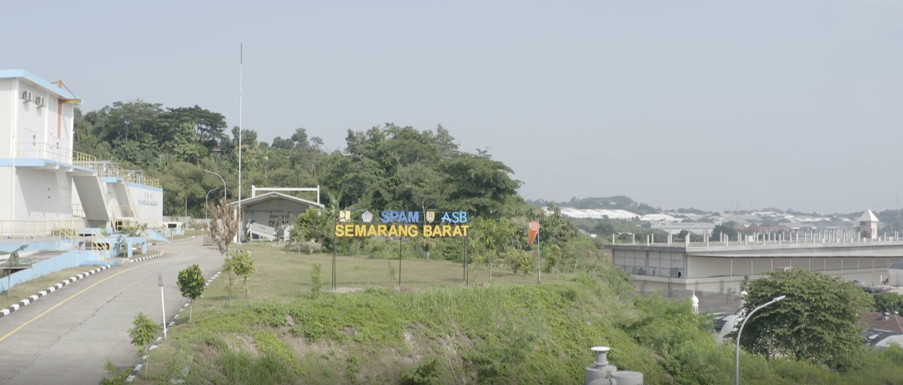
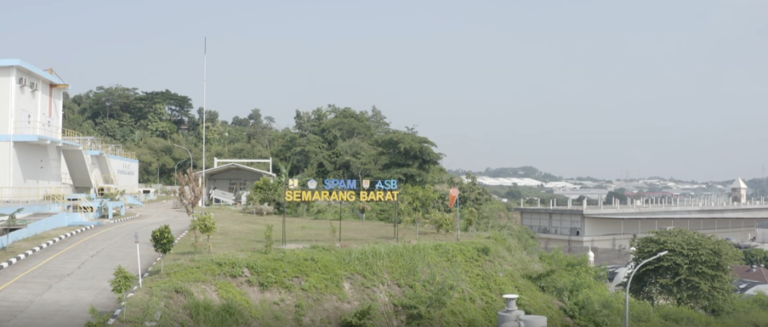
Indonesia already has several examples of PPP infrastructure relevant to the climate change adaptation agenda. One example is the West Semarang Drinking Water Supply System (SPAM) in Semarang City. Drinking water infrastructure is crucial when changing rainfall patterns, drought, and increasing water demand put additional pressure on clean water availability. According to Ministry of Finance data, the West Semarang SPAM PPP project has a capital expenditure of approximately IDR 417.3 billion, with a production capacity of approximately 1,000 liters per second and service coverage of approximately 70,000 household connections, equivalent to 350,000 people, in the West Semarang, Ngaliyan, and Tugu areas (2024).
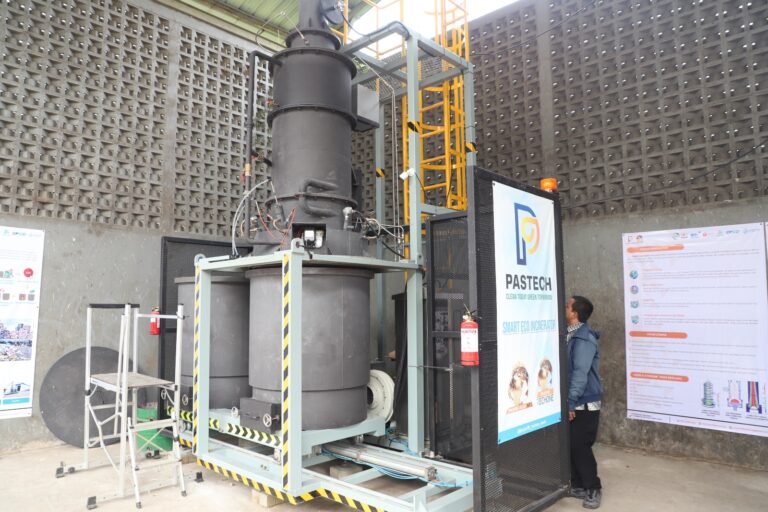
The second example is waste management, which is directly linked to climate change mitigation because poorly managed waste can produce methane emissions. Regional budget limitations are a major obstacle to developing waste management systems (Alfakih, 2023). To help close this funding gap, PPPs have been used in several waste management projects, such as the Lulut-Nambo Final Waste Processing and Recycling Facility (TPPAS), the Legok Nangka Regional Waste Processing and Recycling Facility (TPPAS), the Piyungan Regional Waste Processing and Recycling Facility (TPPAS), and the Jatibarang Waste Processing and Recycling Facility (TPPAS).
However, PPPs should not be considered the main solution for all climate financing. Private investors still need profits commensurate with investment risk, while many climate projects have no direct source of income. Coastal protection, mangrove restoration, early warning systems, or protection of vulnerable groups may produce large economic and social benefits, but investors will find it difficult to make a profit. In addition, government guarantees, VGFs, or long-term payments in PPPs can still create fiscal obligations for the state. Therefore, PPPs should complement climate financing, not replace government responsibilities or international financing.
The efforts to attract private investment must not result in the public having to pay unaffordable service fees. The use of PPP schemes must consider value for money, service affordability for the public, and the government’s financing capacity. Project assessments should also consider costs and benefits throughout the infrastructure lifecycle, including construction, operational, and maintenance costs. This is crucial to ensure that the selection of PPP schemes not only attracts private investment but also provision of public services so that people can carry out their socio-economic lives (Kemenkeu, n.d.- b).
So, who should finance climate action, especially in developing countries? The answer isn’t one party, but all parties, each with its own distinct roles. Developed countries still need to lead international financing through grants and concessional financing, particularly for adaptation projects. Developing country governments need to integrate climate risks into their budgets and development planning. Multilateral institutions can provide low-cost loans, guarantees, technical assistance, and project preparation support. Capital markets can provide financing through thematic bonds. Meanwhile, the private sector can contribute to projects with adequate business models and risk sharing, one example being through PPP schemes.
At the end, the challenge of climate financing isn’t simply about getting money, but finding the right financing sources for the right climate needs. Developing countries, including Indonesia, need to combine the state budget, international grants, capital markets, or private investment with managed risks. The fund from developed countries and international organization can be directed to adaptation projects with significant social benefits but no revenues, thematic bonds can be used to build green infrastructure, while PPPs can be used for infrastructure with risk-sharing and service models that enable private sector involvement. If implemented carefully, PPPs can help transform climate commitments into beneficial and environmentally friendly infrastructure.
References:
- Alfakih, S. (2023, December 6). Melihat tantangan dan meraih peluang dari tumpukan sampah [Seeing challenges and seizing opportunities from piles of trash]. https://kpbu.kemenkeu.go.id/read/1205-1659/umum/kajian-opini-publik/melihat-tantangan-dan-meraih-peluang-dari-tumpukan-sampah
- Chavarría-Flores, A., & Warren, P. (2024). Sovereign climate bonds: Policy innovation for just transitions in developing countries. Journal of Climate Finance, 7, Article 100041. https://doi.org/10.1016/j.jclimf.2024.100041
- Direktorat Jenderal Pengelolaan Pembiayaan dan Risiko. (n.d.). Produk dan Layanan [Products and Services]. Kementerian Keuangan Republik Indonesia. https://djppr.kemenkeu.go.id/produkdanlayanan
- Kementerian Keuangan Republik Indonesia. (n.d.-a). Bagaimana cara kerja proyek KPBU [How PPP projects work]. https://kpbu.kemenkeu.go.id/read/41-44/investor/mengapa kpbu/bagaimana-cara-kerja-proyek-kpbu
- Kementerian Keuangan Republik Indonesia. (n.d.-b). Hubungan antar komponen dalam studi penyiapan proyek KPBU [The relationship between components in the PPP project preparation study]. https://kpbu.kemenkeu.go.id/read/76-223/umum/kajian-opini-publik/hubungan-antar komponen-dalam-studi-penyiapan-proyek-kpbu
- Kementerian Keuangan Republik Indonesia. (2024). Presiden Joko Widodo resmikan SPAM Semarang Barat [President Joko Widodo inaugurated the West Semarang SPAM]. https://kpbu.kemenkeu.go.id/berita/read/1688/presiden-joko-widodo-resmikan-spam semarang-barat
- Organisation for Economic Co-operation and Development. (2024). G20/OECD report on approaches for financing and investing in climate-resilient infrastructure. OECD Publishing. https://www.oecd.org/en/publications/g20-oecd-report-on-approaches-for-financing-and investing-in-climate-resilient-infrastructure_8f6d436a-en.html
- Organisation for Economic Co-operation and Development. (2025). Revisiting public-private partnerships (PPPs) for water and sanitation: Balancing risks, focusing on results [Background paper]. https://www.oecd.org/content/dam/oecd/en/events/2025/04/twelfth-meeting-of-the roundtable-on-financing-water/background-paper-revisiting-public-private-partnerships-for water-and-sanitation.pdf
- Organisation for Economic Co-operation and Development. (2026). Climate finance provided and mobilised by developed countries in 2013–2024. OECD Publishing. https://www.oecd.org/en/publications/climate-finance-provided-and-mobilised-by-developed countries-in-2013-2024_ab5eb9ad-en.html
- Republik Indonesia. (2015). Peraturan Presiden Republik Indonesia Nomor 38 Tahun 2015 tentang Kerja Sama Pemerintah dengan Badan Usaha dalam Penyediaan Infrastruktur. https://jdih.kemenkeu.go.id/dok/perpres-38-tahun-2015
- United Nations Environment Programme. (2025). Adaptation gap report 2025: Running on empty—The world is gearing up for climate resilience without the money to get there. https://wedocs.unep.org/items/b547996e-14ee-4f1c-a6d4b811dd373ae9
- United Nations Framework Convention on Climate Change. (2024, November 24). COP29 UN Climate Conference agrees to triple finance to developing countries, protecting lives and livelihoods. https://unfccc.int/news/cop29-un-climate-conference-agrees-to-triple-finance-to developing-countries-protecting-lives-and

 Mwaiwawo Banda

 Mujibullahi Shahud
 Seftario Virgo
 Jawal Sualisu
 Hanifah Setyaningrum
 Fadhli Ilahi
It is in reality a great and helpful piece of information. I’m happy that you shared this useful information with us. Please stay us informed like this. Thanks for sharing.