
Introduction
A secondary school student in Lagos is likely to have heard about climate change. They may have encountered discussions on social media, watched television reports on flooding, or participated in environmental activities at school. For a student in parts of northern Nigeria, however, the experience can be very different. Despite living in communities facing drought, desertification, and extreme heat, access to climate information remains uneven. This disconnect reflects a troubling reality: Nigeria is highly vulnerable to climate change, yet public awareness and understanding of climate risks remain fragmented across regions.
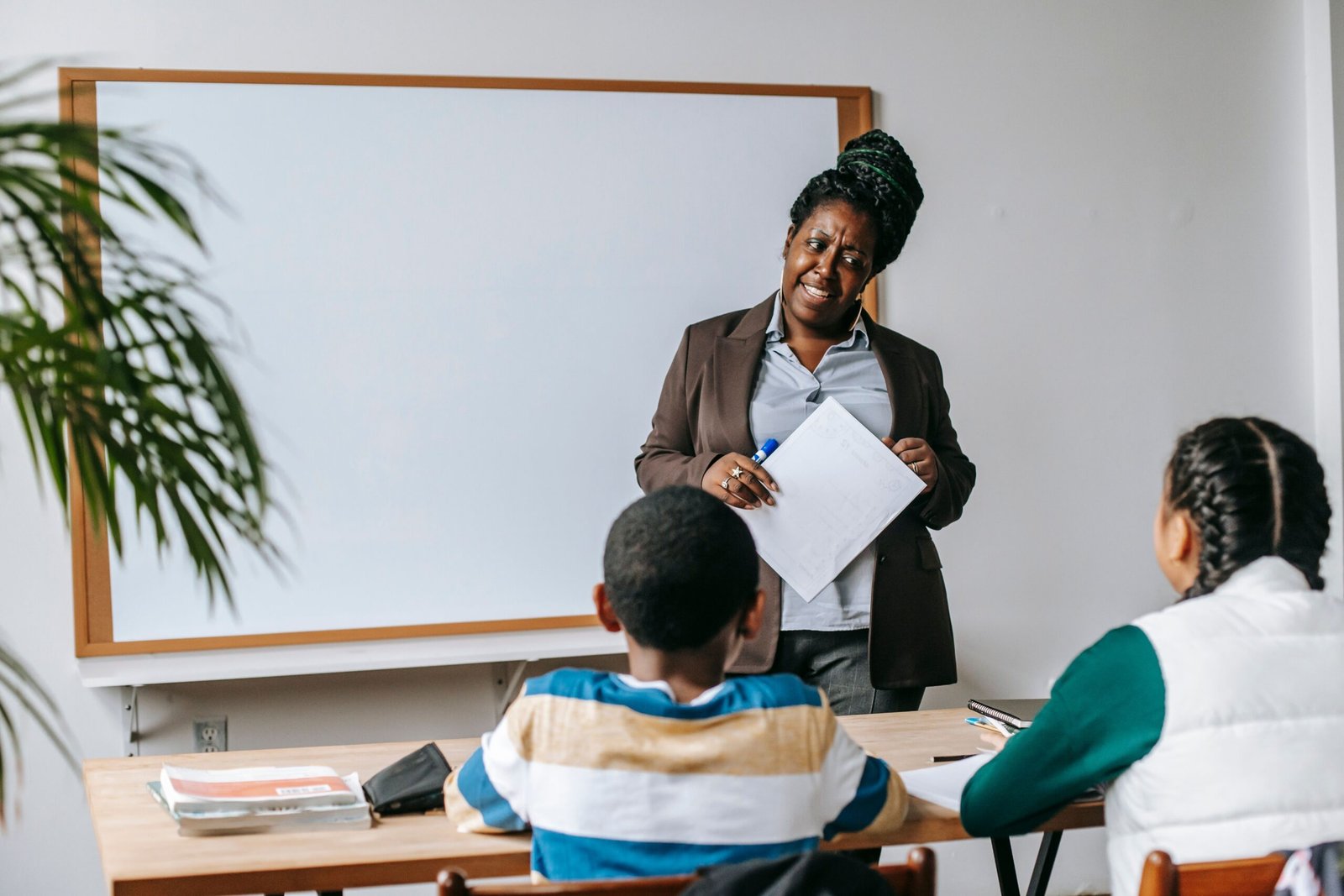
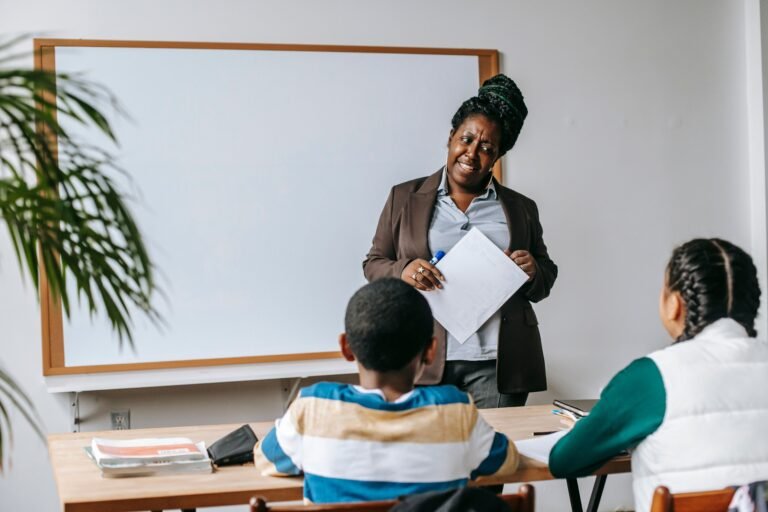
This gap matters because climate adaptation begins with awareness. People cannot prepare for risks they do not understand, nor can they support adaptation measures they do not see as relevant to their lives. If Nigeria is serious about building climate resilience, climate education cannot remain a peripheral topic within existing subjects. It must become a national priority. One way to achieve this is by introducing Climate Communication as a dedicated subject in secondary schools.
From Policy Commitments to Public Understanding
Nigeria’s climate policy framework already recognizes the importance of education. The Climate Change Act 2021 mandates the integration of climate change across all levels of education, while Nigeria’s Nationally Determined Contributions (NDCs) emphasize Action for Climate Empowerment (ACE), which promotes climate awareness, education, and public participation.
Yet a significant gap remains between policy ambition and public understanding. Climate awareness varies considerably across the country, with urban populations generally displaying higher levels of climate literacy than many rural and economically marginalized communities. This uneven distribution of knowledge creates what can be described as an awareness gap, where vulnerability to climate impacts often exceeds understanding of climate risks.
Research suggests that climate knowledge plays an important role in shaping public attitudes and behaviour. According to Armstrong, Krasny, and Schuldt (2018), awareness and understanding provide an essential foundation for meaningful engagement with climate action. Without a basic level of climate literacy, individuals are less likely to support adaptation measures or participate in collective responses to environmental challenges.
At present, Nigeria relies heavily on informal channels such as social media campaigns, awareness events, and donor-supported programmes to disseminate climate information. While these initiatives are valuable, they often reach audiences unevenly and cannot guarantee nationwide coverage. A dedicated secondary-school subject would help establish a minimum level of climate literacy across all geopolitical zones, ensuring that climate knowledge becomes a civic competency rather than an opportunity determined by geography or digital access.
Beyond Environmental Science: Why Climate Communication Matters
Some may argue that climate change is already covered in science or geography classes. While this is true, Climate Communication would serve a different purpose.
Traditional environmental education focuses primarily on the scientific dimensions of climate change: greenhouse gases, rising temperatures, and changes in weather patterns. Climate Communication, by contrast, focuses on how people understand, interpret, discuss, and respond to climate risks.
This distinction is important. As Janković and Schultz (2017) demonstrate, providing scientific information alone is often insufficient to motivate action. Communication is most effective when it helps people connect scientific knowledge to their daily experiences and social realities. Climate Communication therefore shifts the conversation from simply understanding climate science to understanding how climate information influences public behaviour, decision-making, and collective action.
In practical terms, students would learn how climate risks are communicated, why misinformation spreads, how media narratives shape public perceptions, and how communities can engage in adaptation efforts. Such skills are increasingly important in a world where information is abundant but understanding is often limited.
Making Climate Change Relevant to Everyday Life
One of the main barriers to climate action is that climate change often feels distant. Many people perceive it as a problem affecting future generations or distant locations rather than something already shaping their own communities.
However, climate change is already influencing Nigerian livelihoods. Farmers face changing rainfall patterns, coastal communities contend with erosion and flooding, urban centres increasingly experience flash floods, and northern communities continue to grapple with desertification and water scarcity.
Research on climate communication suggests that people are more likely to respond when risks are communicated in ways that are personally meaningful. Janković and Schultz (2017) argue that effective communication bridges the gap between scientific evidence and lived experience. Climate Communication education would help students make these connections, enabling them to understand not only what climate change is but how it affects their families, communities, and future opportunities.
From Knowledge to Resilience
The ultimate objective of climate education should not be the memorization of scientific facts. It should be the development of resilience.
Studies of climate adaptation repeatedly show that adaptation strategies are more successful when communities understand the risks they face and perceive those risks as personally relevant. Research on farmers’ perceptions similarly demonstrates that awareness strongly influences willingness to adopt adaptation measures (Matos Carlos et al.).
Climate Communication can help build this capacity by equipping students with both knowledge and practical skills. A well-designed curriculum could prepare future farmers, teachers, civil servants, journalists, community leaders, and policymakers to communicate adaptation measures effectively within their communities.
Research on policy learning further supports this approach. Lee and van de Meene (2012) argue that meaningful learning occurs when knowledge is embedded within local contexts and linked to practical governance challenges. Climate Communication offers precisely this opportunity by connecting global climate concerns to local realities.
What Would Students Learn?
A dedicated Climate Communication curriculum could include:
- Climate risks and vulnerabilities in Nigeria.
- Media literacy and critical evaluation of climate information.
- Understanding misinformation and disinformation.
- Risk communication during floods, droughts, and heatwaves.
- Community engagement and public participation.
- Climate storytelling and advocacy.
- Adaptation planning and resilience-building strategies.
- Communication techniques for promoting behavioural change.
Such a curriculum would help students become not only informed citizens but also active participants in climate adaptation and sustainable development.
Addressing the Counterargument
Critics may argue that Nigerian schools already face overcrowded curricula and that climate change should simply be integrated into existing subjects.
This concern is understandable. However, climate change is no longer a narrowly environmental issue. It affects agriculture, public health, infrastructure, migration, education, security, and economic development. Given its cross-cutting nature, there is a strong case for creating dedicated space within the education system to develop the communication and critical-thinking skills needed to navigate climate risks.
The question is therefore not whether climate education should be expanded, but how best to ensure that future generations are equipped to understand and respond to one of the defining challenges of their time.
Avoiding “Greenwashing” in Education
Introducing a new subject alone will not guarantee success. Without adequate teacher training, locally relevant materials, and practical learning approaches, Climate Communication could easily become another theoretical subject disconnected from students’ experiences.
The Federal Ministry of Education’s Climate Change Education Handbook (2025) acknowledges the importance of empowering learners to take meaningful action. Achieving this goal requires moving beyond abstract discussions of carbon emissions and global temperature targets.
Educational approaches proposed by Born (2019) and Fearns (2019) provide useful guidance. By encouraging learners to connect environmental memory with future climate possibilities, education can become more engaging, participatory, and locally relevant. A student in Bayelsa should be able to discuss coastal flooding and erosion. A student in Kano should be able to examine desertification and water scarcity. Climate education becomes meaningful when it reflects the realities learners encounter in their own communities.
This challenge is particularly important in vulnerable regions. Despite promising initiatives such as the partnership between UNICEF Nigeria and Africa Re to support climate education, reaching children in the most climate-vulnerable communities remains a significant logistical and financial challenge.
Climate Communication as a Resilience Strategy
This argument contributes to a growing body of scholarship that views climate adaptation not only as a technical challenge but also as a communication challenge. While climate policy frequently emphasizes infrastructure, technology, and finance, research increasingly demonstrates that public understanding, risk perception, and learning are equally important components of resilience (Janković & Schultz, 2017; Lee & van de Meene, 2012).
Climate Communication should therefore be understood as a resilience strategy. By developing citizens who can critically evaluate information, communicate risks, and promote adaptation within their communities, education becomes an essential component of national climate preparedness.
Conclusion
Nigeria’s Climate Change Act 2021 recognizes the importance of education, but legislation alone cannot close the country’s climate-awareness gap. Climate resilience is ultimately built through informed citizens who can understand risks, interpret information, and communicate adaptation strategies within their communities.
Research on climate communication, policy learning, and public perception consistently suggests that these capabilities do not emerge automatically; they must be cultivated through structured learning (Armstrong, Krasny, & Schuldt, 2018; Janković & Schultz, 2017; Lee & van de Meene, 2012). Integrating Climate Communication into secondary education would help create a generation of Nigerians better equipped to navigate environmental uncertainty, support adaptation efforts, and contribute to sustainable development.
If climate change is one of Nigeria’s defining challenges, then Climate Communication should become one of its defining educational priorities. The classroom may ultimately prove to be one of Nigeria’s most important investments in resilience, adaptation, and a sustainable future.
References
- Armstrong, A. K., Krasny, M. E., & Schuldt, J. P. (2018). Communicating climate change: A guide for educators. Cornell University Press. https://www.loc.gov/item/2018036694/ [loc.gov], [d119vjm4ap…dfront.net]
- Born, D. (2019). Remembering nature in climate change: Re-thinking climate science and climate communication through critical theory. RCC Perspectives, 2019(4), 79–86. https://www.jstor.org/stable/26760168
- de Matos Carlos, S., da Cunha, D. A., Pires, M. V., & do Couto-Santos, F. R. (2020). Understanding farmers’ perceptions and adaptation to climate change: The case of Rio das Contas Basin, Brazil. GeoJournal, 85(3), 805–821. https://www.jstor.org/stable/48730873
- Fearns, V. K. G. (2019). Experiencing tomorrow: The importance of immersive scenarios for climate science communication. RCC Perspectives, 2019(4), 89–96. https://www.jstor.org/stable/26760169
- Federal Ministry of Education. (2025). Climate change education handbook 2025. Federal Ministry of Education.
- Federal Republic of Nigeria. (2021). Climate Change Act, 2021. Federal Government of Nigeria.
- Janković, V., & Schultz, D. M. (2017). Atmosfear: Communicating the effects of climate change on extreme weather. Weather, Climate, and Society, 9(1), 27–37. https://doi.org/10.1175/WCAS-D-16-0030.1 [pollux-fid.de], [vufind.lboro.ac.uk]
- Lee, T., & van de Meene, S. (2012). Who teaches and who learns? Policy learning through the C40 cities climate network. Policy Sciences, 45(3), 199–220. https://doi.org/10.1007/s11077-012-9159-5 [research.monash.edu], [link.springer.com]
- Moser, S. C. (2010). Communicating climate change: History, challenges, process and future directions. WIREs Climate Change, 1(1), 31–53. https://doi.org/10.1002/wcc.11
- Nisbet, M. C. (2009). Communicating climate change: Why frames matter for public engagement. Environment: Science and Policy for Sustainable Development, 51(2), 12–23. https://doi.org/10.3200/ENVT.51.2.12-23
- UNESCO. (2024). Greening education partnership: Getting every learner climate-ready. UNESCO. https://www.unesco.org/en/education-sustainable-development/greening-education-partnership
- UNICEF Nigeria. (2025). African Reinsurance Corporation and UNICEF partnership on climate-resilient education in Nigeria.
- UNICEF Nigeria. https://www.unicef.org/nigeria

 Mwaiwawo Banda
 Mujibullahi Shahud
 Seftario Virgo
 Jawal Sualisu
 Hanifah Setyaningrum
 Fadhli Ilahi
I am constantly searching online for tips that can benefit me. Thx!
Have you ever thought about including a little bit more than just your articles?
I mean, what you say is fundamental and everything.
Nevertheless just imagine if you added some great pictures or video clips to give your posts
more, “pop”! Your content is excellent but with pics and clips, this blog could certainly
be one of the best in its niche. Excellent blog!
Hi there! This is my first visit to your blog! We are a group of volunteers and starting a new project
in a community in the same niche. Your blog provided us useful information to
work on. You have done a wonderful job!
Hurrah! Finally I got a webpage from where I
know how to genuinely get useful facts concerning my
study and knowledge.