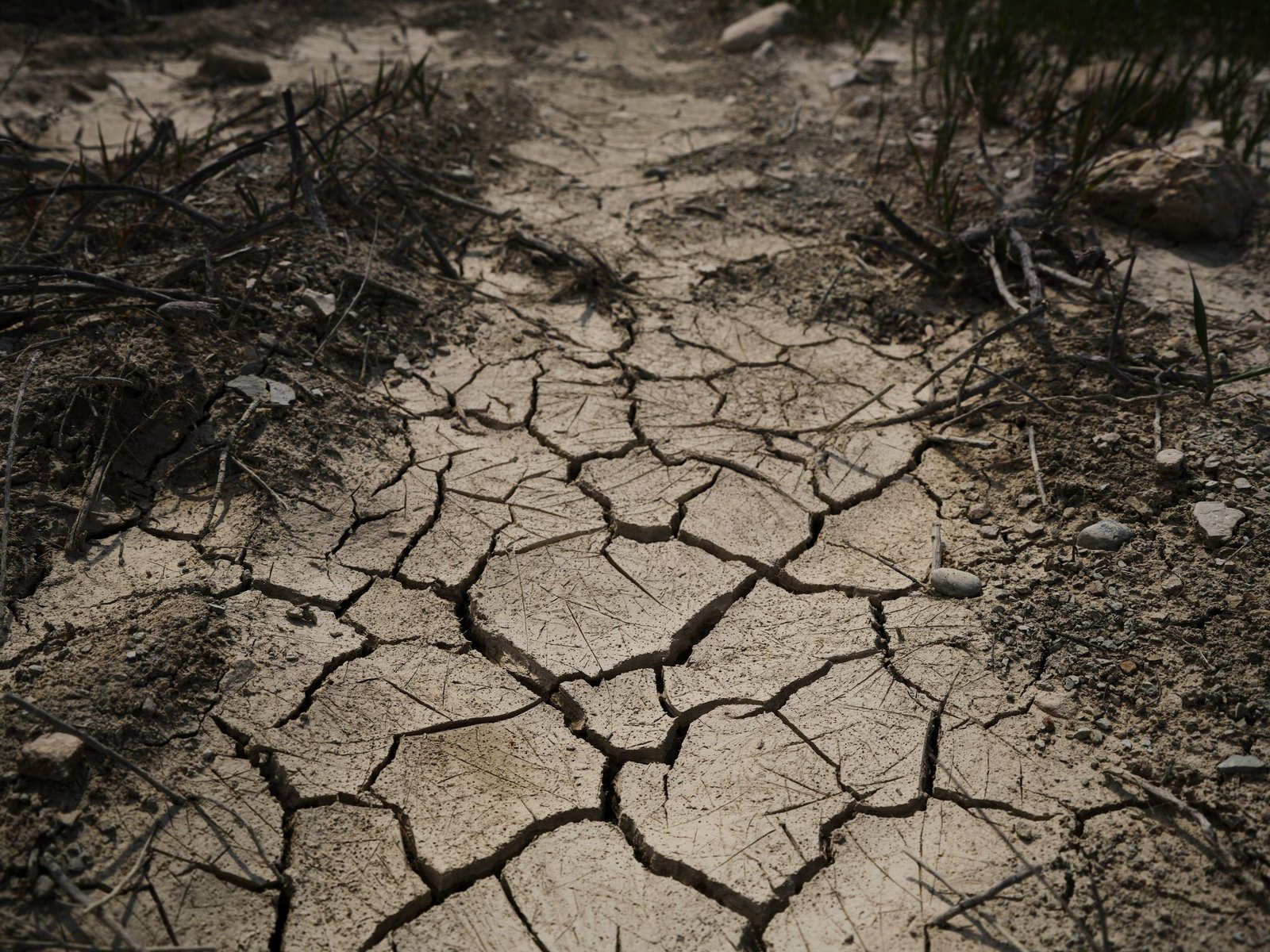

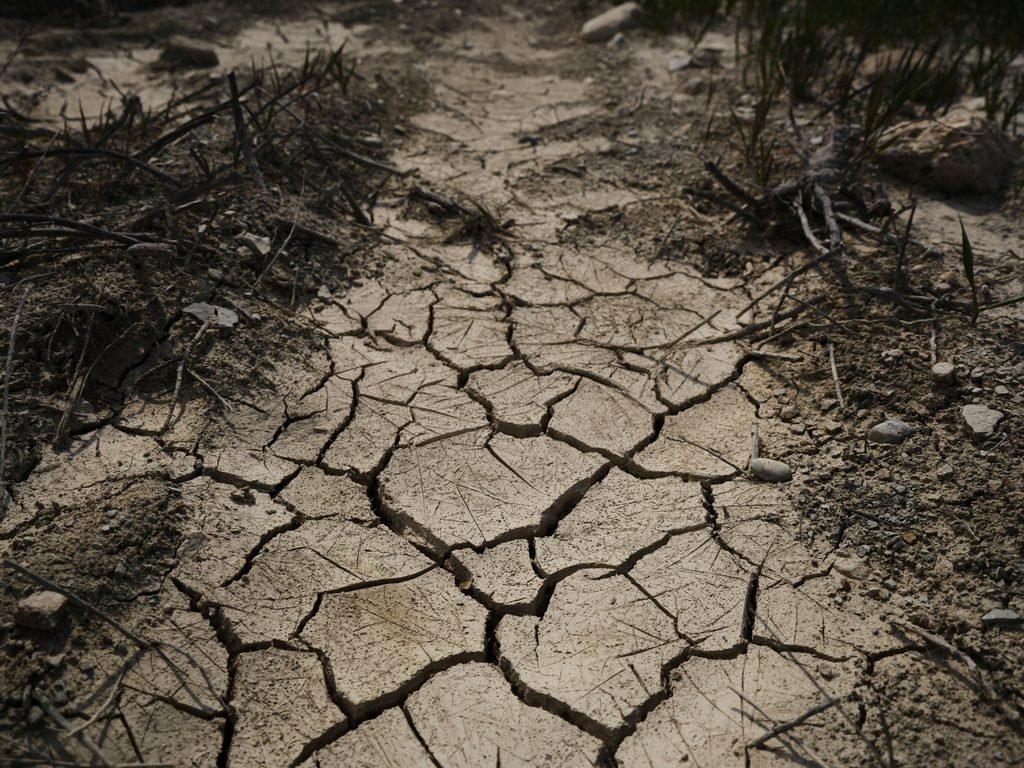
On 18 May 2023, Iran’s president Ebrahim Raisi went to drought-hit Sistan and Baluchestan and told Afghanistan’s rulers, in public, to hand over the province’s water rights at once (USIP, 2023). Nine days later Iranian border guards and Taliban forces exchanged fire. At least three people died (Al Jazeera, 2023).
The Taliban’s reply was that the Helmand had no water. One former Taliban commander filmed himself filling a single jerrycan and offering it to Raisi (The Diplomat, 2023).
Both governments said they respected the 1973 Helmand River Water Treaty, and both accused the other of breaking it. That is the puzzle I want to work through here. The two sides accept the treaty and keep quoting it, yet it does not stop the conflict it was written to end. When the Afghan prime minister signed it in 1973, he said it would settle the Helmand question so that another century would not be wasted on it (Nagheeby & Rieu-Clarke, 2021). Fifty years on, the dispute is louder than ever.
Two explanations come up again and again. One is climate: drought shrinks the river, so less water reaches Iran. The other, popular in Iranian media, is bad faith upstream, with Afghanistan building dams and keeping the water for itself. I don’t think either is enough, because the treaty expected drought and wrote a rule for it.
That rule only works if both parties trust one shared measurement, and the measurement system has collapsed. Climate stress did not break the treaty on its own. What it did was expose a verification gap. Through that gap, drought turned from a hydrological fact into a diplomatic argument, open to whoever controls the gauge.
Start with the text. Afghanistan delivers Iran an average of 22 cubic metres per second, the figure the Helmand River Delta Commission recommended in 1951, plus 4 m³/s “as an expression of goodwill and brotherly relations”, which makes 26 m³/s in total (Helmand River Water Treaty, 1973, Art. II). That comes to roughly 820 million cubic metres a year. A monthly table sets how it is spread out, and the biggest deliveries fall in February and March (78.16 and 73.13 m³/s). All of these numbers apply only in a “normal water year”, meaning a year in which flow at the Dehrawud hydrometric station, upstream of Kajaki reservoir, reaches 5,661.715 million cubic metres between October and September (Art. I(c)). If the flow falls short “due to climatic factors”, Iran’s share is cut in proportion to the measured deficit (Art. IV). Iran can claim nothing above its allocation; Afghanistan keeps all rights to the rest (Art. V). And if extreme drought makes delivery to the delta impossible, the commissioners have to consult and draw up an emergency plan (Art. XI).
The drafters, in other words, were not naive about climate. Article IV is a climate adaptation clause written in 1973. Its weakness is what it rests on: in a dry year, Iran’s entitlement depends on one number, recorded at one Afghan station.
The treaty knew this was sensitive. Protocol 1 (Art. 5) lets the Iranian commissioner ask for the Dehrawud records in a below-normal year, and even observe and measure the flow there himself. Verification was what Afghanistan gave in return for keeping control of the upstream gauge.
The allocation is also very unequal. Iran’s 820 million m³ is about 8.5 percent of the basin’s average surface water of 9,552 million m³, and under 14 percent of water demand in Sistan (Nagheeby & Rieu-Clarke, 2021, citing Thomas & Mahmoudzadeh Varzi, 2015). Even so, Afghan critics in the 1970s saw their government as a “water dealer”, and ratification was held up until 1977. So why would Iran accept so little? Nagheeby and Rieu-Clarke say the answer is certainty. A small share that was guaranteed, with a right to check it, was worth more in drought years than an open dispute.
That certainty is the part that has failed. Glen Hearns, who advised the Afghan government on transboundary water from 2012 to 2014, notes that the two sides exchange hydraulic data, but not from Dehrawud, because the station had been out of commission for many years. The Commission doesn’t meet every year either, and deliveries to Iran aren’t properly monitored (Hearns, 2015). According to Nagheeby and Rieu-Clarke, Iranian requests to visit the station, especially in drought years, were turned down on “security” grounds. Afghanistan, for its part, accuses Iran of running hundreds of pumps along the river bank and taking more than its share.
The complaints mirror each other. Each side says the other is cheating, and neither can prove it.
This leaves Article IV close to useless. With no working gauge that both sides trust, Iran can’t tell a real 40 percent shortfall from a reported one, and Afghanistan can’t prove good faith even when it is telling the truth. “There is no water” can’t be tested. Neither can “they are hiding the water”. Nagheeby and Rieu-Clarke call this a fear of cheating produced by anarchy, drawing on Grieco’s realism. I’d place it more narrowly. The fear sits in one broken clause of a treaty that is otherwise intact, and not in some general atmosphere hanging over the region.
You can watch the mechanism work in the 2023 crisis. Once the Taliban blamed drought, the argument left the Commission and moved to satellite images and viral videos. Afghan Witness compared imagery from May 2021 and May 2023 and found more water stored in both the Kajaki and Kamal Khan reservoirs in 2023 (Afghan Witness, 2023). That doesn’t prove a breach, since a reservoir level in May says little about annual flow at Dehrawud, and annual flow at Dehrawud is what the treaty measures. Still, it shows what was going on: open-source analysts were doing the job the treaty gave to two commissioners, using the wrong data, because the right data weren’t available. Later events point the same way. In March 2024, after heavy rain, the Kamal Khan gates were opened and water reached the Iranian border (Pajhwok, 2024). In June 2025 an Iranian official said the negotiations had achieved little and only limited water had come through (Afghanistan International, 2025).
Water crosses the border when Afghanistan has a surplus. The monthly table has little to do with it.
The infrastructure built since 1973 has also changed what the treaty’s numbers mean. The treaty pictured a river running through to the delta. Kamal Khan Dam, opened in March 2021 under Ashraf Ghani, put an Afghan reservoir close to the border, and Ghani suggested Afghanistan might trade water for oil (Sinaiee, 2025). The last control point before Iran is now a sluice gate. Iran has its share of blame here too. It started building the Chah Nimeh reservoirs in the early 1980s, and a 2006 study involving Iran’s own Ministry of Energy found that Iranian storage and irrigation capacity on the Helmand was already larger than the treaty allocation (Hearns, 2015). Both states built for a bigger river than the one they now share. Groundwater, which Iran also pumps, is not in the treaty at all.
If the measurement problem hurts both sides, why does neither fix it? Putnam’s (1988) two-level game is useful here. Raisi’s warning in Sistan was aimed at least as much at Iranian voters as at Kabul, at a time when more than 90 percent of Iran’s population faced drought conditions (USIP, 2023, for 2022 and 2023). A public threat like that ties a negotiator’s hands and shrinks the range of deals he can sell at home. The Taliban have a Level II of their own: farmers in Helmand and Nimroz, the movement’s heartland, and a regime that wants recognition and does not want to look weak in front of Tehran. Iranian commentators claim the Taliban use water as a bargaining chip for recognition (Sinaiee, 2025). That is a claim and not an established fact, but it shows how the dispute is read in Iran. On both sides, accepting the other side’s numbers costs more at home than accusing it of breaking the treaty. Neither side walks out, though, because leaving would cost even more; Nagheeby and Rieu-Clarke make the same point in realist terms, saying each fears renegotiation would leave it worse off.
So where does climate change fit? I see it as a stress test more than an explanation. Article IV assumes “normal” stays put, a fixed benchmark taken from mid-twentieth-century hydrology. If mean flows drop, or flows swing more from year to year, more years count as “below normal”, and proportional reduction becomes how the treaty runs most of the time. Each of those years needs a verified number. A treaty that once needed trust now and then would need it almost every year. Whether flows at Dehrawud really are falling is hard to say, because the long record that would show it is exactly what isn’t publicly available. The science-to-policy gap we discussed in Weeks 2 and 5 is about more than politicians ignoring data. Sometimes the data are a political resource themselves.
The obvious objection comes from Nagheeby and Rieu-Clarke (2021). They explain the stalemate through anarchy and the Great Game, and for the treaty’s origins this works well: a 1947 CIA memo treated the Helmand dispute as a threat to American influence against the Soviet Union, and Washington pushed the 1973 settlement. The framework is weaker on change, however. Anarchy has been constant, so it predicts continuity. It can’t explain why the Commission met around twenty times between 2004 and 2019, in talks the former Iranian commissioner called “amicable”, and then broke down after 2021, when outside powers had mostly left. A verification account explains this better. The Commission worked, imperfectly, while two recognised governments sent commissioners on a regular schedule, and it stalled once non-recognition and a new dam cut the channel that numbers were supposed to travel through.
There are limits to this. It is a reading of one case, the counterfactual is hard to establish, and drought years also cluster after 2018, so the variables are hard to pull apart.
If the argument holds, the policy lesson is modest. Renegotiating the allocation, which Iran has floated, is risky for both sides and unlikely while Kabul is unrecognised. Restoring verification costs less: a working Dehrawud station, a second gauge at the Kamal Khan outflow, and real-time data both commissioners can see. Where trust is too thin for that, a neutral technical body could supply satellite estimates of reservoir storage and river flow. The treaty already makes room for this. Article IX provides for a third party’s good offices, and Protocol 2 sets up a fact-finding mission before any arbitration. An arrangement like this can also run below the level of formal recognition, which is how Iran already deals with the Taliban when it negotiates with them directly.
The Helmand treaty knew droughts would come. It could not picture a river whose drought nobody could agree on.
References
Afghan Witness. (2023). The water rights dispute behind rising Afghan-Iran tensions. Centre for Information Resilience. https://www.info-res.org/post/the-water-rights-dispute-behind-rising-afghan-iran-tensions
Afghanistan International. (2025, June 10). Taliban has delivered only limited Helmand River water, says Iranian official. https://www.afintl.com/en/202506107808
Al Jazeera. (2023, May 27). At least three killed in shooting at Iran-Afghan border. https://www.aljazeera.com/news/2023/5/27/clash-on-iran-afghan-border-kills-at-least-three
Hearns, G. (2015, July 23). The Helmand River and the Afghan-Iranian Treaty of 1973. International Water Law Project Blog. https://www.internationalwaterlaw.org/blog/2015/07/23/the-helmand-river-and-the-afghan-iranian-treaty-of-1973/
Helmand River Water Treaty. (1973). The Afghan-Iranian Helmand River Water Treaty, with Protocols No. 1 and No. 2 (signed at Kabul, 13 March 1973). https://www.internationalwaterlaw.org/documents/regionaldocs/1973_Helmand_River_Water_Treaty-Afghanistan-Iran.pdf
Nagheeby, M., & Rieu-Clarke, A. (2021). Water diplomacy in the Helmand River Basin: Exploring the obstacles to cooperation within the shadow of anarchy. In A. Kittikhoun & S. Schmeier (Eds.), River basin organizations in water diplomacy (pp. 201–222). Routledge.
Pajhwok Afghan News. (2024, March 7). Water released from Kamal Khan dam into Iran. https://pajhwok.com/2024/03/07/water-released-from-kamal-khan-dam-into-iran/
Putnam, R. D. (1988). Diplomacy and domestic politics: The logic of two-level games. International Organization, 42(3), 427–460.
Sinaiee, M. (2025, August 22). Taliban weaponizing water as Iran officials keep mum, Tehran daily warns. Iran International. https://www.iranintl.com/en/202508209570
The Diplomat. (2023, June). Border clashes and water disputes complicate Taliban-Iran relations. https://thediplomat.com/2023/06/border-clashes-and-water-disputes-complicate-taliban-iran-relations/
Thomas, V., & Mahmoudzadeh Varzi, M. (2015). A legal licence for an ecological disaster: The inadequacies of the 1973 Helmand/Hirmand Water Treaty for sustainable transboundary water resources development. International Journal of Water Resources Development, 31(4), 499–518. (Cited via Nagheeby & Rieu-Clarke, 2021.)
United States Institute of Peace. (2023). Iran and Afghanistan clash over water rights. The Iran Primer. https://iranprimer.usip.org/node/11806

 Jozi Ikhlas Attarik
 Muhammad Ariiq Nurfidani
 Nasib Sahim
 Grienda Qomara
 Ellena Pangestu Kavarera

 Arahman Akbar
+ There are no comments
Add yours