
Generally, the issues surrounding climate change often focus on deforestation, greenhouse gas emissions, vehicle emissions, power generation, and industrial activity. Besides, everyday household activities such as cooking are also closely linked to issues of energy, the environment, and public health. To this day, approximately four of every five people in sub-Saharan African countries still rely on firewood or charcoal for cooking. Kapinga et al. (2026) further note that the continued use of firewood not only threatens forest sustainability but also generates air pollution that can be hazardous to human health. This issue becomes even more critical when cooking is carried out on a large scale, such as in schools that provide meals for thousands of students, or in healthcare facilities that serve patients and medical staff.
Climate diplomacy and Tanzania’s Energy Investment Plan at COP31
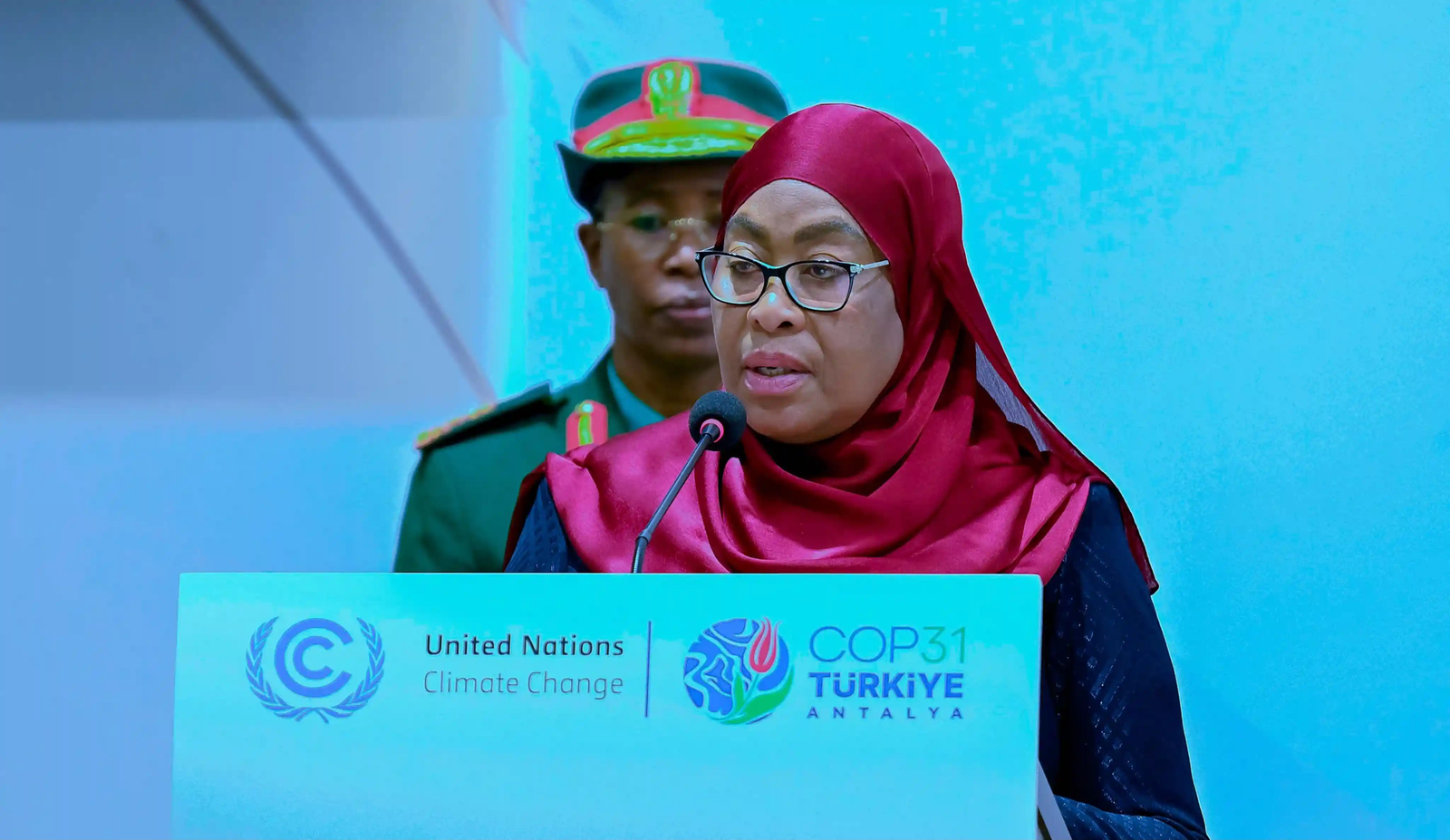
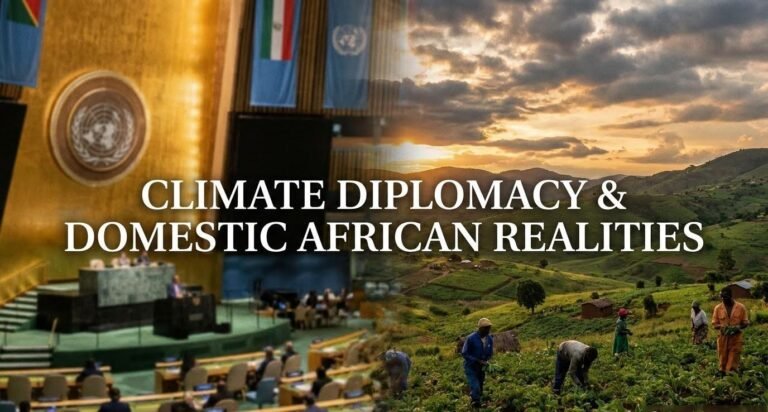
This issue was a key focus at the UN Climate Change Conference (COP31), held in Antalya, Turkey, 9-20 November 2026 an event that marked a historic milestone for the United Republic of Tanzania as it brought the topics of energy transition and clean cooking to the global climate diplomacy stage. On November 11, 2026, the Government of Tanzania, in collaboration with Sustainable Energy for All (SEforALL), hosted a forum titled “Advancing Tanzania Energy Transition and Clean Cooking in Schools and Health Facilities.” The forum highlighted Tanzania’s efforts to accelerate its energy transition by implementing clean cooking technologies in schools and healthcare facilities. The event was attended by Tanzanian President Samia Suluhu Hassan, the President of the World Bank, the President of the African Development Bank (AfDB), Tanzania’s Minister of Energy, and the CEO of Sustainable Energy for All (SEforALL) signaling that the issue of clean cooking is gaining traction at the highest levels of international leadership and finance. During the COP31 forum, President Samia Suluhu Hassan announced plans to launch Tanzania’s Energy Transition and Investment Plan (ETIP) on January 26, 2027.
Tanzania’s Reliance on Firewood for Cooking
Tanzania has a compelling reason to push for the realization of this agenda. Research by Kapinga et al. (2026), which examined 27 public schools in the Ruvuma and Mtwara regions, found that 26 of these schools (96.3%) still rely on firewood as their primary fuel for cooking. Meanwhile, in terms of other energy uses, 23 schools (85.2%) have adopted electricity as their main source of lighting. These findings highlight a gap between the expansion of access to electricity and the transition in energy sources used for cooking activities.
From a health perspective, Kapinga et al. (2026) that the use of fuels such as firewood and charcoal for cooking generates smoke and pollutants, which increase the risk of health problems for cooks, students, and staff within school environments. In healthcare facilities, the issue takes on an even broader dimension, as these settings are intended to support the safety of both patients and medical personnel. The report from the Tanzanian Ministry of Health 2025 indicates that the government has initiated a transition toward clean cooking across various public and private institutions including hospitals and other healthcare facilitiesin alignment with the National Clean Cooking Strategy (2024–2034). According to the Tanzanian national media, The Citizen, one such implementation has taken place in the Kwimba District, where 167 gas cylinders were distributed to healthcare workers through a partnership between Oryx Gas Tanzania, the Doris Mollel Foundation, and Keep a Child Alive, accompanied by training on the safe use of the cylinders. This program is expected to help healthcare workers save time on meal preparation, allowing them to focus more effectively on patient care.
Expanding Clean Cooking Adoption
Nevertheless, Tanzania has recorded a significant surge in progress over the last four years. According to the Energy News Network (2026), Tanzania’s Minister of Energy, Juma Homera, reported at the COP 31 forum that the national adoption rate for clean cooking has risen sharply from 6.9% in 2021 to 28.6% in 2025. This impressive achievement stems from the implementation of the National Clean Cooking Strategy 2024-2034, which aims for 80% of Tanzania’s population to transition to clean cooking energy by 2034. Furthermore, SEforALL has noted that national access to electricity increased from 78.4% in 2020 to 85.5% in 2026 a development supported by the Mission 300 National Energy Compact, which serves as a robust foundation for public cooking facilities.
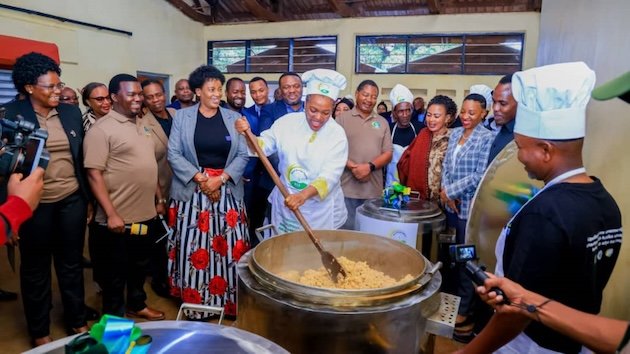
Tanzania is considered highly committed to realizing an energy transition and promoting clean cooking. In July 2025, SEforALL and the World Food Programme (WFP) in partnership with the Government of Tanzania and with support from Modern Energy Cooking Services (MECS) launched a pilot clean cooking kitchen at Kibasila Primary School. The kitchen is equipped with large-capacity electric pressure cookers, a safe electrical installation, and a ventilation system designed for the comfort of those preparing the food. This initiative serves as a stepping stone toward expanding electric cooking technology to 50 other schools, while also strengthening the global platform for clean cooking in schools.
Financing Challenges and Sustainability of Clean Cooking
The biggest challenge in scaling up this program is financing and operational sustainability. The study by Kapinga et al. (2026) estimates initial investment requirements for electric cooking systems at roughly 30-80 million shillings per school, biogas at about 100-120 million shillings, cylinders at about 60-70 million shillings, and solar cooking systems at about 150-160 million for a 40 kW capacity. Nevertheless, no single technology is suitable for every region, because the choice must take into account the reliability of electricity supply, the availability of raw materials, operating costs, and the capacity for maintenance.
Strategic Pathways for Sustainable Clean Cooking
The strategic pathways are needed so that the clean cooking agenda in public institutions can proceed in a sustainable and relevant manner. First, the government needs to design a dedicated funding scheme and a digital carbon credit mechanism so that schools and health facilities are not burdened by the upfront investment costs for electric or biogas kitchen equipment. Second, the choice of clean cooking technology must be adapted to local infrastructure conditions, for example by prioritizing electric stoves in areas with adequate electricity networks. Third, the transition program must be accompanied by technical training on equipment maintenance for staff and the establishment of student communities that care about green energy, so that clean cooking behavior takes firm root from the school environment all the way to the family.
Ultimately, COP31 must translate climate commitments into tangible change reaching even into school kitchens and health facilities. A just energy transition should not merely be measured by the construction of power plants, but felt in cleaner air, safer meals, and healthier workplaces.
References:
- International Energy Agency. (2023). A vision for clean cooking access for all: Executive summary. IEA. https://www.iea.org/reports/a-vision-for-clean-cooking-access-for-all/executive-summary
- Kapinga, A. G., Amanzi, N., & Utonga, D. (2026). Institutional energy use and clean cooking transition pathways in public schools in southern Tanzania. Discover Energy, 6, 103. https://doi.org/10.1007/s43937-026-00212-w.
- Lamb, C. (2026). At COP31, Tanzania’s clean cooking share climbs to 28.6% from 6.9% in 2021. Energy News Network. https://energy-news-network.com/industry-news/tanzania-clean-cooking-28-6-percent-cop31/
- Ministry of Health, United Republic of Tanzania. (2025). Annual Health Sector Performance Profile 2024. Dodoma: Ministry of Health.
- Sustainable Energy for All (SEforALL). (2026). President Hassan leads Tanzania’s push to unlock clean energy investment, green industries and jobs at COP31. https://www.seforall.org/news/president-hassan-leads-tanzanias-push-to-unlock-clean-energy-investment-green-industries-and.
- Sustainable Energy for All (SEforALL). (2025). Clean Cooking Takes Off in Schools with First eCooking Kitchen Launch in Tanzania. https://www.seforall.org/news/clean-cooking-takes-off-in-schools-with-first-ecooking-kitchen-launch-in-tanzania
- The Citizen. (2026). Clean cooking drive reaches health workers in Kwimba. Mwananchi Communications Limited. https://www.thecitizen.co.tz/tanzania/news/national/clean-cooking-drive-reaches-health-workers-in-kwimba-5377078


 Nasib Sahim
 Mwaiwawo Banda
 Jawal Sualisu
 Hanifah Setyaningrum
 Fadhli Fauzan Ilahi
+ There are no comments
Add yours