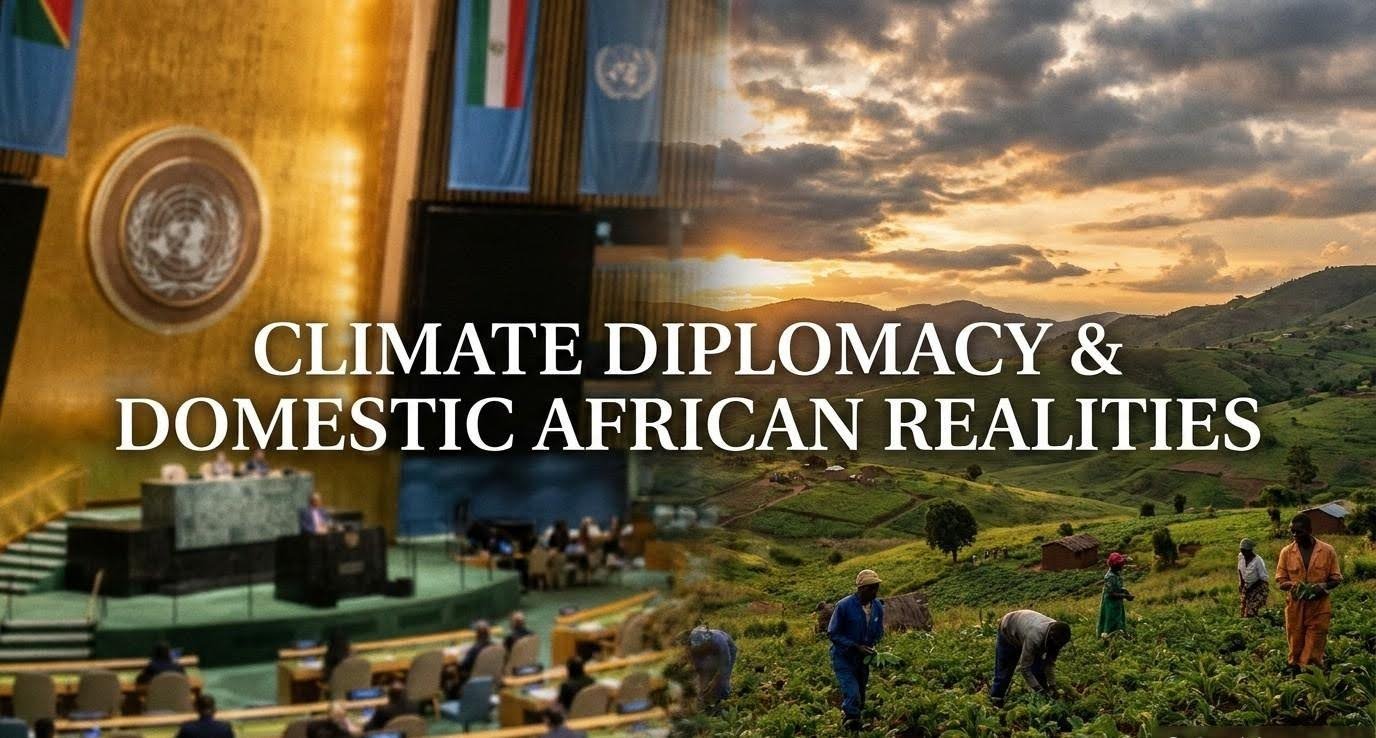

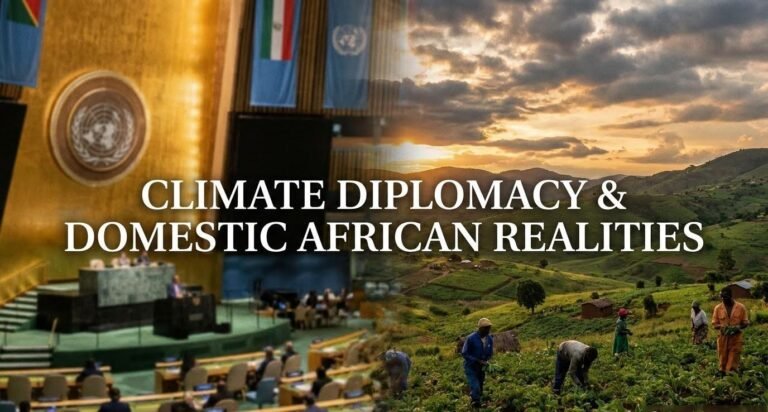
Malawi is in a very difficult position at the UN climate talks. It’s a very small emitter, but it’s extremely vulnerable to the impacts of climate change and has very limited resources with which to respond. At the various climate conferences (COP27 in Sharm el-Sheikh, COP28 in Dubai and COP30 in Belém) Malawi has used its voice and its position within the LDC group to push for much more climate finance and action on loss and damage.
But a diplomatic breakthrough is just the starting point. The real question is whether Malawi can actually turn those international commitments into support for the communities themselves, support for resilient infrastructure and support in the aftermath of disasters. Robert Putnam’s concept of “two level games” is the perfect lens through which to understand why that is such a difficult task. The government plays one game internationally and another game at home where it is constrained by the political and economic realities of the situation.
Two tables, one negotiation
Putnam’s model looks at international negotiation as a game played at two levels. Level I is the government-to-government bargaining over an agreement. Level II is about securing sufficient domestic support from the various constituencies and institutions for the agreement to be accepted and implemented.
The range of agreements that can win support at home is called a country’s “win-set.” A small win-set can sometimes strengthen a negotiator’s hand abroad: a leader can argue that domestic constraints limit the concessions they can make. But if the gap between an international commitment and domestic capacity becomes too wide, implementation can fail. Putnam’s framework describes this risk as “involuntary defection”—not a deliberate rejection of an agreement, but an inability to carry it out (Putnam, International Organization).
For Malawi the gap is a gap created by debt, lack of public resources and the sheer range of development needs. Climate commitments are in competition with health, education, agriculture and disaster recovery. The issue isn’t just about making more promises. It’s about having the resources and the institutional capacity to actually deliver on those promises.
Strength through collective diplomacy
A single low-income country has limited leverage in international negotiations. Working through coalitions helps change the balance. Malawi can advance its priorities alongside other LDCs and African states, building shared positions on adaptation finance, climate justice and loss and damage.
This approach has helped the LDC Group influence climate negotiations. Research on the group’s participation in the UN climate process documents its role in advancing the loss-and-damage agenda and shaping debates over how climate burdens should be shared (Gray and Cointet, International Organization). At COP30 in Belém, Malawi spoke on behalf of the LDC Group, calling for stronger implementation and transparent tracking of climate commitments (LDC Group closing plenary statement).
The principle of common but differentiated responsibilities is central to this diplomacy. It recognizes that countries have different historical contributions to greenhouse gas emissions and different capacities to respond. Malawi’s argument is that climate finance should help vulnerable countries protect their people and pursue development, not add to the burdens they already face.
Malawi’s updated Nationally Determined Contribution (NDC) reflects that distinction. It sets a 6 per cent emissions-reduction target by 2040 that can be pursued with domestic support, alongside an additional 45 per cent reduction conditional on international assistance. Together, these measures amount to a 51 per cent reduction against the business-as-usual scenario (Malawi’s updated NDC policy brief). The conditional target makes the financing requirement explicit: a significant part of Malawi’s ambition depends on support from beyond its borders.
The limits at home
Malawi’s domestic climate ambitions meet a tight fiscal reality. The World Bank describes the country’s public debt as unsustainable and government financing for climate-related action as constrained. Its analysis also identifies agriculture and road infrastructure as particularly exposed to climate impacts, while finding that additional adaptation investment could reduce future economic losses (World Bank, Malawi Country Climate and Development Report).
The pressure is visible in the climate budget. UNICEF’s 2025–26 climate finance brief reports that the allocation for environment and climate management fell from MK282 billion in 2024–25 to MK177 billion in 2025–26. It also reports that 88 per cent of public climate finance in the current period is donor-funded, with financing made up of both grants and loans (UNICEF Malawi, Climate Finance Budget Brief 2025–26).
These figures show why international promises can be difficult to implement. When external support is delayed, insufficient or offered as loans, Malawi has little room to fill the gap without adding pressure to public finances. At the same time, the government must respond to immediate needs, including food insecurity and disaster recovery. Long-term resilience projects may be essential, but they compete with urgent demands for scarce resources.
This is where the two-level game becomes especially important. The same government that negotiates ambitious targets abroad must decide how to fund them at home. The problem is not necessarily a lack of commitment to climate action. It is that domestic resources may not match the commitments made internationally.
Research on adaptation planning in Malawi and neighbouring countries also points to the role of politics and institutions. A multi-country study found that national leadership, political priorities and donor funding shaped the evolution of adaptation agendas in Malawi, Tanzania and Zambia. The authors argue that how power and resources interact within a country affects whether climate planning becomes effective and inclusive (Pardoe et al., Regional Environmental Change). Funding is essential, but so are the institutions that direct it and the communities whose needs guide its use.
From a fund to support people can use
The Loss and Damage Fund is one of the clearest examples of Malawi’s coalition diplomacy. At COP27, countries agreed to establish new funding arrangements, including a fund, to help vulnerable developing countries respond to climate-related loss and damage. At COP28, they agreed on the fund’s operationalization (UNFCCC, COP28 decision).
That was an important diplomatic step. Yet creating a fund does not guarantee that support will reach communities quickly or at the scale they need. For Malawi, the terms of finance matter as much as the headline amount. Grants can support recovery without adding repayment obligations; loans, even on concessional terms, can increase pressure on a country already dealing with high debt.
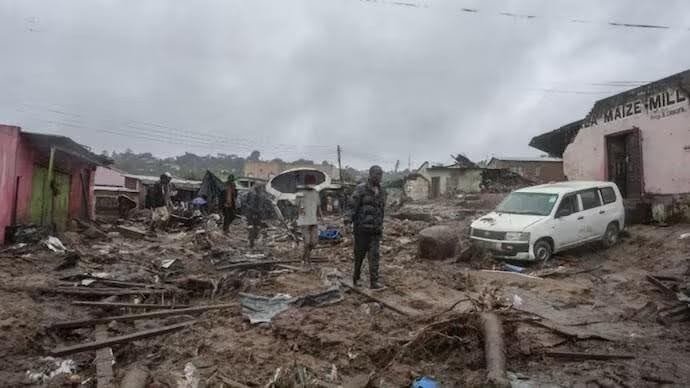
Cyclone Freddy shows what is at stake. A peer-reviewed review of the cyclone’s impacts in Malawi describes damage and disruption across health, shelter, education, nutrition, water and sanitation, agriculture, transport and livelihoods. It also reports an increase in cholera cases and deaths in affected districts (Braka et al., BMJ Public Health). Loss and damage is not an abstract negotiating term. It includes the destruction of essential services and the disruption of people’s lives.
The distribution of finance matters, too. Research on adaptation funding within Malawi found that the most climate-vulnerable districts did not necessarily receive the greatest support. Donor priorities and the capacity of districts to absorb funding helped explain how finance was distributed (Barrett, World Development). This finding cautions against judging success by national totals alone. Climate finance must reach the places and people most exposed to climate risks.
Making commitments deliver
Malawi’s diplomacy shows that international agreements cannot be separated from domestic capacity. Coalition-building gives the country a stronger voice at climate negotiations. But that influence will matter most when agreements produce support that can be used at home.
For Malawi, bridging the divide means predictable grant-based finance, accessible procedures and investment in the institutions needed to manage funds well. It also means linking climate finance to local priorities: resilient agriculture, infrastructure, early warning systems and recovery after disasters. Support should be assessed not only by how much is pledged, but by whether it reaches vulnerable communities and helps them recover without undermining essential public services.
Malawi’s NDC makes the bargain clear: much of its climate ambition depends on international support. Its constrained public finances make that support all the more important. The question facing negotiators is not whether Malawi is willing to act. It is whether the global commitments made in climate conference halls will give the country the means to do so.
For Malawians facing floods, droughts and damaged livelihoods, the measure of climate diplomacy is simple: does it lead to practical support when it is needed? That is the test of whether the two tables, international and domestic, are finally working together.

 Jawal Sualisu

 Hanifah Setyaningrum
 Fadhli Fauzan Ilahi
 Seftario Virgo

 Mujibullahi Lawan Shahud
+ There are no comments
Add yours