
- | Introduction
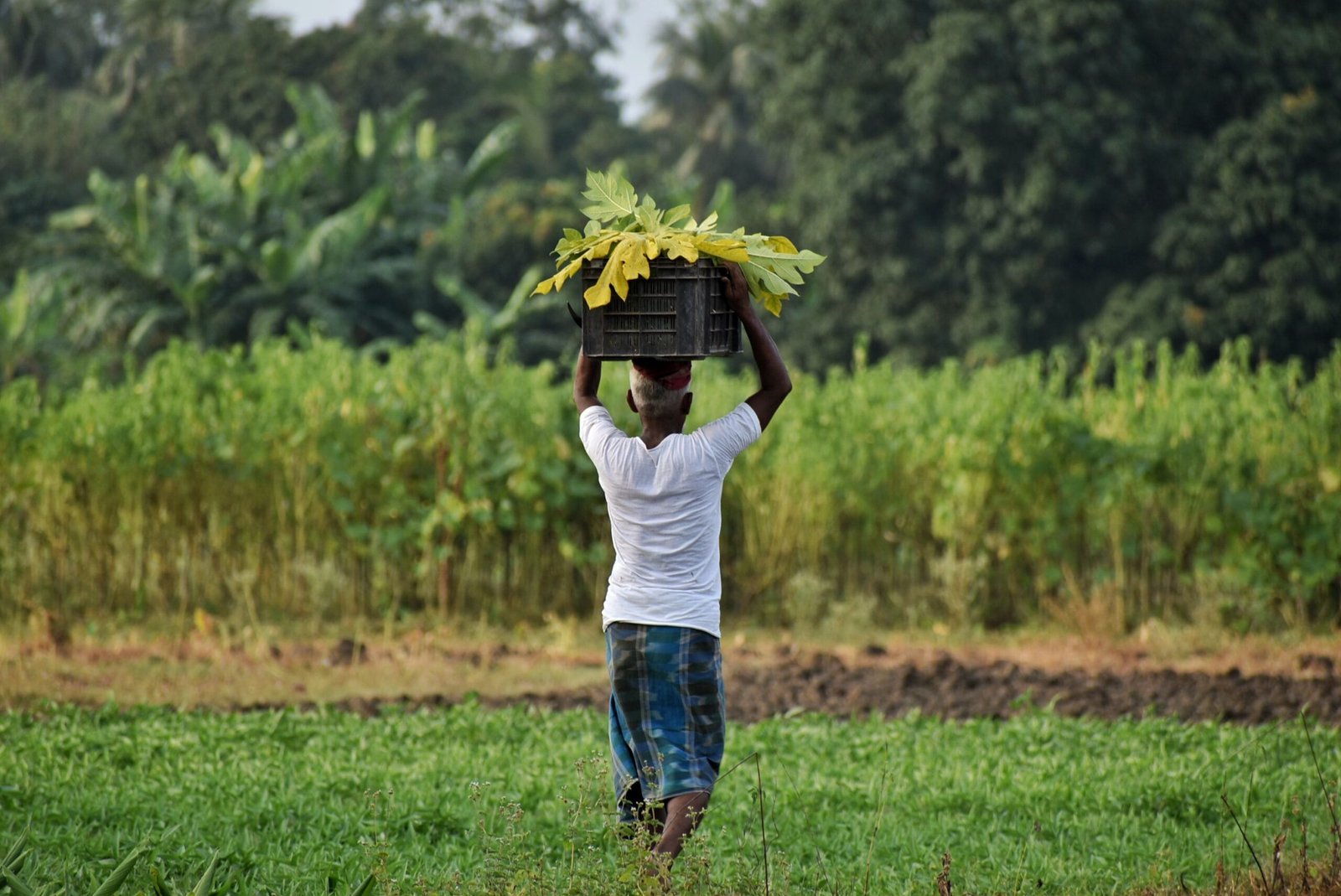
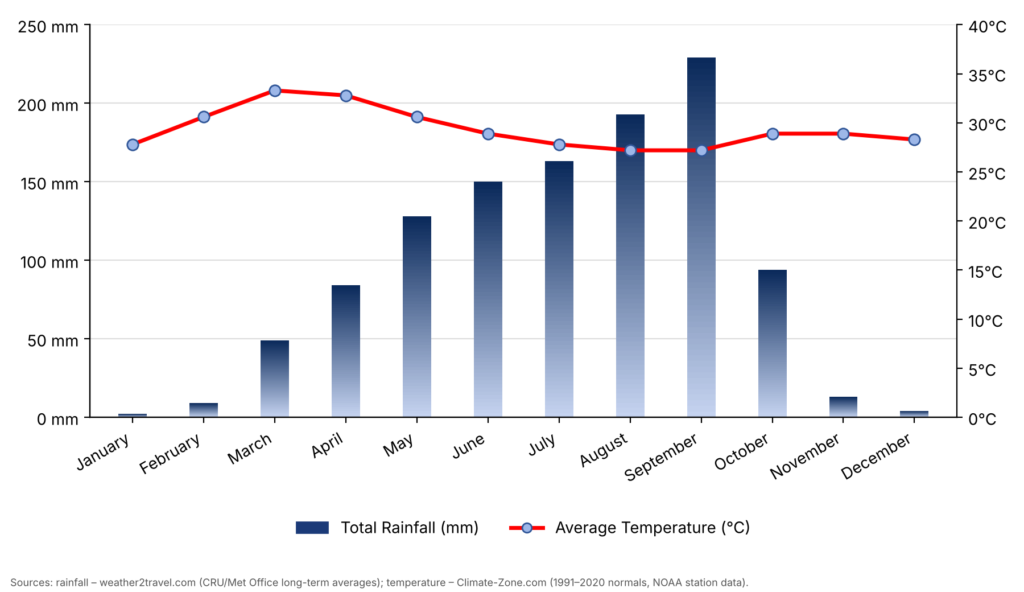
The issue of climate change communication and climate change policy making has been studied, discussed or implemented in a very rigid and complicated way, heavily dependent on dry scientific reports, large scale global conferences and top-down rules. But effective climate action cannot be divorced from information sharing and/or overcoming of psychological barriers, nor from the framing of local environmental realities (Boakye, 2023; Cudjoe, 2025). The climate reality in the savannah regions of the northern part of Ghana is characterized by an extreme unimodal rainfall pattern, in which the single rainy season, which occurs around May to October, has to provide sustenance to rural communities during a very dry season of the year, which is dominated by dusty Harmattan winds for many months (Nuhu & Matsui, 2022; Atanga & Tankpa, 2021). Annual temperatures are consistently rising in the region, regularly above 34°C up to 35°C with peak temperatures in the pre-season months of March and April being extremely high, meaning that smallholder farming households are subjected to enormous environmental pressure (Mugabo et al., 2025; Kofitio et al., 2026). The region’s main agricultural, water security and economic vulnerabilities are supported by this harsh baseline of irregular rainfall, periods of drought in the middle of the season and high levels of thermal stress (Mugabo et al., 2025; Mumuni et al., 2026).
The traditional method of science and institutional response when dealing with climate communication is typically one that focuses on narrow, technocratic indicators of climate vulnerability, seeing it as a solely physical threat that can be mitigated through capitalist retail products (Boakye, 2023; Cudjoe, 2025). However, in order to appreciate the actual impact of climate change in Northern Ghana, one needs to consider how these biophysical stressors play out in living conditions of the farmers (Atanga & Tankpa, 2021). In places such as the Upper East, North East, Upper West and Northern regions, smallholder farmers are not only feeling the effects of climate change as temperature changes or missing out on a few millimeters of rain, but they are feeling the effects as a threat to their food security and livelihoods (Mumuni et al., 2026; Nuhu & Matsui, 2022).
- | The Technocratic Trap: Packaging Climate Crisis as a Market Opportunity
Science communication in the traditional sense is typically based on a limited, technocratic science agenda that focuses on physical risks and downplays the socio-ecological nature of changes (Boakye, 2023; Cudjoe, 2025). In the mainstream language, the vulnerability of agrarian societies is often seen as a technical problem, a short-term mechanical problem that can be systematically addressed and fixed with capitalist retail products (Cudjoe, 2025). This is a fundamental change of emphasis from political and structural accountability to making the most serious environmental issues more attractive market opportunities for outsiders (Cudjoe, 2025).
In the case of Northern Ghana, where farming households are smallholders, experiencing erratic rainfall, late or early rains, and long dry spells in the middle of the rainy season, this technocratic perspective is starkly pronounced (Atanga & Tankpa, 2021; Mugabo et al., 2025). For rural communities, when the message of climate threats and rainfall anomalies is conveyed, the presumed choices taken are commercial and financial in nature (Cudjoe, 2025; Mumuni et al., 2026). Instead of investing in public irrigation or in the restoration of degraded landscape ecology, or in the reform of unequal agrarian structures, these entities sell packaged commodities: drought-resistant hybrid seeds, agrochemical inputs that are synthetic and sold to farmers under a risk-sharing model in the form of index-based weather insurance platforms (Cudjoe, 2025; Mugabo et al., 2025).
This is a model of transaction which depends completely on instrumental reason and technical framing (Boakye, 2023; Cudjoe, 2025). Climate science is presented in terms of meteorological hazards, that is, in terms of the loss of a few millimetres of precipitation and/or a few degrees of “coolness”, whereas the smallholder is presented not as a political agent with systemic rights, but rather as a person who must go out and buy commercial goods to survive (Cudjoe, 2025; Mugabo et al., 2025). The market solution therefore holds little hope for a farmer who has been struggling with deep-rooted systemic issues, such as repeated decades of soil leaching, lack of localised water retention measures, or unstable international commodity prices, and is only offered as micro-credit or a fraction of an insurance premium (Mugabo et al., 2025; Nuhu & Matsui, 2022). This process effectively transforms an entrenched social and environmental conflict into a surface-level exchange of money and hides the injustices and structural inequalities within corporate green-growth jargon (Cudjoe, 2025; Mugabo et al., 2025).
- | Ground Truth: Structural Realities Versus Superficial Financial Transactions
The failure of market-based climate interventions in Northern Ghana is not an anomaly but a structural reality, a mismatch that cannot be overlooked as one examines the issues in detail (Cudjoe, 2025; Mugabo et al., 2025). Regional food systems in the Upper East, North East, Upper West and Northern regions have long been subjected to systemic challenges that are so much more than rainfall shortfalls or seed quality issues (Atanga & Tankpa, 2021). Historical land degradation, very high soil leaching rates, insecure ownership of customary lands, poor overall water management and access to wider economic opportunities are the primary causes of vulnerability of agrarian systems in northern Ghana (Mugabo et al., 2025; Nuhu & Matsui, 2022).
Private market actors define adaptation as a commercial transaction, whether it be for buying drought-resistant seeds, packages of chemical fertilizer, or index-based weather insurance, and turn what is a multi-layered socio-ecological struggle into a retail transaction (Cudjoe, 2025; Mugabo et al., 2025). A packet of GM seed or drought-tolerant seed cannot germinate or grow in topsoil that has been devoid of organic material for several decades due to repeated tillage and leaching of nutrients (Mugabo et al., 2025). Likewise, there is no water retention-building, dug-out, or irrigation canal construction in an index-based weather insurance policy; it only provides a small cash payment after an event that has already ruined a family’s food provision for the year (Mugabo et al., 2025).
In addition, these market-based instruments often exacerbate rural financial hardship (Mugabo et al., 2025). Micro-loan borrowers who buy hybrid seed and chemical inputs from smallholders discover that irregular weather conditions lead to crop loss even when they buy chemical inputs and the seeds are hybrid, resulting in cycles of indebtedness (Mugabo et al., 2025; Nuhu & Matsui, 2022). Market-based climate governance commodifies resilience, rather than empowering farmers as citizens to have rights to access public infrastructure and structural support (Cudjoe, 2025). It transforms the climate crisis into a business opportunity for seed companies and financial institutions and puts the responsibility for risk on the shoulders of the most vulnerable farmers (Cudjoe, 2025; Mugabo et al., 2025).
Such a superficial exchange of financial value is not enough for Northern Ghana to be resilient to climate change (Mugabo et al., 2025). It calls for long-term investments in public green industrial and environmental policies, including the large-scale rehabilitation of degraded landscapes, afforestation, community-managed water infrastructure, soil protection and capacity development, which tackle the structural origins of climate vulnerability (African Centre for Economic Transformation [ACET], 2026; Deutsche Gesellschaft für Internationale Zusammenarbeit [GIZ], 2024).
- | Conclusion
It is necessary to shift the paradigm in Northern Ghana from a traditional market-based approach that involves quantifying ecological vulnerability as a business opportunity, to a more holistic and comprehensive solution (African Centre for Economic Transformation [ACET], 2026; Cudjoe, 2025). The narrow focus on technocratic indicators and individual retail products (seed packs, agrochemical inputs and insurance based on indices) turns climate adaptation into a consumer choice and consequently a matter of structural injustice, as illustrated throughout this paper (Cudjoe, 2025; Mugabo et al., 2025). These financial tools contribute to profit to commercial players and seed companies, but do not address root causes of agricultural stress: historical degradation of land, high level of thermal exposure, unimodal precipitation, and poor public infrastructure (African Centre for Economic Transformation [ACET], 2026; Mugabo et al., 2025).
Sure, a resilient state to weather the wind is not a farm store purchase (Mugabo et al., 2025). It calls for a paradigm shift in both climate communication and climate governance (Boakye, 2023; Cudjoe, 2025). Climate communication needs to go beyond abstract scientific indicators and product marketing and adopt participatory, community-based approaches relevant to the realities of smallholder farmers in Northern Ghana (Boakye, 2023; Mumuni et al., 2026). Policy at the institutional level should prioritise public-led green industrial policies and investments for long-term environmental gains, including extensive landscape restoration, afforestation, soil conservation and sustainable community irrigation systems, to create real capacity as opposed to deep cycles of rural indebtedness (African Centre for Economic Transformation [ACET], 2026; Deutsche Gesellschaft für Internationale Zusammenarbeit [GIZ], 2024; Mugabo et al., 2025).
Finally, a focus on structural rather than individual consumer actions means that climate action in Northern Ghana supports farming communities as political actors, giving them rights, and safeguarding the rights of human lives and precarious ecosystems for generations to come (African Centre for Economic Transformation [ACET], 2026; Cudjoe, 2025; Deutsche Gesellschaft für Internationale Zusammenarbeit [GIZ], 2024).
References
- African Centre for Economic Transformation. (2026). Green industrial policy and climate-resilient agricultural transformation in West Africa. https://acetforafrica.org/research-and-analysis/publications/
- Atanga, R. A., & Tankpa, V. (2021). Climate change, flood disaster risk and food security nexus in Northern Ghana. Frontiers in Sustainable Food Systems, 5, 706721. https://doi.org/10.3389/fsufs.2021.706721
- Boakye, A. (2023). Climate change communication in Ghana: Bridging the gap between science and local perceptions. Ghana Journal of Geography, 15(3), 1–24. https://www.ajol.info/index.php/gjg/article/view/261603/246941
- Cudjoe, E. (2025). Technocratic framing and community resilience in climate change adaptation policies across sub-Saharan Africa. American Journal of Humanities and Social Sciences Research, 9(11), 104–120. https://www.ajhssr.com/wp-content/uploads/2025/11/L25911104120.pdf
- Deutsche Gesellschaft für Internationale Zusammenarbeit. (2024). Resilient agriculture and sustainable landscape restoration in Northern Ghana. https://www.giz.de/en/worldwide/324.html
- Kofitio, R. K., Mensah, P., & Owusu, K. (2026). Rising thermal extremes and pre-season heat stress across the Guinea and Sudan savannah zones of Ghana. PLOS Climate, 5(2), e0001038. https://doi.org/10.1371/journal.pclm.0001038
- Mugabo, J. R., Alhassan, A., & Mensah, K. (2025). Agricultural adaptation to climate change threats in Northern Ghana: A review of the issues. Journal of Sustainable Development in Africa, 27(3), 45–63. https://jsd-africa.com/Jsda/2025%20V27%20No3%20Fall/AGRICULTURAL%20ADAPTATION%20TO%20CLIMATE%20CHANGE%20THREATS%20IN%20NORTHERN%20GHANA%20A%20REVIEW%20OF%20THE%20ISSUES.pdf
- Mumuni, E., Yussif, K., & Chentiba, A. T. (2026). Communication for climate-smart agricultural adaptation among smallholder farmers in Northern Ghana. Frontiers in Sustainable Food Systems, 10, 1757702. https://doi.org/10.3389/fsufs.2026.1757702
- Nuhu, M. G., & Matsui, K. (2022). Gender dimensions of climate change adaptation needs for smallholder farmers in the Upper East Region of Ghana. Sustainability, 14(16), 10432. https://doi.org/10.3390/su141610432

 Mwaiwawo Banda
 Jawal Sualisu
 Hanifah Setyaningrum
 Fadhli Fauzan Ilahi
 Seftario Virgo
 Mujibullahi Lawan Shahud
+ There are no comments
Add yours