
INTRODUCTION
In 1991, a Nordic country, Sweden, introduced carbon pricing (Andersson, 2019), to encourage renewable energy use. The policy, which aligned with the Paris Agreement objectives, was designed to create cleaner energy supply and use technologies. This resulted in wind and biofuel investment subsidies, international environmental taxation, and tax reform (Cruciani, 2016).
Sweden has steadily increased renewable energy sources, reaching a share of 48% in 2021 (Commission, 2023). Sweden’s clean energy policy has political ambition, institutional capacity, historical legacy and regulatory measures to meet its ambitious climate goals such as 100% renewable electricity generation by 2040 and net-zero greenhouse gas emissions by 2045 (States, 2024).
SWEDEN’S ENERGY SUPPLY AND TRANSITION TO CLEAN ENERGY
Sweden is a world-leading country in clean energy, with 98% of its electricity coming from renewable sources and 70% from nuclear power. The government aims for 100% fossil-free electricity production by 2040 (Sverige, 2023). Sweden’s energy greener approach prioritizes reducing emissions over rigid definitions of renewability.
Bioenergy and hydropower are the most popular renewable energy sources, with hydro and nuclear being the primary sources (Bioenergy, 2021). Wind and solar are also contributing to the country’s energy supply (Figure 1). However, the hydro power sector may not last long due to environmental concerns surrounding small hydro streams.
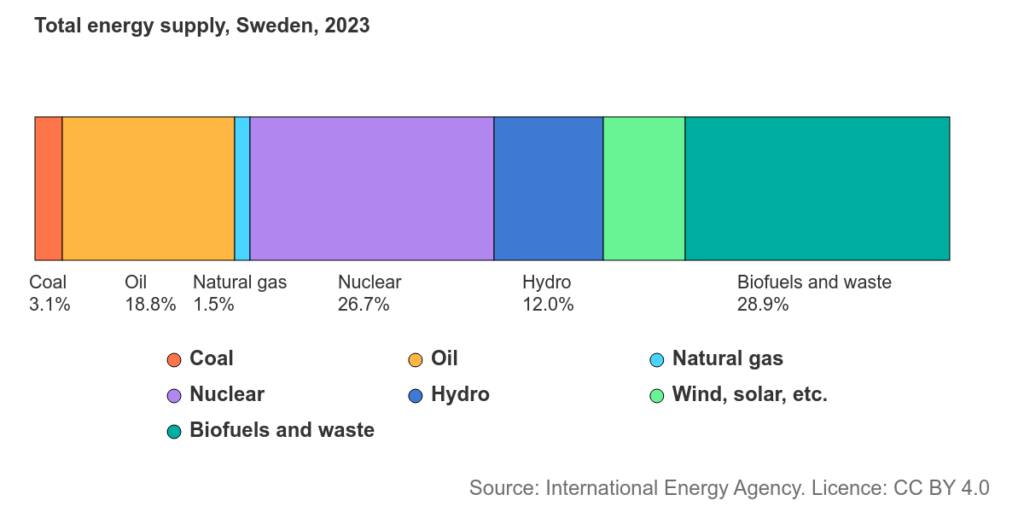
Figure 1: Energy Supply and Sources for Sweden
Source: https://www.iea.org/countries/sweden/energy-mix
The early adoption of the carbon pricing in Sweden and also the highest carbon price in the world, has proven effective at driving decarbonisation. Sweden’s clean energy contribution continues to increase as it moves closer to the goal of having a fossil fuel-free power industry by 2040 and highly influenced by its nuclear energy sector (Figure 2). However, the recent decommissioning of reactors introduces uncertainty into future nuclear capacity and raises questions about reliance on nuclear as a transitional technology (Tang et al., 2021). According to IEA review, Figure 2 presents a statistics of Sweden’s energy production, consumption and emission reductions based on set targets of fossil-fuel free by 2045 (Review, 2024). This signifies a clear achievement in its transition to clean energy towards the set policy goals.
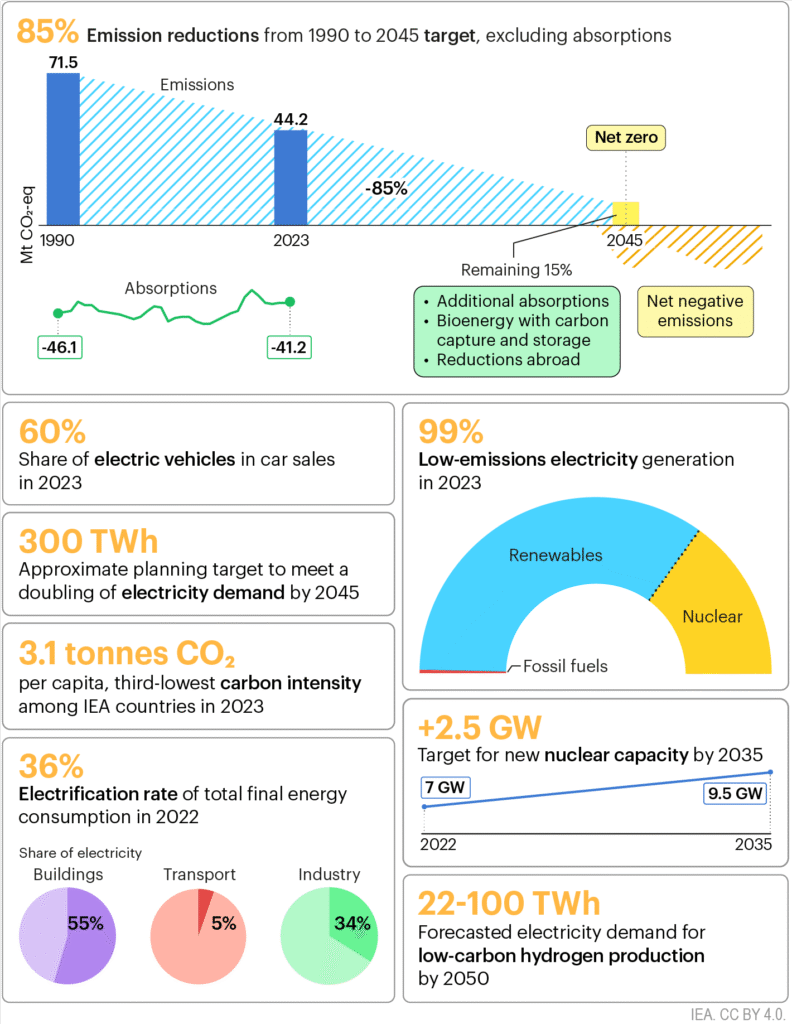
Figure 2: Emission reductions, a step to meet 2045 fossil-free target
Source: https://www.iea.org/reports/sweden-2024/executive-summary
- Institutional Context of Sweden Clean Energy Policy
Sweden uses a comprehensive legal framework, including the Environmental Code, to promote sustainable development and clean energy adoption (Swedish EPA, 2017). The Electricity Act of Sweden, Energy Tax Act, and Climate Act structure market operations to encourage clean energy adoption (International Energy Agency, 2019). The government seeks to establish efficient markets with competitive pricing and supply security for all sectors.
The 2016 energy policy, which achieved ecological sustainability, competitiveness, and security of supply, was effective because of Sweden’s ties to northern Europe (Sector, 2019; Tang et al., 2021). However, Sweden’s policies are tightly bound to EU policies, reducing local flexibility and creating rigidity. This adjustment indicates a forward-looking, “regulative” policy, but may increase dependence on external policy changes, impacting future policy.
Political Framework
Sweden’s political support for energy policies is consistent, supporting sustainable development. These agreements are supported by major parties, such as Social Democrats, Moderate, Green, Center, and Christian Democrats (Thalberg, 2022). This ensures policy stability and forward planning, setting targets such as a 50% reduction in energy intensity and 70% reduction in transport emissions by 2030 (International Energy Agency, 2019).
The acceptance of the energy and climate policy framework is symbolic in driving the transition to green energy (Wang, 2006). This shows a political will to prioritise climate mitigation and has been described as a success in terms of generation of broad support for climate policy measures.
Social and Cultural Factors Affecting Clean Energy Policy in Sweden
Historically, Sweden’s cultural identity is geared towards environmental sustainability making it a leader in welfare and ecological responsibility (Delfay, 2023). Sweden is known for its high carbon taxes, which are not denied by society rather, societal support translates into high policy legitimacy which implement bold measures, such as aggressive renewable deployment and stringent carbon taxes reducing fossil fuel consumption.
Sweden faces challenges in meeting emissions targets in the transport sector (Countries, 2023), but has made progress in electric vehicle adoption and acceptance, supported by government incentives. However, balancing commitment to clean energy and emission reductions with economic competitiveness is crucial, as Sweden’s aggressive promotion of clean energy development helps maintain a stable industrial competitiveness baseline (Thalberg, 2022).
Economic and Market Driven Factors that Enhanced the Transition
In 2015, the Swedish Government initiated a network policy, “The Fossil Free Sweden” ahead of the UNCCC in Paris (Thalberg, 2022). The goal was to enhance the competitiveness of Swedish businesses and industries by going fossil free. Today, the policy brings together industries, businesses, municipalities, regions, and sector organisations that support Sweden’s 2045 objective of carbon neutrality.
Also, the introduction of government tax breaks, subsidies, and incentives for small-scale wind and solar projects have spurred capacity growth; in 2022, solar capacity increased by 50% reaching 2,384 MW (Wang, 2006). Additionally, electricity and excise taxes are set up to support renewable energy sources. In particular, the tax exemption for electricity production encourages investment in renewable or clean energy.
SWEDEN’S CLEAN ENERGY POLICY EFFECTIVENESS AND VULNERABILITIES
Strengths of Sweden Clean Energy Policy
- Political and Institutional Consensus and Long-Term Goal: The stable energy policy, societal acceptance, and ambitious climate goals have led to widespread acceptance of capital-intensive energy initiatives, indicating effective institutionalization in transitioning from fossil fuels to renewable energy, with potential for progress through setting high goals.
- Market-Based Approach: High carbon taxes and clean energy initiatives have boosted innovation and competitiveness in the region, setting a precedent for others. Regional cooperation and EU policies aim to shift energy policy towards climate change mitigation and market-oriented measures, including incentive-based climate funding schemes for municipalities and industries (Wang, 2006).
- Cultural Values: Societal endorsement of sustainability sustains political will and facilitates acceptance reforms.
Challenges of Sweden’s Clean Energy Policy
- Political and Institutional Challenges: In light of the ongoing global energy crisis and demand levels, Sweden, a country with higher ambitions in its energy sector energy policies has become a key topic in political elections and campaigns. Despite the clean power supply, prices have continued on the rise which might be related to the Russia-Ukraine War (Commission, 2023). These factors can hinder clear pathways and cause administrative inefficiencies.
- Transport Sector Decarbonization: Despite ambitious policy targets and support, emissions at the transport sector remains high and market failures slow the adoption of low-emission vehicles.
- Long-term Market Stability: The electricity sector still faces challenges: to integrate higher shares of renewable energy without affecting security and affordability needs further reforms.
- Lack of Social Equity: Society imbalance on energy supply particularly in disadvantaged groups and communities. Policies need to incorporate social equity.
- CONCLUSION AND POLICY RECOMMENDATION
Sweden’s clean energy policy highlights consistency, predictability and public acceptance, but also needs to include flexible policies to cope with the changing technologies and markets. Sweden is on track to reach net zero greenhouse gas emissions by 2045 and is a global decarbonization leader. Swedish people are concerned with the environment, river protection and also do not want nuclear power, which is a clean energy source but not a renewable energy. Sweden provides investment subsidies, research and technology demonstration subsidies and tax policies to accelerate clean energy.
To advance clean energy, Sweden should include primary policies in its energy sector such as:
- price-setting and quantity-forcing policies, which mandate prices or quantities,
- investment cost reduction policies, which provide incentives in the form of lower investment costs,
- public investments and market facilitation activities, which offer a wide range of public policies that reduce market barriers and facilitate or accelerate clean energy markets,
- emphasizing infrastructure development, vehicle turnover incentives, and behavioural change strategies,
- the electricity market must evolve to handle increasing variability and capacity challenges. Further regional integration and smart grid investments are essential,
- policies should incorporate measures to support marginalized populations and ensure inclusive transitions.
Key words: Sweden clean energy policy, carbon pricing, renewable energy transition, climate policy framework, green energy, sustainable development



 Eliakim Isuwa
 Abdul-Razak Issifu Yidana
 Jonathan Tarnue Payne
 Precious Douglas Maulana
Trong bài viết này, chúng ta sẽ khám phá chi tiết, từ các sản phẩm cá cược, chương trình khuyến mãi, đến lý do tại sao trở thành lựa chọn hàng đầu của người chơi tại Việt Nam. Chúng ta cũng sẽ tìm hiểu cách tham gia, mẹo chơi hiệu quả và các tính năng nổi bật khiến 66b – Nền tảng cá cược trực tuyến đỉnh cao cho người chơi nổi bật trên thị trường cá cược trực tuyến. TONY04-25