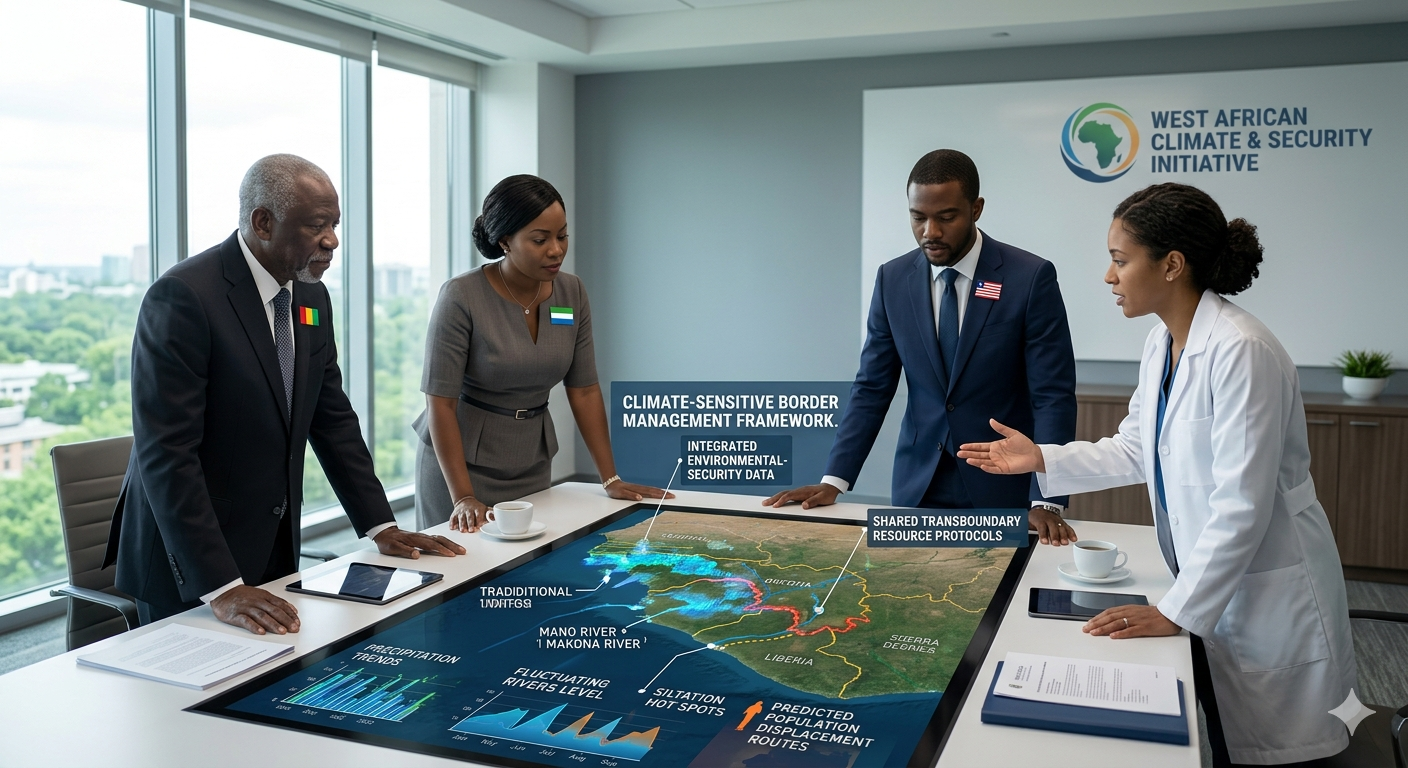

Introduction
The Mano River Union (MRU), includes Sierra Leone, Guinea and Liberia, has always been tagged to some hard security issues along the borders, like the civil wars and resource conflicts. But now things are getting a bit more sophisticated. Instability is creeping up around borders, especially in a place called Yenga, a small village on the Makona River. People have often described the Yenga unrest as a result of the fallout from the colonial boundary-making. However, this framing is not complete. The conflict is actually a symptom of a mixed security dilemma, with the unclear of territorial boundaries in colonial times overlapping with socio-ecological stress driven by climate change. This interaction is essential to understand and help to promote climate diplomacy, enhance climate literacy, and create more effective integrated policy responses.
The hunting of the Colonial Map
The Yenga conflict between Sierra Leone and Guinea dates back to the 1912 Anglo-French protocol that established borders without much consideration of geographical locations or settlement patterns (Donaldson, 2010). The military presence of Guinea in Yenga, which was initially justified in the Sierra Leone civil war, has since turned into a prolonged diplomatic stalemate. These conflicts are a reflection of a larger problem: colonial boundaries are authoritative in law but empirically weak. The ambiguity of their borders allows rival claims to sovereignty and frequent military flexing, especially where territorial boundaries are ill-defined and feebly institutionalised.
Climate Change as a “Threat Multiplier”
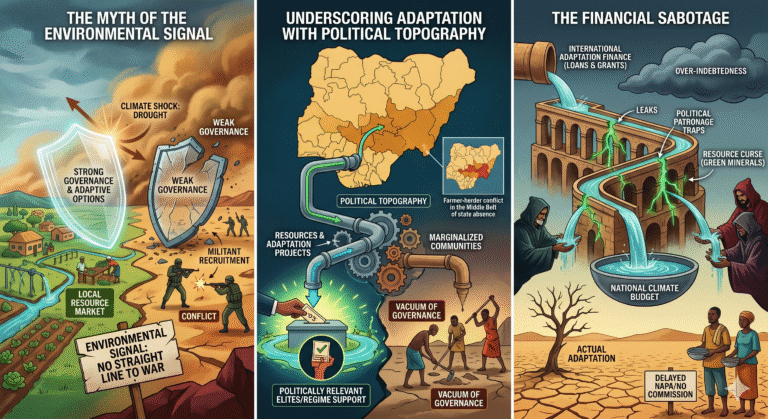
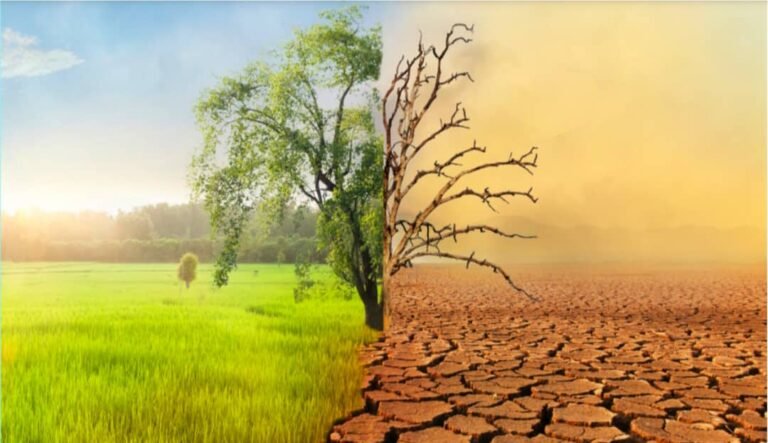
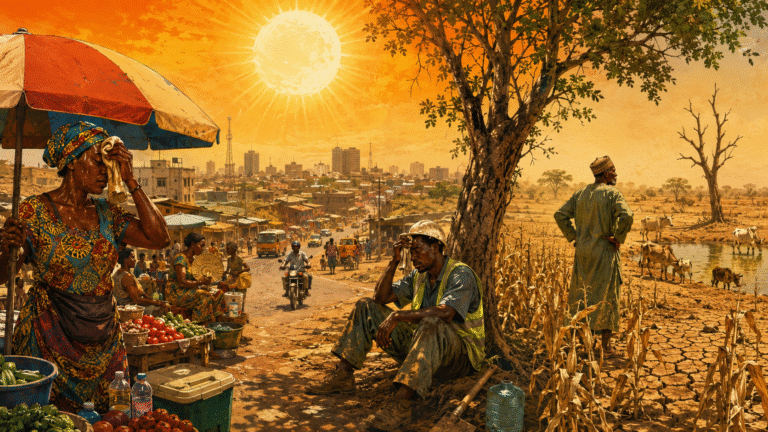
Although the territorial uncertainty offers the structural background of the conflict, climate change is escalating already existing pressures on the border areas, which play the role of a threat multiplier (Wannewitz & Garschagen, 2021). Along the Guinea Coast of West Africa is also witnessing more changes in rainfall, drying seasons are lasting longer than usual, and the shared rivers systems are experiencing hydrological instability (Obahoundje & Diedhiou, 2022). These changes are especially significant in the MRU, where fisheries and rain-fed agriculture are the main livelihoods. Environmental degradation, such as river siltation and soil losing its fertility, decreases the supply of arable land and water resources. Consequently, settlements are more and more forced to cross the borders in search of sustainable livelihoods, migrations which are commonly perceived with the prism of security, leading to misunderstandings and localised tensions (Sanon et al., 2020).
The experience of the MRU shows that climate and territorial disputes cannot be regarded as distinct areas of policy. Territorial conflicts offer the legal and political foundations of the legal and political basis of conflict, whereas climate stress offers the socio-economic pressures that trigger the conflict. This crossroad highlights the significance of climate literacy in the governance of security. In the absence of a clear picture of environmental change and the way it influences human mobility and resource consumption, the action of states can only contribute to conflict instead of alleviating it.
The existing studies and policy models still rely heavily on macro-level climate data, which is not always able to reflect the local realities. There exists a pressing necessity for micro-level, place-based analysis that connects the hydrological changes in the Makona River basin, seasonal disruptions in livelihoods, patterns of cross-border mobilities, and particular instances of conflicts. Without this kind of detail, security actors will tend to perceive movements caused by climate as intentional territorial encroachments. Improving the data integration and local climate literacy is thus the focal point of improving the policy design and operational responses.
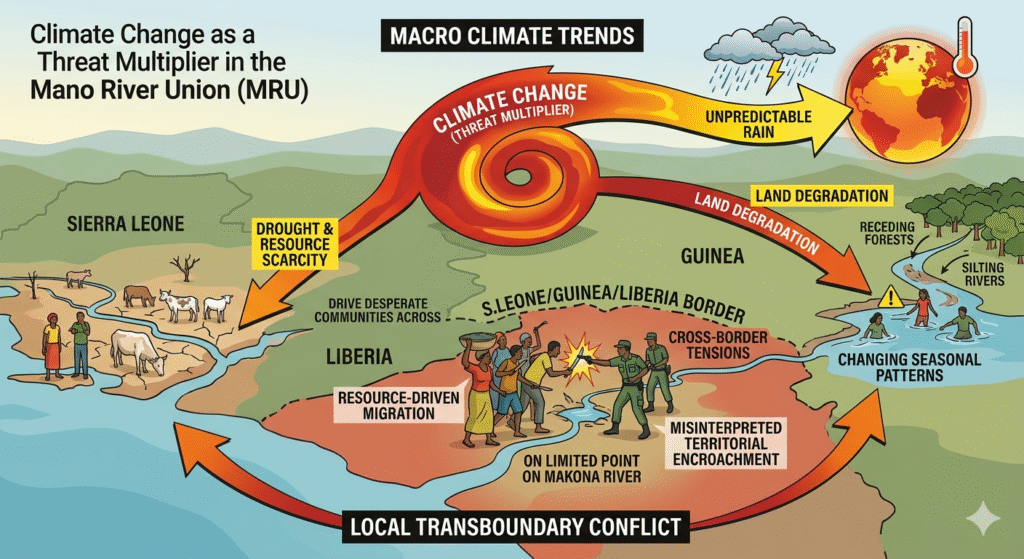
Fig. 1
Expanding the Role of Climate Diplomacy
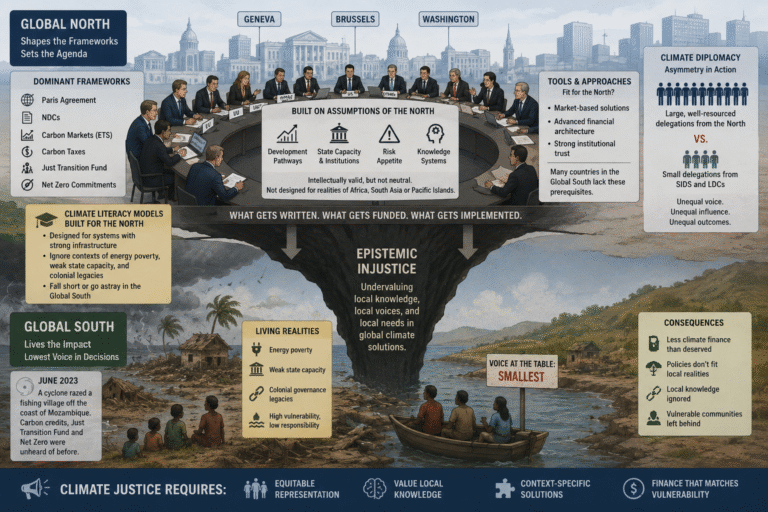
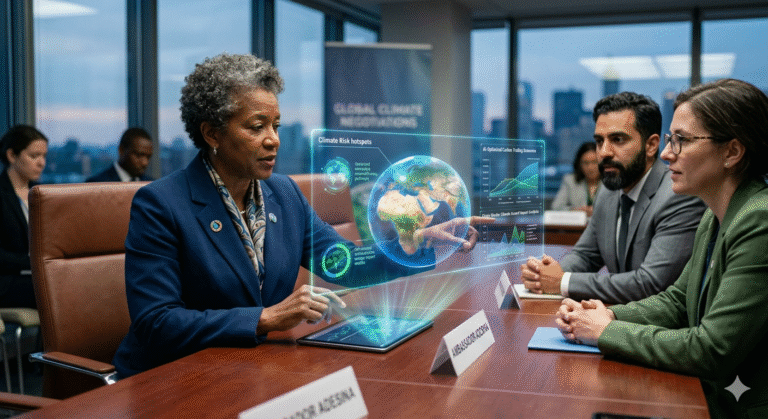
To tackle the issue of hybrid climate-security risks, it is essential to go beyond the conventional, state-based strategies to adaptive and cooperative frameworks of governance. At MRU, climate diplomacy is recommended to focus on transboundary water governance systems to oversee common river systems, joint environmental monitoring systems to decrease informational asymmetries, cross-border institutional coordination processes within MRU frameworks, and integration of local communities in decision-making. This extension of the solution space is consistent with the calls to acknowledge local actors as co-creators of climate security, and not bystanders of top-down interventions (Wannewitz & Garschagen, 2021).
One of the main obstacles to successful intervention is the institutional division between climate adaptation and environmental governance and border security. This division restricts the ability of states to act in response to interdependent dangers. There is a need to shift towards climate-sensitive border management that would incorporate environmental intelligence into security policies and prioritize climate resilience alongside peacebuilding needs.
To stabilise the MRU, a policy response involving both structural and environmental causes of conflict needs to be coordinated. Some of the major priorities are the strengthening of MRU regional governance systems to coordinate climate and security, investing in climate-smart agriculture and livelihood diversification, creating early warning systems that combine climate and conflict indicators, improving local-level conflict management and resource-sharing systems, and decreasing institutional fragmentation with integrated policy frameworks (Obahoundje & Diedhiou, 2022).
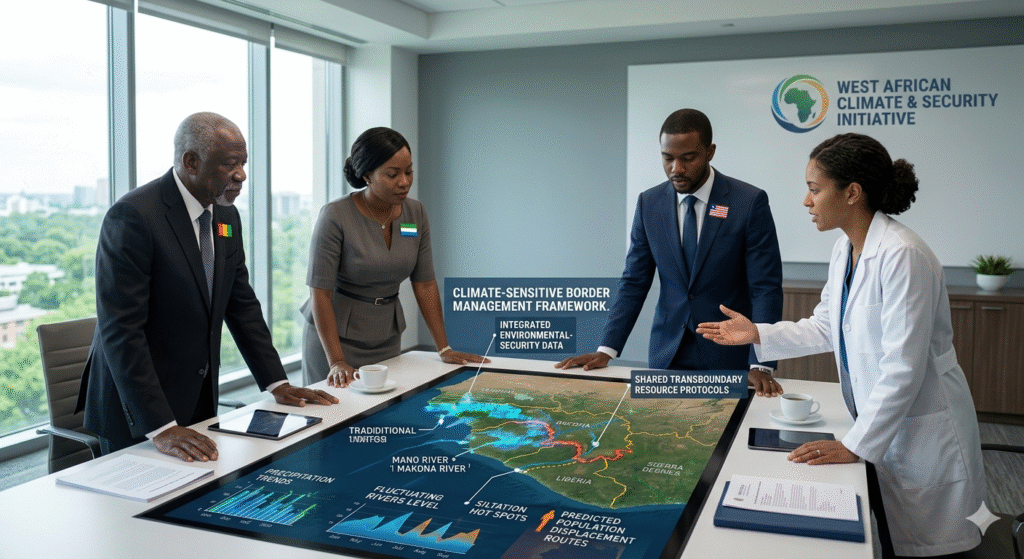
Fig. 2
Conclusion
Yenga conflict is commonly perceived as an issue of historical grievance. But its perseverance is indicative of a more profound change: the growing interlacing of environmental change and geopolitical tension. In the Mano River Union, borders can no longer be considered as fixed lines defined by legal agreements only; they are a dynamic socio-ecological space that is affected by climate variability and human adaptation. This is a dilemma that policymakers and players in the region must tackle: until they combine climate literacy, diplomacy, and policy, environmental stress will remain a source of political instability.
Keywords: Climate change, climate diplomacy, MRU, border security, border conflicts, geopolitical tensions.

 Reston Dennis Juah
 Noor Ul Ain
 Hassan Barrie
 Hoby Nasandratra Andriamiandrisoa
66B luôn cập nhật phiên bản mới để tối ưu hiệu năng, giảm giật lag và nâng cao trải nghiệm. Đây là yếu tố quan trọng giúp nền tảng giữ được lượng người chơi ổn định. TONY07-03