

Social media is now a key platform for tackling issues like climate change. Generation Z (Gen Z) is a digital generation that uses these platforms to tackle environmental challenges, raise their voices and bring about change. They are the first generation to have access to smartphones and internet at all times, as well as to social media platforms. As a result, they are more likely to follow online media and recommendations from friends and peers than old forms media, like television and newspapers. Meanwhile, a new type of public personalities has emerged: the social media influencers. These are young people who amass large social media followings and use their influence to influence the views, preferences and habits of their followers. They bring to the environmental issues that once seemed distant, like melting ice sheets or deforestation, and make sustainability more accessible and relatable to young people through short videos, photos and stories . Due to their heavy use of digital platforms and heightened concern about the environment, Gen Z uses social media to find information, express ideas and promote sustainable behaviours. Social media is therefore an important research and intervention space.A sense of urgency, particularly among young people, is emerging as the world grapples with environmental issues like pollution, climate change and biodiversity loss. Social media sites such as Instagram, TikTok and Twitter are both information and advocacy spaces. These networks allow users to connect with environmental content, movements and resources for sustainability projects. Research indicates social media raises awareness of environmental issues through information dissemination and exposure to global campaigns. These channels also enable brands and businesses to promote sustainable living in ways that resonate with Gen Z, and connect activism with consumption. Social media features such as gamification, interactivity and visuals also boost participation in sustainability campaigns. Live streaming, badging, and challenges increase engagement and interactivity. These are particularly important for Gen Z, who are more interested in user friendly and interactive digital content.
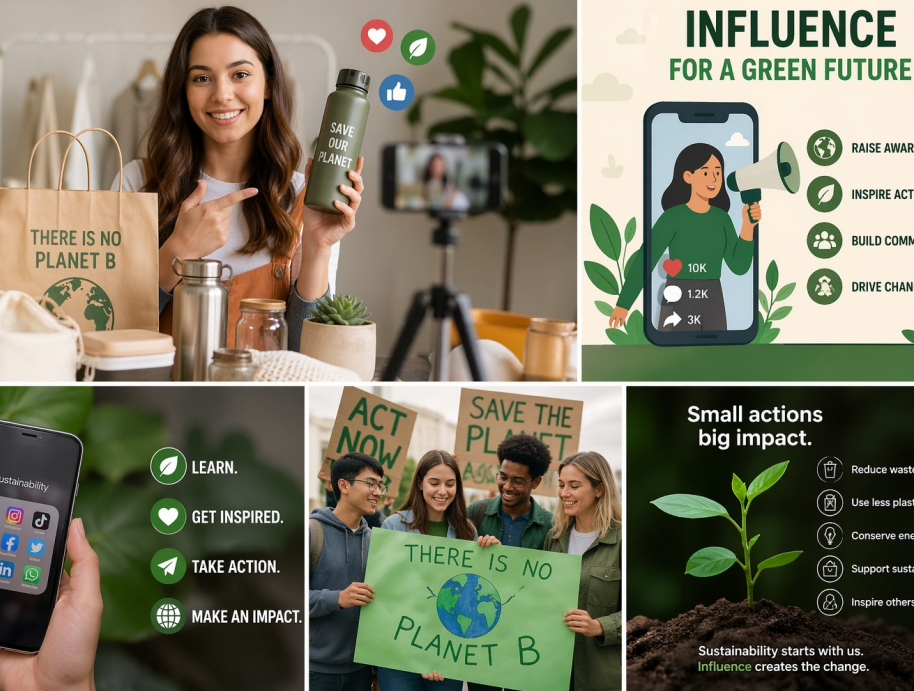
Gen Z is highly engaged with social media campaigns that include visual and interactive content, influencer promotion and user stories on sustainability. Credible green advertising, influencer advocacy and interactive platform often influence green purchasing. This then translate into green consumption behaviour, demonstrating the link between attitudes and behaviour. A recent study, which surveyed more than 298 participants and used SmartPLS for data analysis, revealed that social media engagement, environmental awareness, attitudes towards green advertising, influencer advocacy, and platform features all play a crucial role in sustainable consumption. The findings reveal engagement and awareness have a significant impact on green purchase intentions, leading to sustainable consumption.
The study also shows influencers as trusted sources who impact Gen Z’s perceptions of green products and sustainable consumption. Influencers can connect brands with consumers, and influence attitudes and behaviours through their promotion. Gen Z often view influencers as role models, and their endorsements can be powerful. If influencers are perceived as authentic, they can promote trust in green products and promote sustainable living among their followers. Moreover, social platform features like hashtags, challenges and live streaming have been shown to be effective in promoting engagement with environmental sustainability. These interactions not only raise awareness, but also promote behaviour change, such as more sustainable consumption and support for environmental activism.
How Influencers Promote Environmental Sustainability
The key difference between influencers and other environmental communicators, such as government campaigns or NGO ads, is their rapport with their followers. Studies demonstrate that influencers are seen as more authentic, credible and relatable than other communicators. This is especially with the Gen Z, who have grown up distrusting of advertising and corporate marketing. This authenticity is crucial for behaviour change. In communications research, source credibility, or how much an audience identifies with and trusts the communicator, is one of the most consistent predictors of attitude change. When a young person sees their favourite vlogger talk about why they have adopted a plant-based diet, or see them shopping at second-hand stores instead of fast-fashion brands, it is different than hearing about it from a government PSA, making it relatable and accessible.
Making Sustainability Accessible and Aspirational
Environmental influencers make sustainability look appealing. Environmental messages have often been negative, guilt-inducing and sacrificial with images of ice caps, starving polar bears and dire warnings about personal carbon footprints. Such appeals might raise awareness, but they don’t always change behaviour. Influencers do things differently. They demonstrate that sustainability can be fashionable, cheap and even fun. The “zero waste” movement, championed on social media, is about not deprivation, but creativity and mindfulness. Clips demonstrating how to create household cleaning products, build a compost heap, or upcycle clothes from second-hand shops go viral not because they are scary, but because they are useful and appealing to watch. This approach is important. Environmental psychology research demonstrates that if sustainable behaviours are seen as fitting with a preferred lifestyle, people are more likely to engage in them. By linking sustainability to visually appealing and desirable lifestyles, influencers reduce the cognitive barriers to action.
Creating Online Communities and Norms
Influencers not only communicate, they create communities. Comments, hashtags and campaigns are places for environmental values to be expressed and reinforced. This is important because of the influence of social norms. When people think others are behaving in an environmentally responsible way, they are more likely to do so too. Seeing thousands of his/her peers in the comment section of a post talking about their zero-waste lifestyles and sharing plastic-free wins sends a message to a young person: this is what people like me do. For instance, the #TrashTag challenge, which became popular in 2019, involved taking pictures of littered areas, picking up the rubbish and posting it on social media. It led to millions of social media posts and real-life collective action in dozens of countries. The challenge was not promoted by institutions but by individuals.
Translating Science into Everyday Language
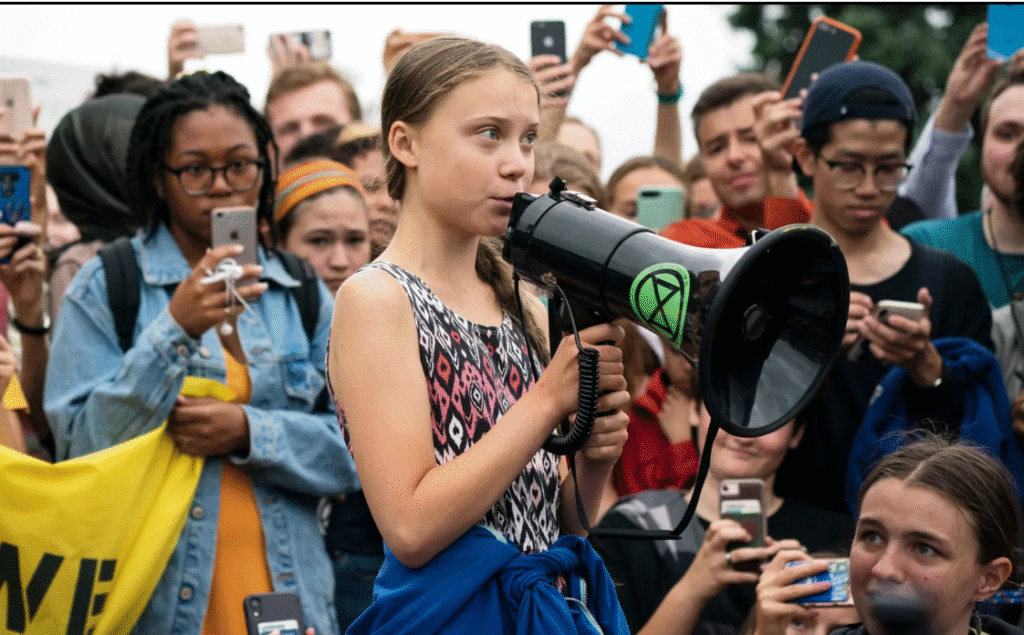
Environmental science can be highly technical. Terms such as carbon sequestration, ecosystem services, or net-zero emissions can be difficult to explain to the broader public let alone to young people browsing Instagram or TikTok. Successful environmental influencers are translators. They simplify scientific knowledge and communicate it in an attractive format. Videos about the life cycle of a plastic bottle, or infographics that show the carbon footprints of various foods, make the complex world of environmental science accessible and relatable. This is an important function because education about the environment is complicated in many places. A teenager who is listening to an hour-long science lecture about climate change may not learn as much as one who views a ten-minute YouTube clip produced by someone who inspires them.
Challenges of Social Media Influencers Environmental Awareness
But there are limitations to using social media for sustainability. Misinformation, shallow engagement and greenwash are major challenges for social media. To tackle these challenges, we need to better understand the role of social media in influencing Gen Z, and ways to encourage authenticity and action. Moreover, not all Gen Z is equally able to access social media, or respond to the sustainability messages they find. Sustainable products, such as zero-waste, organic food and sustainable fashion, can be more expensive. Influencers’ content that fails to recognise economic realities can be alienating and inaccessible to young people from less affluent backgrounds. And not everyone has equal access to social media, both within and between wealthy nations and the Global South. An analysis of influencers environmental communication without these considerations provides an incomplete picture.
Implications for Policy and Practice
First, policy and environmental organisations should consider influencers communication as a policy tool. Collaborating with trusted influencers, especially those who promote sustainability through both lifestyle and systemic change, can amplify environmental messages beyond the reach of institutional channels. However, these collaborations need to be carefully negotiated to avoid accusations of commercialisation.
Second, media literacy is crucial. Gen Z needs to be given the tools to spot greenwash, assess the veracity of environmental claims, and understand the difference between “woke washing” and genuine environmental action. This is a challenge for education, civil society, and platforms.
Third, influencers themselves must be responsible Influencers who accumulate large followings on environmental platforms have a responsibility to be accurate, to recognise the complexity of environmental issues, and to avoid the temptation to maximise engagement. The best environmental influencers those who have built trust over the years are those who acknowledge their own fallibility and point their audiences to engagement and systemic change.
Keywords: Social media influencers, Environmental sustainability, Generation Z (Gen Z), Digital communication, Climate change, Environmental awareness, Sustainable behaviour



 Reston Dennis Juah
 Noor Ul Ain

 Hassan Barrie
 Hoby Nasandratra Andriamiandrisoa
Hệ thống phân cấp hội viên tại slot365 casino mang lại lộ trình thăng tiến rõ rệt với những ưu đãi độc quyền, chỉ dành riêng cho những nhà đầu tư chiến lược. (Tương tự cho đến đoạn 60, tập trung vào: Sự tận tâm, quyền lợi khách hàng, tính chuyên nghiệp) TONY05-15