
Introduction
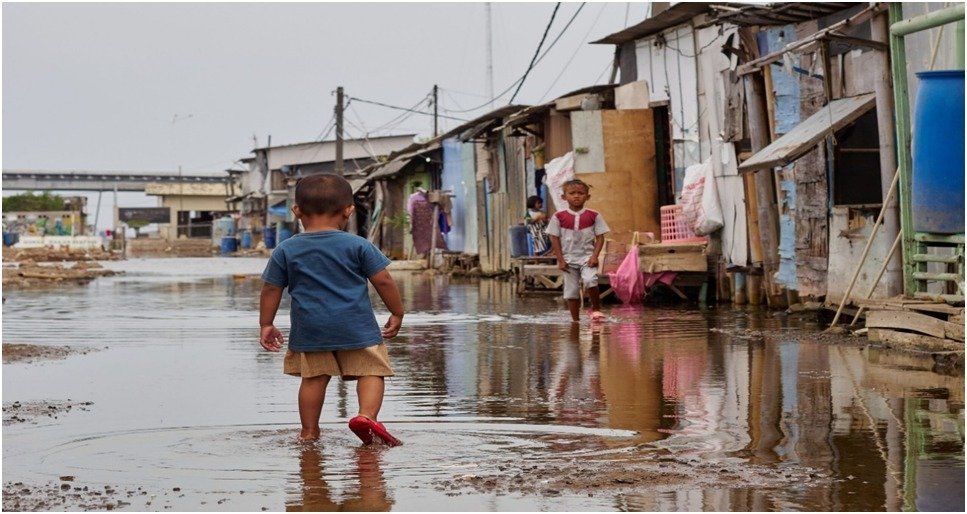
Indonesia is a highly climate and disaster vulnerable nation in the world. The country lies along the Pacific “Ring of Fire” which has over 17,000 islands and is prone to earthquakes, volcanic eruptions, tsunamis, floods, droughts and forest fires (World Bank Group, 2016). All these geophysical risks today overlap with the accelerated climate risks, such as sea-level rise, excessive rainfall, coastal erosion, and peatland erosion. Although Indonesia has good national policy frameworks regarding climate adaptation and disaster management, the implementation of the frameworks into local actions is not balanced (Bappenas, 2019). This essay discusses how Indonesia is susceptible to climate change and natural hazards, the multi-level governance limitations that define the impacts of adaptation, and the local efforts being taken by the communities and institutions to enhance resilience. It uses key climate reports, scholarly studies, Indonesian policy evaluations and personal observations when residing in Indonesia.
Indonesia’s Climate and Environmental Exposure
There exist several, intersecting climate hazards which affect Indonesia based on scientific evidence.The Sixth Assessment Report on climate change, presented by the IPCC identifies Indonesia as one of the countries that are extremely susceptible to sea-level rise, extreme rainfalls and heat stress (Roberts, 2022). According to the estimates of the World Bank in Coastal Resilience in Indonesia, (2022), over 110 million Indonesians inhabit the low-lying coastal areas, which exposes them to the dangers of coastal floods and storm surges.
- Sea-Level Rise and Land Subsidence: There are a series of Indonesian cities that have been caught between the menacing rising sea level and the sinking ground. The land subsidence in Jakarta ranges between 3 – 10 centimeters per year mostly because of the extraction of the groundwater, enhancing coastal inundation (Garschagen, 2018). The chronic tidal floods (locally referred to as rob) affect Semarang which has been exacerbated by loss of mangroves and subsidence (Aris & Lorenz, 2008). These events transform the normal high tides to devastating floods which influence livelihoods, mobility and infrastructure.
- Increasing Floods and Rainfall Extremes: In western and central Indonesia, rain patterns have been altered to become erratic. According to climate forecasts provided by Handayani et al., (2021), the intensity of rainfall will continue to increase, and this will lead to urban flooding in cities like Jakarta, Bandung, Medan, and Surabaya. Flood risk is further increased by rapid urbanization, poor drainage systems and low green areas.
- Drought and Water Scarcity: In eastern Indonesia and some aspects of Sulawesi and Maluku extend dry spells resulting in scarcity of water and agricultural output (MoE/EPA, 2025). These are circumstances that impact unequally on rural families and smallholder farmers.
- Peatland and Forest Fires: Fires such as in Sumatra and Kalimantan have become the most serious climate-related risks in Indonesia. According to the Center of International Forestry Research, drought and land-use pressures add to the highly flammable conditions that are formed due to the existence of drained peatlands (MoE/EPA, 2025). Peat fires are a source of greenhouse gases and haze that has an impact on human health and the economies of the region.
- Geophysical Hazards Compounding Climate Risks: The position of Indonesia on the tectonic fault lines places the country at risk of earthquakes, volcanic eruptions, and tsunamis. The 2018 Sulawesi earthquake and tsunami, the 2018 Lombok earthquake, and the eruptions of Mount Merapi portray the magnitude of the frequent risks (Pomonis et al., 2019). Such occurrences overlap with climate vulnerabilities, and there should be combined risk planning.
Governance and Institutional Challenges
Indonesia has prepared the National Action Plan on climate change adaptation and Master Plan on disaster management, as well as many more sectoral adaptation plans (MoE/EPA, 2025). But the issue of implementation still exists especially in the provincial and district level.
- Fragmented Multi-Level Governance: Responsibility on adaptation lies in the Ministry of Environment and Forestry, the National Development Planning Agency, the Meteorology, Climatology, and Geophysical Agency and the National Disaster Management Agency and provincial and district governments. According to a study by Sembiring, (2017) this multi-institutional environment has usually led to overlap of mandate, slowness of coordination, and uneven implementation.
- Limited Local Capacity: According to the World Bank Lifelines: The Resilient Infrastructure Report, (2019), most local governments do not have sufficient technical capacity to evaluate climate risks, map them, and plan the infrastructure . The capacity of the districts to operationalize the national plans of adaptation is hampered by budget, insufficient access to climate information and inadequate staffing.
- Land-Use Conflicts and Development Pressures: Risk knowledge does not stop urbanization into floodplains, wetlands and coasts. Low levels of implementation of land-use regulation and pressure of property development are direct causes of flood-exposure, ecosystem degradation, and groundwater depletion.
- Low Involvement of the Private-Sector: According to the Asian Development Bank, (2022), the participation of the private-sector in climate adaptation is limited due to the lack of clear incentives, absence of disclosure policies of climate risks, and the presence of financial uncertainties as long-term resilience investments. This has made adaptation greatly dependent on societal and community efforts.
Local and Community-Based Adaptation Practices
Indonesia has led the world in a number of community-based and local adaptation approaches, despite governance gaps, and that are in line with global best practices.
- Mangrove Restoration: Community-based restoration of mangroves at the scale of Demak (Central Java), Riau Islands, Lombok and parts of Sulawesi have been effective in reducing erosion, sedimentation, and natural buffer against tidal flooding (Handayani et al., 2021). This report also show that mangrove restoration is among the most efficient and affordable coastal defense mechanisms of Indonesia.
- Peatland Restoration and Fire Prevention: Peat rewetting, canal blocking program and community fire patrol programs are headed by the Peatland and Mangrove Restoration Agency. These measures have been useful in curbing the number and intensity of fires in certain areas of Sumatra and Kalimantan (World Bank, 2022).
- Disaster-Resilient Villages: The program Disaster-Resilient Villages of the National Disaster Management Agency assists over 8,000 villages in creating hazard maps, evacuation routes, local volunteer teams and early warning procedures (Bappenas and World Bank Group, 2012). The strategy enhances community preparedness.
- Urban Adaptation Measures: In Jakarta, Surabaya and Semarang, localized measures are being taken like cleaning of neighborhood drainage, micro-dikes and high-rise housing (Garschagen, 2018). Whereas these measures are small-scale, they mitigate daily impact of floods and are used to supplement large infrastructure.
- Volcanic Risk Preparedness: Around Mount Merapi, people cooperate with the Research and Technological Development Agency of Geological Disaster in order to observe volcanoes and engage in evacuation drills. Idris & Putra, (2023) emphasize the efficiency of such localized networks in preventing deaths in the case of an eruption.
Personal Environmental Observations
My experience in Indonesia gave me firsthand experience of the environmental susceptibility of the nation. Heavy rainfalls often lead to overflowing of drainage channels around my place of residence (UIII dormitory) even when rainfall had taken a few hours as a measure of the strong precipitation and the shortcomings of urban drainage systems. Another example that highlighted the significance of early-warning systems are the regular alerts sent by the Meteorology, Climatology, and Geophysical Agency about the possibility of floods, heavy rain, or high tides.
Also, the buildup of waste in the waterways and drains results in local flooding. These common observations are consistent with the results of empirical studies that found out that urban drainage, waste handling and maintenance of small infrastructure have a significant impact on flood resilience in Indonesian cities. Such experiences helped me to realize that adaptation is not only dependent on the large-scale national policies, but on the daily operations of urban systems and environmental management.
Strengthening Indonesia’s Adaptation Pathways
Indonesia can focus on the following strategies in order to improve the effectiveness of the adaptation:
- Improve Local Government Capacity: Invest in technical training, climate data systems, and adaptation budgeting for district and municipal authorities.
- Strengthen Land-Use Regulation: This is an essential measure to ensure that there will be uniform enforcement throughout the provinces to avoid any development in high-risk zones and to preserve natural buffers.
- Scale Up Nature-Based Solutions: The mangrove, peatland, and watersheds rehabilitation presents economical protection and ecological long term gains.
- Improve Urban Resilience Infrastructure: It is necessary to upgrade drainage infrastructure, enhance spatial planning and climate-resilient housing to quickly expanding urban areas.
- Promote the involvement of the private sector: Introduce clear incentive, climate-risk reporting, and blended finance models to induce private funding to resilience.
Conclusion
The susceptibility of Indonesia to climate change and natural hazards is facilitated by a geophysical exposure, climate-enhancing intensification, and institutional limitations. Although the national adaptation frameworks are inclusive, the actual growth and development require enhancing the local capacity, increasing the coherence of governance, and enhancing community-based and nature-based resilience. Both local programs and scientific organizations as well as national agencies are critical in providing resiliency. Having worked in Indonesia, personal experiences help to highlight how environmental challenges can be manifested in daily life. Indonesia will be able to minimize climate risks and develop a more resilient and sustainable future with improved coordination, enhanced land-use enforcement and investment in local adaptation.
Keywords: Indonesia Climate Vulnerability, Sea-level rise, Urban flooding, Climate governance, Disaster risk management, Mangrove restoration, Resilient infrastructure.







 Reston Dennis Juah
 Noor Ul Ain
 Hassan Barrie
 Hoby Nasandratra Andriamiandrisoa
66b nguyễn sỹ sách không ngừng nỗ lực để hoàn thiện hệ sinh thái giải trí, hướng tới mục tiêu trở thành nền tảng cá cược số 1 trong lòng người hâm mộ. TONY05-15