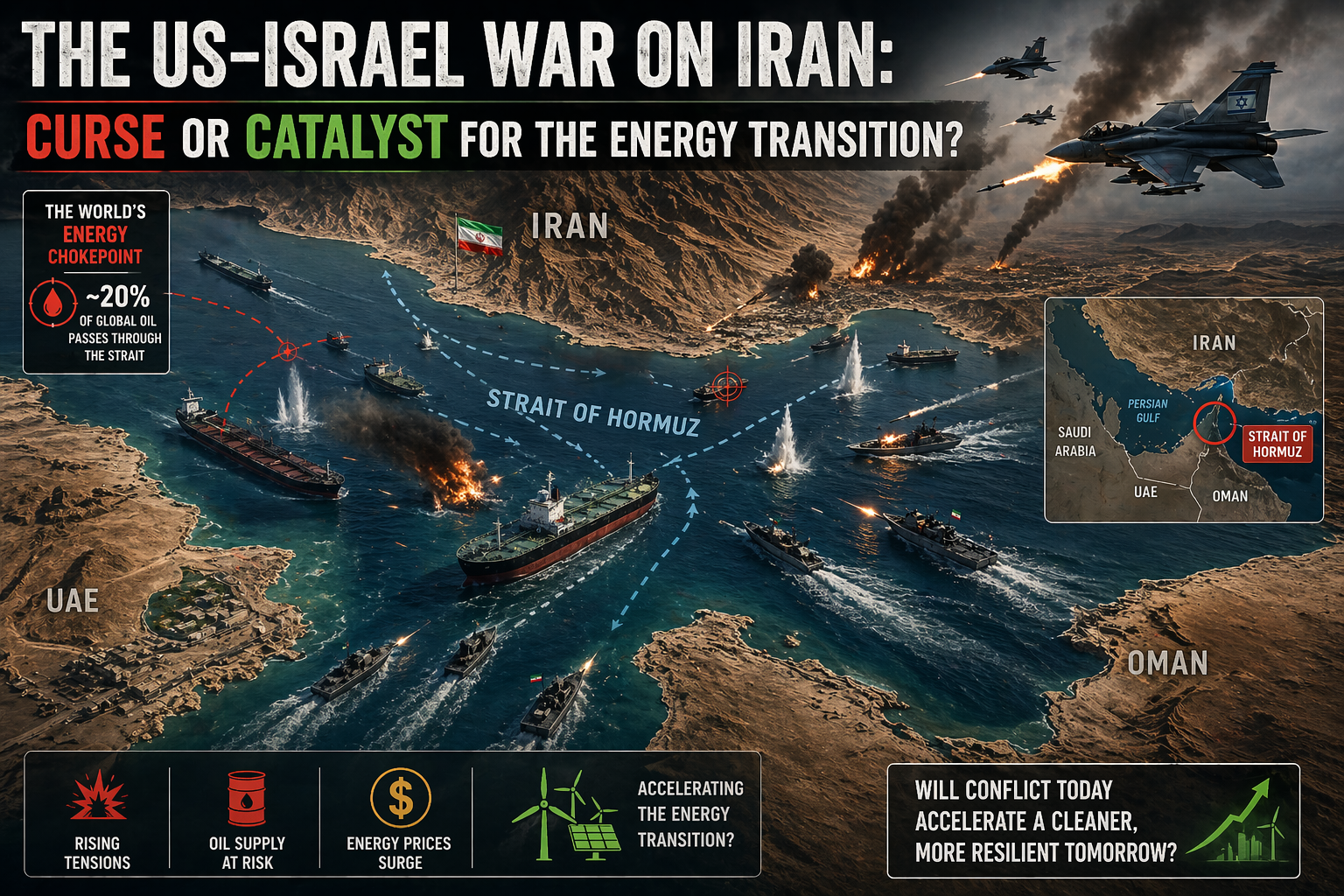

The US and Israel waged a costly war on The Islamic Republic of Iran which started on the 28th February 2026 leading to blockade on ship transit route through the strait of Hormuz. It is important to note that almost twenty percent (20%) of global energy supply transit through this vital route. This war came at a time when nations are struggling to balance between climate security, energy security, and social security.
This blockade leads to energy and social insecurity concerns around the world. Therefore, prompting governments globally to introduce energy conservation measures. For example, the government of Egypt introduced energy conservation measures such as the early closure of some businesses and government offices. As a short-term measure, Bangladesh government planned early closure of all public and private universities to conserve energy for the most needed services. The fact that Bangladesh heavily relies on energy supply through the Strait of Hormoz makes them one of the most vulnerable to the impact of the blockade.
The shipping route is responsible for a significant amount of global energy supply. In microeconomic, the law of supply and demand states that when supply is low and demand is high, the price increases. That is what was anticipated, and that is exactly what is happening, as the cost of importing energy to Egypt, for example, doubles within a few weeks into the war. Therefore, the cost of basic commodities increases, which could soften public and government concerns about energy security and social security risks (transition risks) in the context of needed decarbonization.
Can this disruption be a sufficient signal for countries to increase the share of renewable energy in the national energy mix to reduce the future impact of such shockwaves? Or will it provide an opportunity for other fossil fuel–producing countries to increase their output for economic gain? This is a difficult question to answer, as the situation involves many unpredictable factors: the duration of the war, the likelihood of lifting sanctions on other fossil fuel producing countries such as Russia and Venezuela, etc.
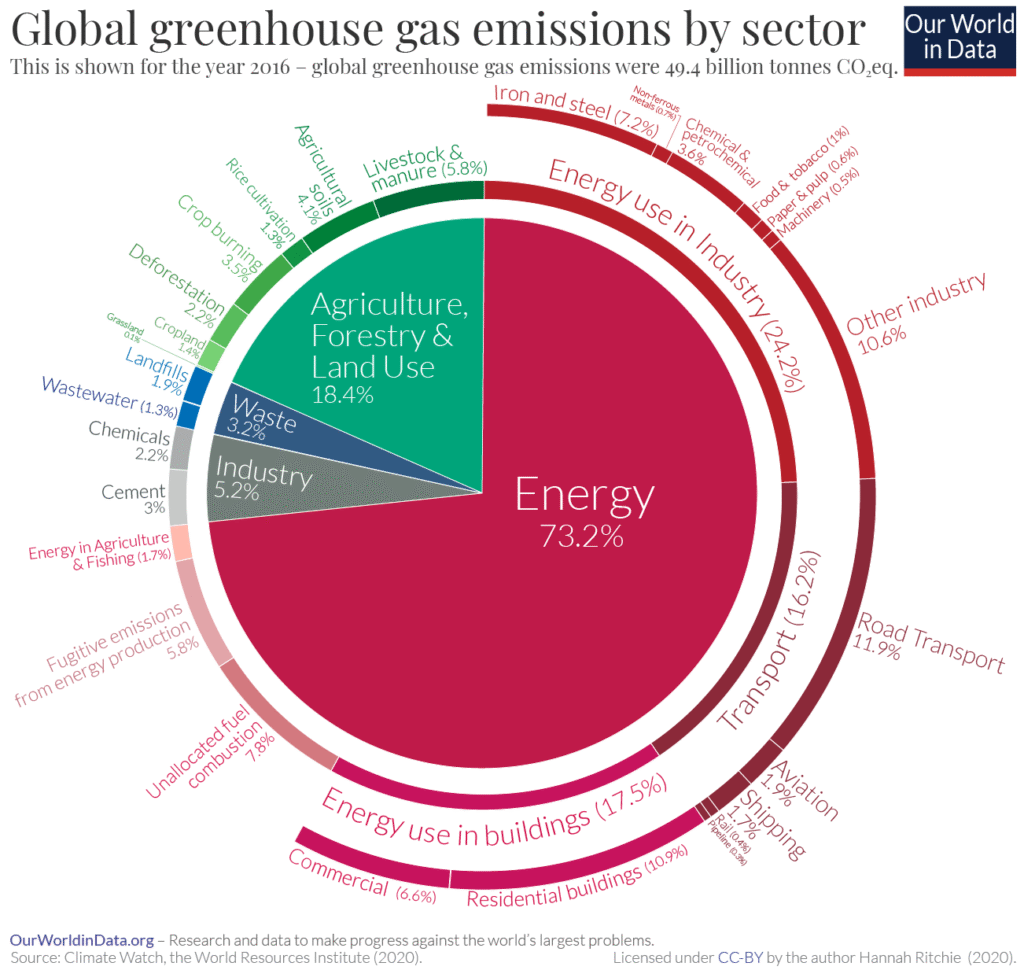
Reducing emissions from the energy sector is the single most effective way of accelerating decarbonization or Net-Zero goal. As seen above, the energy sector was responsible for around 73.2% of global greenhouse gas emissions in 2016. Energy use in industry, transport, and buildings has significantly driven these emissions. These are some of the subsectors affected by the disruption, and they are the backbone of economic growth. When they are affected, social insecurity will be exacerbated—not only energy insecurity. These two security concerns are some of the issues slowing decarbonization efforts. Now that these disruptions are occurring unplanned, will their effects be strong enough to drive the transformative changes needed in policy and practice toward low-carbon economic, social, and environmental systems?
Some important commodities essential for global industrial production passing through the Strait of Hormuz are crude oil, liquified natural gas (LNG), liquified petroleum gas (LPG), helium, refined petroleum products, petrochemical feedstocks, and fertilizers. While there is significant uncertainty regarding how such a disruption would affect the energy transition, it could prompt a shift in many developing countries from transitional fuels like LNG to more traditional biomass sources such as firewood or charcoal for cooking. This shift may increase greenhouse gas emissions and reduce natural carbon sinks due to accelerated deforestation.
In addition, there could be an increase in electricity demand, as those using LNG for cooking may shift to electric cooking appliances, potentially leading to higher emissions in countries that rely on carbon-intensive fuels such as coal for electricity generation. This could further delay the urgent phase-down or even phase-out of coal power plants required for decarbonization. Energy security is one of the main concerns in the transition, and LNG is a key energy source for ensuring security of supply while reducing dependence on coal and other high-emission fuels. However, such disruptions may further exacerbate skepticism among coal-dependent energy systems about relying on LNG for their future energy supply.
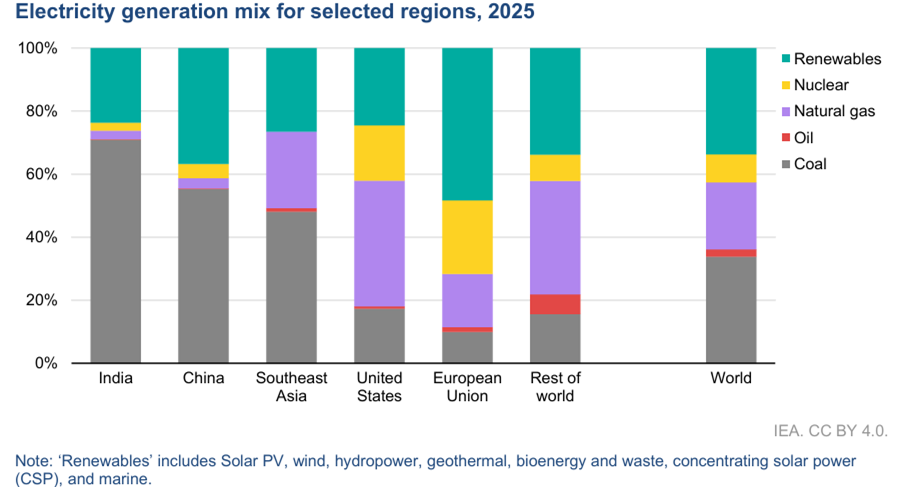
On the other hand, this disruption presents an opportunity to implement energy conservation regulations that might otherwise face public resistance. Many governments around the world have introduced load-shedding measures, encouraged citizens to use energy more efficiently, and promoted the adoption of energy-efficient appliances. In fact, my university, Universitas Islam Internasional Indonesia, has introduced prepaid electricity meters in student dormitory rooms, in addition to other measures such as asking staff to work from home on Fridays.
Secondly, these disruptions could serve as a long-term signal to businesses and investors that future returns lie in renewable energy, given the fragile geopolitical realities of our generation. The Russia–Ukraine war was an early signal, followed by the US–Israel conflict with Iran, which has further highlighted the vulnerability of global energy systems to geopolitical shocks. Early indications are showing that investments in renewable energy increases as a result of the war on Iran. However, this increase is not because of decarbonization but for energy security, which is still serve as a co-benefit for the energy transition.
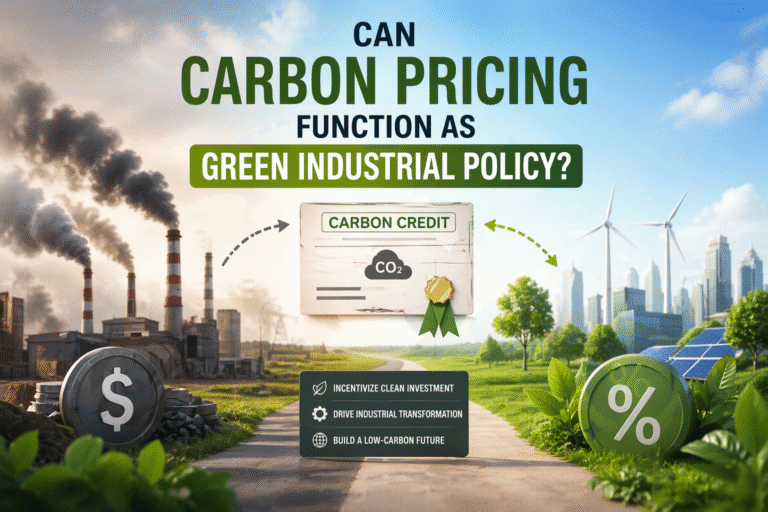
Carbon pricing is expected to increase the cost of energy from high-emission fuels, making cleaner alternatives more competitive. However, due to the close interplay between policy and politics, many governments shy away from carbon pricing because it is politically unpopular. Voters may oppose such measures, as carbon pricing can raise the cost of living. Now that energy prices have increased due to the war, the public may be more willing to accept these realities as being beyond the control of their leaders. While investment in fossil fuels signals lower returns in the future, the transition could become cheaper and faster as a result.
Putting it together, the impact of a blockade of the Strait of Hormuz may be negative for the energy transition in the short term; however, it could be beneficial for the transition in the long term. Its ultimate impact will depend on how governments navigate the immediate trade-offs between energy security, social security, and climate security concerns, and whether they seize this moment of disruption to accelerate the shift toward more resilient, affordable, and sustainable energy systems.
Keywords: Strait of Hormuz, Energy Transition, Energy Security, Decarbonization



 Reston Dennis Juah
 Noor Ul Ain
 Hassan Barrie
 Hoby Nasandratra Andriamiandrisoa
+ There are no comments
Add yours