
Every year, the global leaders comes together to try to solve climate change yet the evidence shows that the crisis is far from solved. So what’s going wrong? Can we improve how we tackle climate change crisis, or is it time to look beyond these negotiations?. Burning fossil fuels continues to drive the crisis, and the scale of change needed is becoming unattainable. Rising temperatures are now linked to deadly heatwaves, wildfires, and floods, causing growing damage to both human and natural systems. Scientists warn that we are dangerously close to crossing the 1.5°C threshold, a limit meant to protect the most vulnerable people and ecosystems. The Paris Climate Agreement was designed to address this crisis. It set a goal to keep global warming well below 2°C, while aiming for 1.5°C. On paper, this sounded strong. In reality, it requires rapid emissions cuts. More than a decade later, emissions are still rising. In 2025, GHG emissions reached about 60.63 GtCO2e, with fossil fuel emissions alone increasing by 1.1% from 2024. While international talks have laid the foundation for moving away from fossil fuels, they can no longer be treated as the main driver of climate action. Evidence shows that national policies are shaped less by global agreements and more by domestic politics, economic priorities, social pressures, and external shocks such as energy crises or geopolitical conflict. This then raises a important question: if climate diplomacy is no longer leading, where should we look instead? This blog revisits over three decades of climate diplomacy within shifting geopolitical, economic, and technological contexts to assess whether international negotiations still offer a credible path forward in the fight against climate change.
The Unfolding Climate Crisis
Across continents, extreme weather events are intensifying. In 2025 alone, storms, catastrophic floods, wildfires, and deadly heat waves were recorded all over the world . From monsoon floods in South Asia that displaced millions to cyclones hitting India, Sri Lanka, and the Caribbean , the human cost was severe. Mountains collapsed under torrential rains, forests burnt under extreme temperatures, and cities failed to copy with disasters one after another. Scientists warned that these were not once off events but part of a trend caused by a warming climate. The disasters cost hundreds of billions of dollars, overwhelming emergency resources and revealed global vulnerabilities. As extreme weather events are increasing, it is not a question of whether disasters will occur but how will the world navigate the disasters.
In October 2025, a strong hurricane hit the Caribbean, devastating Jamaica. The hurricane caused widespread damage from flooding and high winds, destroying homes and infrastructure and displacing many people, leaving them without food, water, and shelter. This led to devastating economic damage, equivalent to a substantial fraction of the economy. In November the same year , a major cyclone hit Sri Lanka, affecting over a million people. Lives were lost, and infrastructure, including roads and hospitals, were heavily damaged. Floods and landslides made access difficult, turning the situation into a large-scale humanitarian crisis that required international support.
At the same time, Europe experienced intense heat waves and widespread wildfires. Forests were destroyed and farmland dried out causing severe water shortages. Extreme heat became more frequent and more dangerous, affecting both the environment and people’s livelihoods. North America also faced one of its worst wildfire seasons. Large areas of land burned, and many communities were forced to evacuate, sometimes more than once. Fires lasted longer and burned more intensely, leaving lasting damage, and vulnerable populations were among the most affected. The impacts are physical, economic, and social, and they will continue long after the events themselves. A UN report released in October 2022 warned that there is “no credible pathway” to keep global warming below 1.5°C, the limit scientists say should not be crossed, and the target agreed at the Paris Accord . The latest Emissions Gap findings also show that the window for limiting warming to 1.5°C is rapidly closing, with a likely overshoot expected within the next decade unless emissions decline sharply.
Climate Diplomacy Through the Decades
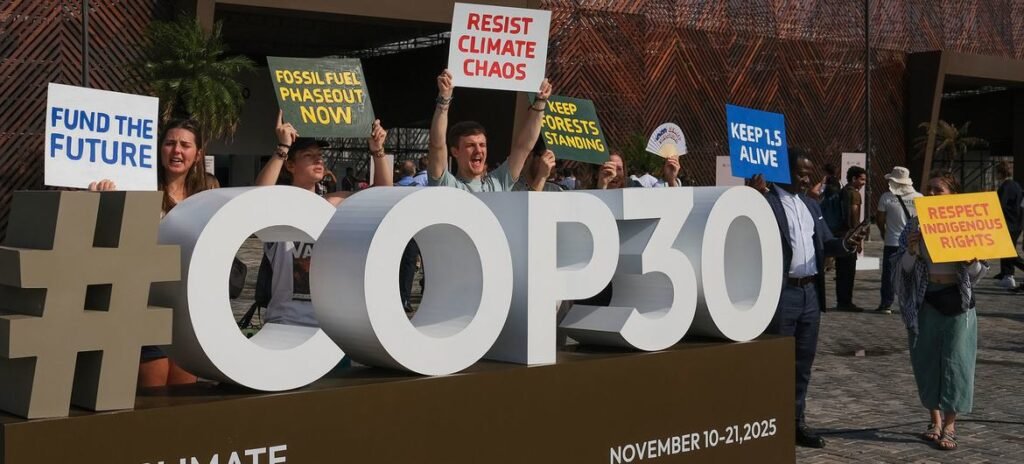
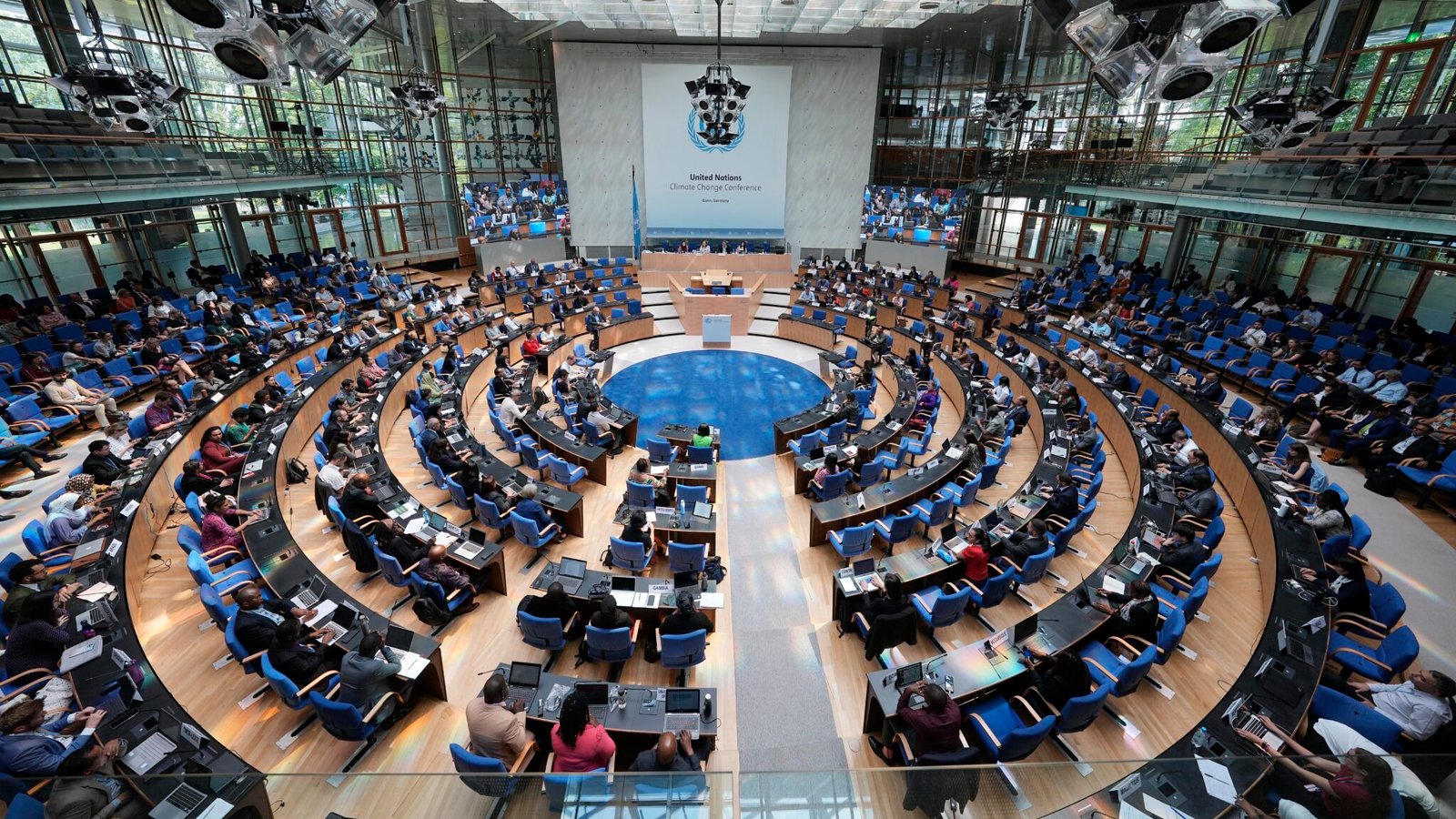
Given the worsening climate crisis, countries are supposed to meet regularly to find the way forward. These annual negotiations are meant to push progress forward. But progress has been slow and often frustrating. Recent COPs have exposed deeper problems. Meetings have been held in major fossil fuel–producing countries, raising concerns about conflicting interests. The presence of fossil fuel lobbyists has been significant, and in some cases, negotiations have run alongside deals that expand fossil fuel production. Criticism has grown. Climate activists like Greta Thunberg have called these meetings out as performative and brainwashing , a criticism which is hard to refute. Even key players involved in shaping past agreements have warned that the current system is not delivering change at the speed or scale required.
The Limits and Value of Multilateralism
Multilateral cooperation is facing growing challenges. Climate negotiations often resemble a power struggle between major countries. Reaching a common ground on responsibility for emissions, whether past, present, or future, between key players like the United States, China, and India seems unlikely under current conditions. Geopolitical tensions, including US -Iran wars, Russia’s invasion of Ukraine, and China’s alignment with Russia, make it even harder to achieve a binding global agreement beyond the Paris framework. But despite these shortcomings, international climate negotiations have been valuable. They have fostered large-scale scientific cooperation, raised concerns about equity and justice, and encouraged national and local institutional development. They have also helped support climate action, particularly in developing countries that are vulnerable to climate change, and the development of renewable energy technologies.
From Kyoto to Paris
The Kyoto Protocol was a milestone in global climate negotiations. It was signed in Kyoto, Japan, in 1997 and was replaced by the Paris Agreement in 2016. The underlying principle of the Kyoto Protocol was that developed countries should take the lead in curbing emissions since they are historically responsible for producing most of the greenhouse gases. It mandated that developed nations should cut greenhouse gas emissions and impose emissions caps on each nation for certain time periods. Overall, these nations agreed to reduce their emissions by an average of 5.2% by 2012, but with different targets for each country. The Kyoto Protocol offered three mechanisms to assist countries to meet these targets, Emissions trading, the Clean Development Mechanism, and Joint Implementation. These mechanisms enabled countries to meet their emissions reduction targets, including by financing emissions reduction projects in other countries. The protocol also established the principle of “common but differentiated responsibilities”. That is, developed countries had a greater responsibility, while developing countries were not expected to reduce emissions on the same terms. As a result, there were two categories of countries: Annex I countries (developed countries), which were required to meet targets, and non-Annex I countries (developing countries), which were encouraged to take part. The Kyoto Protocol remains a significant climate policy agreement. It was the first significant international agreement to legally bind countries to greenhouse gas emissions reductions and provided a framework for subsequent agreements.
The Sustainable Development Summit in 2015 agreed to the Paris Agreement. This agreement saw almost all nations commit to emissions reduction and to increase their efforts in the future. This agreement was binding on both developed and developing nations. The Paris Agreement entered into force in 2016 and represented a move to a more universal approach to climate change. The 2015 Paris Agreement, though voluntary, is still significant. It was the first time that almost all nations agreed to take action on climate change within a common framework. It established a clear long-term objective to hold the increase in the average temperature to well below 2°C and to make efforts to limit it to 1.5°C and established a process to update commitments every five years. The Agreement also established transparency measures that allow to monitor countries’ reduction emission efforts. This has put pressure on governments to cut their GHGs. However, the NDCs can be argued be ineffective in curbing emissions. This is in partly due to the Paris Agreement enabling governments to determine their own ambition. Countries can choose targets based on what they are able to do, rather than what is needed. There is no penalty for low targets or not meeting them, other than political pressure .
Conclusion
Despite all these limitations, COPs are not pointless. They have facilitated international agreements such as the Paris Agreement. They offer an opportunity for all nations, including the most vulnerable, to have a voice. They have also helped raise climate finance and promote collaboration. But their results are sometimes disappointing. They may promise large amounts of money yet it is often inadequate or take the form of debt. Renewable energy and fossil fuel pledges are often unclear or delayed. The gap between commitment and action is keeps widening. This creates a difficult reality. Climate negotiations are flawed yet necessary. They have made significant progress but not fast enough to keep pace with the problem. So it is not a matter of whether we should continue or end them. It is how we can improve them, while acknowledging that they cannot alone shoulder the burden of climate action. The reality is, nations can no longer wait for a global agreement. Countries that have the right political, economic and social conditions must act unilaterally, building on the existing international progress. Future international efforts will be based on their leadership and climate clubs.
Keywords: Climate change, Climate crisis, Climate action, Climate diplomacy, Climate governance.




 Reston Dennis Juah
 Noor Ul Ain
 Hassan Barrie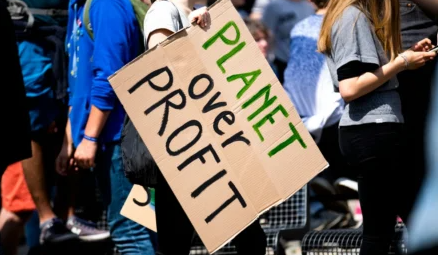
 Hoby Nasandratra Andriamiandrisoa
xn88. sở hữu kho game phong phú với hơn 500 trò chơi được phát triển bởi các nhà cung cấp hàng đầu như Evolution Gaming, Microgaming và NetEnt. Điều này đảm bảo chất lượng đồ họa sắc nét và trải nghiệm chơi game mượt mà trên mọi thiết bị. TONY05-15