

- Introduction
Climate change policy is realizing the importance of understanding that human behavior is the missing link between technical solutions and the accomplishment of environmental objectives. This realization came into focus when I settled in Universitas Islam Internasional Indonesia (UIII), a postgraduate multicultural campus of over 25 countries, which is provided with shared facilities, habits and attitudes towards the environment. I started to understand that climate policies are not failing because they are poorly constructed, rather they fail due to the behavioral assumptions underlying it not being compatible with how people actually behave. The experience I had in the UIII dormitory, particularly the apparent differences in behavioral approach to shared areas between students, led me to become interested in the intersection of behavior, policy, and waste management. Based on academic literature, class discussions and personal reflection, this paper examines how behavioural insights can enhance climate policy frameworks in institutions of higher learning in Indonesia and the ASEAN region at large.
- Governance, Behavioral Gaps, and Policy in Indonesia and ASEAN.
Indonesia has made significant progress toward aligning the national development with low-carbon strategies, captured in the Low Carbon Development Initiative (Bappenas, 2019) and changes in the Nationally Determined Contributions (Indonesia-MoEF, 2022). According to the studies, like Djalante et al., (2021), climate governance, in Indonesia, has advanced to a coherence level but still has gaps in implementation at the subnational and institutional levels. The waste management, specifically, still remains a significant source of national emissions given the release of methane by uncontrolled waste. Nugroho et al., (2022) also claim that most sectors including the waste sector in Indonesia needs behavioural change and community engagement to support the policy changes.
On the ASEAN level, ASEAN Circular Economy Framework, (2021) and The ASEAN Blueprint, (2025) call on sustainable consumption and waste reduction through behavior. However, as Hastuti, (2024) demonstrates, the region-wide change to sustainability is a gradual process, as the daily routine practices are inconsistent with the policy demand. Similar statements are made by Lestaluhu et al., (2023), who mention that in Indonesia, the environmental policies require more behavioral alignment, social norm support, and institutional instruments to encourage compliance.
These readings resonate a lot with what I observe on campus a lack of alignment in policy expectations and the real world. This gap enabled me to observe that learning institutions which were supposed to be incubators of environmental leadership tend to reproduce inconsistencies at the national and regional levels.
- Personal Observations on Waste Behavior within a Multicultural Campus.
My experience in the UIII dormitory was the most valuable experience in gaining an understanding of behavioral aspects of climate policy. I noticed that certain students of certain nations like Gambia, Pakistan, or Nigeria would leave the common kitchen and bathroom messy even after using them. Although I was at first irritated by it, with time, I started to observe these actions in a behavioral-policy context instead of morality. I discovered a lot of us come to UIII with behaviors formed by the infrastructure, cultural ethics and daily waste management systems of our home countries.
As a Ghanaian myself, I had to face my biases as there is a great difference between waste facilities in cities and rural locations. I believed that other people should act in a certain manner that appeared responsible to me, whereas my idea of responsibility was influenced by a certain cultural and environmental background. This reflection also enabled me to internalize the argument posed by Ostrom, (1990), which states that collective management of resources is not only based on rules, but it is based on shared norms and understanding. As a newly formed and culturally diverse institution, UIII has not yet developed any collectively agreed standards when it comes to waste behavior only shared spaces.
The waste practice gap also brought back to my mind some of the notions we have learned in the classroom concerning limited rationality and behavioral constraints. According to the Theory of Planned Behavior developed by Ajzen, (1991), although people may have a positive attitude towards sustainability they do not behave in a way that is sustainable when habits, social norms, and convenience come in their way. That theory came to life more vividly to me in the form of seeing students applaud climate action in the classroom but throwing mixed waste in their everyday life.
- Behavioral Insights and Policy Integration: Lessons from Class and Literature
There were a few ideas in the course that allowed me to see why waste policies do not work. When addressing the gaps in policy implementation, it became evident that climate governance fails when it is too much to be imposed on people without institutional backup. To illustrate, UIII promotes recycling, yet no informational prompts are visible, no behavioral prompts to follow and no surveillance to conditionalize proper disposal. According to Thaler and Sunstein (2008), successful nudging depends on creating a situation in which the sustainable choice is made the simplest.
(Djalante et al., 2021) emphasize that climate governance in Indonesia remains fragmented, and its fragmentation is evident even in a small organization such as UIII. Even though national policies focus on the principles of the circular economy, everyday behaviors of students are influenced more by habit than higher-level strategies. The distance between climate policy and daily action is thus psychological as well as structural.
In the ASEAN view, Hastuti, (2024) emphasizes that sustainable transitions need to change the way collective practices, rather than policy frameworks, are done. This observation is very much applicable to the life at campus: due to the cultural diversity of the student body, there is no behavioral norm prevailing in the campus and hence policy compliance by the students is even more complicated. In the absence of culturally appropriate behavioral interventions, including peer pressure, social norm communication, and culturally specific education campaigns, the waste management policies will stay purely symbolic and not transformative.
- Critical Reflections: What UIII Teaches us about Policy and Behavior.
The fact that UIII is not just a place of study but an environment of climate politics in the Global South based on my experiences, there are policies in place and these policies poorly integrate behavioural practices. Learners are conscious of the environment, even though not all of the daily activities are comparable. Learning is enriched by cultural diversity and it makes it difficult to manage the environment.
The most surprising thing was the fact that even climate conscious people can practice unsustainable behavior when the structure fails to support good practices. It was made apparent that finding a solution to climate-related problems needs more than knowledge, but systems of behavior that reorganize habits, incentives, and institution settings. The experience of UIII has helped me to understand that the successful climate policy should comprise both rules and behavioral knowledge and social norms, as well as culturally adaptive approaches.
- Policy Implications
According to my experience and the literature, there are a number of implications that higher institutions in ASEAN have:
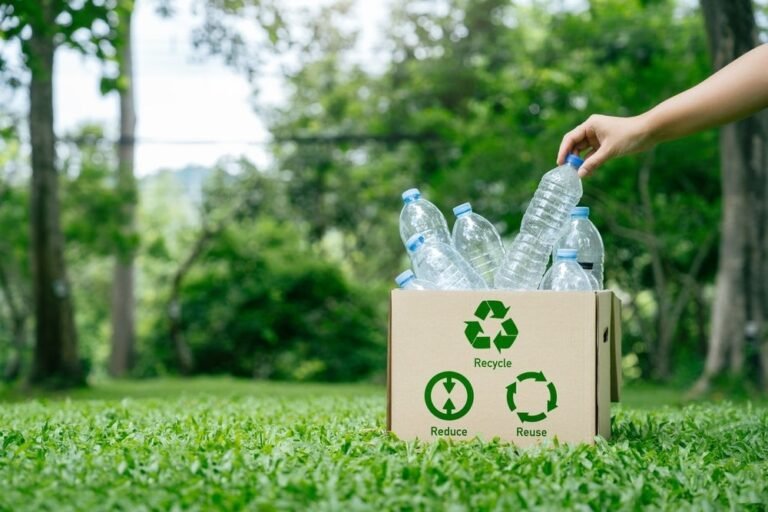
- Behavioural considerations ought to be implemented in Waste Management Systems. These could be by clear signs, color-coded bins, and reminders.
- Education programs must acknowledge the diversity of international students and accept different cultures for easy adaptivity.
- Accountability and social norms should be supported by methods participatory enough to improve sustainability teams and led by students.
- The universities within ASEAN need to align with the sustainability practices in their campuses so that there will be consistent behaviors throughout the region.
These are in line with the Low Carbon Development goals of Indonesia, the ASEAN Framework of Circular Economy and internationally recommended sustainable campuses.
- Conclusion
My UIII experiences proved that climate policy success lies in the ability to comprehend how individuals act in real-life situations and not in ideal ones. My stay in a multicultural dormitory has served as a strong reminder that sustainability has to be constructed on the basis of behavioral insight, cultural sensitivity, and institutional design. Incorporating the behavioral science in climate and waste policies will allow universities such as UIII to become true examples of low-carbon development in the ASEAN. Finally, transformative climate governance is started by everyday choices, common grounds, and the desire to learn the environmental experience of others.
Keywords: Climate policy behaviours, Waste management, ASEAN, Circular economy, Waste practices, Climate governance Indonesia, Sustainable Campuses.




 Reston Dennis Juah
 Noor Ul Ain

 Hassan Barrie
 Hoby Nasandratra Andriamiandrisoa
Với tỷ lệ cược hấp dẫn, cập nhật liên tục và nhiều loại kèo đa dạng, bạn sẽ cảm thấy hồi hộp và phấn khích trong từng trận đấu. 888slot freebet Các trận đấu được cập nhật trực tiếp giúp bạn theo dõi và điều chỉnh cược một cách dễ dàng. TONY05-15