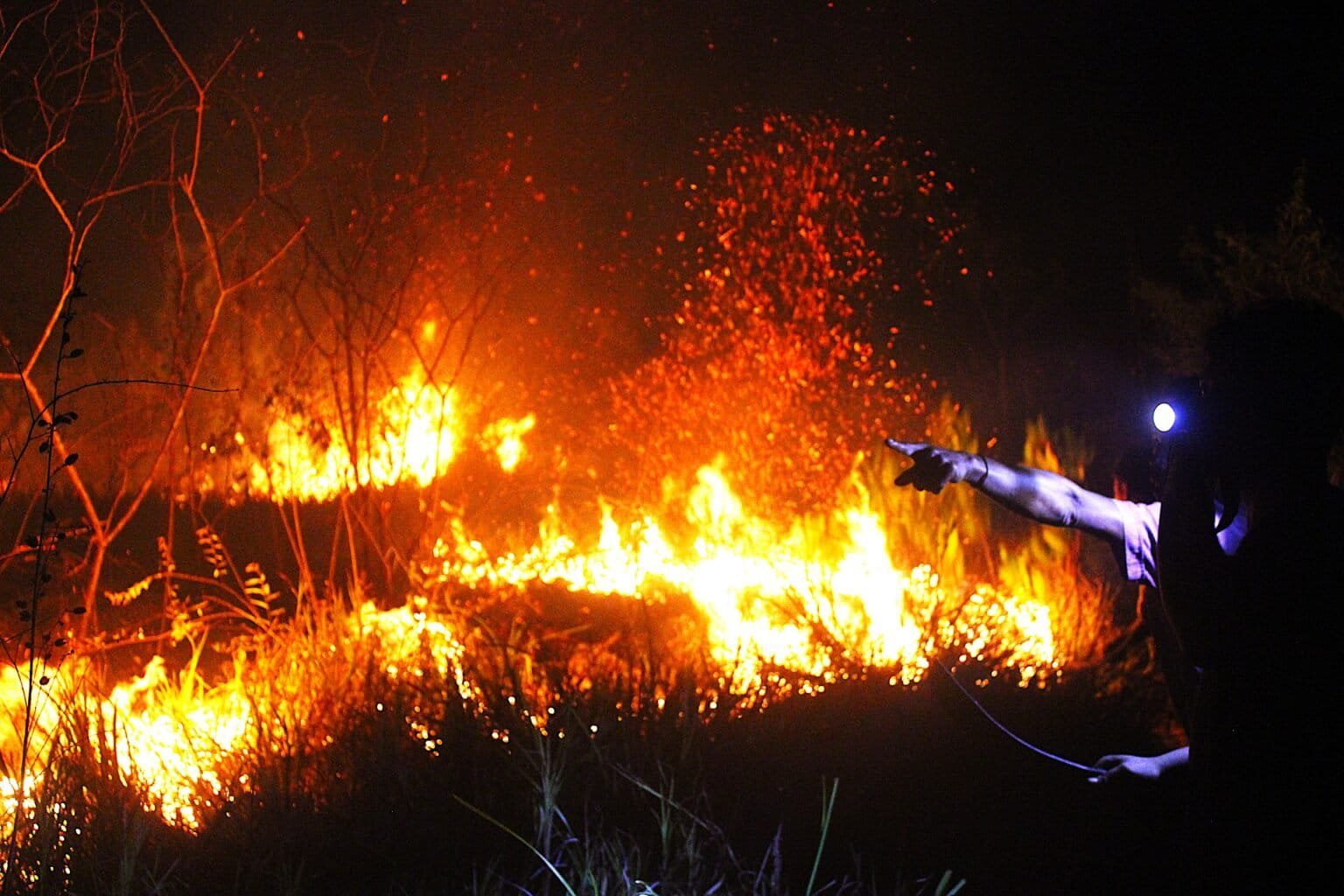

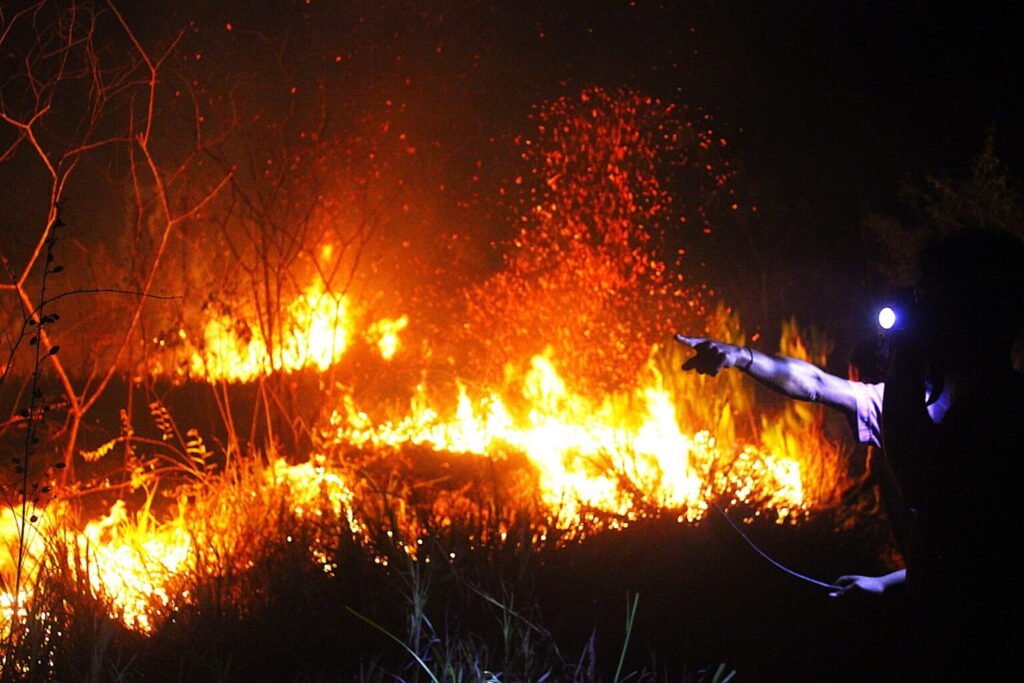
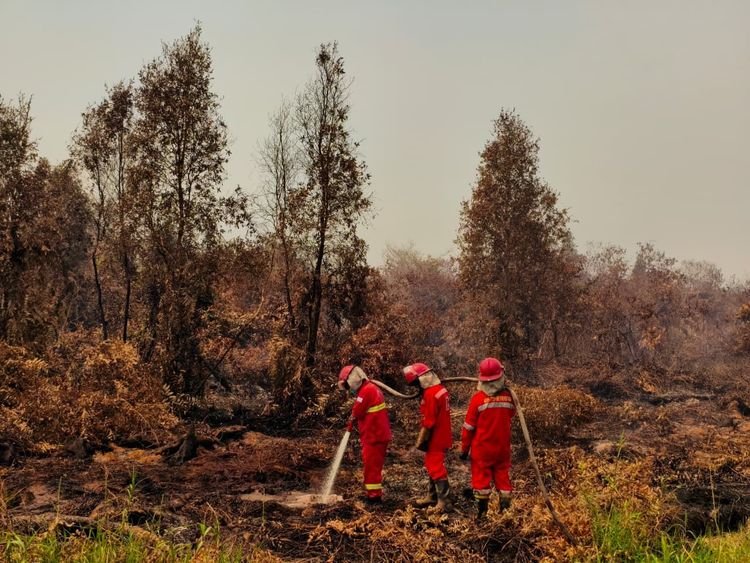
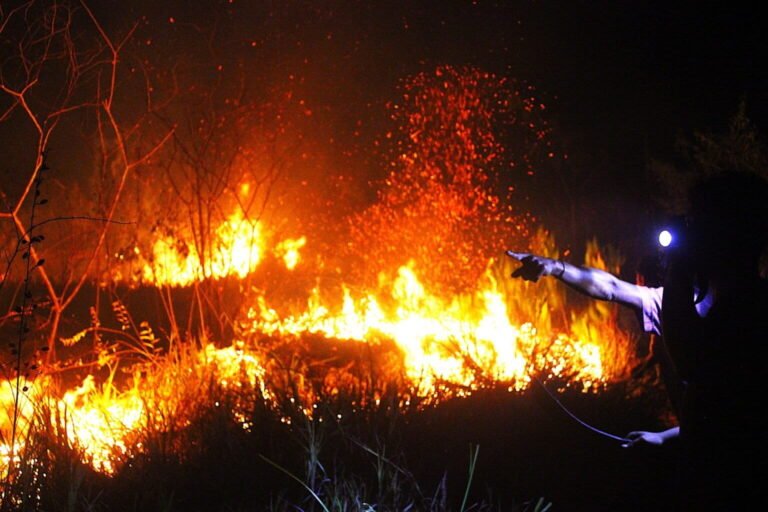
In 2026, two narratives about the land and fires in Kalimantan competed for public attention. The Indonesian government told a narrative of control: El Niño is the main cause of this disaster, the land and fires in Kalimantan is an annual event and firefighters are on the job to extinguish the fire. On other hand, Greenpeace Indonesia told a narrative of failure: the land and fires are predictable, caused by the concession land of palm oil companies, and the state has not prevented them as early as possible.
The narrative that people believe matters. It determines the level of pressure a government faces both domestically and from neighboring countries that also end up breathing in the smoke. This article looks at that contest through the ideas of Bjoern Hagen and Deepti Ganapathy, who suggest that official voices tend to dominate mainstream coverage and that environmental groups can act as a counterweight.
The Indonesian Government’s narrative: weather, control, progress
The Indonesian Government’s narrative is based on three points. The first factor is the weather. Minister of Forestry Raja Juli Antoni stated that by mid-August, the El Niño index had surpassed the levels recorded in 2015. The second factor concerns control efforts. He said hotspots had fallen across Kalimantan and Sumatra by the end of August, helped by water bombing and weather modification, although he also acknowledged that many fires were deliberately set by individuals or companies. The third is progress: the total area of land burned during El Niño years has declined from approximately 2.61 million hectares in 2015 to 1.16 million hectares in 2023.
As of July, the official total for 2026 reached approximately 202,000 hectares. For West Kalimantan, the disaster agency recorded 38,300 hectares between January and August.
An episode on October 12 illustrates how this narrative functions. During a meeting at the presidential palace, the disaster management agency reported that only 639 hectares of land remained to be cleared of fires. The President reportedly expected tens of thousands of hectares or more, and the Ministry of Forestry later explained that the figure was not the national total. A small number, delivered without context, can create a picture of success.
Why did this story spread so widely?
Hagen (2019) describes how governments tend to practice “risk attenuation”, which means downplaying a hazard by presenting it as an unpredictable event outside their control. El Niño fits this pattern neatly, because nobody can be blamed for the weather. This does not make the El Niño explanation false, since El Niño is real. The question is how much weight it carries compared with the way land is governed.
Ganapathy (2022) adds that mainstream press coverage leans heavily on official and law enforcement sources, while NGOs and local communities sit on the margins. In fire season, it is easy to see how this can happen. Briefings from ministers, the military, and disaster officials are regular and quotable. In contrast, independent satellite analyses and the voices of local communities who are the ones breathing in the smoke emerge more slowly and are not as easily incorporated into news bulletins. As the study focuses on media in India, it is best viewed as a perspective for understanding the context in Indonesia, rather than as direct evidence.
Greenpeace Indonesia as the counter-narrative
Greenpeace Indonesia has contributed to this discourse by presenting its own evidence. Its monitoring recorded 592 smoke sources across Kalimantan between 11 and 16 August, and 455 of them were on peatland, including 322 in West Kalimantan, 181 in Central Kalimantan, and 86 in South Kalimantan. Nationwide, it identified 6,811 smoke sources between 8 August and 1 October, with 970 inside 120 forestry concessions and 980 inside 233 palm oil concessions.
On total burned area, Greenpeace cites the Nusantara Atlas analysis, which estimates 1.9 million hectares between January and September, far above the official figure for the earlier period. Together with Pantau Gambut, it also alleged that 20 entities, including firms linked to Malaysia and Singapore, were connected to the fires. These are NGO findings, not court rulings, and monitoring groups use different methods. Even so, they change the question from “is it El Niño?” to “who holds the land where the fires start?”
Greenpeace also changes the tone. Its forest campaigner said the return of peat fires shows the government failed to prevent a disaster that could be predicted. The message is not only technical. It links the data to people’s health and to a cross-border problem: the smoke reached Serian, a Malaysian district about 50 kilometers from the Indonesian border, where authorities declared an emergency.
The work of Hagen (2019) helps explain why this is significant. He argues that trust in environmental organizations is closely linked to public concern. When people trust the data from groups like Greenpeace, the story of a purely natural disaster becomes harder to sustain.
The counter-narrative is not powerless against mainstream media either. National outlets such as Kompas, Katadata, and Okezone carried the NGO figures, and a Greenpeace campaigner presented the 1.9 million hectare estimate on national television. The government’s voice is loud, but it is not the only one.
Two narratives, one overlap
The two sides agree on more than their rhetoric suggests. The Ministry of Environment has recorded about 85,000 hectares of burned concession land in Sumatra and Kalimantan, with 335 companies on its radar. The real disagreement is about scale, speed, and enforcement. Greenpeace is also an interested party with a campaign to run, so its numbers deserve the same scrutiny as the government’s.
What the government can learn
The policy lesson is that fire is also a communication problem. Three steps would help.
First, publish one national figure that people can trust. This includes explaining the methodology behind the official data, providing comparisons with independent satellite analyses, and remaining open to verification by outside parties.
Second, make accountability visible. Mongabay reports that hundreds of people have been named suspects, while the alleged involvement of five forestry concession holders in the 2025 Riau fires remains stalled at the police. Showing that concession holders face the same scrutiny would strengthen the government’s credibility.
Third, use regional tools that already exist. The ASEAN haze agreement requires members to monitor fires and share information, and Indonesia says it is working through ASEAN mechanisms. Opening its own fire data would make those mechanisms more credible. Community groups such as Masyarakat Peduli Api can also be given a bigger formal role in prevention.


 Mwaiwawo Banda
 Jawal Sualisu
 Hanifah Setyaningrum
 Seftario Virgo
 Mujibullahi Lawan Shahud
+ There are no comments
Add yours