
Introduction:
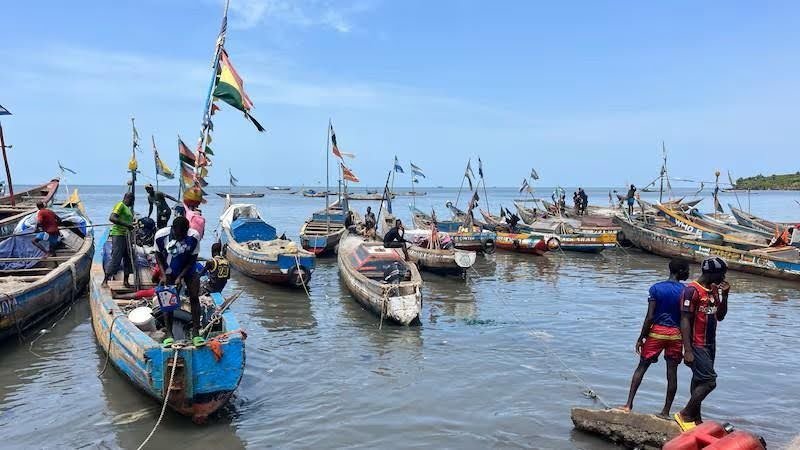
Fisheries are vital to the economy, food security and livelihoods of coastal communities in Sierra Leone. Fishing is not just an economic activity for many households, but a source of daily income, employment, nutrition and social identity. However, the viability of this sector is facing increasing challenges due to environmental degradation, climate change, unsustainable fishing practices and weaknesses in fisheries governance. These challenges are particularly relevant in Tombo, one of Sierra Leone’s largest artisanal fishing communities, where fishing provides livelihoods for fishers, processors, traders, boat owners and other small businesses.
Climate change impacts on coastal livelihoods include: sea level rise, coastal erosion, changing ocean conditions and potential changes in the distribution and productivity of marine resources. Coastal zones and fisheries are highlighted as key climate-vulnerable sectors in Sierra Leone’s National Adaptation Plan, which acknowledges the importance of coastal resources to local economies and food security (Government of Sierra Leone, 2021). But climate change alone cannot explain the woes of fishing communities. Sustainability of the sector is also impacted by overfishing, competition between industrial and artisanal fishers, poor infrastructure and unequal access to resources.
This essay makes the case that climate change, fisheries governance and livelihood inequality are interconnected challenges in Tombo. The community’s vulnerability depends on environmental change, but also the effectiveness of fisheries regulation, the participation of local people in decision-making and the unequal distribution of resources and opportunities. To tackle these challenges, climate-resilient fisheries policies are required that incorporate environmental protection, accountable governance and support for vulnerable fishing households.
Climate Change and the vulnerability of Tombo’s Fisheries
Coastal communities are concerned about climate change due to their dependency on marine and coastal ecosystems. Marine habitats and availability and distribution of fish can be impacted by changes in sea temperatures, ocean conditions, rainfall and coastal processes. Fishing and associated livelihoods are important livelihoods for many households in Tombo, and fluctuations in availability of fish may have impacts on income, employment, food prices and nutritional outcomes for these households.
The Government of Sierra Leone (GoSL) has prepared its National Adaptation Plan which includes risks associated with climate change affecting communities, fisheries and coastal ecosystems. It emphasizes issues such as sea-level rise, coastal flood, coastal erosion, and impacts on estuaries and aquatic systems (Government of Sierra Leone, 2021). These shifts could lead to further challenges for communities living off-coastal livelihoods.
The effects of environmental change don’t just happen to fishermen who venture into the sea, but also to those who are in the countryside. Women engaged in fish processing and marketing activities may also see their income drops due to lower fish production or higher fish prices or less predictability in fish supply. Difficulties may also be encountered by the fish transporters, boat owners and traders in the event of a downturn in fish activities.
However, it is imperative not to blame all drops in fisheries production on climate change. Other factors that can affect fish availability include overfishing, fishing gear, habitat destruction, pollution, and industrial fishing operations. In Tombo and Goderich, a study of the CBFM revealed that CBFOs were hampered in controlling overfishing and other inappropriate fishing methods, especially in areas affected by activity by industrial fisheries that they were unable to monitor. 2021). This implies that, in addition to fisheries management and enforcement, environmental vulnerability also needs to be considered.
A major question for Tombo is whether there are policies that are effective in responding to the dual stressors to marine resources. In addition to adaptation to climate change, environmental pressures that are already affecting the fishery sector need to be mitigated, to ensure livelihoods are protected.
Fisheries Governance and Institutional Challenges
Fisheries governance are defined as fishing laws, institutions, policies and decision-making processes that govern fishing. Good governance is vital to combat overfishing, to preserve fish habitats and to manage fishing activities and assure that fisheries continue to be productive for the future generations. The fisheries governance in Sierra Leone includes government institutions, local fishing organisations, industrial fishing operators and the artisanal fishers. The relation, however, between these actors may be complex due to differences in power, responsibility and the resources they have at their disposal. The study on Community Based Fisheries Management in Tombo and Goderich revealed that community fisheries organisations have a huge constraint in managing the fishing activities. While these organisations tried to manage local fishing practices, they did not have enough influence on overfishing by industry and sometimes conflicts and government interference resulted in a reduction in their effectiveness for the management of small-scale fisheries (Is community-based management of small-scale fisheries in Sierra Leone the answer to their problems? 2021)? The results show just how hard it is to coordinate and control fisheries where both national institutions and community-based organisations are responsible but have little coordination and control. This governance issue is of special importance with regard to climate change. Reduced resilience to environmental fluctuations and lax oversight and unsustainable fishing practices could continue to make marine ecosystems less resilient to environmental change, further reducing the ability of fish populations to rebound. Climate adaptation thus needs to be coupled with effective fisheries management and specific measures to respond to climate risks. The National Adaptation Plan (Sierra Leone’s NAP) outlines a policy approach for making climate adaptation a central part of development planning and highlights management of coastal areas, protection of the environment, gender equality and social inclusion (Government of Sierra Leone, 2021). But it is not enough to just have a policy in place, it needs to be implemented. Additionally, funding, institutional coordination, reliable data, and enforcement are required, as are the participation of affected communities. For Tombo, a critical question is how national fisheries and climate policies are put into practice and whether it benefits the local fishers. Good governance should include meaningful engagement of fishing communities, clear enforcement of rules and regulations and a clear process for resolving conflicts between artisanal and industrial fishers.
Livelihood Inequality and Gender Relations in Tombo
The concept of livelihood inequality is concerned with disparities in livelihood access to income, productive resources, decision making power and livelihood coping mechanisms in the face of economic and environmental stresses. Inequality may be analysed by the various roles that fishermen, fish processors, traders, boat owners, and other members of the fisheries value chain play in Tombo.
The participation of women in fisheries related activities is more important. Olapade and Sesay (2019) conducted a study on women in Tombo and Goderich and observed women’s involvement in fish processing and marketing but in a wide scale. Some of the study’s findings also were that there was poor access to credit facilities, high processing cost, inadequate cold storage facilities and smoking kilns, and poor landing site conditions. The results in this study show that if women are economically important, they are not automatically equally endowed with resources or decision-making power.
These inequities can be exacerbated by climate impacts. As fish supplies are increasingly subject to uncertainty, women buying fish for processing and resale could be affected by increased expenses and reduced profits. Losses may be harder for those who don’t have savings, cheap credit, better processing equipment or other means to cope.
Resources for fish processing can also be impacted by environmental pressures. According to Olapade and Sesay (2019), the smoking of fishes in the two communities were done using mangrove and forest wood. This poses an important environmental and livelihood issue with regards to the dependence of fish processing on the availability of energy and the potential to put pressure on coastal and forest ecosystems if the energy is unsustainably sourced from wood. Therefore, access to efficient technologies for smoking and other alternative energy sources can be used to assist livelihoods and environmental conservation.
Livelihood inequality is also linked with governance participation. Women and poorer fishing households may be marginalized due to the fact that they have less influence on decisions regarding fishing regulation, infrastructure and funding for adaptation. The primary emphasis of fisheries policies on fish catch and fishery owner(s) may lead to overlooking those who process, preserve, and distribute fish.
A more inclusive approach would consider women as important economic players, and include them in fisheries management and adaptation planning in the context of climate change. Credit access, better processing facilities, business training and participation in local decision-making could contribute to lessening vulnerabilities and enhance the fisheries economy in general.
Relationship between Climate Change, Governance and Inequality
Climate change, governance, and inequality should not be considered isolated issues, as is the case with Tombo. The impact of climate change on marine resources could be further stressors, though the impacts on local households will depend, in part, on the management of fisheries and their distribution.
For instance, if the availability of fish decreases, households with savings and/or improved equipment and alternative livelihoods might be more resilient. Poorer fishers/women, who rely on daily fish sale might have less choice. Likewise, lax enforcement of fishing rules can lead to continued unsustainable fishing and further strain on marine resources, which can create unfair competition among fishing groups.
The climate vulnerability framework can explain this relationship. Vulnerability is not just a function of an environmental hazard to which one is exposed, but also of the sensitivity of the individual to the impact of the hazard and their capacity to adapt. This ability may be affected by dependence on fisheries, a lack of financial resources, inadequate infrastructure and unequal representation in decision-making processes in Tombo.
The Food and Agriculture Organization (FAO) recognises the importance of small-scale fisheries to food security and livelihoods in Sierra Leone. It also identifies the need for better post-harvest processing and for gender inclusive, climate-smart fisheries and food systems in its sustainable small-scale fisheries work. These priorities indicate that adaptation should not only move beyond safeguarding fish stocks to people and economic activities reliant on fish stocks.
An important gap in evidence, however, exists. There are existing studies on fisheries governance and livelihood issues in Tombo and national policy documents highlight the general risks of the coastal zones of Sierra Leone when faced with climate change. Increased research was needed at the community level to determine how local changes in climate are impacting fish catches, household incomes, women’s economic activities and local adaptation strategies in Tombo. This study could contribute to the understanding of the difference between climate effects and other environmental and institutional factors, and inform more targeted interventions.
Policy Recommendations
A combination of environmental, institutional and social measures is needed to overcome these interrelated challenges.
- The government should enhance fisheries monitoring and enforcement to address the illegal, destructive and unsustainable fishing practices. Industrial and artisanal fishing activities should be fairly regulated, with clear and accountable procedures.
- Close cooperation between national institutions and Tombo’s fishing organisations is needed. Ensuring community involvement enhances local knowledge, trust and compliance, but local organisations also need to have delegated authority and technical support as well as coordination with national fisheries institutions.
- Incorporating climate adaptation into fisheries planning. This involves enhancing local climate and marine data; conserving coastal ecosystems; tracking fish availability changes; and creating easily available early-warning information for fishing communities.
- Investment in resilient fisheries infrastructure should be made by government agencies and development partners. Better landing sites, cold storages, hygienic processing facilities and energy-efficient fish-smoking technologies will help optimize post-harvest losses and boost profitability of fisheries-related activities.
- Fisheries policies should directly tackle inequity in livelihoods. There should be improved access to credit, training, infrastructure and decision making for women processors and traders, poorer artisanal fishers and other vulnerable groups. Household livelihood alternatives can also provide households with coping mechanisms to mitigate the impact of low catch periods on marine resources.
These measures should be assessed on community levels using evidence such as changes in household incomes, fish losses, access to fishing resources, involvement in the management and condition of coastal ecosystems.
Conclusion
The challenges of climate change, fisheries governance and livelihood inequality are all interlinked for Tombo’s fishing community. Changing climate poses threats to marine ecosystems and coastal livelihoods, though these impacts can be mediated by fisheries regulation, environmental management, and economic resources and gaps in decision making. Previous studies show that there are gaps in the community fisheries management system and that there are major constraints on women in fish processing and marketing.
The central question is thus not just how to adapt fisheries to climate change but how to create a climate-smart fisheries system that is environmentally sustainable, institutional responsible and socially inclusive. Sierra Leone’s climate adaptation policies offer a good foundation; however, they cannot be effective unless strategies are implemented and citizens are actively engaged.
In the case of Tombo, these relationships can be explored. Additional studies on the impacts of local climate change, fisheries governance and livelihood disparity can be considered to find out who’s most vulnerable and which interventions work best. Sustainable fisheries in Sierra Leone will need to be adapted to the climate and have better institutions and access to resources, while also recognizing the people who make the livelihoods of the sea.
References
Food and Agriculture Organization of the United Nations. (n.d.). Sierra Leone: Voluntary guidelines for securing sustainable small-scale fisheries. https://www.fao.org/voluntary-guidelines-small-scale-fisheries/in-action/where-we-work/sierra-leone/en
Government of Sierra Leone. (2021). National adaptation plan. United Nations Framework Convention on Climate Change. https://unfccc.int/sites/default/files/resource/SierraLeone_iNAP_Final.pdf
Is community-based management of small-scale fisheries in Sierra Leone the answer to their problems? (2021). Marine Policy. https://www.sciencedirect.com/science/article/abs/pii/S2452292921000060
Olapade, O. J., & Sesay, D. F. (2019). Women involvement in the fishery activities of two coastal communities in Sierra Leone. African Journal of Agricultural Research, 14(5), 279–286. https://doi.org/10.5897/AJAR2018.13574
Overå, R., & colleagues. (2014). “Fishing na everybody business”: Women’s work and gender relations in Sierra Leone’s fisheries. Feminist Economics. https://doi.org/10.1080/13545701.2014.895403
Food and Agriculture Organization of the United Nations. (2024). Small-scale fisheries governance. https://www.fao.org/voluntary-guidelines-small-scale-fisheries/key-thematic-areas/sustainable-resource-management/small-scale-fisheries-governance

 Mwaiwawo Banda
 Jawal Sualisu
 Hanifah Setyaningrum
 Fadhli Fauzan Ilahi
 Seftario Virgo
 Mujibullahi Lawan Shahud
+ There are no comments
Add yours