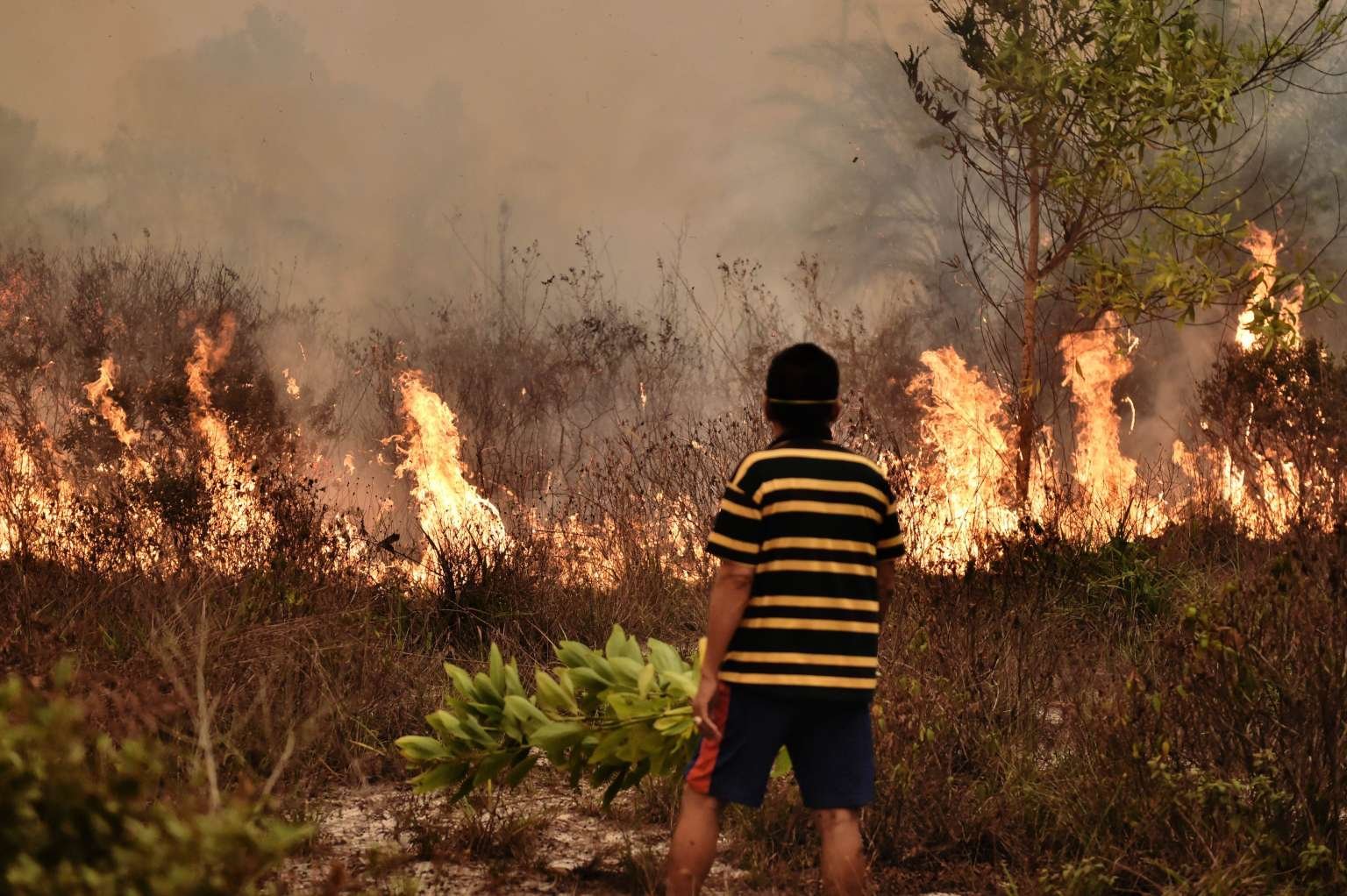

In October 2026, 19 provinces in indonesia implement Pembelajaran Jarak Jauh (PJJ) policy due to air outside has become unsafe to breathe. The implementation affected 61.693 schools and an hundred thousand of students attended class through an online screen. In Palangka Raya, Adelina Saragih brought her seven-year-old son to a volunteer-run “smoke safehouse” after days of exposure left him with a cough worse than any he had had before, keeping him awake at night and wheezing as he breathed. Based on data from the Indonesian Ministry of Health, we can see that in November 2026 the air quality in various Indonesian cities was categorised as dangerous and unhealthy.
Beyond that, there’s anxiety from many parents who cannot protect their children from the very air they breathe. The influence of haze is limitless it can affect numerous vital problem such as mental health, student intelligence, child development and physical health problem. These sights have become a seasonal ritual in western Indonesia, so common that the physical cost is now routinely recorded, while the psychological cost has not been questioned.
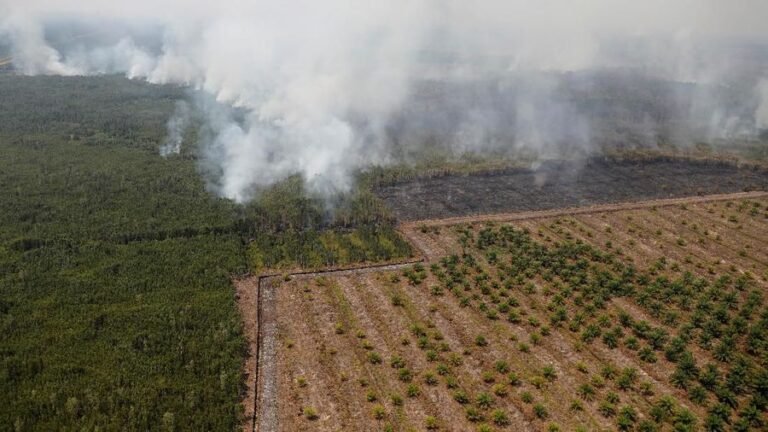
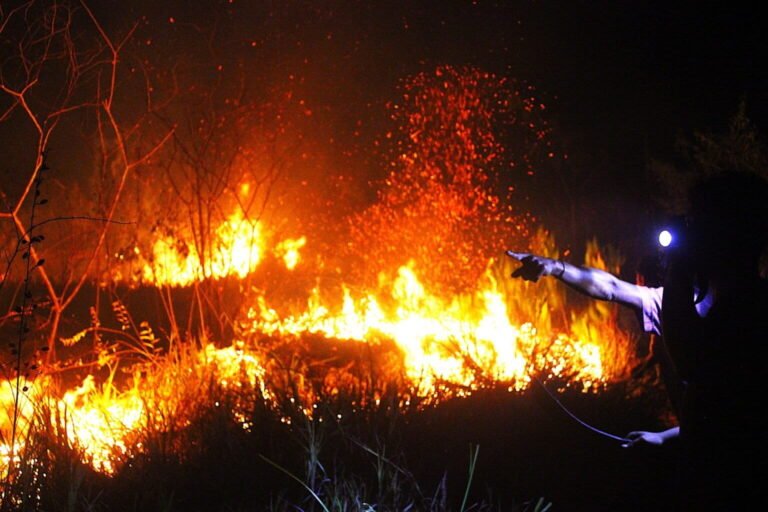
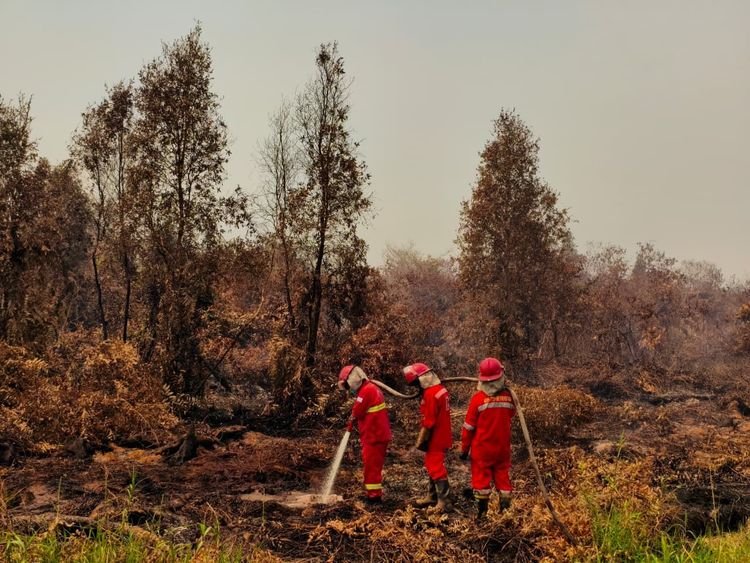
The Karhutla 2026 fire season has been exceptional in scale. As of August 2026, Karhutla has impacted 10,674,201 individuals across Indonesia, states the Indonesian Ministry of Health. Forest fires occurring today are causing it to rise day by day. Another source estimates 401,586 individuals suffering from Acute Respiratory Tract Infection cases caused by the forest fire and haze. According to reuters, Karhutla this year is the worst forest fire in indonesia since 2015. Indonesia’s emission contribution also increase due to high volume of forest fire, since 2003 this year is the highest emission contribution caused by forest fire.
Furthermore, what distinguishes haze from other climate hazards is its seasonal cycle and its persistence. It arrives with the dry months, lingers until the rains return, and comes back the following year, and the year after that. The names of the worst years change, from 1997 to 2015, 2019 and now 2026, but the rhythm does not. In between, the government’s own National Adaptation Plan notes, the same scorched landscapes now flood when the monsoon comes, so that some communities never fully leave crisis mode. A child in Palangka Raya who studied from home because of smoke in 2023 has done so again this year. That is the problem with how Indonesia thinks about the mental toll of climate change. Its policies are built to respond to disasters that strike and then pass. Haze does neither. It does not strike so much as settle in, and it never truly passes. By treating psychological harm as something that happens only after a disaster, Indonesia has left the people who breathe its smoke every year off its mental-health map entirely, even though the evidence that this smoke scars the mind already exists, much of it drawn from Indonesia itself.
The clearest prove of this blind spot is come from the National Adaptation Plan itself. In this plan, the government already know that drought and haze is a serious health threat. But when the plan talk about trauma and mental health, the focus is move to Java, Sulawesi and Papua. Province like Riau or Central Kalimantan that breathing the smoke almost every year is not mentioned as region with psychological risk at all. It is framed as “disaster-related trauma”, it means mental problem only counted when the disaster already happen and people already lose their house. In other part, the plan mention mental health stressor just as “downstream consequences” of climate events, something that come later and not become the main concern.
This pattern is not only happen in Indonesia. A global stocktake by UNEP Copenhagen Climate Centre (2026) found that extreme weather still dominate how countries frame their climate risk, while slow-onset process and indirect health pathway is less consistently addressed. The same report also note that mental health in national climate plans is rarely followed by detailed policy response. Years before, WHO (2022) already warn that only nine from 95 countries surveyed put mental health and psychosocial support in their health and climate plans, and the IPCC describe mental health support as particularly inadequate in the global response.
This way of thinking is more and more difficult to defend when we look at the science. Aslam and Aljasir (2025) explain that air pollution is associated with higher stress, interpersonal hostility and violence, and it even reduce the cognitive function. A meta-analysis by Braithwaite and colleagues (2019) found that people who exposed to fine particulate matter (PM2.5) for more than six months have higher odds to experience depression, around 10 percent for every 10 g/m increase. The same study also found a link between short-term exposure of coarse particle (PM10) and suicide. Closer to our region, a study during the 2013 haze crisis found that haze is related with acute physical symptom
and mild psychological stress. Interestingly, that study was conducted in Singapore, the country that receive the smoke, not in Riau or Kalimantan where the smoke is come from. But it does not mean Indonesia have no evidence at all. Using the 1997 forest fire as a natural experiment, Kim, Manley and Radoias (2020) found that severe air pollution give significant and persistent effect on mental health. One standard deviation increase in pollution raise the probability of clinical depression almost 1 percent, measured ten years after the exposure, and women seem more affected. Another study from the same fire show the pollution also increase the likelihood of poor general health almost 3 percent. A master thesis from Universitas Gadjah Mada (2025) also found that PM2.5 consistently worsen the mental health condition of Indonesian people.
Children carry the heaviest burden, but they are the hardest to speak about it. The National Adaptation Plan note 74 million Indonesian children are exposed to high air pollution that harm their development and cognition. This year, remote learning in Palangka Raya and Banjarmasin was extended again and again, and Central Kalimantan even postponed its national academic test. COVID-19 already taught us how heavy long school closure is for young people mind. Until now, nobody is given the task to measure what the haze do to theirs.
Some may argue that the nearly one percent increase in depression risk observed in the 1997 fire research is too minor to rise to the level of policy concern. But it is not about one person, it is about more than ten million people afflicted by haze this year and many of them inhale the same smoke practically every dry season. Even a minor risk, if repeated year after year in a large population, can add up to a huge public health burden. The authors of the worldwide meta-analysis even suggest that, if the association is causal, reducing average exposure to PM2.5 from 44 to 25 µg/m³ might cut the incidence of depression across the world by about 15 percent. In public health, a modest risk taken by millions is never a small problem.
Closing this gap does not require a new institution, it requires four tangible steps from the existing institutions. First, the Ministry of Environment as the owner of the National Adaptation Plan should add Sumatra and Kalimantan on the mental health risk map and alter the framing from “disaster-related” to “climate-related” trauma in the next assessment. Secondly, the Ministry of Health should add psychological complaints to the list of daily haze monitoring that currently includes respiratory illnesses and place psychologists and psychiatrists on the standby personnel list during the fire season. Thirdly, education offices in haze-affected areas should not only send students home, but also provide psychosocial assistance for youngsters who are studying remotely for weeks. Fourth, the government should start measuring, for example by incorporating the CES-D questionnaire, already used in the Indonesia Family Life Survey, into the national health survey in haze-affected areas. The procedures also align with the Belém Health Action Plan, which requires countries to prepare their mental health system for climatic stressors and monitor the impact with concrete indications. Eventually, Indonesia missed not capacity, but recognition.



 Mwaiwawo Banda
 Jawal Sualisu

 Hanifah Setyaningrum
 Fadhli Fauzan Ilahi
 Seftario Virgo

 Mujibullahi Lawan Shahud
+ There are no comments
Add yours