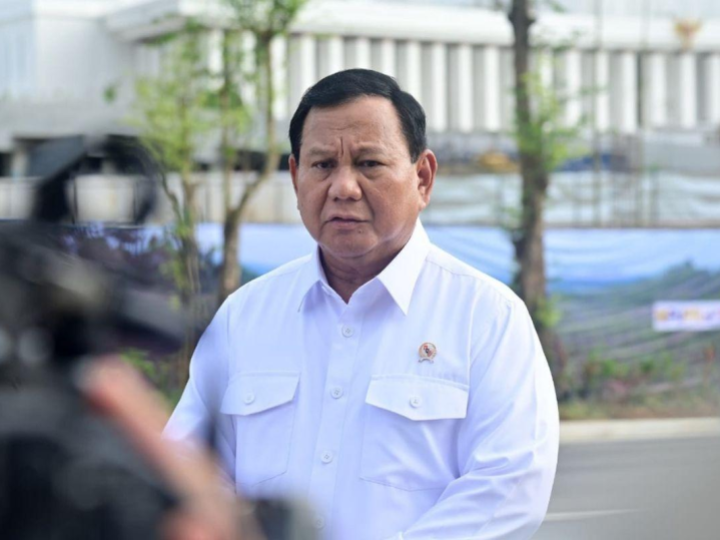

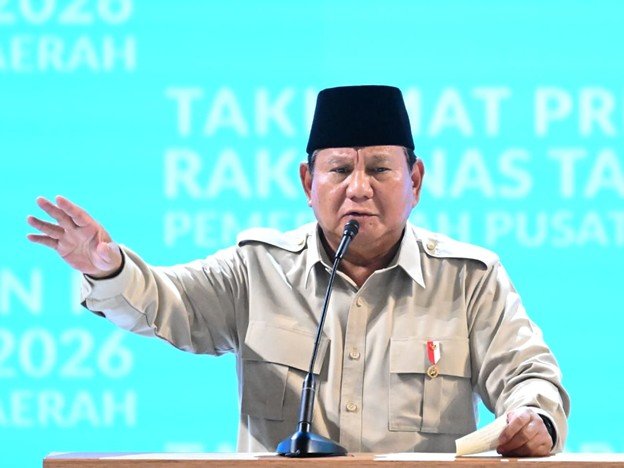
President Prabowo Subianto personally delivered a speech on fiscal policy at the DPR plenary session on Wednesday (20/5/2026). This was out of the ordinary. Previously, such delivery was done by the Minister of Finance.
The most important point of the speech was the restructuring of the export scheme for coal, palm oil, and ferro-nickel. Starting January 2027, exports of these commodities must go through state-owned enterprises.
Prabowo said the policy was taken due to rampant under-invoicing practices that have reduced state revenues. However, this reason received a negative response. Business actors also showed resistance to the policy.
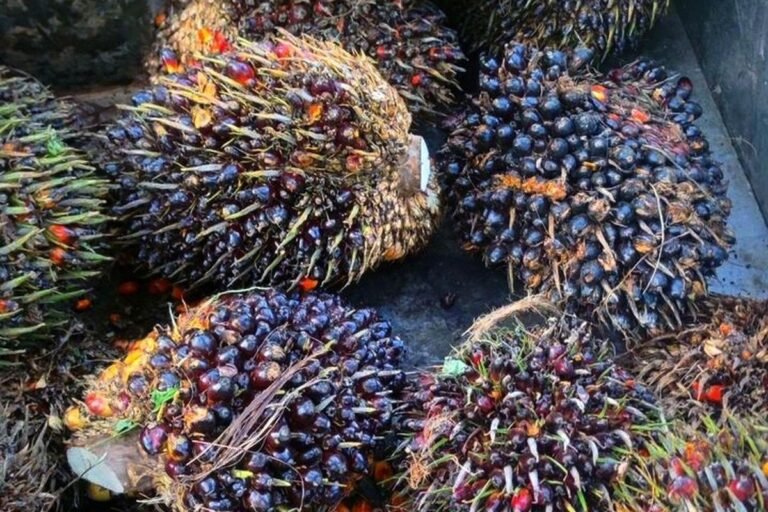
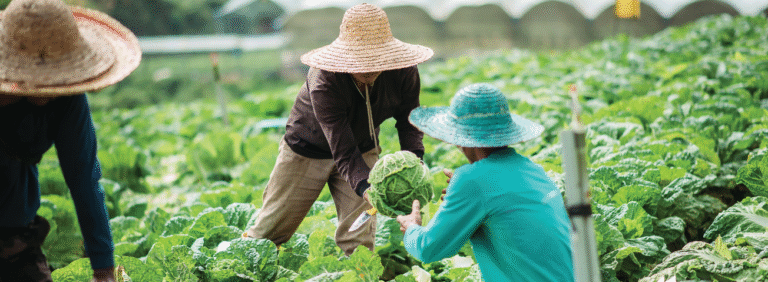
The three commodities whose export schemes Prabowo restructured are those whose production has massive environmental impacts. Palm oil plantations are one of the biggest drivers of deforestation in Indonesia. Research conducted by Austin et al. (2019) shows that between 2001 and 2016, around 3 million hectares of forest were converted into palm oil plantations. Another study shows an uncontrolled trend of land expansion for palm oil plantations, reaching 16.24 million hectares in 2019 (Gaveau et al., 2022). The environmental damage caused by the mass production of this commodity is also disproportionate to the profits generated. Research conducted by Sumarga et al. (2016) in Central Kalimantan shows that the profits generated from opening palm oil plantation land do not exceed the costs of disaster and economic impacts.
The same applies to nickel. Lo et al. (2024) found that nickel mining in Sulawesi has reduced forest cover but its effects on welfare are uneven. Emissions produced by metal smelters are also projected to contribute to rising healthcare costs in Indonesia of up to USD 3.42 billion by 2030 (Myllyvirta et al., 2024).
Massive damage is also caused by coal mining. Research by Mahroini and Chen (2024) shows that Indonesia’s coal production generated revenues of around USD 40 billion in 2020, but the external costs from greenhouse gases and air pollutants reached around USD 2.131 trillion. These externalities are calculated from air and water pollution from the mining process.
Regardless of whether this policy is good or bad for Indonesia’s business climate, the way it was communicated, which only showed an orientation toward state revenue, needs to be improved. Prabowo would do well to see the opening to build a supporting coalition and strengthen bargaining power in climate diplomacy around this single-gate export regulation. The absence of a supporting coalition from civil society groups, while on the other side there is a possibility of resistance from large corporations, carries the risk of generating backlash.
This damage should be included in the formulation of Prabowo’s reasons for regulating exports more strictly. This rationale, beyond being capital to generate public support from pro-climate constituencies, can also serve as a foundation for Indonesia’s climate diplomacy. Especially given that Indonesian palm oil derivative products once faced trade barriers from the European Union for being considered a contributor to the reduction of tropical forest cover.
Conversely, by putting forward a policy narrative for environmental interests, it could become an entry point for countries that have strong commitments to achieving net-zero.
Raising the reason for tightening export oversight of these three commodities due to the environmental problems they cause is also in line with the climate policies of the Prabowo Subianto administration. On several occasions, the President’s Special Envoy for Climate Change Hashim Djojohadikusumo, who is Prabowo’s brother, has actively promoted Indonesia’s forests to be traded as carbon credits. Oversight of commodities that play a role in reducing forest cover is naturally aligned with that policy.
Keywords: climate diplomacy, resource governance, export control, environmental governance, Indonesia



 Reston Dennis Juah
 Noor Ul Ain
 Hassan Barrie
 Hoby Nasandratra Andriamiandrisoa
Điều mình thích nhất ở xn88. com là giao diện nhìn rất dễ dùng. TONY06-18
888slot áp dụng công nghệ AI để cá nhân hóa trải nghiệm người dùng: gợi ý game phù hợp, nhắc lịch khuyến mãi và hỗ trợ nhanh qua chatbot. TONY07-03
Had a great experience with the payouts here. Everything was handled professionally and arrived on time. Big thanks to brzzwin26 for the great service.
Top notch experience so far. The graphics are crisp and the winning streaks are real. I’ll be spending a lot more time here for sure. vnlf168