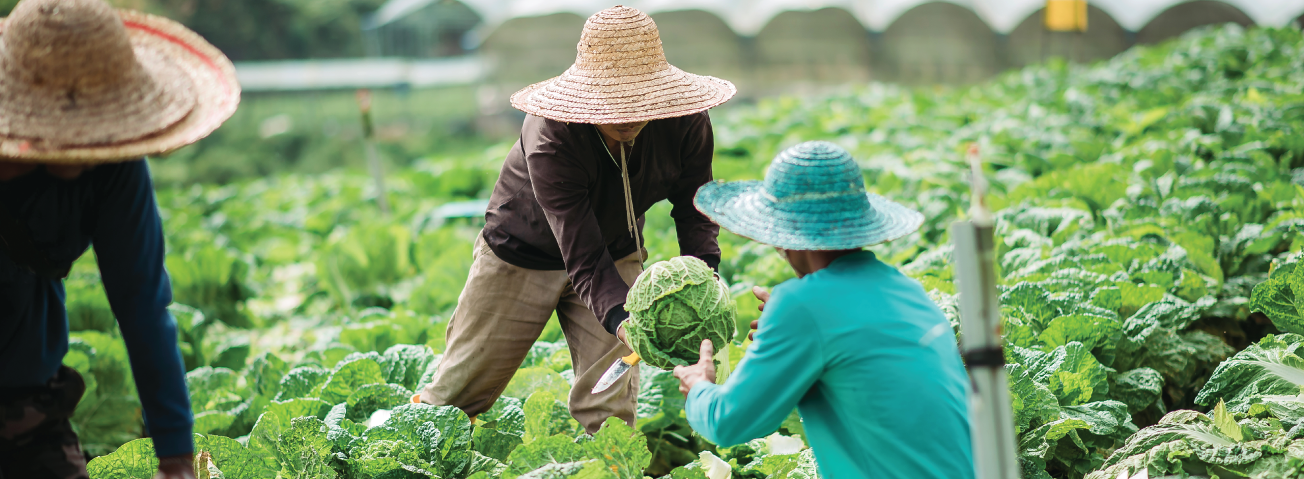

Have you ever stopped thinking about as to where the next meal or diet comes from? For most people, it’s a quick trip to the grocery store or supermarket. But behind those stocked shelves is a huge, complex universal system that is continuously under fire. Today, we are discussing about the issue of food security—a terminology that sounds academic but it is deeply personal. At its heart, food security means that all people, at all times, have the economic and physical access to enough nutritious and safe food to lead a healthy life. It’s built on four stages or pillars: having meal available, ability to afford it, along with knowing how to use it properly, and—crucially—have that sort of system that remain stable over time.
Why does this seem to matter right now? Reason is, our global food nexus or system is currently walking a tightrope. Although we produce enough food globally in order to feed everyone, an estimate of roughly 800 million people remain undernourished. As the earth warms, the “stability” pillar of food security is shaking. The big concern or question we are currently facing is: Is climate change the ultimate “boss level” hindrance to our survival, or is it just one part of a much larger, bigger interconnected puzzle?
The Climate Crisis in the Field
For a long time, we’ve all heard about the issue of global warming, but for a farmer, it isn’t just an ordinary headline, rather, it is a daily reality. Currently, the agricultural sector is arguably the most vulnerable to the change in climate because it basically relies heavily on the rhythm of the weather. Increasing temperature are perhaps the most intense direct blow. Even though a few extra degrees might sound good in a cold climate, most crops have a “breaking point.” For every 1 degree Celsius rise in temperature during the growing season, grain yields for staple food like rice can drop by a staggering 10%. Take for example, in India, pundits project that the production of wheat could drop by four to five million tonnes for every degree the temperature rises. It’s not basically about heat, though; it’s all about variability. Patterns in rainfall are increasingly becoming erratic—dry places are even getting more drier, and wet places are even seeing more destructive, intense storms.
Further to that, there are “hidden” impacts. A warmer globe is seen as an invitation for diseases and pests to migrate into new territories. Pundits believe that for every degree of warming, the level at which crop losses to insects might increase by an approximate of 10% to 25%. For the soil, it’s even suffering; intense, extreme weather results to erosion, leaching of nutrient, and that of salinization, leaving the land less fertile for future generations.
Real-World Ripples: From Russia to Pakistan
These are not just rhetoric or theories. We have seen these disastrous events takes place in real-time. For instance, the 2010-2011 season, Russia experienced a severe heatwave that literally destroyed about 30% of its grain crops, leading to a massive shock to the global economy. During that same time, on the other hand, Pakistan experienced its worst floods in 80 years, submerging one-fifth of the country, and resulted in the destruction of 14% of its cultivated land. Going forward to 2022, Pakistan was again hit by a record-shattering rainfall and floods that caused $1.3 billion in losses to the economy, mainly targeting staple like sugarcane, cotton, and along with rice. On the other hand, livestock is not even safe. For Sub-Saharan Africa, continuous droughts have been intense and devastating. Take for example, between 1998 and 1999, in the region of Borana, Ethiopia, an enormous 62% of cattle were lost due to the occurrences of drought. When animal dies, it is not just food that is los; rather, it is a farmer’s savings account and their fundamental source of income generation.
The Vulnerability Gap
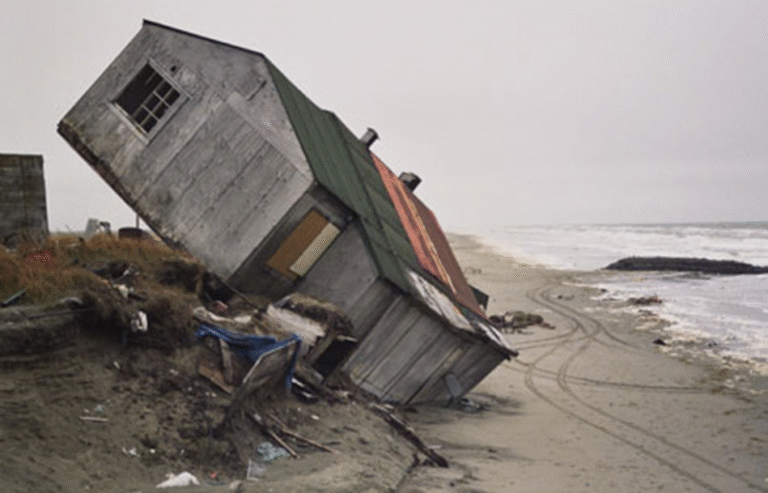
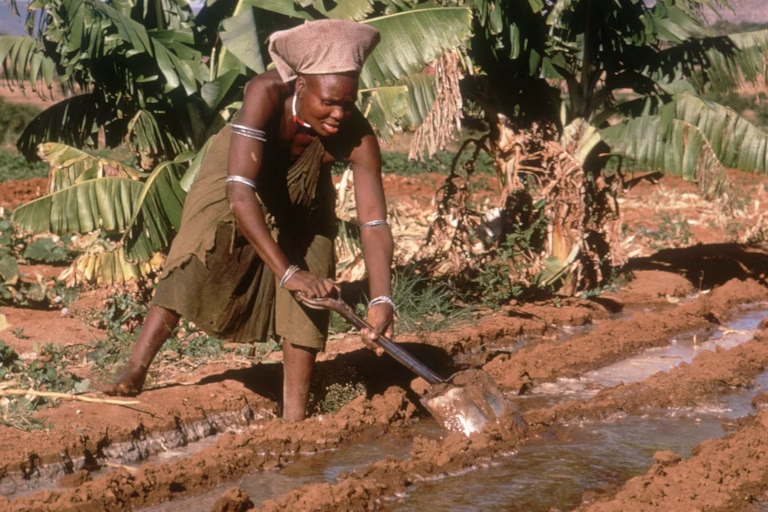
Interestingly, one of the most sobering facts is that the issue of climate change is “politically and universally stratifying”. Meaning, the people who did the least to cause the entire problem of climate change are the ones that are suffering the most. Take for instance, in developing countries across Asia and Africa, nearly 70% of the entire population significantly rely on agriculture for their livelihood. Additionally, smallholder farmers, who are into the production of about 80% of the foodstuff that are consumed in Sub-Saharan Africa and that of Asia, are mainly at the front lines. They frequently lack the appropriate resources, like insurance, irrigation systems, or high-tech seeds—in order to bounce back from a bad season. For instance, when a harvest fails in developed or wealthy nation, the prices might go up at the store. On the contrast, when it fails for a smallholder farmer, it can mean the divergent or difference between eating and going hungry.
Is Climate Change the “Biggest” Threat?
This prompt the million-dollar question. Is the issue of climate change the only thing we should think or worried about? Not exactly. Our food system is being squeeze or compressed by so many forces at once:
- Population Growth: Pundits predict that the earth population might reach 9.1 billion people by 2050. In order for everyone to be fed, there is need to increase the production of food by 70% to 100%.
- Land Degradation: Take for instance, over half of India’s land is currently suffering from some form of land degradation, such as salinity or erosion.
- Water Scarcity: Sector like agriculture utilizes significant amount of water, and as such, when rivers dry up and along with the depletion of ground water, the competition for what’s remain is becoming fierce.
- Conflict and Policy: Sometimes, the biggest or core problem isn’t basically about the weather; it’s us. Civil war, poor agricultural policy frameworks, and along with lack of investment in rural infrastructure can at times undermine food security just as fast as drought.
Therefore, in many ways, climate change functions as a “threat multiplier.” It takes existing problems—such as the scarcity of water and that of poverty—and makes them much more dangerous.
Innovative solutions: The Path Forward
So, is it all gloom and doom? Fortunately, no. There is a huge universal effort to “future-proof” our food. Hence, one of the most emerging and exciting innovations is Climate-Smart Agriculture (CSA). This isn’t just a single tool; it is seen as a technique that looks at building resilience, increase in productivity, and—whenever possible—the reduction of greenhouse gas emissions.
Here are a few techniques that are used to fight back
- Underutilized Crops: In India, for example, they currently depend heavily on just a few crops (such as maize, wheat and along with rice) for most of their calories. On the other hand, in Africa, it is a home to “orphan crops” such as groundnut, cowpea, and along with amaranth that are naturally drought-resistant and nutrient-dense. Another example is in South Africa—households that have integrated these crops have seen a staggering increase from 21% to 26% in the improvement of their water and food security.
- Technological Innovations: Interestingly, scientists are now utilizing satellite imaging and along with remote sensing in order to track the health of crops and that of predict uncertain events (like drought) before they even happen. Additionally, those that are involve in breeding of plants are now developing “scuba rice” that can survive being submerged under floodwaters for about two weeks.
- Sustainable Practices: Simple changes such as “no-till” farming, mulching, and along with agroforestry (that is, planting of trees among crops) can help in keeping moisture in the soil and can even help pull out carbon out of the atmosphere.
- Policy Support: For instance, countries such as India have created or implemented “Food for Work” programs and grain banks in order to ensure that even during bad years, the most vulnerable doesn’t fall through the cracks.
The Verdict
So, is the issue of climate change the greatest threat or hindrance to agriculture? If we look at evidence, it is certainly the most unpredictable and pervasive threat. Hence, it changes the very physics of our weather system and that of the chemistry of our atmosphere. Further to that, it doesn’t function in silo. It is part of a “vicious circle” or system of loop where population pressure, environmental degradation, and along with political instability all work together and feed into each other.
Therefore, the future of food isn’t basically a technical challenge for scientist; it is a political one for all of us. We have the rightful tools—ranging from ancient, resilient seed to that of high-tech satellites—in order to adapt. The real and critical question is whether we have that collective will that is meant to implement these solutions before the next major shock hits. When we diversify what we eat, supports smallholder farmers, and also demand climate-conscious policy frameworks, we can ensure that the issue of “food security” remains a reality for everyone, not just a luxury for the few. The plate of the future is being decided today and right now; let’s make sure there is enough on it for everyone.
Keywords: food security, agriculture.

 Noor Ul Ain
 Hassan Barrie
 Hoby Nasandratra Andriamiandrisoa
Nội dung tuyệt vời, cảm ơn bạn đã chia sẻ slot365 vip TONY06-29
Chơi tại cricfy cricket facts app thấy trải nghiệm mobile rất ổn. TONY07-08
Merely a smiling visitant here to share the love (:, btw outstanding pattern. “Competition is a painful thing, but it produces great results.” by Jerry Flint.
unlocker.ai – The Ultimate AI Tool for Bypassing Restrictions and Unlocking Content Seamlessly!
The Ultimate AI Tools for Bypassing Restrictions and Unlocking Content Seamlessly!
Sau vài hôm dùng thử hb88 uy tín số 1 , mình thấy mọi thao tác đều khá tiện lợi. TONY07-20
Perfect for anyone using iOS devices. The optimization is amazing and the gameplay is seamless. I’m sticking with iosbetslot.