
When we think about fighting the issue of climate change, our mind and thoughts often run straight to high-tech: large arrays of satellite, complicated computer models that processes petabytes of data, and the current renewable energy innovations. This is referred to as modern climate science, a massive toolkit that has given us universal understanding of how our world is warming. But there is another alternative of technology that has been silently operating for decades, one that is built on monitoring, trail-and 0error, and devoted connection with the land: Indigenous knowledge. For years, these two opposite worlds were seen as being in discord—one which is “objective” and “rational,” whereas the other is seen as “cultural/spiritual” or “anecdotal”. But, as the crisis of climate change intensifies, we are starting to note that the choice is not between storytelling and satellite data. The real issue lies in how they might work together.
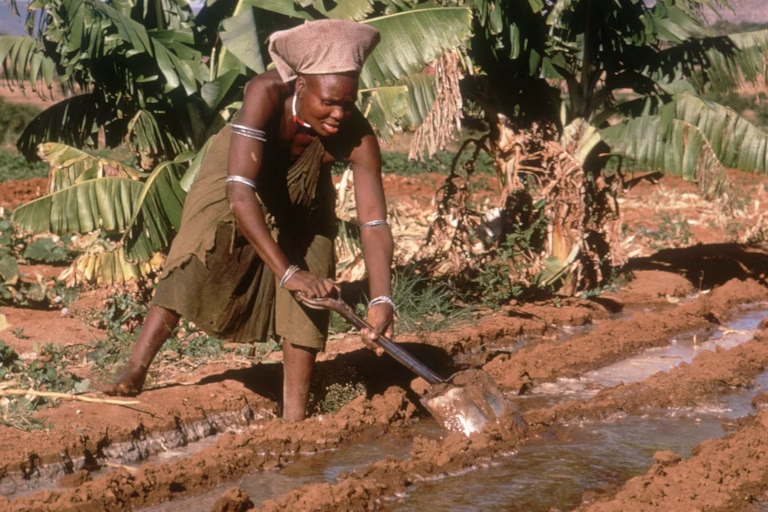
This indigenous water conservation method for farming, pictured here in 1975, is in use today as a climate smart agricultural technique. Volkmar Wentzel/Hulton Archive/Getty Images
What exactly are we talking about?
In a nutshell, modern climate science is a system of idea that heavily depends on scientific method. It utilizes numerical data, such as CO2 levels and temperature records, to construct models that forecast future trends on a regional or universal scale. It is “top-down,” frequently seeing the big picture from a far. Alternatively, indigenous knowledge (also refers to as Traditional Environmental Knowledge or TEK) is a system of knowledge that is passed down through generations within a specific community or neighbourhood. It is not just a catalogue of facts; it is an integral system that encompasses of practices, beliefs, and a moral code for how to live in peace with nature. Whereas, science looks for “global laws” that is apply everywhere, indigenous knowledge is “placed-based”—it is deep-seated in the unique history and ecology of a specific home.
The Original Adaptors
Indigenous communities are not just “marginalize population,” they are seen as the earth’s “advance security” of climate change. Even before the first weather monitoring station was constructed, these indigenous communities were spiritual and religious observers of their habitats. Historically, these indigenous people have adapted to environmental shifts that would side-lined the models we have today. For example, the African Sahel, a region that is prone to intense and continuous drought, local farmers utilize zero-tilling and natural mulching mechanisms in order to keep moisture in the soil. Similarly, in the Andes, the Quechua community resuscitate a primitive system of irrigation called waru waru to manage continuous floods and frost.
These are not survival strategy; they are rather based on a knowledgeable understanding of bio-indicators. Indigenous groups might observe the mating behaviour of some animals, the flowering of specific plants, or how stars move around in the sky in order to decide exactly when to plant their crops. Take for instance, in Bolivia, this method—commonly referred to as the Pachagrama—is often just as well grounded as scientific meteorological reports, which helps farmers to avoid huge agricultural losses.
Conflict or Compliment?
So, do these two systems of knowledge clash with each other? They definitely can. Modern is frequently reductionist, meaning it break down things into smaller parts or stages (such as single chemical reaction), while indigenous idea is based on a holistic approach, which sees everything as fundamentally interconnected (17,32). Agitation frequently comes to fold when scientific models or data does not match or relate to the lived experience of the people that is on the ground (33,34).
Nevertheless, many pundits now see them as supportive rather than contrary. Think of it this way: Science is great at know the how (like the physics of a storm or wind), whereas indigenous idea is great at looking at the why and the overall context and what impact does that storm or wind means for the food’s security of the community and the impacts its has on the local population of the fish).
A Few real-world examples of this “match made in heaven”
- The artic: Inuit farmers, hunters, and scientists collaborate together in order to study polar bears. Whereas scientists used time-series data to highlight how the ice was breaking before, Inuit elders on the other hand, presented the historical context at which bear was distributed over several generations. Collectively, they consented or affirmed how global warming constrain bears to expand their home ranges in order to find sufficient food.
- Disaster Management: During the 2004 Tsunami in Indonesia, several indigenous communities were able to survived because they had and understand traditional stories about the sea “withdrawing” wave. This pre-historic early-warning mechanism saved many lives in a way that even modern sensory could not reach in time.
- Forestry in Sweden: Indigenous farmers have used traditional rotation of crops and the planting of tress to provide shade in order to strengthens the soil and curtail infestation from pest without utilizing chemical fertilizers, resulting in building resilience that provides benefits for the whole regional ecosystem.
The Elephant in the Room: Power and Recognition
If the combination of these systems is so efficient, why are we not seeing it happening everywhere? The answer to that question frequently comes down to the concept of power and representation. Customarily, western model (science) has been seen as the “predominant” knowledge system, whereas indigenous styles of knowing were often seen and dismissed as mere “fables/folklore” or “primordial/primitive.”. Even when science apply efforts in incorporating indigenous knowledge system, it often does so in a “utilitarian” manner—utilizing the important or useful bits (such as a specific medicinal plant), whereas neglecting the indigenous community’s right or the spiritual/traditional context of that knowledge.
Also, there are concerns when it comes to intellectual property. Indigenous communities are frequently worry-and rightly so—or researchers who comes to ‘extract” their ideas in order to utilize it for commercial gains (like new drugs) without their permission or any sharing of benefits. To resolve this, we need a switch towards “collaborate outcomes” where the indigenous people are seen as counterparts or equal partners and co-authors of the research, and not just subjects/components of the study.
A Stronger Future Together
The combination of modern time precision data with real-time deep knowledge of the indigenous community/people does not just enables our climate action more “inclusive”—it makes it even stronger. Currently. Indigenous regions hold about 80% of the earth’s remaining biodiversity, despite making up small fraction of the universal population. Clearly, they are doing something in the right direction. By giving some sort of regards to the sovereignty of the indigenous people and incorporation their time-tested practices into the modern adaptation and mitigation techniques, we ought to gain a much clearer and more nuanced “toolbox” that strengthens us for survival.
This is not basically about science “validating” indigenous knowledge. It is definitely about two diverse ways of how the world is seen—the canoe and that of the ship—which are traveling side-by-side on the same river. If we can learn and agree to navigate together as partners, we might just find a way in order to weather the storm. To sum up, as we look to the supercomputer and the stars to ascertain answers for the crisis of climate change, maybe the foremost radical thing we can do is to take a look back to the earth and give a listening ear to those who have adequately cared for it for centuries. If we persist in treating our planet as a gathering of data rather than a nexus of relationship, will all the modern technologies in the globe be sufficient in order to solve a home we no longer know how to inhabit?
Key words: Indigenous knowledge, climate science

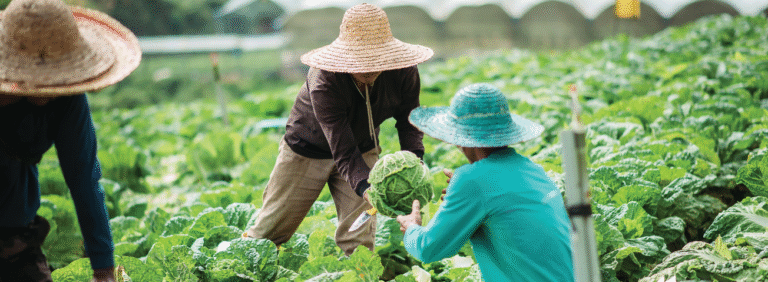
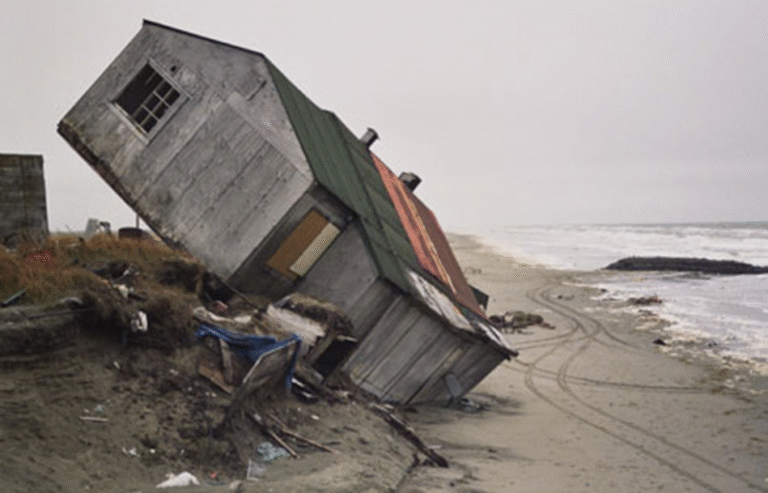

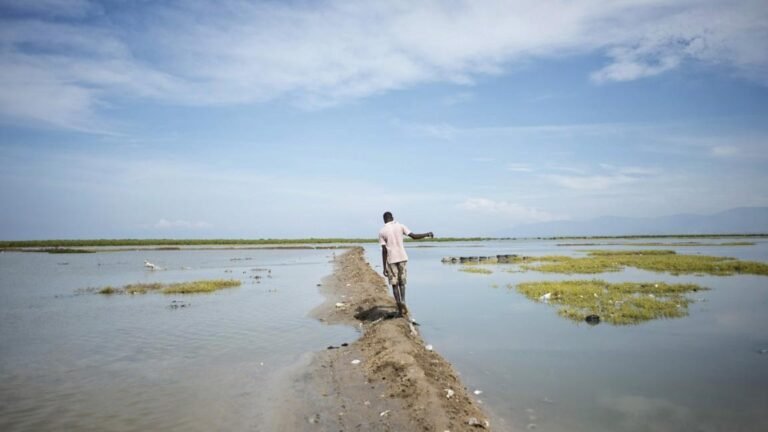
 Noor Ul Ain
 Hassan Barrie
 Hoby Nasandratra Andriamiandrisoa
Dùng thử 66b nguyễn sỹ sách p15 quận tân bình là gì vài hôm thấy tốc độ phản hồi khá nhanh. TONY05-29
Slot game tại xn88 có RTP trung bình từ 96% trở lên – cao hơn mặt bằng chung, giúp bạn tối ưu lợi nhuận lâu dài. TONY05-28
Bạn có thể xem live với hơn 200+ trận đấu siêu hấp dẫn như: 888slot login Cyber Alliance Cup, Open Fire All Stars, Demacia Cup, LCK,… Chúng tôi cho phép người chơi so sánh tỷ lệ cược trước khi vào tiền đồng thời, xem nhanh kèo từ 3-4 ngày để vào ăn được bộn tiền khi chiến thắng. TONY06-13
I really appreciate the clean layout of the login page. It makes getting into the games so much easier. Keep up the good work jiliplay888comlogin.