
To solve one of the most urgent global issues of our time, scientists, media and policymakers are addressing climate change and communicating its risks often through scientific evidence and policy instruments such as technical graphs, scientific reports, policy goals and international agreements. The effects and threats of climate change are already widespread on human societies, ecosystems and biodiversity, according to the IPCC (2023).
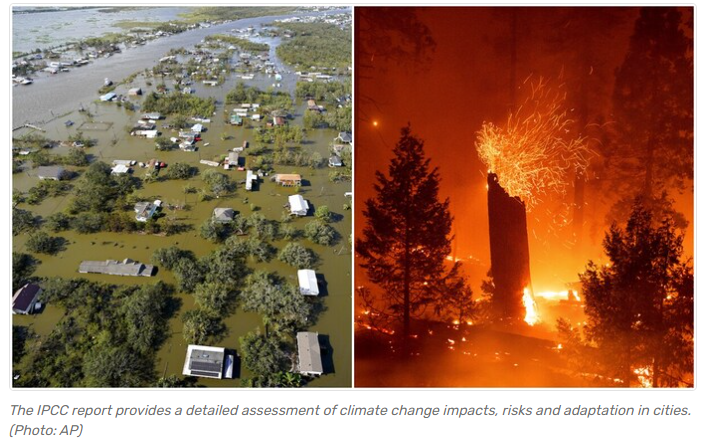
Figure 1. UN IPCC report warned about the consequences of climate change.
Climate communication, however, is limited, and weak, if it remains in the realm of technical talk and fails to consider how humans experience climate change in their everyday lives. Climate change is not always experienced by communities (especially the urban communities in the village) in terms of 1.5°C warming or net zero emissions. It is experienced as a lack of rain, loss of crops, increased flooding, changed fishing seasons, loss of land, food insecurity and absence of customary natural markers. Thus, it is important to consider the use of Indigenous and local knowledge in climate communication.
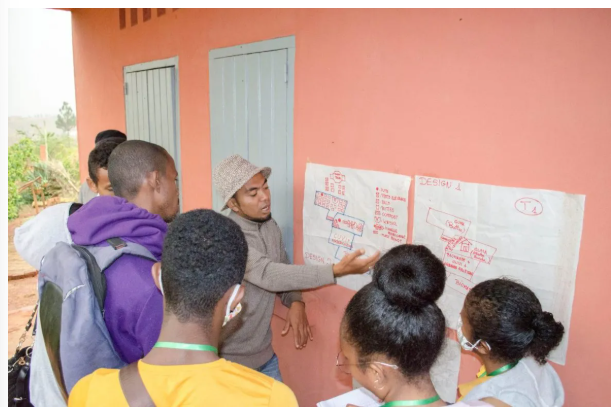
As part of their contribution to climate action, understanding, adapting to impacts and encouraging mitigation efforts of climate change is really important for the Local and Indigenous knowledge systems. These knowledge systems are not however, the mere traditional practices. These are cultural practices encompassed in knowledge of the environment gained from long experience, memory, language, farming, fishing/fluvial practices, forest use, spirituality and community practice. Indigenous Peoples are also known for having unique knowledge and practices that could provide effective solutions to climate change, such as sustainable farming and climate-resilient water management. So, it’s not only about communicating science to communities; it is also about interacting and clearly explaining to them in a way that they would understand it. It should also include the ideas of listening and paying attention to communities as holders of knowledge.
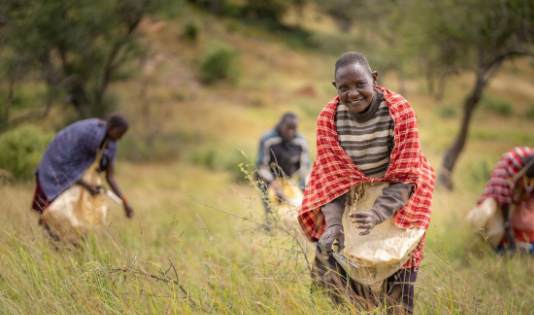
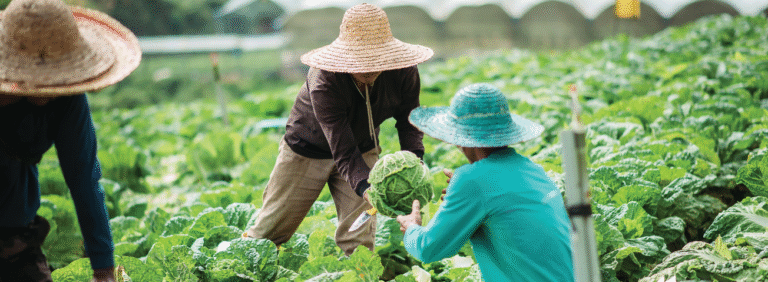
Previous research has validated the impacts of climate change on Indigenous peoples and local communities in their social and ecological systems. Indigenous Peoples and local communities have been found to face ongoing impacts from climate change that affects many of their aspects of their lives, including livelihoods, ecosystems and their culture. The local community may be able to notice environmental changes first and more closely than do organisations or national institutions. They know when it rains late, when a flower comes out at another time, where fish go to other places, or where a forest is not as before. Such observations can help to bring communication of climate to life, by connecting local observations with global climate.
The need for this topic is driven by a large gap in climate communication. There is still a lot of climate messages that goes from top to bottom. Experts speak. Governments announce policies. Reports are made by international organizations. Then, communities are informed and expected to understand and obey. However, the choice of this approach can be ineffective as it neglects to consider the local people as active and main participants and instead treats them as passive recipients of information, that makes climate change abstract, distant and foreign for them. The situation is worse in the Global South where a majority of the communities are already poor with insufficient infrastructure, historical injustice by emitting less, and lack confidence in the government. So, for them to perceive climate action as meaningful or fair, communication should be relevant to their daily lives and lifestyles.
Indigenous/local knowledge is should not be added as a minor supplement to climate communication. Instead, it should be integrated and valued, particularly for communities in need. The central research question is then: How can Indigenous and local knowledge contribute to the climate communications in the Global South? The advocacy for the use of Indigenous and local knowledge in climate communication is then based on the idea that the messages should be more local, more trusted, culturally meaningful and more action oriented. This knowledge, however, should be applied in a respectful, consensual and protecting manner. It should not be taken from communities and be used without giving them power in decision making.
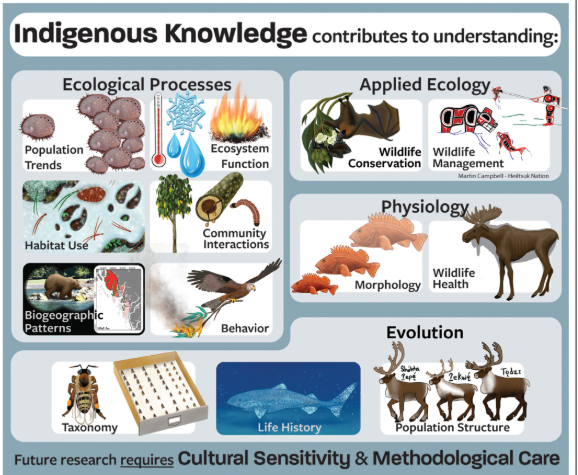
First, the Indigenous and local knowledge makes the communication of climate more accessible. Numbers and models are prevalent in climate science. These are required, but they can seem very technical and far from daily life. Local knowledge then should help climate change to be more visible, easier to remember and discuss. Traditional and Indigenous Knowledge (TIK) supports weather forecasting, seasonal change detection, climate variability management and climate risk response to the communities in Eswatini. This demonstrates the potential of local knowledge to serve as a link between scientific alert and daily practice. The weather forecast might state the rainfall will be postponed. Local knowledge can be used to describe the meaning of this in terms of planting, food storage, water consumption and community preparation. Communication is not effective just when information is delivered but only when people are able to understand and use it. For example, one farmer may not be particularly insightful to a more generic message about climate change but they can relate more when it comes local signs, crop cycles, soil conditions, or community memory because those are the closest to their lifestyles. In this way, Indigenous and local knowledge helps communication to be less abstract. It provides a local face to climate change and also enables them to understand that climate action is not just a government initiative or an international issue. It is part of the land, food, culture, and survival protection.
Secondly, it participates and helps a lot for improving trust. When people do not trust the speaker, any correct and relevant messages from a ministry, international organization or outside expert says make them feel excluded included in decision making. Trust can be enhanced by the use of indigenous and local knowledge resources which are from people living within the community. There can be different kinds of knowledge that are cherished within their own social context by elders, farmers, fishers, local leaders, women and youth. Incorporating these voices in the communication of climate change makes the message more of a conversation than an order from outside.
Specifically, trust is important in the context of climate adaptation. Adaptation means changes to practices and/or preparedness for risks or acceptance of policies. A lack of faith in the message, they reject and it but if they trust the messenger, then they may listen. A critical aspect has then been emphasized on how incorporating Indigenous knowledge into climate adaptation planning will require time, not just collecting it quickly for a report and then forget about it, sensitivity, empathy, and ethical considerations should all be respected and valued. It ought to be one component of a prolonged connection, the better people feel about their knowledge being respected and not extracted, the stronger the communication about the climate is.
The third contribution is its cultural meaning. Climate change is also a cultural issue as it changes the people’s relationship with the land, water, ancestors, memory and identity. Not all the losses are monetary, culture can also be sacrificed through deforestation, losing their river, species or sacred places. It has been explained that the local reports can be utilized to help identify the economic and non-economic loss and damage of Indigenous Peoples and local communities. This is particularly important for climate diplomacy as finance, emissions and technology are important concerns in international climate negotiations. The questions and issues are important, but they are not the whole story. Dignity, identity and justice are a required topic of climate communication. Local and traditional knowledge can thus help to make climate information more human. It can prove that climate change is not only what’s in the air. It’s also about houses, songs, rituals, food systems, about family histories and the right to live in a meaningful place. This is nearly the concept of climate justice. The vulnerable communities are not only a victim of climate change. They are also knowledgeable, and political actors. If they are not there, the climate communication is recreating the inequality which has led towards the climate crisis in the first place.
And lastly, its fourth contribution that is going to be discussed about is enhanced policy action. Awareness alone isn’t enough. It should inspire decision makers and stimulate institutions to get moving. The use of indigenous and local knowledge in policy development can also be further enhanced, given the potential of indigenous and local knowledge to supplement national knowledge. A case study conducted in South Africa shows that the use of Indigenous knowledge in the context of local realities and planning process can be relevant to local climate adaptation and planning. This reinforces the notion that local knowledge is not in opposition to science. It is one that can take a seat by the side of science to aid in making more informed and meaningful decisions to address climate change.
This is particularly relevant for the Global South where many national and international climate policies are of a national or international nature but are translated into the local areas. A good idea on paper that doesn’t work in practice may be a bad idea on the ground. For example, a warning system that is not given in the local language won’t work. Conflict can arise when a relocation policy does not take into account cultural connection to land. Failure to consider local crop knowledge could be a failure of adaptation programme. In such situations the issue is not just about the technical aspects. It’s also communicative. If Policy won’t listen, policy won’t work.
Indigenous and local knowledge, however, pose challenges and risks for its use. It should be useful and valuable, but it should not to be regarded as a fixed and idealised historical fact. Several of the traditional indicators are no longer reliable with the changing climate. The NAP Global Network stated that Traditional and Indigenous Knowledge (TIK) can affect the accuracy of weather forecast due to many alteration that are currently been hard to predict so further research and learning is then needed. It also implies a careful combination of knowledge systems in the process of climate communication. A close connection between scientific information and the local knowledge should exist, and the two should correct and reinforce each other.
Another dangerous risk is that governments, researchers and international organisations can use Indigenous knowledge without the consent, recognition or benefits-sharing towards them. This can be a form of another injustice. Indigenous and local knowledge on climate mitigation should be approached in ways that are sensitive to Indigenous peoples and their rights must be respected. It is quite significant to emphasize that they should not be used as free data for outside supports and expertise. Communities need to have control over the dissemination, interpretation and application of the knowledge which can be related to the subject of climate diplomacy.
At the international level, the UNFCCC Local Communities and Indigenous Peoples Platform support the sharing of experiences and good practices in climate action in a comprehensive way. During COP29, the Baku Workplan also emphasized the need for involvement of the knowledge, values and contributions of Indigenous Peoples and local communities in inclusive climate action. The developments show that indigenous and local knowledge is not only a local issue anymore. Now, it has been integrated into the world, into the global climate governance. Yet this is an international recognition that has to become a powerful force on the ground, at the local level. Inclusion in climate diplomacy will not be sufficient if they continue to be left out of projects that affect their lands.
To conclude, Indigenous and local knowledge can significantly contribute to making climate change more understandable, trustworthy, more culturally relevant and more actionable when it comes to communication. Climate communication is more effective when it is anchored in local knowledge and not in scientific knowledge, and if it is ‘downward’ to the Global South. Communication should not be a unidirectional communication from experts to communities. It should be a two-way message where science, lived experience, culture and justice meet.
The purpose of this blog is not to provide in-depth information about a particular country or community, but about IK (Indegenous Knowledge) in general. The author recognizes that there are differences among Indigenous Peoples and among local communities in terms of their historical past, political rights, and the language(s) they speak and relationship with the state. More research and development in different countries especially in the Global South is then required to understand the differences in the use of Indigenous and local knowledge in communicating climate change. Finally, further studies are needed on the role of climate institutions in safeguarding community ownership of knowledge while enabling that knowledge to inform public policy, as the future of climate diplomacy depends on it, rather than relying on who speaks for the planet. It should also pose the question, who has been listening to the planet for generations.
Keywords: Indigenous knowledge, Local knowledge systems, Climate communication, community participation, Global South
References
Chanza, N., Marambanyika, T., & others. (2024). Overlaps of indigenous knowledge and climate change mitigation: Evidence from a systematic review. Frontiers in Climate.
Ciocco, T. W., Chief, K., Meadow, A. M., & others. (2024). Indigenous knowledge in climate adaptation planning: Reflections from initial efforts. Frontiers in Climate.
Intergovernmental Panel on Climate Change. (2023). Climate Change 2023: Synthesis Report.
Muchaku, S., Magaiza, G., & Hamandawana, H. (2023). Translating Indigenous Knowledge into actionable climate-change adaptation strategies: A case study of Maluti-a-Phofung Local Municipality, Free State Province, South Africa. Sustainability, 15(2), 1558.
Reyes-García, V., Fernández-Llamazares, Á., McElwee, P., & others. (2024). Indigenous Peoples and local communities report ongoing and widespread climate change impacts on local social-ecological systems. Communications Earth & Environment.
Tfwala, S., Mabaso, S., Groenewald, M., Khumalo, K., Matsebula, S., & Sibandze, G. (2023). Traditional and Indigenous Knowledge for climate change adaptation in Eswatini. NAP Global Network.
United Nations Development Programme. (2024). Indigenous knowledge is crucial in the fight against climate change: Here’s why.
United Nations Educational, Scientific and Cultural Organization. (2025). Local and Indigenous Knowledge Systems and Climate Change.
United Nations Framework Convention on Climate Change. (2024). Local Communities and Indigenous Peoples Platform.
United Nations Framework Convention on Climate Change. (2024). COP29 adopts Baku Workplan to elevate voices of Indigenous Peoples and local communities in climate action.

 Reston Dennis Juah
 Noor Ul Ain
 Hassan Barrie
777 always feels lucky and I must say this place delivers on that energy. The interface is clean and I never get lost trying to find my favorite games. Deposits land instantly and I love how transparent the bonus terms are written out. mmmay777
Heya i’m for the primary time here. I came across this board and I to find It really helpful & it helped me out a lot. I hope to provide one thing back and aid others such as you helped me.