
Corruption remains as a main issue mostly faced by countries in their development, particularly within the public sectors especially in the Global South where weak public trust, poor quality of public services and the cost of decisions they were not responsible for, are some of the major development challenges. Therefore, many of these countries are often rated as being poorer than the global average. Furthermore, corruption is also a significant problem in climate communication diplomacy because public funding, international finances, and institutional trust are essential for effective climate action. Good and well-structured policies on papers would still fail for implementation if climate funds are distributed late, or controlled by few powerful communities for their own special interests or used with lack of public transparency (Transparency International 2025).
Corruption can then be considered as an obstacle to climate action, as it results in the lack of funds, rules and public decisions on climate. Communication, as evidenced in past studies and policy documents, is not only a tool for spreading information, but can be a power to expose injustice and dishonesty. Media, including social media, can hold public and private actors to account and demand transparency. The Open Government Partnership also notes that the use of digital technologies for can support for transparency, participation and accountability as part of open government reforms. Beyond entertainment, social media can influence many important fields such as education and turn into a public forum for the citizens to expose abuse, share evidence, pressure leaders, and create collective anger against corruption. Which can be aligned with efforts to fight and solve the political reality of the Global South that suffers from weak accountability systems, limited press freedom, unequal access to justice and strong patronage networks. But in such an environment, it’s not that people are unaware about corruption. People know in many cases but don’t have a safe avenue to report it. This all changes with social media, which provides a quicker and cheaper alternative for people to publish information. A video, a post, a screenshot, or hashtag can be the key to detect corruption easier and faster, transforming a local problem into a national or even international issue. If corruption exposed publicly, its political cost might go up. One example that could represent this well is the case of the ‘gen z’ protest that has carried and spread all over the world through digital activism, led by young generation for a better future and fight corruption, economic insecurity, exclusion from political power, dissatisfaction with institutions.
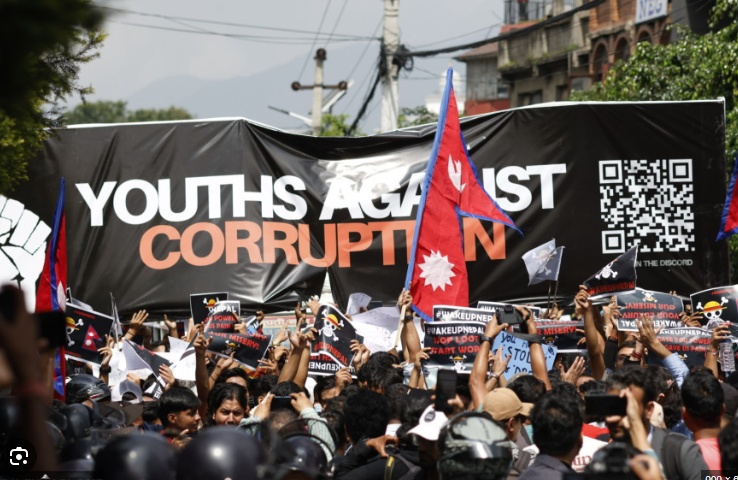
Social media has the potential to be a force against corruption but it can’t be a substitute for it. Its impact depends on its connection with offline institutions such as independent journalists, civil society organisations, anti-corruption organisations, public complaint mechanisms and courts. Without this, social media can trigger public angers and disappointment without necessarily taking anyone responsible. So, the main research question is: How can social media be utilized as an instrument to fight corruption in Global South countries and how can it make corruption visible?
This blog argues that social media has a role to play in combating corruption by generating public pressure from the private suffering and this is only effective when coupled with legal, institutional, and political action. People in many Global South countries suffer from corruption in daily life through public services, local permits, public procurement, police services, education or health systems. Things like these used to be personal without the exposure of social media. There were complaints to families or neighbours that was not heard and widely shared in society. The scale of visibility alters and increase with social media that can be used as evidence of bribery, poor public services, abuse of power or any other aspect that can be shared by a person and information can be circulated rapidly across networks. Corruption tends to be more tolerated in environments speed bureaucratic processes, so quick citizen posting can lead to loss of control over the narrative by officials. This exposure is significant because it develops what can be called public pressure as corrupted actors typically rely on secrecy, fear and social acceptance.
If people think the practice of corruption is “normal”, they might decide not to put up a fight against it. Social media can undermine that sense with the idea that there are others that are upset about the same thing. UNODC teaches citizens how to resist corruption by reporting on it to authorities or through the media, and by helping to promote a culture of integrity through campaigning. This implies that by using social media, a single grievance can become a movement and a person’s story comes to a public conversation.
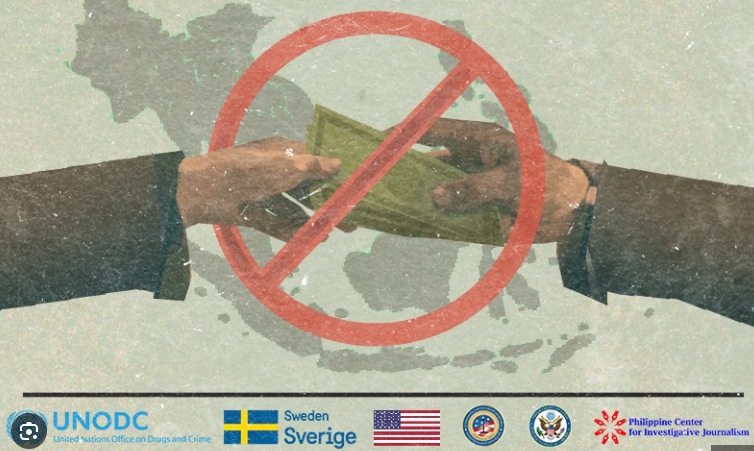
Figure 2. Southeast Asia journalists launch anti-corruption network and get supports by UNODC
However, this exposure only, or a viral post that can bring shame to a public servant would not be enough for justice. It doesn’t necessarily invite investigation, punishment or reform. Many of the digital anti-corruption initiatives fall apart and study on the issue of social accountability indicates that information shared and published is not always sufficient. The power of citizen voice is strengthened when it is accompanied by organized action and state response. Social media might be pointing to a problem, but institutions need to do something about it, otherwise organizing anger online may either fade away within a few days or take another form, and corruption may go on.
Apart from that, social media plays a role in mobilisation because it can unite people on a topic, particularly in young people, activists, journalists and civil society organizations. It can assist them in arranging petitions, protests, campaigns and public conversations. A research study in Ghana claims that social media has the power to reveal corruption, expose offenders, mobilize citizens and push for accountability. This is crucial for the Global South as distance, cost, fear and distrust may make it difficult to participate in formally organized politics. Some of these barriers are decreased by social media. No one has to be in the capital to participate in a national debate. They may attend from villages, small cities, universities or from migrant communities overseas.
Climate diplomacy is also not spared the need for mobilisation, it is typically perceived as a process involving diplomats, ministries and international institutions, which require domestic legitimacy for climate policies. Putnam’s idea of 2-level games reminds us that international negotiations also have a domestic political dimension, as they are not only shaped by governments but domestic actors as well.
For example, when the citizen is posing questions about the climate action: where is the climate money going and who is benefiting from adaptation projects, and whether vulnerable communities are really included. Social media can thus bridge the local accountability to promises for global climate. It asks a very basic but fundamental question – why does a government take up climate finance on behalf of vulnerable people and still they are not in the decision-making process? Public education can be on of social media function as well. Corruption is not always obvious as it may be embedded in technical terminology, budgets, procurement processes, or legal processes. Social media can render a complex issue into a more simplified message. It can provide explanations for a damaged road, a failed flood project, or lack of public service, alleging that it is connected with corruption. The role of e-government and social media in promoting openness and anti-corruption lies in enhancing access to information and setting expectations for transparency. If citizens cannot comprehend the uses of public funds, they will have more trouble recognizing misuses of public funds.
However, it is important to emphasize that social media has its disadvantages. First, not everyone is equally connected and knows how to use the internet and/or has safe places to it. In many Global South countries, there may be other barriers to digital participation among older adults, women, and poorer with rural communities. This means that not everyone’s voice will be heard while some voices maybe amplified more clearly via social media. The fight against corruption is therefore occurring in a context where attention is often focus to those that can have easier access to internet and more educated in digital literacy but last to be aware of corruption impacts may be those who are most affected by it. The same goes with many issues of climate communication, the people who are most affected by climate risks don’t always show up in the public debate.
Thus, information presented on social media can also be incorrect or less accurate. One wrong charge can ruin a man’s reputation without examination of evidence. The political elites can also use this opportunity to attack opponents, protect corrupt networks from possible liability or even blinding and diverging people from real issues into entertainment. The transformation of media and information access then may have good and bad consequences for governance which risks polarization and conflict. However, this should not replace formal investigations. Instead, it should be able to facilitate evidence-based accountability. Fact-checking, independent reporting, secure whistleblowing systems and fair procedures should be included in anti-corruption systems with proper management because anti-corruption communication can turn into political noise.
Social media can also be a risky medium for the people involved, those who expose corruption can be threatened, targeted for online harassment, subjected to legal intimidation or actual violence. This is particularly critical in nations with influential leaders in the local politics or security apparatus. As a result, there is a need to provide protection systems for social media activism. Citizens should not be put at risk of revealing corruption without adequate protection. Reporting of abuse should be made easier and safer, for example through anti-corruption agencies, civil society organisations and the media. Article 19 argues that ccess to information is essential for combating corruption, and public participation is a key element of the framework for fighting corruption according to the UN Convention against Corruption. This demonstrates that social media should not become a risk factor for the rights of ordinary citizens but should instead, be incorporated into a broader rights-based framework. These limitations show that the greatest strength of social media is not to “fight corruption” by itself, but to open the door to accountability by increasing the visibility of corruption, raising the cost of ignoring it, and connecting citizens with journalists, NGOs, and reformers.
We must then understand that the ultimate outcome depends on what goes on after the post appears. Investigates an anti-corruption agency? Is the case verified by the media? Are there questions asked in parliament? Is the court just? Does the government publish information? Does the public continue to pay attention once the # has gone? The questions illustrate that social media is just part of a greater chain of accountability. This is crucial for countries in the Global South since corruption and climate vulnerability tend to co-locate in the same communities. The poor communities are vulnerable to floods, drought, poor housing, weak infrastructure, and bad public services. Where corruption gets in the way of climate adaptation projects, those communities are vulnerable twice. When they experience risk and facing the climate crisis, they experience it again when adaptation funds fail to reach them. Transparent and accountable climate finance is required to boost the value of climate investments. Social media can complement this by allowing citizens to pose practical questions regarding the climate budget, the project selection, the relocation plans, disaster assistance and public consultation. So, the answer is evident: social media can contribute to reducing corruption in the Global South but can’t solve the corruption problem on its own. It helps to break silence, disseminate information, activate citizens and help make abuse visible to the public. However, a lack of information is not the only source of corruption. Lack of institutions, elite protection, poverty, fear, and unequal power are also responsible for it. Social media is relevant when there is real-world accountability behind its presence. Therefore, social media can make corruption more difficult to be covered up, but only institutions and organised civic pressure can make corruption more difficult to be repeated.
Keywords: Social media accountability, Anti-corruption, Digital activism, Institutional transparency
References
ARTICLE 19. (2022). Using access to information to combat corruption. https://www.article19.org/wp-content/uploads/2022/12/UNCAC-Guide-FInal.pdf
Asomah, J. Y. (2025). Is social media a helpful communicative tool in combatting corruption in developing countries? Evidence from Ghana. Communication and the Public, 10(3), 177-196.
Bertot, J. C., Jaeger, P. T., & Grimes, J. M. (2010). Using ICTs to create a culture of transparency: E-government and social media as openness and anti-corruption tools for societies. Government Information Quarterly, 27(3), 264–271.
Fong (2025), How global gen z have shocked and transformend governments. Council of Foreign Relation
Fox, J. A. (2015). Social accountability: What does the evidence really say? World Development, 72, 346–361.
Open Government Partnership. (n.d.). Actions for transparent and accountable digital governance.
Putnam, R. D. (1988). Diplomacy and domestic politics: The logic of two-level games. International Organization, 42(3), 427–460.
Transparency International. (2025). Corruption Perceptions Index 2024.
Transparency International. (2025). How corruption undermines global climate efforts.
United Nations Development Programme. (2018). The truth and nothing but the truth.
United Nations Development Programme. (2024). Enhancing transparency and accountability of domestic public climate finance.
United Nations Office on Drugs and Crime. (n.d.). The role of citizens in fighting corruption.
United Nations Office on Drugs and Crime. (n.d.). The role of the media in fighting corruption.

 Reston Dennis Juah
 Noor Ul Ain

 Hassan Barrie
Had a lucky streak yesterday and the bonuses were a nice touch. If you are looking for a reliable place to play just go with inyuno777.
I have tried many platforms but this one feels the most stable. Everything from login to withdrawal is seamless. Highly recommend 10jilicccasinologin.
Hiya very cool web site!! Guy .. Excellent .. Amazing .. I will bookmark your blog and take the feeds alsoKI am glad to find a lot of helpful info right here in the put up, we’d like develop extra techniques in this regard, thanks for sharing. . . . . .
Registering my account took less than a minute. It is great to see a platform that values the users time. Sign up at 32jililoginregisteronline today.