
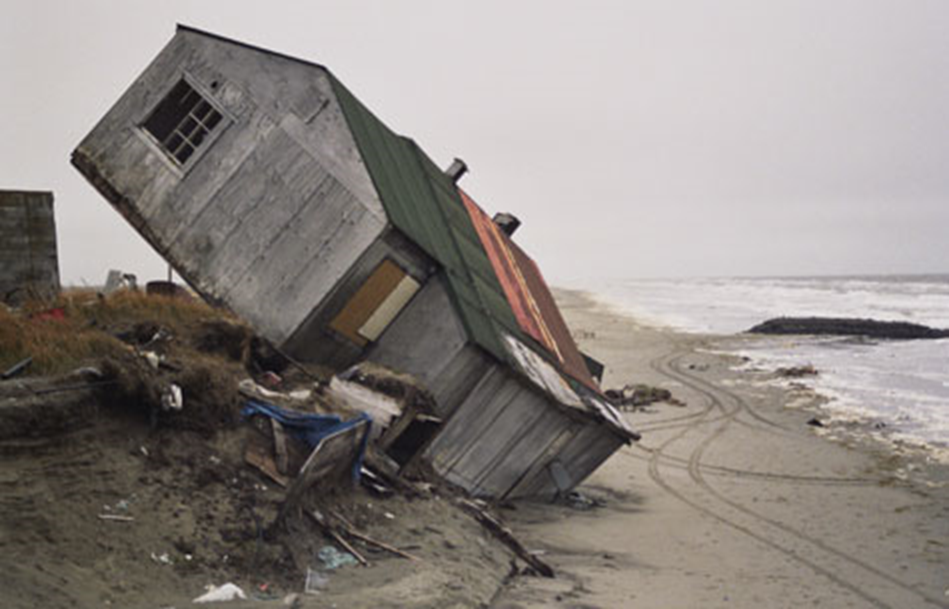
Imagine waking up and realizing that the ocean is no more a scene backdrop, but rather a silent encroacher at your doorstep. For thousands of inhabitants that reside along Liberia’s coastal cities, this is not metaphorical—it is a daily, continuous, and heart-wrenching reality that is unfolding. Coastal erosion, frequently depicted as the wearing down or washing away of land by the sea/ocean, is swiftly altering the geography of our world. Although it is a natural occurring process, it has accelerated into a universal climate change crisis that endangers the 40% of the earth’s population that are living within 100 kilometres of a coastline. For example, in the West African nation of Liberia, two major cities—the capital, which is Monrovia, and that of the port city of Buchanan—is seen as a “canary in the coal mine” for susceptible coastal urban centres everywhere. Their case is one of a dangerous tug-of-war that is between human survival and rising tides, presenting or highlighting meaningful lessons on adaptation, resilience, and the high cost of inaction.
The Perfect Storm: Why the Sea is Winning
Coastal erosion is becoming a paramount climate change obstacle because it is no more just about the moving around of sand; it is rather, about the disappearance of land forever. This problem is enforced by a “perfect storm” of climate change and interference from human. As the earth temperature increases, glaciers are melting and ocean waters are expanding, which leads to an increase in seal-levels. In the context of Liberia, commentators project that a one-meter rise in sea level might submerge or inundate 95 square kilometres of land area.
Meanwhile, the sea is not the only problem. The activities of humans are significantly igniting the situation. In Liberia, illegal mining of sand is a huge problem; sand functions as a natural gatekeeper or barrier between sea and land, and when it is removed and used for the purpose of construction, the coastline is left vulnerable, defenceless, and susceptible to flooding. Additionally, the destruction of mangrove forests, which is seen as a “coastal engineer” that traps sediment and break wave energy, has left coastal communities vulnerable to the full force of the Atlantic Ocean. Even infrastructure projects that seems effective, such as harbour breakwaters, have unknowingly “starved” certain beaches of sands, in turn, leading them to infiltrate even faster or quicker.
Monrovia’s Frontline: The Despair of West Point
The city of Monrovia stands at the epicentre of this crisis. Nowhere is the effect more seen or visible than in the slum community of West Point, a densely populated neighbourhood that is built on a low-lying peninsula. In just ten years, the total population of West Point has decreased from the sum of 85,000 to that of 50,000 as the sea has literally eaten away significant portion of the land. The stats are astonishing; an estimate of over 30 meters of coastline have been lost, which have destroyed more than 670 homes and leaving thousands of inhabitants homeless. But these are not just basically homes or houses, but instead, they are lives. Inhabitants have been seen their health facilities, schools meant for learning, and even the community’s only football pitch vanish beneath the waves. Many see the ocean as both their source of providing food and also their destroyer, which seems ironical.
Nearly fifty percent of residents in West Point depends on fishing, yet as the sea level rises, encroaches, and stocks of fish decline due to warming waters, their fundamental source of income is degrading away. Testimonies from the community is alarming. One inhabitant who has fished for nearly thirty years and has built two houses with earning from fishing, laments how the same sea that put food on his table ultimately returned to “break his house”. This displacement generates a class of “climate refugee” who frequently have nowhere to else to live or moved to, in turn, resulting into a deeper psychological stress and extreme poverty.
Buchanan: A City Under Siege
Buchanan, one of Liberia’s most vulnerable coastal cities, tells a synonymous story. As a key port city, its economic significance to the country is essential, yet its infrastructure is continuously under threat from the presence of the Atlantic Ocean. Erosion here has damaged vital road networks, and hampers vital maritime trade routes. In Buchanan, as in the capital, Monrovia, the government of Liberia has swiftly proposed and responded with the idea of “hard engineering” solutions, which is rock revetment walls. Whereas these proposed solutions present short-term solution or reliefs and have been embraced by inhabitants who were constantly losing their houses, they come along with a catch. These proposed structures are capital intensive, which requires persistent maintenance, and frequently derail the natural appearance of the beaches. To add, they can at times enforces the problem of erosion further down the coast, safeguarding one neighbourhood at the expense of another.
The Human and Economic Toll
The impacts of coastal erosion penetrate through every segment or layer of society. Going beyond infrastructure and that of housing, there is an emerging health crisis. Flooding that occurs in these communities are often mix with raw sewage, resulting to outbreak of water-borne diseases like diarrhoea and cholera. Women and children are seen as the most vulnerable group in this scenario; for instance, women, who primary responsibilities are to manage household and along with smoking of fish by using mangrove wood, faces increased workloads and that of health risks as these resources disappear. Also, livelihoods are being forcibly shifted. Take for instance, some fishermen, which are unable to catch fish for survival, have paradoxically turned to the illegal mining of sand as a new means or source of income generation, further exuberating the very erosion that is destroying their houses. Therefore, it is vicious cycle of survival that demonstrates the desperate need for alternative livelihoods.
The search for solutions
Currently, the governance structure of Liberia’s coast is frequently seen as a top-down approach. Most decisions are often made in response to disasters rather than through proper long-term planning. Hence, there is a growing realization that “quick fixes” are not enough.
- Moving Toward Integrated Management: Pundits are proposing for an Integrated Coastal Zone Management (ICZM) plan. This would consist of a holistic approach that will bring together array of stakeholders, which include scientists, officials of government, and along with coastal dwellers themselves. Presently, many inhabitants are not aware of policies frameworks that are affecting them, some even relates the rise of sea levels to superstitions rather than climate change. Closing this gap in awareness is essential.
- Hard vs. Soft Engineering: Even though rock walls (that is, hard engineering) are the present standard in Liberia, there is a proposal that is meant to explore other measures, which is considered as nature-based solutions. This consist of the restoration of mangroves and that of the stabilization of sand dunes. These sorts of methods are frequently seen as more sustainable, less-expensive in the long-run, and also provide additional benefits like the improvement of fish habitats and that of carbon storage. Hence, the challenge in this regard is that, mangroves can take up to ten to fifteen years in order to gain maturity, and in turn, government often lack the patience, or the funding that is needed for such long-term projects.
- The Contentious Issue of Relocation: The government of Liberia has made attempt in evacuating residents that are residing in high-risk areas like West Point, but these efforts frequently failed to yield fruition. Why? Reason is, many prefer the risk of the sea to that of the risk of losing their livelihoods. By relocating a fishing community to inland, away from water, can be seen as a “death sentence” for their economy. Any successful relocation should include proper and decent housing facilities and a way for residents to continue earning a living.
The Takeaway for the World
These lessons or stories from Buchanan and that of Monrovia shows a clear manifestation: vulnerability is not just about geographical fact; it is a choice of policy. Other coastal cities around the globe should learn that waiting for disaster to act is the most cost-intensive strategy possible. Hence, we must stop the habit of seeing the issue of coastal erosion as merely a technical engineering problem and start to view it as an environmental, economic, and along with social challenge. This means the enforcement of regulations against the mining of sand, investing in nature-based defences, and along with the involvement of local or indigenous communities in every step of the planning process. Therefore, the Atlantic Ocean is a powerful force, but it is not the only one. Through collaborative action, support from the international community, and along with a commitment to sustainable development, we can make sure our cities that are situated in coastal areas don’t just survive the tide—but in turn, learn to live in harmony with it. The clock is ticking, and for coastal cities like Buchanan and Monrovia, the future is arriving one wave at a time.
Keywords: Monrovia, Buchanan, Coastal erosion



 Noor Ul Ain
 Hassan Barrie
 Hoby Nasandratra Andriamiandrisoa
+ There are no comments
Add yours