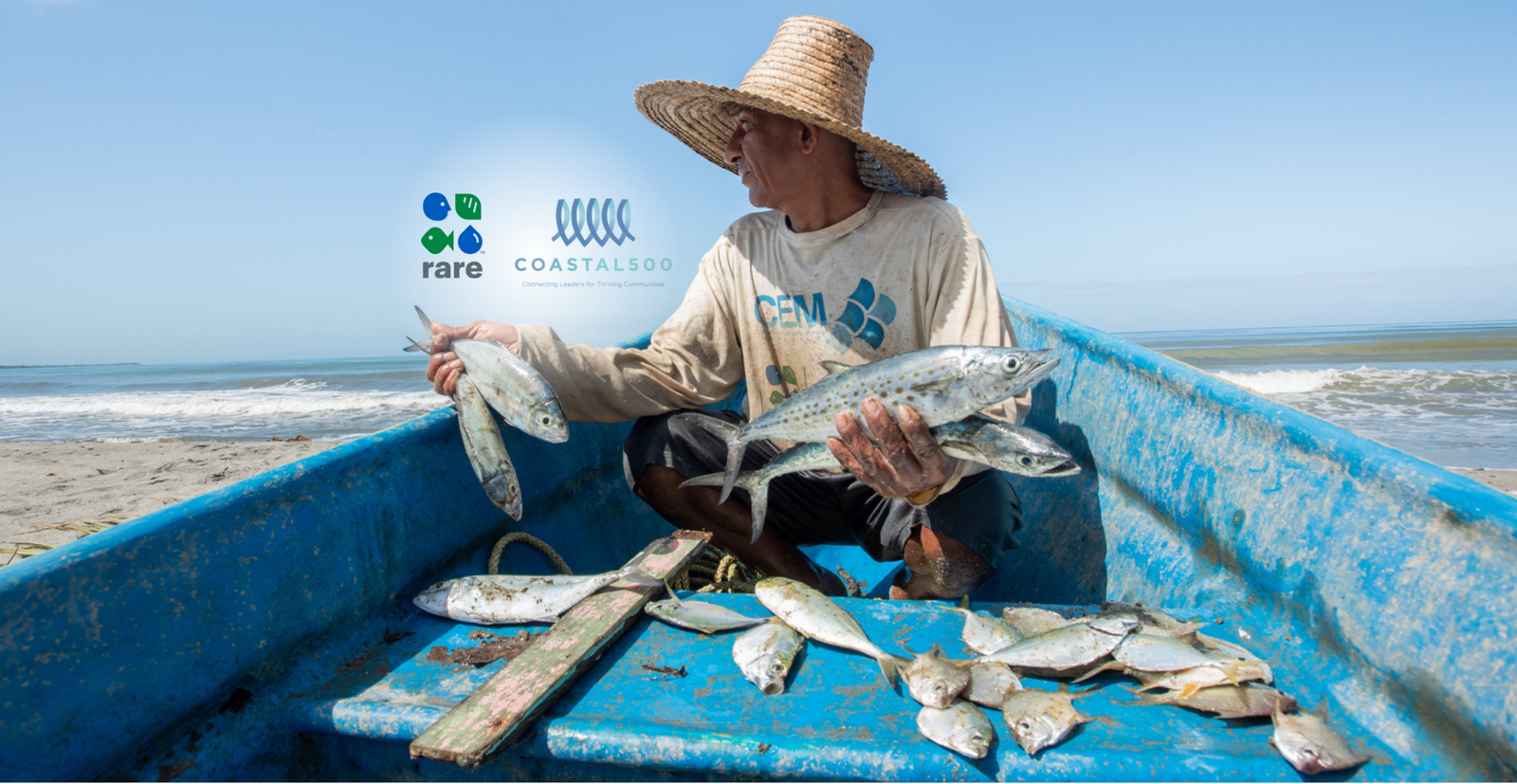

Fish Forever is a community-based program run by Rare, an international non-governmental organization (NGO) focused on marine and fisheries. The goal of this program is to facilitate community-based management for small-scale fisheries in coastal areas by empowering fisher communities and local governments to protect and utilize their marine resources in a more sustainable manner. The program does it by revitalizing coastal marine habitats (such as coral reefs, mangroves, and seagrass), preserving biodiversity, and safeguarding the livelihoods of fisher households and their community. This program has been run in eight different countries across the world, including Guatemala, Honduras, Brazil, Mozambique, the Philippines, Indonesia, Palau, and Micronesia. In Indonesia, this program is held mostly in the eastern part, namely Southeast Sulawesi, North Sulawesi, North Maluku, Maluku, and Southwest Papua. This article examines the various approaches that this program implements using policy instrument, climate adaptation, indigenous knowledge, and multi-level governance concept. It argues that the Fish Forever program is using a multi-approach scheme to achieve its goals, making it an ideal model on how to run a climate adaptation project.
The Problem Beneath the Surface
Currently, Indonesia’s marine and fisheries sector is facing an alarming problem of illegal, unreported, and unregulated (IUU) fishing practices, which leads to overfishing and habitat degradation. For instance, the use of illegal mesh size fishing nets in Bali increases juvenile fish captures, preventing the fish population from reproducing. As a result, research estimates that the fishing industry in the Bali Strait is in decline and is expected to end in 2040. Many cases have also been reported on the desertification of coral reefs due to the use of poisons and explosives. According to one report, fish catches in some places in Indonesia have decreased by around 80%. And with the threat of climate change, this problem can possibly worsen due to ocean warming, deoxygenation, and acidification. These problems need to be addressed to protect the livelihood of the communities that depend on fishing for a living as well as the sustainability of the ecosystem, especially because coastal communities are often economically disadvantaged, making them highly vulnerable to these threats. Therefore, the Fish Forever program promotes a “managed access” scheme (PAAP, pengelolaan akses area perikanan) to achieve more sustainable fisheries practices. This scheme has eight elements, namely (1) Community Engagement & Behavior Adoption, (2) Effective Management Bodies, (3) Managed Access, (4) Networks of Marine Reserves, (5) Data for Decision Making, (6) Financial & Market Inclusion, (7) Blended Finance, and (8) Policy Governance.
Eight Elements, Six Instruments
According to Ulibarri et al. (2022), there are six instruments in adaptation, which include direct regulation, planning, economic instruments, information provisioning, capacity building, and networking. Comparing it to the PAAP’s eight elements, the six instruments are sufficiently represented in the eight elements of PAAP. For instance, community engagement and behavior adoption element of PAAP is included in the instruments of capacity building, information provisioning, and networking. The implementation of this element is the formation of PAAP fishing groups and the provision of training to improve the capacity of fishermen in running their institutions. Another example is the policy governance element, which falls under the policy governance instrument. Its implementation is the formalization and ratification of PAAP into regional policy in Southeast Sulawesi, as stipulated in Southeast Sulawesi Provincial Governor Regulation No. 36 of 2019 concerning PAAP.
No-Take Zones and Local Taboo
One of the significant approaches of this program to maintain the sustainability of the resources is the establishment of no-take zones (KLA, kawasan larang ambil). These established zones prohibit all types of fishing activities. This aims to provide optimal conditions for fish populations and other marine life for species recovery. In Sterner and Coria’s framework, this approach represents a zoning-based policy instrument. Sterner and Coria define zoning as a regulation whereby certain methods or technology are banned in or are limited to a certain area. To determine the area of the no-take zone, planning and surveys are carried out to identify key areas of ecological connectivity determined by ocean currents, fish spawning and larval development sites. This identification is crucial, as no fishing activities are allowed in juvenile fish larval development sites to ensure that fish grow to maturity and reproduce before being caught.
In addition to science-based surveys, socio-economic surveys were also conducted in determining these no-take zones. In the Kolono Bay area in Southeast Sulawesi, the designation of these zones also took into account local indigenous knowledge of “pamali” (taboo) areas. Even before the Fish Forever program existed, there were already several forbidden zones in Kolono Bay. One of these is the Air Madidi or Wouwiululua, which is a part of Ngapawali no-take zone. Undoubtedly, the integration of indigenous laws into the framework for determining no-take zones will help to increase the effectiveness of the implementation of no-take zones themselves. This is because indigenous laws have long been widely accepted and used among local communities.
A Network of Coastal Mayors
Lastly, the Fish Forever program also uses the multi-level government approach in strengthening the network and capacity of government leaders across participating countries and municipalities. According to Stehle et al., transnational city networks (TCNs) are a manifestation of the horizontal dimension of multi-level governance. Ideally, these networks can act as a platform for cities to exchange best practices, as well as learn from, initiate, and support each other’s projects and policies. The Fish Forever’s version of TCN is Coastal 500, a global network of mayors and local government leaders committed to working to ensure the prosperity of coastal communities. As of 2024, the Coastal 500 had grown to around 310 coastal leaders (about 160 mayors and 150 fisheries leaders) from Brazil, Guatemala, Honduras, Indonesia, Micronesia, Mozambique, Palau, and the Philippines. And in June 2024, the first Coastal 500 international gathering was held on Siargao Island, the Philippines, for a week as a platform for members to share relevant experiences and cultural beliefs on sustainable marine and fisheries.
Keywords: small-scale fisheries, community-based management, marine conservation, climate adaptation, multi-level governance


 Reston Dennis Juah
 Noor Ul Ain

 Hassan Barrie
 Hoby Nasandratra Andriamiandrisoa
Finally a platform that understands the local market. Great payment options and a huge selection of sports betting. Definitely the best in the region! we88malaysia
The excitement here is on another level. I had a great run last night and the payouts were fast and easy. Can’t wait to jump back in! bdjoya999slot
Absolute luxury feel to the whole thing. The graphics are stunning and the gameplay is incredibly fluid. It feels like a premium experience. sagacasinoroyale
The variety of games here is impressive. I spent a few hours exploring and the graphics are amazing. Definitely spending more time on br7pwin from now on.
I really enjoy the community vibe here. Everyone is friendly and the rewards are actually attainable. Big thanks to vn168fgame for the great time.