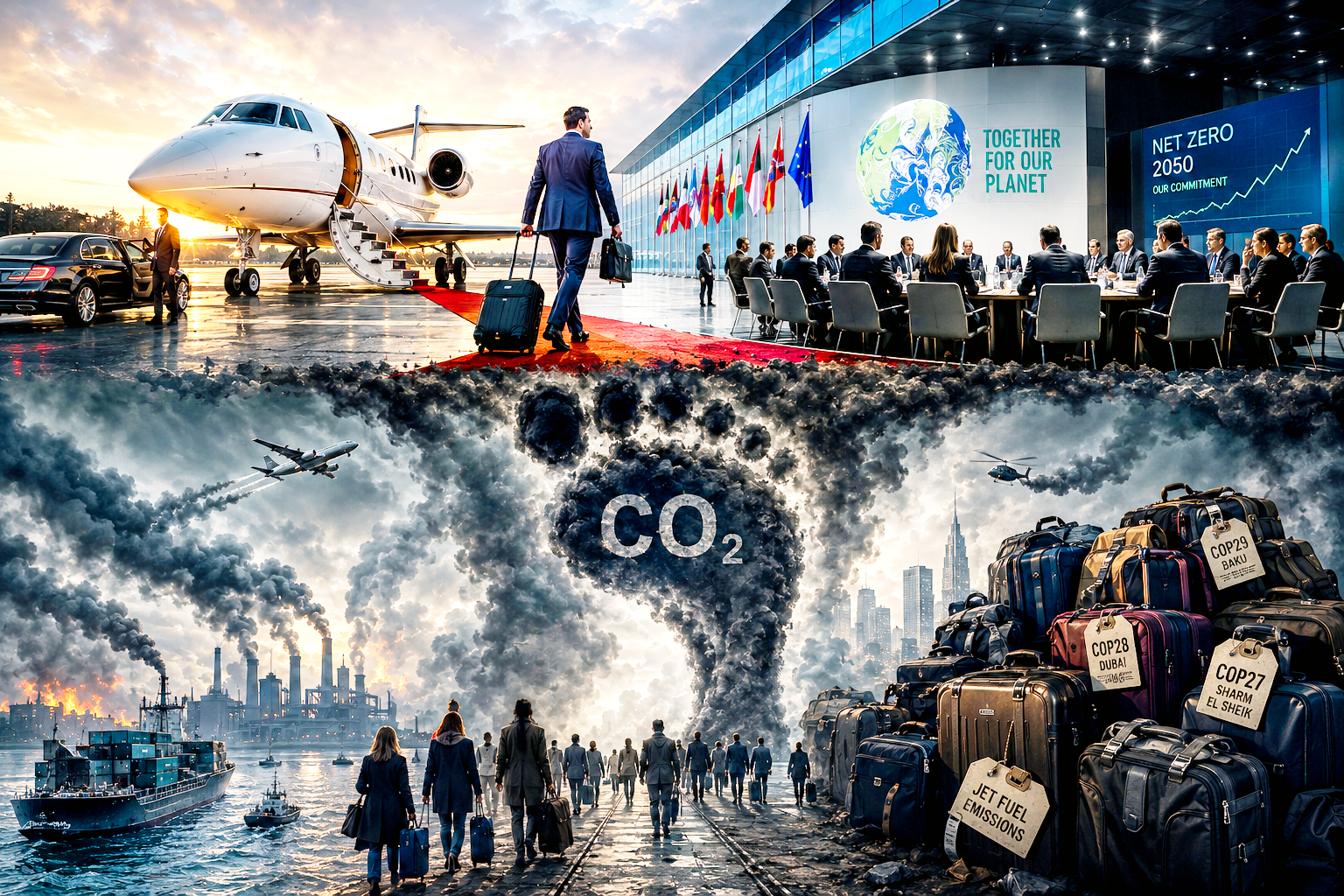

When it comes to COP conferences, climate policy memos, and classrooms of future climate negotiators, there is a secret everyone in the climate diplomacy community knows but only few are interested in blurting it out, and that is; the people who are tasked with saving the planet are among its most prolific individual polluters. And this paradox of performative contradiction is not simply a kind of petty hypocrisy, but a structural undermining of that very cause they are supposed to be saving. For decades, we have been studying fossil fuel lobbying, climate denialism and geopolitical competition as the deadliest enemies of our progress but we have been oblivious to what is the most intimate and corrosive threat: the carbon-intensive lifestyle of diplomats, UN officials, NGO leaders and academic experts who constitute the global climate governance class. It is a topic that seldom gets written about, the whispered shame that everyone keeps quiet about, the Emperor’s new clothes made from jet fuel and hotel minibars, and it needs to be exposed because it compromises the moral mandate and psychological credibility required for genuine climate action.
The evidence does not go unnoticed, and it is merely disregarded. Think of the annual summits of the Conference of the Parties (COP) that have emerged as the main ritual of climate diplomacy. The emissions of the COP29 in Baku were estimated to be 152,082 tons of CO2e (air travel constitutes 82% of emissions) for an estimated 10,000 participants, observers and journalists who flew around the world to negotiate emissions reductions. The irony is far beyond symbolic as it is also pedagogical. Each of the delegates who arrives makes a live demonstration that the commitments to climate are subordinate to the professional convenience and diplomatic status. In fact, research on the “spiral of silence” in climate communication shows that people do not only avoid talking about the climate crisis because they are afraid of being rejected by others, but because they are afraid of being perceived as incompetent or hypocritical, and this dynamic is exponentially magnified especially when the messenger is doing the exact opposite of what he or she is trying to say. (Swim et al., 2015) .
This contradictory situation goes beyond conference traveling. Senior climate diplomats maintain a lot of multiple residences, they travel back and forth frequently between capitals and their headquarters on an inter-continental scale, and they live in a professional world where physical presence seems equal and akin with some form of serious diplomacy. A 2024 report by the Council on Foreign Relations (CFR) observed that climate diplomacy has become “more and more divorced from actual emissions trajectories” as countries continue to make “grand pledges” on the one hand, and increase their fossil fuel infrastructure on the other. The diplomats that are forging these commitments are not outsiders looking from the sidelines but they are also embedded participants in the high-carbon global elite. They send their children to an array of international schools in Geneva and Washington, live in climate-controlled expatriate compounds, and also consume at rates higher than what would be necessary on a global scale. It is not a personal failing that can be rectified by some kind of carbon offsetting (which itself has been widely and thoroughly debunked as an accounting fiction that enabled further pollution,), but rather a structural trait of the diplomatic class, one that has confused access and mobility with influence.
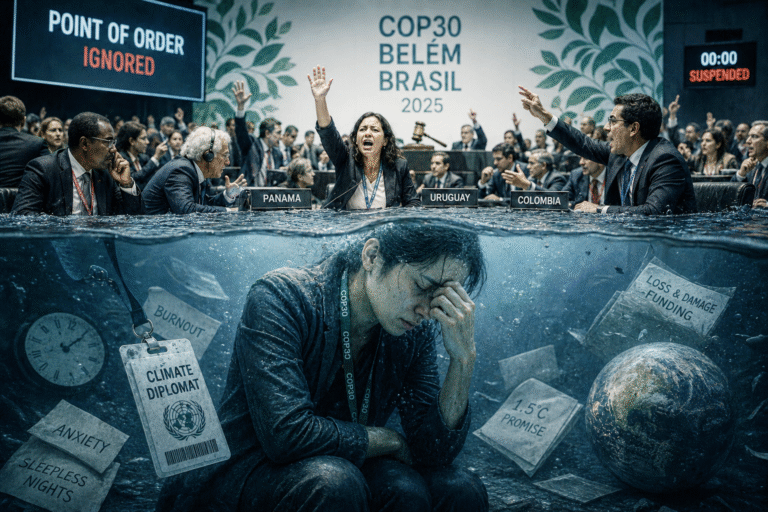
Why is this important besides being a moral consistency? That’s because credibility is the currency of climate communication and research has been done that shows repeatedly that perceived hypocrisy undermines persuasive power. For instance, research on effective climate messaging reveals a strong preference for authenticity, local relevance, and shared sacrifice from audiences over any kind of rather abstract climate technocratic knowledge coming or delivered from positions of privilege. If a climate diplomat speaks about degrowth and transitions to renewables while maintaining a lifestyle that only requires continuous growth and fossil fuel consumption, they are not only compromising their personal credibility but they also taint the whole narrative frame. The public, particularly in developing countries which are also being urged to give up on coal-based development sees this kind of disparity and and logically draws the inference that climate action is a stunt or performative exercise for the rich rather than an emergency. This kind of perception breeds and continues to fuel the very skepticism and political paralysis that diplomats lament and complain at every COP.
This silence is wholeheartedly maintained by a professional omertà. To raise it is to risk accusations of ad hominem attack, of distracting from “the real issues,” of undermining solidarity among climate advocates. But such a deflection itself is a form of privilege defense mechanism. We do not hesitate when it comes to the issue of calling out the hypocrisy of fossil fuel executives who fund climate denial while also simultaneously investing heavily in coastal protection for their own private estates, we should apply the same or even more of this unflinching standard to the climate diplomats who fly to Baku or Amazon to negotiate the fate of nations they will never live in, using a carbon budget they do not personally feel constrained by. The UN Secretary-General’s statement at the opening of the COP27 summit in Sharm el-Sheikh, Egypt, on November 7, 2022, that “ humanity has choice to cooperate or perish”, feels more like hollow rhetoric, given that the logistics alone of the conference generates more emissions than the average of some small countries each year.
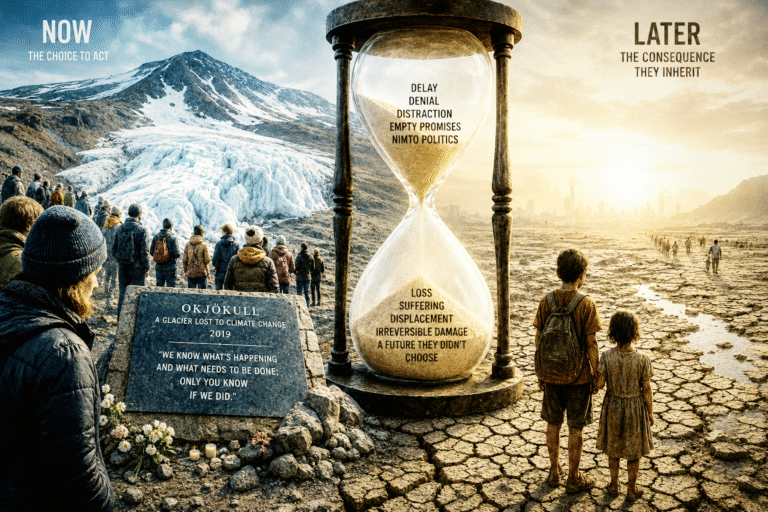
So considering all the above, the plea is not that the international climate diplomacy process needs to be ended, it is that its physical and symbolic structure must be transformed and reconfigured. Virtual participation should be the norm, not the exception as the 2020 covid 19 pandemic has already provided a chance to test this out. Diplomatic careers need to be reconceived and redesigned to incentivise regular and sustained local presence and regional expertise rather than global mobility. But more importantly, the climate community needs to have the courage to regulate its own carbon privilege as much as it does its own national emission targets. Until they live the constraints they negotiate, climate diplomats will continue to be unintentional ambassadors of the very system they categorically challenge and oppose, and the public will continue to perceive climate action as something that is a luxury concern for the jet-setting class instead of an existential imperative for humanity. The unspoken truth about the climate action is that the enemy of the climate movement is not the coal-baron nor even the climate denier, but the mirror it holds up to the contradictions in itself, revealing an example of class that demands sacrifice from others while exempting itself from the math.
The task before us as future climate diplomats is to write about it, to speak about it and to change it, why? Because the atmosphere does not recognize diplomatic passports, and the physics of carbon accumulation is indifferent to our good intentions.
KEYWORDS: Climate Diplomacy, Carbon Footprint, Climate Governance, Climate Communication, Climate Credibility


 Reston Dennis Juah
 Noor Ul Ain
 Hassan Barrie
 Hoby Nasandratra Andriamiandrisoa
I feel like my luck has actually improved since I started playing here. The bonuses are generous and the graphics are top notch. It is a total win for me. Visit hoki69slot and see for yourself!