

A good recent example of a transformational change in climate policy is the Inflation Reduction Act (IRA) of 2022. President Joe Biden and Vice President Kamala Harris signed this Act into law on August 16th, 2022. One of the main things the Act seeks to do is invest in domestic energy production, as well as a push towards clean energy for U.S. economy decarbonization. It has proven to be the largest climate change investments of U.S. history. The Act allowed an investment of $369 billion in renewable energy and energy efficiency and clean transportation technologies. It would cut U.S. emissions to 37-41 percent below 2005 levels by 2030. In short, the 2030 emission in the United States is projected to be reduced by 2500–2800 metric tons less than the 2005 emission (Silvio, 2022). If not for the IRA, U.S. 2030 emissions would be about 24-35 percent below 2005 levels (Larsen et al., 2022). Clean energy and electric vehicle tax credits, large scale investments in domestic clean tech and environmental justice provisions comprise the IRA’s emissions reducing provisions. Therefore, this is a transformational change in U.S. climate and energy policy. During and after this shift, it came with massive investment in clean energy; incentive for clean transportation; environmental justice and equity; carbon pricing and corporate accountability; carbon reduction and emissions targets; innovation and clean tech investment. To achieve the objectives of the Act, a blend of carrot-stick, and direct federal investments to forge movement away from GHG-intensive activities.
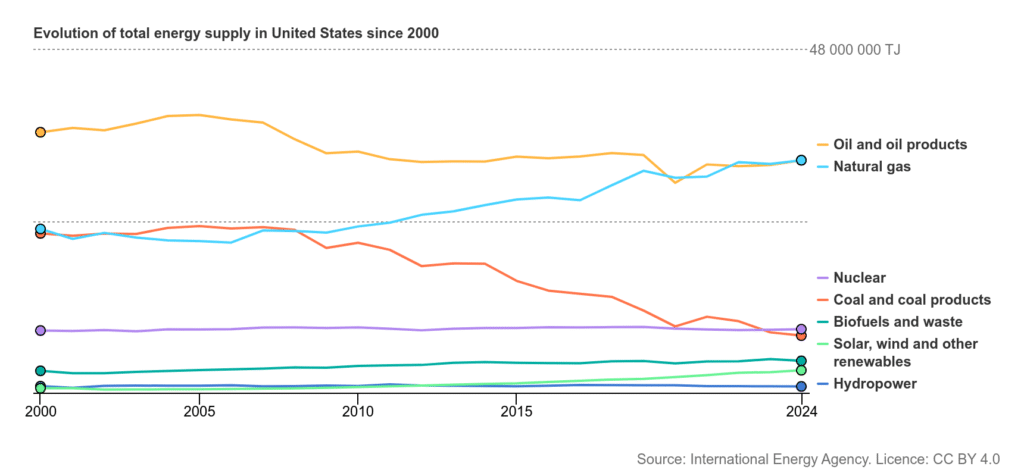
Firstly, the IRA massively invests in clean energy to accelerate GDP growth, create new jobs, and bring about improvements in public health. The Act, in most cases, reshaped U.S. climate action, economic reform and social equity while pushing for economic growth. And in fact, that massive investment in clean energy could add another 1.4 million to 1.5 million jobs in 2030. Construction, manufacturing and service industries account for the concentration of these jobs (Silvio, 2022). According to IPCC, the sectors contributing the most greenhouse gas emission are: industry, energy, transport, building, and AFOLU. Additional executive and state actions therefore would have enabled U.S. to meet its Paris Agreement Nationally Determined Contribution through the IRA. With tax credits and incentives for companies and people, the IRA would have helped to expand solar, wind and other forms of renewable energy. This is meant to swiftly catalyze the transition to clean energy, especially in the relatively slow decarbonization sectors.
In addition to providing substantial tax credits and incentives for the deployment of more clean commercial vehicles, the IRA supports a domestic electric vehicle supply chain and establishes electric vehicle charging infrastructure. IRA transportation sector provisions accelerate transportation sector toward zero emission vehicles through a mixture of consumer and manufacturing policies. This is to provide tax credits and incentives for clean transportation, which helps cut through one of the five most greenhouse gas emitting sectors, transportation. There will be incentives and investments in domestic supply chain, to manufacture electric vehicles and to produce batteries (International Council on Clean Transportation 2023). In brief, the Act offers individual and commercial charging infrastructure tax credits and tax credits for new and used electric vehicles for both commercial and consumer vehicles, designed to speed electric vehicle sales in the United States for all types of vehicles.
Environmental justice and equity are critically featured in the IRA provisions. The Act provides for funding in the support of disadvantage communities which are most hit by disease and pollution caused by climate change. Within the IRA, there is a funding element that enables communities of color and low-income communities to benefit from clean energy jobs, cleaner air, more affordable renewable energy solutions. New jobs are expected to be created in the construction sector, manufacturing sector and the technology sector linked to investment in clean energy and green technologies. That will create jobs in economically deprived communities. Making large corporations pay their fair share in funding government’s climate change initiative programs and addressing climate change cost, the IRA puts a 15 percent minimum tax on profitable corporations. The IRA also charges the oil and gas industry for methane emissions.
Provisions aimed at high emission sectors such as energy, industry and agriculture are directly contained in the IRA. Greenhouse gas emission is not the only focus, the provisions also promote fast development of green technologies and industries. In addition, IRA offers incentive tax for companies to make investments in clean technologies like wind, solar, hydrogen, and carbon capture. Incentivizing within the US domestic production of clean technologies, the Act promotes the growth of clean energy industries. The purpose is to reduce reliance on foreign suppliers, enhanced U.S. manufacturing industry and economic growth.
The great thing about The IRA is that it offers good, economic as well as environmental and also social reforms. To build a sustainable U.S. economy the Act integrates massive public investment in clean energy, electric vehicles, environmental justice, and climate mitigation technologies. Without IRA, U.S. clean energy generation is projected to grow from 40 percent of total energy generation in 2021 to 46-72 percent and with IRA, clean energy generation is projected at 60-81 percent (Larsen et al., 2022). This Act has put U.S. back in the arena as a leader of international climate action. There is no way the U.S. will hit its 2030 target, a 50-52 percent reduction in greenhouse house emission from 2005 level, with the IRA alone. Yet, it is argued to reduce the cost of those additional executive and subnational actions required to reach the 2030 target.
Unfortunately, President Donald Trump ordered the freezing of all IRA related disbursement funds by signing and executive order they called ‘Unleashing American Energy’ on his first day in the Oval Office. Even though many believe, his administration will not be able to repeal the entire Act but they can and are already targeting key provisions (Mehmet Can Cetin, 2025). Evidences are pointing to the fact that the current administration is doing everything to undo the IRA energy transition provisions in support of fossil-fuel industry. Of recent, the US and TotalEnergies, a french energy giant, agreed to redirect almost one billion dollars from off-shore wind energy lease payment to oil and natural gas production (Stephanie Kelly and Jarrett Renshaw, 2026). Climate action is not a priority for the current US administration and if the next administration happens to be like them then IRA would absolutely death. In conclusion, the IRA provides enough incentives to be consider as a transformational policy. However, US is a democratic country where two ideological opposing group exchange the presidency. This is threatening the sustainability of gains in energy transition making the IRA a non-locked-in transformational policy.
Key words: Inflation Reduction Act, US, Transformational Policy, Clean Energy, tax Credit




 Reston Dennis Juah
 Noor Ul Ain

 Hassan Barrie
 Hoby Nasandratra Andriamiandrisoa
Downloading the 1777batapk update took seconds and the mobile version runs like a dream. No crashes and the live dealer section is top notch. I finally found a spot where gambling feels stress free. 1777batapk
The download was fast and the installation was a breeze. The graphics are top notch and it runs perfectly on my device. Get it now at y666gamedownload.
The app version is just seamless. Everything is so organized and easy to navigate. I’m really enjoying my time on bd4999betapk.