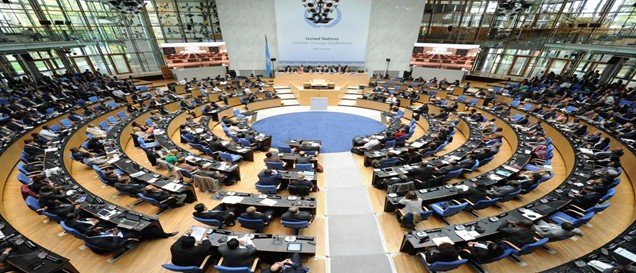

Climate change was perceived for many years as an environmental problem that called for scientific solutions and environmental policy action. Today, however, it is a more than just an environmental problem when it comes to climate change. It increasingly influences foreign policy, economic development, humanitarian, and international security. With the increasing severity of climate change worldwide, governments have realized that climate change is not only threatening ecosystems but also affecting political stability, economic prosperity, and human security. Thus, climate diplomacy has become a major component of global governance within the framework of international environmental negotiations (Ruppel, 2024) (Hamzah, 2025).
The rising significance of climate diplomacy stems from the understanding that the problem of climate change is transnational. The effects of climate change cannot be tackled individually, as greenhouse gas emissions, disasters, migration flows, and resource insecurity do not respect country boundaries. (Tänzler & Carius, 2026) argue that climate diplomacy is no longer limited to the realm of climate negotiations but also involves foreign policy, development cooperation, humanitarian assistance, conflict prevention, and security policy. Likewise, (Hamzah, 2025) states that climate diplomacy is an emerging instrument for the incorporation of climate issues into the international diplomatic and strategic agendas of states. Thus, climate diplomacy is not only about the environment, but also about climate risks to social and international stability.
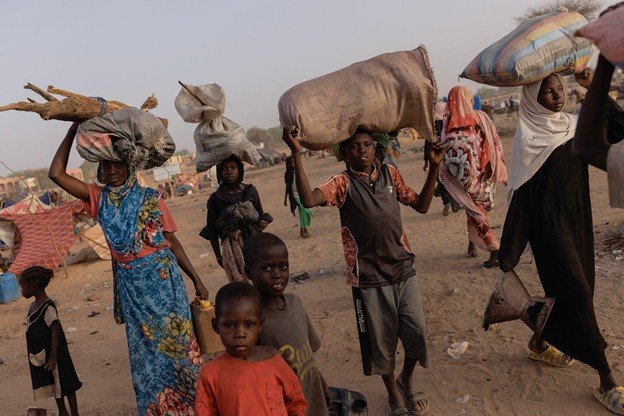
The increasing awareness of climate change as a security threat is one of the most important factors behind this shift. Climate change rarely leads to conflict directly, but it can exacerbate social, economic, and political vulnerabilities. The impacts of rising temperatures, extended droughts, floods, and altered rainfall patterns may affect food security, agricultural production, and water resources, leading to migration and displacement (Babar et al., 2024). In fragile areas, these pressures can add to existing tensions and heighten the risk of instability. Climate change is often referred to as a ‘threat multiplier’ because it amplifies underlying vulnerabilities instead of triggering conflict on its own (Krampe et al., 2021) .
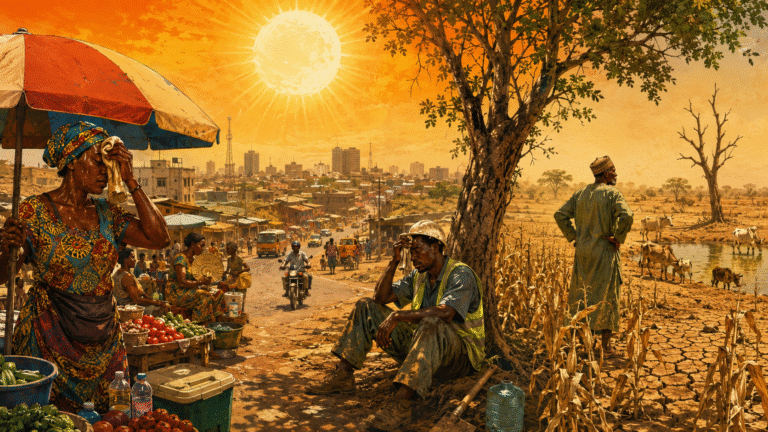
The security implications of climate change are particularly evident in many countries across the Global South. Climate change impacts are particularly acute in regions already grappling with governance issues, poverty, and political instability. This is particularly true for Africa, where successive droughts have led to food insecurity, forced migration, and humanitarian crises. Similarly, many Small Island Developing States face existential threats from sea-level rise, threatening not only livelihoods but also territorial integrity and state sovereignty (Babar et al., 2024). At these moments, climate diplomacy can be leveraged as a yardstick to combat security threats caused by climate change, to mobilize international support, and to safeguard national development paths.
This transition from environmental diplomacy towards security diplomacy has profoundly contributed to the international governance of climate change. The early years of climate negotiations under the United Nations Framework Convention on Climate Change (UNFCCC) were mainly about emissions reductions and environmental protection. Today, climate diplomacy encompasses a much broader agenda that includes adaptation, resilience-building, climate finance, disaster risk reduction, migration, and loss and damage(Hamzah, 2025). This expansion mirrors the increased awareness of the interconnectedness of climate change and all aspects of development and security. Climate diplomacy is thus becoming ever more closely tied up with discussions of economic development, global governance, and international cooperation.
Climate Diplomacy is fundamentally a political process despite the fact that there is a broad consensus about the gravity of climate risk and its impacts. The gap between developed and developing countries on the question of responsibility for climate action is one of the most persistent challenges. The developing countries have consistently pointed out that industrial nations have more responsibility as they have caused a disproportionately large share of greenhouse gas emissions historically. In contrast, developed countries have increasingly stressed collective responsibility and universal action (Jaiswal, 2015). The different perspectives also play a role in the ongoing negotiations on climate finance, adaptation assistance, technology transfer, and loss and damage, which sometimes make consensus harder to achieve.
The theory of two-level games, developed by (Putnam 2017), offers a useful framework to explore the slow pace of climate diplomacy despite the broad consensus on the need for climate action. According to Putnam, governments negotiate simultaneously at the international and domestic levels. Internationally, they try to reach an agreement with other states. Internally, they are required to meet the demands of the political, economic, and institutional factors. Climate diplomacy is thus a conflict of interest between global and national priorities. Countries can sign ambitious climate agreements at the international level, and at the national level, they are subject to domestic scrutiny from industries, the electorate, or other budgetary pressures (Putnam, 2017).
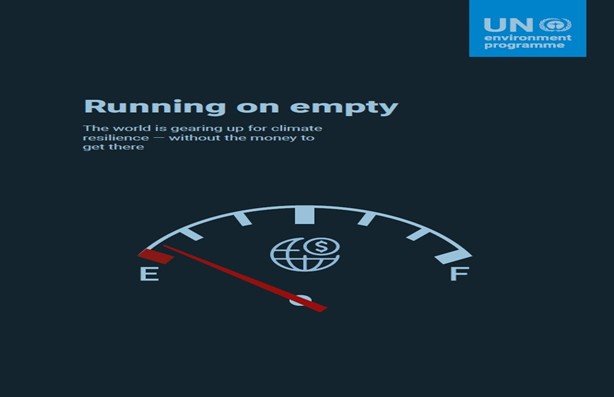
The politics of climate finance is a good example of this challenge. While developed countries may commit to providing financial support for adaptation, mitigation, and loss and damage programmes, domestic political and economic factors can influence the timing and amount of financial support provided. However, developing countries struggle with institutional capacity constraints, governance fragmentation, and implementation challenges that hinder their capacity to access and effectively use climate finance (Roberts & Weikmans, 2017) (OECD, 2023). Climate diplomacy goes beyond negotiations around financial commitments, however, as it also seeks to address governance constraints, institutional barriers, and trust deficits that influence implementation outcomes.
Meanwhile, the field of climate diplomacy has become more intertwined with geopolitical competition. While climate change requires collective action, countries continue to pursue strategic and economic interests through climate policy. (Oertel et al., 2020) suggest that climate action is now being associated with technological leadership, competitiveness of industry, and geopolitical influence. Major powers like the EU, China, and the United States are increasingly competing for global climate control. Climate policies are no longer considered an environmental matter, but also a tool of economic planning and international negotiation.
This development creates both opportunities and risks. Geopolitical competition can drive investments in renewable energy, clean technology, and green innovation. However, rivalry between great powers can pose a threat to trust and make international cooperation difficult. Climate diplomacy thus has to do a delicate balance between competition to stimulate innovation and cooperation to solve a global problem (Oertel et al., 2020).
Another significant pattern is the development of a “multiple bilateralism”(Belis et al., 2018). Multilateral institutional frameworks such as the UN Framework Convention on Climate Change (UNFCCC) continue to play an important role in global climate governance, but bilateral and mini-lateral climate cooperation is growing. Regularly, strategic partnerships are formed between major economies, between regions, and between coalitions of willing states; these partnerships complement traditional multilateral negotiations. Such mechanisms can build momentum for political action and spur innovation in policies, but they can also lead to governance structures that are fractured and unequal in the international climate regime(Belis et al., 2018).
Importantly, the term climate diplomacy is not being used exclusively by the big powers. The case of Ethiopia is a good example of how developing countries can play a meaningful role within global climate negotiations. Ethiopia’s international climate profile was enhanced by its political leadership, domestic climate policy coherence, evidence-based advocacy and the building of coalitions as claimed by (Endalew & Craft, 2016). The example of Ethiopia shows that while economic influence is a factor, it is also essential to be credible, have a strategy, and be active in international processes.
These realities are evident in my work on adaptation and loss and damage at the UNFCCC. International climate talks are frequently perceived as a business of emissions cuts, investments, and institutions. But coalition building, trust building, framing, and political bargaining are much more complex elements of climate diplomacy. Negotiations are not just about environmental policies, but also priorities for development, economic interests, and national security. This complexity is evident in discussions around adaptation finance and loss and damage, where the issues of equity, responsibility, and vulnerability are still significant in negotiations.
Finally, climate diplomacy has gone so far beyond environmental politics. Climate change has emerged as a new security, economic development, and global governance challenge. However, climate diplomacy will not effectively combat the environmental crisis without tackling inequality, vulnerability, geopolitical competition, and human security (Krampe et al., 2021). The success of climate diplomacy in the coming years will thus not just be judged by the climate agreements that are agreed at international conferences, but by its ability to inspire trust, foster collaboration, and inspire collective action in a fractured world.
Keywords: Climate diplomacy, Climate Security, Climate Finance, Global Governance, Geopolitics


 Reston Dennis Juah
 Noor Ul Ain
 Hassan Barrie
 Hoby Nasandratra Andriamiandrisoa
+ There are no comments
Add yours