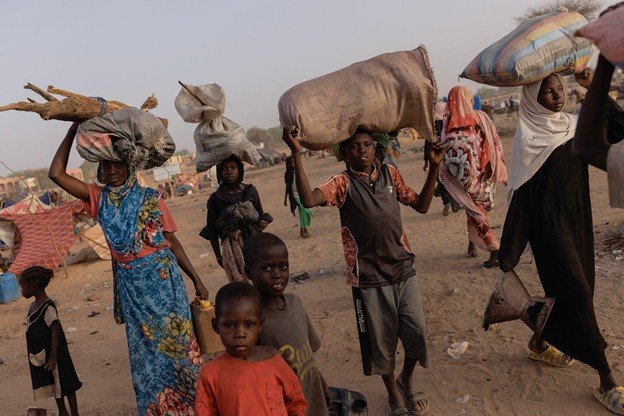

Climate diplomacy has undergone a profound transformation in the last three decades. Governments have established mechanisms for mitigation, adaptation, and climate finance through the United Nations Framework Convention on Climate Change (UNFCCC), the Kyoto Protocol, and the Paris Agreement. Despite these successes, however, one of the most important human impacts of climate change has received little attention in international climate governance: climate-induced migration. While climate diplomacy has become increasingly effective at discussing carbon emissions, renewable energy transitions, and climate finance, it remains far less equipped to respond to the growing mobility of people whose lives and livelihoods are threatened by climate change (Biermann & Boas, 2010; Black et al., 2011).
This is a governance gap that is evident in climate-vulnerable nations, including The Gambia. The Gambia has very low global climate change emissions, but is highly vulnerable to climate change impacts such as coastal erosion, sea-level rise, saltwater intrusion, flooding, and altered rainfall patterns, which pose a risk to agriculture and fisheries (Calvin et al., 2023; MECCNAR, 2021). Migration is becoming a more prominent means of coping with environmental and economic challenges, particularly as they become more severe. This post raises the question of how a central premise of climate diplomacy has been overlooked: climate migration is a challenge that cannot be addressed by climate policy. International climate governance has increasingly acknowledged that climate change raises the risk of vulnerability, but it is reluctant to provide meaningful legal and political mechanisms for addressing the vulnerability of climate change. The Gambia experience highlights the need for climate diplomacy to go beyond carbon-based negotiations to a more people-centered approach to climate governance.
Climate migration is frequently defined as the migration of people under the influence of environmental change and climate-related pressures. But researchers warn that migration shouldn’t be seen solely as a direct result of climate change. (Black et al., 2011) state that migration is generally influenced by environmental, economic, political, and social factors. Climate change as a driver of migration is then more of a threat multiplier than a singular driver, adding to existing vulnerabilities. This distinction is significant because it helps to understand the political nature of climate migration issues in international diplomacy. Many governments have not made any specific legal commitments to populations displaced by climate change because the complexity of migration patterns has made it difficult to establish legal obligations (Black et al., 2011).
The Gambian context illustrates this challenge. Agriculture and fisheries continue to play a critical role in livelihoods and employment, but these two sectors are extremely sensitive to climatic variability. Rainfall variability, soil degradation, flooding, and coastal erosion continue to impact productivity and worsen economic insecurity, especially in rural areas (MECCNAR, 2021). Migration for many households becomes an adaptation strategy and not just a reaction to environmental deterioration. It is important to recognize that, in this sense, climate migration is not necessarily a failure of adaptation; instead, it may be a way for vulnerable groups to survive under the new environmental conditions that they face (Calvin et al., 2023; Rigaud et al., 2018).
While there is increasing evidence on the connection between climate change and human mobility, the current prevailing focus of climate diplomacy remains mostly on mitigation, adaptation financing, and technological cooperation. These priorities are certainly relevant, but also show a state-centric view on climate governance, which is primarily linked to emissions, national commitments, and financial mechanisms. In contrast, human mobility is a sensitive issue in the political sphere as it touches on issues of sovereignty, border control, legal responsibility, and international protection(Biermann & Boas, 2010). As a result, climate migration is marginalized in climate negotiations, despite its increasing relevance.
This omission reflects a broader contradiction within climate diplomacy. This is because, as (Conrad, 2009) noted, climate policy is not just a scientific solution to changes in the environment; it is a political process influenced by institutions, interests, and priorities. Climate migration demonstrates this clearly. The link between climate change and human mobility is increasingly well documented by science, but the political debate is still developing, and political institutions have yet to leverage this evidence to develop suitable governance structures that safeguard vulnerable populations (Conrad, 2009) . The problem lies not with a lack of knowledge but with a lack of political will to deal with the implications of knowledge.
The politics of recognition further complicates this issue. Climate migrants are not as well represented in international legal frameworks as those fleeing persecution or conflict. The 1951 Refugee Convention does not recognize climate change as grounds for refugee status, creating a protection gap for individuals displaced by environmental factors (Biermann & Boas, 2010). This legal gap is not just technological – it is a political one as well. The recognition of climate migrants could bring new financial commitments, more resettlement needs, and pose challenging questions about historical accountability for climate change. Consequently, many governments have been hesitant to acknowledge the reality of climate change-induced displacement, even as evidence of climate displacement is accumulating.
This hesitation is an issue from a climate justice point of view. Countries like The Gambia are responsible for a very small share of greenhouse emissions, but are disproportionately affected by climate change impacts. The blame for the climate crisis is very unevenly distributed, with the industrialized world accounting for the vast majority of excess emissions, as outlined by (Hickel, 2020). However, vulnerable communities in low-emitting countries often suffer the effects in terms of livelihood losses, displacement, and heightened insecurity (Hickel, 2020). Climate migration thus poses fundamental questions of justice, responsibility, and fairness in international climate governance.
There are recent signs of climate diplomacy recognizing these concerns. The Warsaw International Mechanism for Loss and Damage established the Task Force on Displacement to examine climate-related human mobility, while discussions surrounding Loss and Damage have increasingly recognized displacement as a consequence of climate change (UNFCCC, 2014). These developments are welcome and promising, but not enough. Current mechanisms are mainly about exchanging knowledge and policy coordination, but not about creating legally binding protection provisions or specific funding for climate-displaced populations.
Two critiques, offered by (Born, 2019) and (Oomen, 2019), help bring to light the limitations of the current approaches. Both scholars reject technocratic modes of governing the climate based on science and technology, which fail to take into account wider issues of power, justice, and human experience. Climate migration is a good example of this issue. International climate diplomacy has become more complex and advanced in measuring emissions, tracking adaptation finance, and in the development of climate models, but less attention is paid to responding to the lived experience of those forced to relocate due to environmental change (Born, 2019; Oomen, 2019). From this perspective, climate migration not only highlights the need for better governance but also a conceptual gap in the current climate diplomacy.
To overcome this challenge, one needs to rethink climate diplomacy beyond the state-centered approach. Human mobility should be considered a key element of climate governance, not a secondary issue. It means that migration issues need to be integrated into adaptation planning, support for climate-resilient livelihoods must be enhanced, and international frameworks for the protection of displaced populations need to be strengthened. It also calls for recognizing that the impacts of climate change are not limited to environmental degradation but also to human security, livelihoods, and social stability (IOM, 2021; Rigaud et al., 2018). Finally, climate migration poses a threat to the very basis of traditional climate diplomacy, as it demands a shift towards addressing the human impacts of climate change in policy discourse, beyond emissions and finance. The Gambia experience shows that vulnerability to climate change is not only environmental, but is related to mobility, livelihoods, and social protection. To be relevant in an era of increasing climate impacts, climate diplomacy needs to go beyond carbon-centric negotiations and put people at the center of climate governance. Climate migration is not a distant problem; rather, it is a reality that places the limits of current diplomacy and calls for a more just, inclusive, and human-centered form of global climate governance.
Keywords: Climate Migration, Climate Diplomacy, Human Mobility, Climate Justice, The Gambia





 Reston Dennis Juah
 Noor Ul Ain
 Hassan Barrie
 Hoby Nasandratra Andriamiandrisoa
Theo cảm nhận cá nhân thì slot365 com dùng khá ổn định trong nhiều khung giờ. TONY06-18
Great selection of live dealer games. It feels like I am actually in a real casino. I really enjoy the vibe at abcbet234.